Apple OLED iMac Plans in Doubt as Review Begins (Report)

Published (Updated )
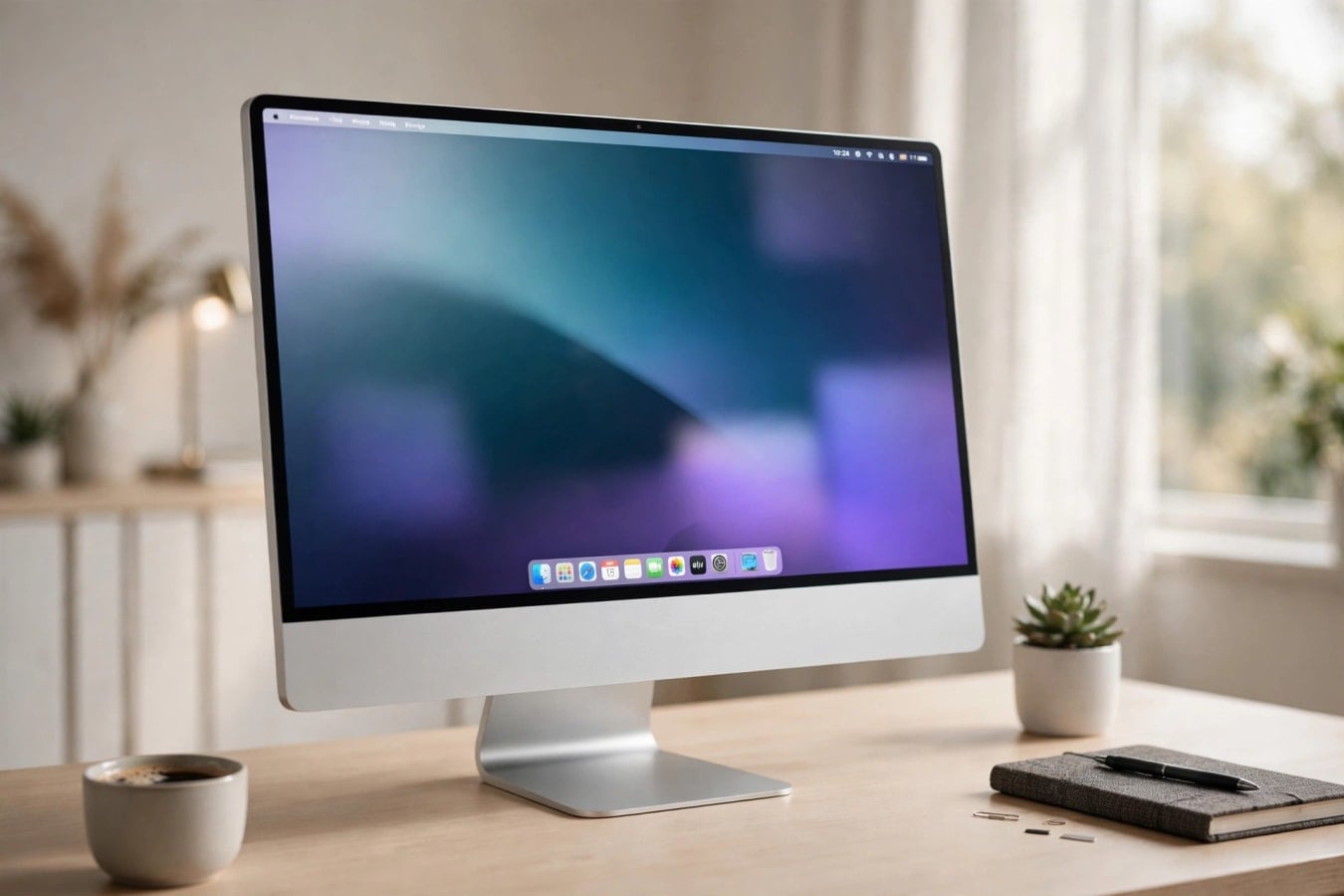
Apple's long-awaited OLED iMac may never arrive — or it may arrive much later than expected. That is the claim in a new report from South Korea, and it has put one of the most talked-about upgrades in the Mac lineup back into question. The quick answer:
- What is reported: Apple is conducting a "comprehensive review" of its plans to bring OLED displays to the iMac, and is talking with Samsung Display about whether to delay or cancel the project.
- What is NOT confirmed: Neither a delay nor a cancellation has been confirmed. Apple has said nothing, and the report rests on a single primary source.
- What the iMac was expected to get: An OLED display around 2029 or 2030, replacing the LCD panel used today.
- Why Apple is reportedly hesitating: Cost and demand. Tandem OLED panels are expensive at desktop size, and the OLED iPad Pro sold below expectations after its 2024 price rise.
- What could happen instead: Apple has reportedly asked LCD suppliers, including BOE, to develop panels for an iMac expected around 2029 — a sign the LCD could stay.
- What you should do: If you need a desktop Mac now, the current LCD iMac is still the safe buy. There is no announced OLED iMac, no preorder date and no price. This article explains what the report says, what is verified and what is not, why OLED at desktop size is so expensive, and what a possible delay means for iMac buyers.
What the report actually says
The story comes from The Elec, a Korean publication that covers the display supply chain. It reported on November 19, 2026 that Apple is reviewing its plans to adopt OLED displays for its iMac range, and that the company is in talks with Samsung Display about whether to push the project back or drop it altogether. The report was picked up within a day by several outlets, including Gadgets 360, Macworld, HotHardware, Times Now, Softonic and AppleMagazine. That spread of coverage makes the story easy to find, but it is worth being clear about one thing: every one of those reports traces back to the same single source. The Elec is the only primary source here, and no second publication has independently confirmed the review, the delay or the cancellation. That matters, because supply-chain reporting is often accurate about what suppliers are being asked to do, but can be wrong about what Apple will ultimately decide. A "comprehensive review" is also a broad phrase — it can mean anything from a routine cost check to a serious decision about whether a product should exist at all. The report leaves both outcomes open, which suggests Apple itself may not have made a final call yet. Apple has not confirmed any change to its iMac roadmap. There is no announced OLED iMac, no launch date, no preorder window and no price. Anyone repeating the story as a fact that the OLED iMac is cancelled is going further than the evidence supports.
How the OLED iMac got here
The idea of an OLED iMac is not new. Apple has been moving OLED displays from small devices to larger ones for years, step by step.
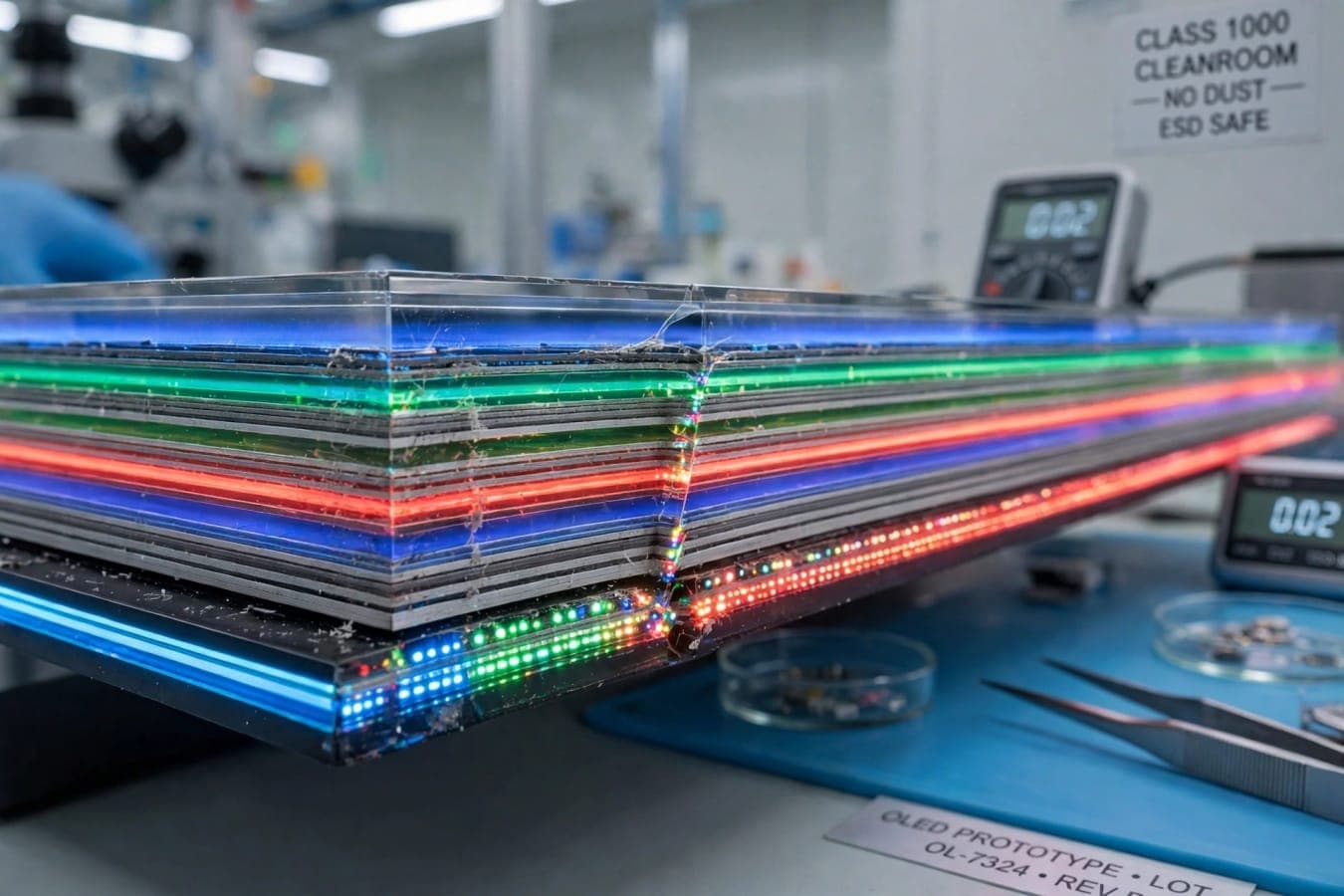
- The early years: OLED first appeared in Apple products on the iPhone and the Apple Watch, where small panels were cheaper to make and the benefits — deep blacks, high contrast, thin panels — were easy to see.
- The iPad Pro leap: In 2024, Apple brought tandem OLED to the iPad Pro. Tandem OLED stacks two light-emitting layers instead of one, which raises brightness and improves lifespan, but it also raises the cost.
- The MacBook Pro step: This year, Apple debuted its first MacBook Pro models with a touch-screen tandem OLED display, taking the technology to a larger laptop screen.
- The next step was meant to be the desktop: Reports had pointed to an OLED iMac arriving around 2029 or 2030, followed eventually by OLED in the MacBook Air.
The 2025 supplier talks
Apple's work on an OLED iMac goes back further than the latest report suggests. The background is worth knowing, because it shows how far along the project was before the review.
- In 2025, Apple approached display suppliers about a 24-inch OLED panel for the iMac, with a target of around 600 nits of brightness and roughly 218 pixels per inch.
- Samsung Display was working toward five-layer QD-OLED samples at around 220 pixels per inch, targeting late 2026.
- LG Display was reportedly working on a competing five-layer white-OLED panel, but has since stopped work on it, according to the reports.
- In October 2026, Bloomberg's Mark Gurman reported that Apple was still testing OLED displays for future iMac and MacBook Air models, with no launch date attached. That October report is an important counterweight to the new one. Just weeks ago, the most reliable Apple reporter in the business was describing OLED testing for the iMac as ongoing. Either the review began very recently, or the testing and the review are happening at the same time.
Reason one: the cost problem
The first reason given for the review is cost, and it is the easier one to understand. Tandem OLED panels are expensive to manufacture. Stacking two light-emitting layers doubles some of the most delicate work in the production process, and the larger the panel, the harder it is to keep yields high. A defect that ruins a phone-sized panel is a small loss. The same defect on a 24-inch desktop panel wastes far more material. That cost problem is worse for the iMac than for almost any other Apple product, for several reasons:
- The iMac is a desktop, not a laptop. Its screen is bigger than a MacBook Pro display, so the panel costs more to make and more to throw away when production goes wrong.
- The iMac sells in smaller volumes than iPhones and laptops. Lower volumes mean Apple cannot spread the cost of a new panel across as many units, which makes competitive pricing harder.
- Memory prices are rising. The report notes that higher memory prices are making it harder for Apple to build cost-effective products, which squeezes the budget for an expensive display upgrade.
- The iMac's price is part of its appeal. The 24-inch iMac starts at a price that puts it within reach of families, schools and small offices. A big jump in price for an OLED screen could push it out of that comfortable spot.
Reason two: the demand problem
The second reason is demand, and it is tied directly to what happened with the iPad Pro. When Apple moved the iPad Pro to tandem OLED in 2024, the price went up — and sales came in below expectations. Buyers liked the screen, but many decided the older LCD model, or a cheaper tablet, was good enough. The result was a cautionary tale inside Apple: a better display does not automatically mean more sales. The numbers behind that caution are striking:
- Combined OLED panel shipments for the iPad Pro from Samsung Display and LG Display are forecast to fall by around 18 percent.
- Shipments are expected to drop from about 6 million units in 2025 to about 4.9 million in 2026.
- The fall is happening even though the iPad Pro is Apple's flagship tablet, with a far larger market than the iMac. There is a counter-argument, of course. An iMac sits on a desk, plugged in, and its screen is the thing you look at all day. For creative professionals, photographers and video editors, an OLED iMac could be a genuinely better tool. But that is a smaller audience, and Apple has to decide whether it is big enough to justify the investment.
The new CEO factor
There is also a leadership angle to this story. John Ternus became Apple's chief executive in September 2026, and the report suggests he is taking a close interest in the OLED question.
- Ternus is reportedly "reassessing the commercial viability" of OLED across Apple's products.
- He is said to be taking closer control of Apple's design teams, which puts him nearer to decisions about which technologies make it into products and which do not.
- He may have influenced the decision to review the OLED iMac, according to the report. It is important to be careful here. The report does not say Ternus has decided to cancel the OLED iMac. It says he may have influenced the review, and that he is reassessing whether OLED makes commercial sense. That is a long way from a final decision, and it is also the kind of thing a new chief executive would be expected to do.
What happens instead: LCD through 2029?
Perhaps the most telling detail in the report is not about OLED at all. It is about LCD. Apple has reportedly asked LCD suppliers, including the Chinese display maker BOE, to develop panels for an iMac expected around 2029. That is the same window in which the OLED iMac was supposed to arrive. If Apple is asking LCD suppliers to build panels for a 2029 iMac, it suggests the company is at least preparing for a world in which the iMac keeps its LCD. Macworld has suggested that a new LCD-based iMac around 2029 would likely use an M8 chip, following the current M-series naming. That is speculation built on Apple's usual chip cadence, not a confirmed fact, but it gives a sense of the timeline: the next major iMac redesign may still be an LCD machine, just with a newer chip inside. The LCD iMac is not a compromise that buyers are suffering through. It is a good screen that most people are happy with. The question is whether Apple can make it meaningfully better without charging meaningfully more — and OLED, at desktop size, has not yet answered that question.
What the delay would mean for the Mac lineup
If the OLED iMac is delayed or cancelled, the effects would reach beyond a single desktop computer.
- The MacBook Air is also reportedly in line for an OLED display, and a rethink on the iMac could slow that project too — although the report does not say so directly.
- Samsung Display and LG Display have invested heavily in OLED production for Apple. A cancelled iMac order would be a setback, although both companies also supply panels for iPhones, iPads and MacBook Pros.
- BOE's role could grow. If Apple leans on LCD for the 2029 iMac, BOE — already an LCD supplier — could win a larger share of Apple's display orders. For the wider industry, the story is a reminder that OLED is not inevitable everywhere. It has won the phone, the watch and the premium tablet. The laptop is next. But the desktop, with its bigger screens and lower volumes, may be the place where the technology's cost finally catches up with it.
Should you wait for an OLED iMac?
This is the question most readers will actually care about, and the honest answer is: no, not on the basis of this report.

- There is no announced OLED iMac. There is no launch date, no preorder window and no price. Waiting for a product that has never been announced is a long game with no finish line.
- The earliest it was expected was 2029 or 2030. Even before this report, the OLED iMac was years away. A delay of a year or two would push it into the 2030s.
- The current iMac is a good machine. The M6 iMac, introduced weeks ago, kept its 4.5K Retina LCD display and remains a strong choice for home, school and office use.
- If you need a desktop now, buy now. The technology in the current iMac will not suddenly become bad because a future model might have a different screen.
- If you already own a recent iMac, there is no rush. Nothing in this report suggests your current machine is about to be made obsolete. The one group who should pause is the group who were already planning to wait until 2029 or 2030 specifically for an OLED iMac. For them, the message of this report is to keep expectations modest. An OLED iMac may still arrive, but the odds look a little worse than they did a week ago, and the arrival date — if it comes at all — is less certain.
What to watch next
The story is far from over, and several things could change the picture in the coming months.
- Watch for a second source. If another publication with its own supply-chain contacts confirms the review, the story becomes much stronger. If no one else confirms it, treat it with more caution.
- Watch Samsung Display and LG Display. Earnings calls and supplier reports can hint at whether OLED panel orders for Apple are growing, shrinking or shifting.
- Watch the MacBook Pro. The new tandem OLED MacBook Pro is a test of whether buyers will pay for OLED on a larger screen. Strong sales would help the iMac's case. Weak sales would hurt it.
- Watch for the 2029 iMac. If Apple starts talking about its next iMac and it is clearly LCD-based, that will tell you more than any supply-chain report can. For now, the OLED iMac sits in a strange middle ground: a product that was widely expected, that Apple has been testing and talking to suppliers about, and that may now be delayed or cancelled before it was ever announced. That is the nature of Apple rumours — and the reason this article has labelled the story as unconfirmed throughout. The display in your next iMac may be OLED, or it may be the same excellent LCD Apple has used for years. Either way, the screen is only one part of the machine. The chip, the software, the design and the price matter just as much — and on all of those, the iMac remains one of the simplest, most capable desktop computers you can buy.
FAQs
Is the Apple OLED iMac cancelled?
No — not confirmed. A report from The Elec says Apple is reviewing its OLED iMac plans and talking with Samsung Display about delaying or cancelling them, but Apple has not confirmed any change, and the report rests on a single primary source.
When was the OLED iMac expected to launch?
Reports had pointed to around 2029 or 2030. There was never an official launch date, preorder date or price announced by Apple.
Why would Apple delay or cancel the OLED iMac?
Two reasons are reported: cost and demand. Tandem OLED panels are expensive to make at desktop size, rising memory prices squeeze budgets, and OLED iPad Pro sales came in below expectations after its 2024 price rise.
Will the next iMac still use an LCD display?
Possibly. Apple has reportedly asked LCD suppliers, including BOE, to develop panels for an iMac expected around 2029, which suggests LCD could stay. The current 24-inch iMac uses a 4.5K Retina LCD with 4480 x 2520 resolution and up to 500 nits of brightness.
Does this affect the OLED MacBook Air?
Not directly, according to the report, which focuses on the iMac. But a rethink on OLED for desktops could slow OLED plans for other Macs too, and Apple was also reported to be testing OLED for the MacBook Air.
Should I wait for an OLED iMac before buying?
No. There is no announced OLED iMac, and even before this report the earliest expected date was 2029 or 2030. If you need a desktop Mac now, the current M6 iMac with its 4.5K Retina LCD display is still a strong buy.
Was this article helpful?

Written By
TechorCoffeeContributing Writer
TechorCoffee is a technology reporter and software creator writing reviews and tutorials for TechOrCoffee.
Comments (0)
Leave a Comment
Read Next
Thu Aug 13 2026
iPhone 18 Leaks and Rumors: Everything Apple’s 2026 iPhone
iPhone 18 leaks reveal rumored specs, A20 Pro chip, camera upgrades, smaller Dynamic Island, AI features, price, launch date and more.
Sat Oct 31 2026
Apple M7 vs M6: What Could Change?
Apple M7 vs M6 preview: rumours, AI, memory, GPU, design, thermals, power and price for Mac buyers in 2026 right now today, all unconfirmed.
Sat Oct 31 2026
MacBook Pro M5 Pro vs M5 Max: Every Major Difference
M5 Pro vs M5 Max compared: CPU, GPU, memory, media engines, battery and price.