FBI and USDA Hacked: US Crime Database Breached Again

Published (Updated )
The Quick Answer
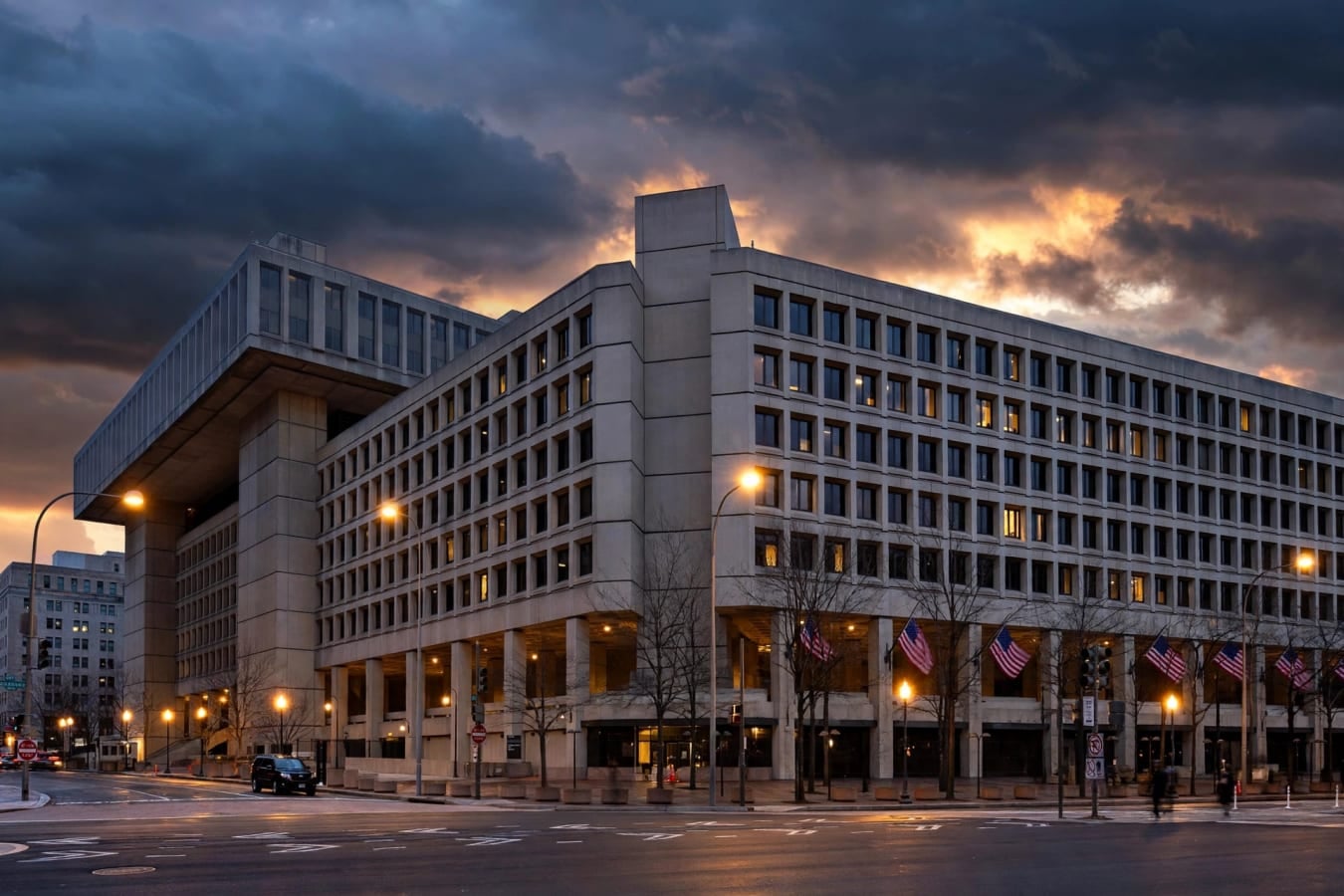
- Hackers breached the FBI and the US Department of Agriculture (USDA) in separate cyberattacks reported on Friday, November 20, 2026.
- The FBI is investigating an intrusion into the National Crime Information Center (NCIC), the nationwide database police use to share warrants, criminal records and background-check data.
- The USDA told staff that a system used to send payments to farmers was targeted in a cyberattack.
- It is not yet known whether the two breaches are connected, or who carried them out.
- The FBI breach is the agency's second since September, when the hacking group ShinyHunters targeted an FBI jobs website.
- The attacks come at the end of a week of major technology failures across the United States, including the global Microsoft Outlook outage and the longest nationwide air-traffic ground stop in 25 years.
- Officials say there is no evidence so far that the outages and the hacks are linked, but the cluster of incidents has put US cybersecurity under fresh scrutiny.
What Happened at the FBI
The FBI intrusion was first reported by CNN on Friday, November 20, citing two people briefed on the investigation.
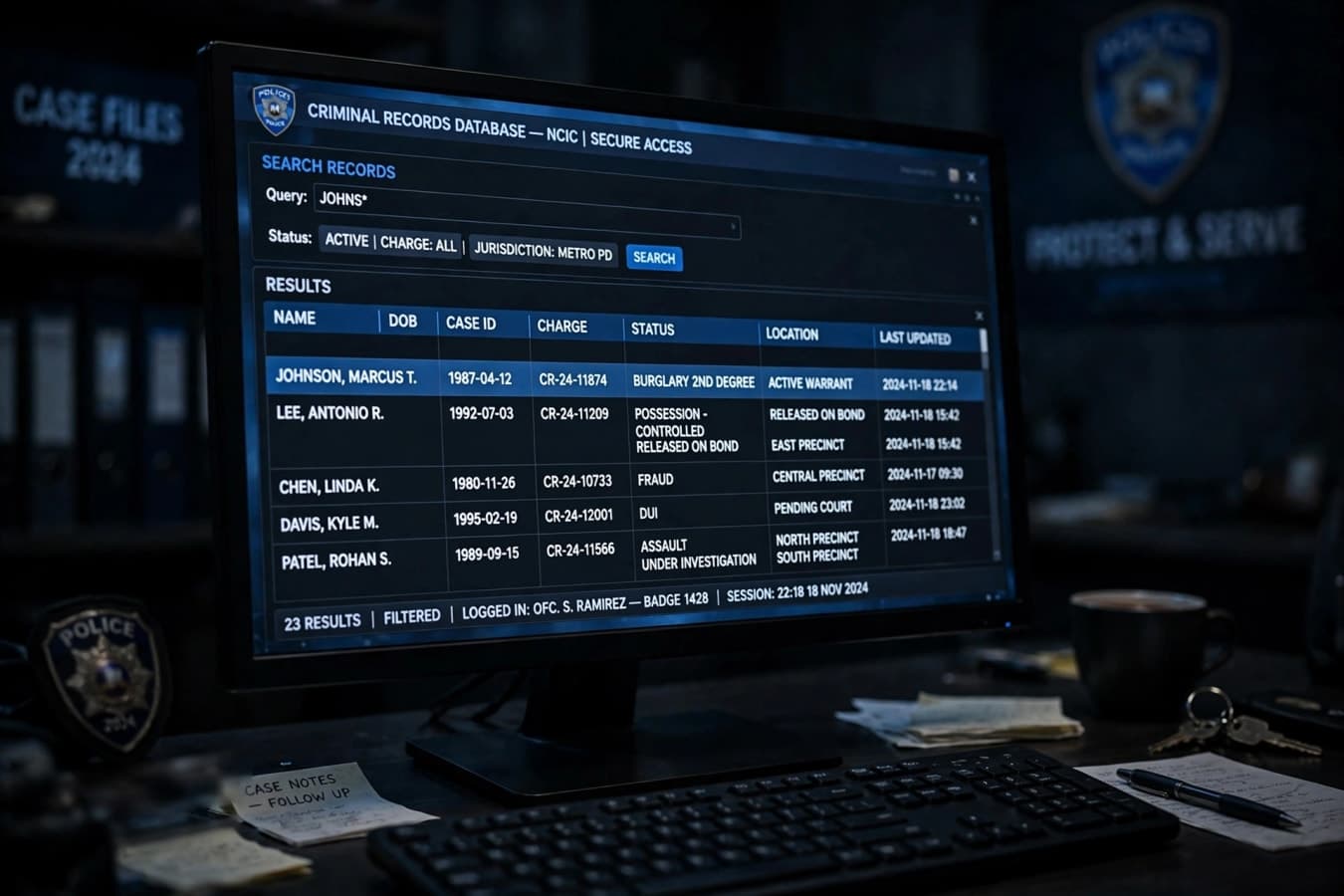
- The target was the National Crime Information Center, known as the NCIC.
- The NCIC is a nationwide criminal information database that links federal, state and local law enforcement agencies across the United States.
- Police officers use it every day to check warrants, criminal histories, stolen property, missing persons and background-check information.
- The FBI is investigating an intrusion into the system by apparent hackers, according to the people briefed on the probe.
- The scale of the intrusion, and whether any data was stolen or altered, has not yet been made public. What is known is that this is not the FBI's first breach this autumn.
- In September 2026, the hacking group ShinyHunters targeted sensitive personal data belonging to employees through an FBI recruitment and jobs website.
- That earlier incident was a different kind of attack, aimed at employee information rather than a law-enforcement database.
- Two intrusions in about two months at the same agency is unusual, and it raises questions about how well even the country's top law-enforcement body can defend its own systems. The FBI has not publicly confirmed details of the NCIC intrusion, and the agency was contacted for comment when the story broke. No official statement had been issued at the time of writing.
What Happened at the USDA
The USDA breach was first reported by NBC News on Friday, also citing people familiar with the matter.
- The department told employees that a system used to facilitate payments to farmers had been targeted in a cyberattack.
- The report was based on information from two former USDA officials.
- The hackers may be able to use the payment system as a backdoor to reach more sensitive material inside the department, the former officials warned.
- It is not yet clear whether any payments were disrupted, or whether any money was diverted. The USDA is not only a farming agency. That is part of why the breach matters.
- The department handles sensitive research and information related to biological threats, including animal and plant diseases that could affect food supplies.
- One former official told NBC that the USDA deals with "a bunch of scary biologic issues" and warned that if an adversary gained access to that research, "they could use our own research against us."
- A payment system may sound low-value as a target, but security experts say attackers often enter through an ordinary business system and then move sideways into the networks that hold the data they really want. The USDA was also contacted for comment. Neither agency has said publicly who is responsible, and investigators have not yet established whether the two breaches are connected.
A Week of Failures Across America
The two hacks landed at the end of a remarkable week for US technology, in which a string of unrelated-looking failures hit the systems Americans rely on most.
- Thursday, November 12: A global Microsoft 365 outage knocked Outlook, Exchange Online and other workplace services offline for more than 24 hours. Microsoft later blamed a hidden software bug dating back to July, combined with a traffic surge and missing server capacity.
- Friday, November 13: The Federal Aviation Administration ordered a nationwide ground stop lasting more than four hours, the longest halt to US air travel since the attacks of September 11, 2001. Officials blamed a faulty router made by Juniper Networks.
- Monday, November 16: JPMorgan Chase said a software bug affecting its internal hardware caused transactional delays for customers, and United Airlines delayed departing flights after its own system outage.
- Tuesday, November 17: Apple said an internal update caused outages affecting iCloud, Apple Pay, Apple Music and the App Store, while Marriott reported sign-in problems and the National Security Agency's classified internal network went down. The Trump administration has said there is "zero" indication the outages are linked or caused by cybercriminals. Homeland Security Secretary Mark Wayne Mullen dismissed the idea of a coordinated cyberattack and instead blamed artificial intelligence overwhelming older systems. That explanation has divided experts.
- Former FBI counterintelligence operative Eric O'Neill, now a cybersecurity executive, told PBS News Hour that no evidence yet connects the incidents, but the timing is too much of a coincidence to dismiss.
- O'Neill said investigators will test three paths: unrelated internal failures, an outside attacker, or a common networking tool used across the industry.
- Prominent cybersecurity expert Nicole Perlroth warned on X that AI is tripling the rate at which serious vulnerabilities are discovered, and that companies are racing to patch them so fast that some patches break things.
- Perlroth called the pattern an approaching "vulnpocalypse" and said the week of failures was "just the opening chapter." The FBI and USDA breaches are different from the outages in one important respect: they are intrusions, not malfunctions. Somebody got in. That is why they have sharpened the debate about whether the week's events are really as unconnected as officials say.
Why the NCIC Breach Matters
The NCIC is not a website or a public database. It is the backbone of day-to-day policing in the United States.
- The system holds records on wanted persons, missing persons, stolen vehicles and property, and criminal histories.
- Officers in patrol cars and at borders query it constantly, and the results can decide whether someone is arrested, detained or released.
- Background checks for firearms purchases also draw on NCIC data in many states.
- Any suggestion that the data could have been read, changed or deleted is therefore serious, even before investigators confirm what actually happened. Security specialists say the worst-case scenarios are not only about stolen data.
- If an intruder could alter records, a wanted person could in theory be made to look clean, or an innocent person could be flagged.
- If the intrusion was a foothold rather than a smash-and-grab, the attacker could still be inside the network, watching how the system is used.
- The FBI will now have to establish how the intruder got in, how long they were there, and what they touched — a process that can take weeks. There is also a credibility question. The FBI investigates cybercrime for the rest of the country, and it advises companies and local police on how to defend themselves. A second breach in two months invites the obvious question: if the FBI cannot keep intruders out of its own crime database, who can? That is unfair in one sense — every large organisation, including the most security-conscious, gets targeted constantly, and a breach is not proof of negligence. But it is the question the public and Congress will ask, and the FBI will need a convincing answer.
Why the USDA Breach Matters
The USDA attack looks smaller at first glance, but the context makes it worrying.
- The department runs farm subsidy and support payments that millions of American farmers depend on.
- A payment system is a tempting target for criminals who want to divert money, and for state-backed attackers who want a way into government networks.
- The former officials who spoke to NBC were explicit that the payment system could be used as a backdoor to more sensitive material.
- The USDA's research covers animal diseases, plant pathogens and food safety — subjects that matter to national security as well as agriculture. The breach also fits a pattern that security researchers have warned about for years: attackers go after the least-defended system in an organisation and then move laterally. A farm payments portal is unlikely to have the same defences as a classified network, which is precisely why it makes a good entry point.
What We Do Not Know Yet
A lot about both incidents is still unconfirmed, and the reporting so far is careful about that.
- It is not known whether the FBI and USDA breaches are connected, or whether they were carried out by the same group.
- No group has claimed responsibility for either attack.
- It is not known whether the intruders were criminals seeking money, or a state-backed group seeking information.
- The FBI has not said what data, if any, was accessed or stolen from the NCIC.
- The USDA has not said whether any farmer payments were affected.
- Neither agency has said how the attackers got in. That uncertainty is normal in the first days of an investigation, but it leaves room for speculation, and speculation has already filled the gap on social media. Readers should treat claims about who did it, and why, as rumours until an official investigation or a named source says otherwise. What is confirmed is the reporting itself: two respected US news organisations, NBC News and CNN, each citing people briefed on the matter, reported on the same day that two major federal agencies had been breached. The agencies have not denied the reports.
What Happens Next
- The FBI investigation into the NCIC intrusion will continue, and the bureau will have to decide how much to disclose about what was accessed.
- The USDA will need to establish whether the payment system was only probed or actually penetrated, and whether any payments were affected.
- Congress is likely to ask questions. The House and Senate committees that oversee the FBI and the USDA have a history of demanding briefings after federal breaches.
- The incidents will feed into the wider debate about the week's outages, and whether the United States' critical systems are being patched and maintained fast enough for the age of AI-driven vulnerability discovery.
- A final post-incident review from Microsoft on its Outlook outage is also expected, and it may add to the picture of how much of the week's disruption was caused by ordinary software failures. For ordinary users, there is no direct action to take from these two breaches. The NCIC is not a consumer service, and the USDA payment system is not something the public logs into. But the incidents are a reminder of a broader point: the systems that underpin policing, farming, banking, air travel and email all run on the same kind of software, maintained by the same kind of overworked teams, and patched at the same frantic pace. When one of them fails, it is news. When several fail in a week, and two federal agencies are hacked on top of it, it starts to look like a pattern — even if nobody can yet prove that it is one.
FAQs
What is the NCIC?
The National Crime Information Center is the FBI's nationwide criminal information database. It links federal, state and local law enforcement agencies and holds records on warrants, criminal histories, missing persons and stolen property.
Was the FBI hacked before this?
Yes. In September 2026, the hacking group ShinyHunters targeted sensitive personal data belonging to employees through an FBI jobs and recruitment website. The November intrusion into the NCIC is the second FBI breach reported in about two months.
What system was targeted at the USDA?
A system used to facilitate payments to farmers, according to NBC News, which cited two former USDA officials. The department told employees about the cyberattack.
Are the FBI and USDA breaches connected?
It is not yet known. The incidents were reported separately by CNN and NBC News, and investigators have not established whether they are related or who was responsible.
Was any data stolen?
That has not been confirmed. The FBI has not said what data, if any, was accessed in the NCIC intrusion, and the USDA has not said whether any payments were affected.
How does this relate to the week's outages?
The breaches came at the end of a week that also saw a global Microsoft Outlook outage, an FAA ground stop, banking delays at JPMorgan Chase and an NSA network problem. Officials say there is no evidence the outages are linked or caused by hackers, but experts say the timing deserves investigation.
Was this article helpful?
Explore Specs, Comparisons & Related Topics

Written By
TechorCoffeeEditorial Team
The TechOrCoffee Editorial Team covers consumer hardware, artificial intelligence, software engineering, and regional smartphone & laptop market analysis.
Comments (0)
Leave a Comment
Read Next
Thu Oct 22 2026
PHP Security Vulnerabilities: Key Risks for Websites
Learn why PHP security matters, how website vulnerabilities can create risks, and what website owners can do to keep their systems secure.
Fri Nov 06 2026
AI Hackers Target Banks at Machine Speed, CERT-In Warns
CERT-In warns 'Crafty Falcon' is using AI tools to breach Indian lenders, fintech and crypto firms at machine speed. What the advisory says.
Fri Oct 30 2026
Gemini 4 Carbon: Google New No. 1 AI, Nobody Can Use Yet
Gemini 4 Carbon explained: Google second frontier model in two weeks, top benchmark scores, cybersecurity focus, Fairwind-only access, and price.