Fireworks AI Breach Exposed Notion, Cursor & Uber Data

Published (Updated )

A single AI infrastructure provider was breached twice in October 2026, and the damage did not stop at its own front door. It spread through the companies that relied on it — into Notion AI conversations, into a tool used by Cursor, and into personal and driver's licence information belonging to Uber users.
A business may never sign up for Fireworks directly, yet its data can still pass through it because a tool it uses runs models there.
Here is the quick answer:
- Fireworks AI, which runs open-weight AI models in the cloud for other companies, was breached twice in October 2026.
- The company spotted suspicious activity on October 6, published its first security bulletin on October 9, and later confirmed two separate security incidents, both contained.
- What was taken included resource metadata and billing details, and for a limited set of accounts, secrets, datasets and incomplete model weights.
- Notion said fewer than 1% of its workspaces were affected, but some exposed Notion AI chat transcripts contained names, email addresses and API keys.
- Cursor said on November 13 that a key it had given Fireworks let the attacker into its own tools, and that is how a fake Claude Code extension reached Cursor users on October 29.
- Uber is notifying 149,346 people that personal and driver's licence information was stolen.
- Fireworks links the activity to a financially motivated criminal group that sells stolen access to large language models, a practice known as LLMJacking.
Below: the timeline, what was taken, how each company was affected, and what to do next.
What Fireworks AI Does, and Why This Breach Travelled So Far
Fireworks AI runs open-weight AI models in the cloud for other companies. Its customers can use those models as a service, and they can also fine-tune models on their own data. The company says it has more than 10,000 customers.
That model is common across the AI industry. Many products that users think of as a single app are, in practice, a chain of providers. One company builds the interface, another supplies the model, and a third may host the infrastructure. The user sees only the brand they signed up for.
When a provider in the middle is breached, the exposure can reach the customers of its customers. Fireworks has not said how many customers were affected, or named the cloud provider involved in the second incident.
The Timeline: From October 6 to November 13
The public timeline built up in stages, as Fireworks, Notion, Cursor and Uber each disclosed what they knew. The dates below are the dates given by the companies involved.
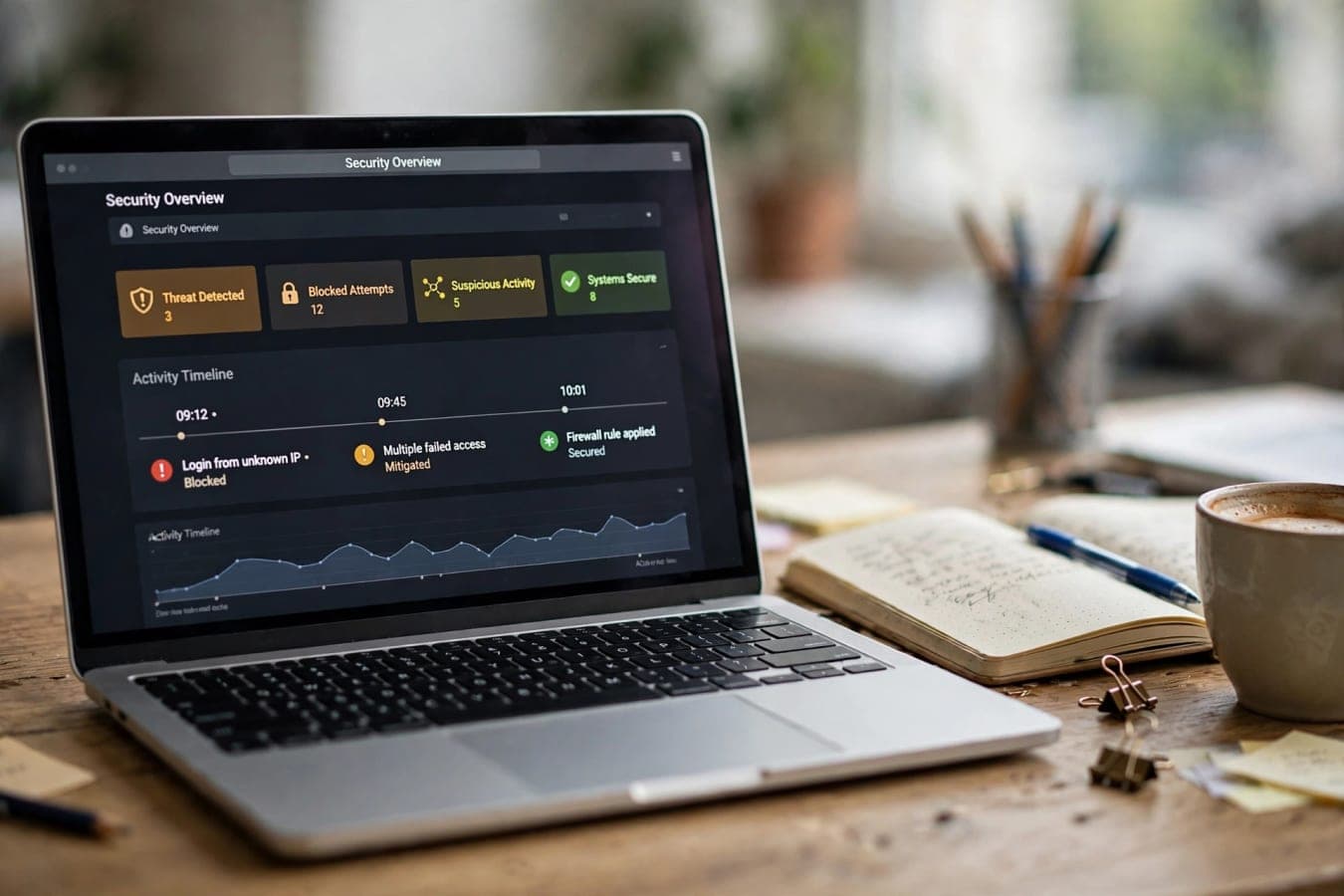
- October 6: Fireworks spotted suspicious activity.
- October 9: Fireworks published its first security bulletin.
- October 23: A third-party cloud provider hosting Fireworks research and development machines had a security incident.
- October 24: An unauthorised third party used that foothold to reach Fireworks development machines and run an unauthorised workload.
- October 25: As of this date, Fireworks said it had detected no further unauthorised access on the customer platform.
- October 29: A fake Claude Code extension reached Cursor users. Cursor later linked this to the Fireworks breach.
- November 2: Fireworks alerted Notion that data had been accessed. A first review found only synthetic testing data.
- November 3: Notion cut Fireworks off, and deleted its data held there on November 4.
- November 6: Fireworks told Notion that attackers might have accessed customer data.
- November 8: Fireworks provided Notion with the affected dataset — Notion AI chat transcripts used for Insights.
- November 9: Fireworks confirmed two separate security incidents, both contained. On the same day, Notion contacted affected customers.
- November 11–12: Notion revoked exposed Notion API keys found in messages and reported exposed third-party API keys to their issuers.
- November 13: Cursor said a key it had given Fireworks let the attacker into its own tools.
The first signs appeared in early October, the second incident followed later that month, and the full impact only became clear in November.
What Was Taken From Fireworks
Fireworks has described the stolen data in categories. The list matters because it shows the breach was not limited to one kind of information.
- Resource metadata: identifiers, display names, descriptions and creation times.
- Billing details: billing and shipping addresses, invoice and payment history, account balance and credit usage.
- What was not taken: payment card numbers were not stored by Fireworks and were not impacted.
- For a limited set of accounts: secrets, datasets and incomplete model weights.
The phrase "for a limited set of accounts" is doing a lot of work here, and Fireworks has not said how many accounts that means. Secrets and datasets are the most sensitive part of this list. A secret can be an API key or another credential. A dataset can contain the data a customer used to fine-tune a model. Incomplete model weights are less useful than a full model, but they can still reveal information about how a model was built and trained.
If your company used Fireworks directly, or a product that used Fireworks, the exposure could include account and billing details and, in some cases, credentials and data you supplied. Treat exposed data as if it were accessible.
Who Was Behind It: LLMJacking
Fireworks links the activity to a financially motivated criminal group that sells stolen access to large language models to illicit routing gateways. That practice is called LLMJacking.
The idea behind LLMJacking is straightforward. Access to large language models costs money. If an attacker can steal credentials or access to a model service, they can resell that access to others who want to use the models without paying for them. The buyers route their requests through illicit gateways, and the victim pays the bill or bears the risk.
Fireworks cites a November 2 blog post by the Google Threat Intelligence Group and Mandiant on the rise of LLMJacking. This is Fireworks' assessment: a motive of financial gain and a method of stealing and reselling model access, rather than naming individual attackers.
How Fireworks Responded
Fireworks says it engaged Palo Alto Networks Unit 42 for forensic analysis, notified law enforcement, rotated credentials and paused dataset uploads. Those steps do not undo the exposure: data taken cannot be taken back, and copied credentials may already have been used.
Notion: AI Chats Meant for Insights Were Exposed
Notion used Fireworks to run some open-weight models in Notion AI, and to analyse stored Notion AI conversations for Insights, an admin dashboard about AI use in a workspace. That second use is where the exposure happened.
Notion says Fireworks had a contractual commitment to zero data retention, yet data was retained on the Fireworks endpoints Notion used. That is the central failure in the Notion part of this story, and it is discussed in more detail later in this article.
On November 2 Fireworks alerted Notion that data had been accessed; a first review found only synthetic testing data. Notion cut Fireworks off on November 3, deleted its data there on November 4, and was told on November 6 that customer data might have been accessed. On November 8 Fireworks provided the affected dataset — Notion AI chat transcripts used for Insights — and Notion contacted affected customers on November 9. On November 11–12 it revoked exposed Notion API keys and reported exposed third-party API keys to their issuers.
Notion says fewer than 1% of its workspaces were affected. That sounds small, and in percentage terms it is. But Notion is widely used in the US, the UK and Europe, so even a small percentage can mean a large number of workspaces and users. Notion has not given an absolute number of affected workspaces.
Most transcripts were described as "unattributable": no user or workspace labels, and no tool-call results or page content, so most could not easily be tied to a specific person. Some were different — they contained names, email addresses and API keys users had typed into chats. People paste all kinds of things into a chat window without thinking about where that text will be stored.
Notion advises treating the data as if it were exposed, and it disabled Insights and stopped serving open-weight models through Fireworks. Those steps do not erase the transcripts already taken.
Cursor: A Key Given to Fireworks Opened the Door
Cursor's disclosure came later, on November 13, and it added a new dimension to the incident. Cursor said a key it had given Fireworks let the attacker into its own tools, and that is how a fake Claude Code extension reached Cursor users on October 29.
That detail matters for two reasons. First, it shows how a breach can move from one company to another through a trusted connection. A key is given for a legitimate reason — to let two systems work together. If that key is stolen, the attacker can use the same trust to reach the second system. The attacker does not need to break in from the outside. They walk in through a door that was opened for a partner.
Second, it shows how quickly a stolen key can harm end users: a convincing fake extension can spread before anyone realises it is not genuine. Cursor users who installed the fake Claude Code extension on or around October 29 should follow Cursor's guidance.
Uber: 149,346 People Told Their Data Was Stolen
Uber is notifying 149,346 people, per TechCrunch, that personal and driver's licence information was stolen. The information includes names, addresses, dates of birth and driver's licence numbers.
That combination is serious: add a date of birth and a driver's licence number to a name and address, and the data becomes useful for identity theft. A driver's licence number is hard to change — unlike a password, you cannot simply reset it.
That number gives a sense of scale missing elsewhere, where the number of affected customers has not been disclosed. People notified by Uber should watch for unexpected accounts, be wary of messages using the stolen details to appear genuine, and follow Uber's guidance.
The Zero Data Retention Promise Did Not Hold
The most important lesson from this breach is not about Fireworks alone. It is about a promise that many companies rely on when they allow AI tools at work: zero data retention.
Zero data retention, often shortened to ZDR, is a commitment that a provider will not keep the data a customer sends it: it is processed and then deleted, not stored or used for training. Businesses in the US, the UK and Europe rely on that promise to use AI tools without handing over a permanent copy of their work.
In the Notion case, Fireworks had a contractual commitment to zero data retention, yet data was retained on the Fireworks endpoints Notion used, and those stored transcripts were then exposed. A contract clause is not the same as a technical guarantee.
Here is what that checking should look like in practice:
- Ask a vendor exactly where data is stored, for how long, and on which systems.
- Ask whether any part of the service — including analytics, dashboards or quality checks — stores data separately from the main request.
- Ask for evidence that data is deleted, not just a statement that it will be deleted.
- Ask how the vendor tests its own retention controls, and how often.
- Ask what happens to data held by a sub-processor, and whether the same retention rules apply there.
A dashboard about AI use sounds harmless, but if building it means storing chat transcripts, the retention promise has to cover that storage too — and a sub-processor's retention practices matter just as much.

What Businesses and Individuals Should Do Now
You do not need to be a Fireworks customer to be affected by a breach like this — only to use a product that relies on a provider like Fireworks. Do you know which AI providers sit behind the tools your team uses every day? For many businesses, the answer is no.
Here are the steps worth taking now:
- List your AI tools and ask who supplies the models. Find out whether the models run on the vendor's own systems or through a third party, and who the sub-processors are.
- Review retention promises. Ask for the retention period for prompts, uploads and chat history, and ask whether analytics or dashboards create a second copy.
- Limit what goes into AI chats. Treat an AI chat like a shared document. Do not paste API keys, passwords, customer data or other secrets into it.
- Rotate keys that may have been exposed. If a key appeared in a chat, a document or a dataset that passed through an affected service, replace it.
- Only install extensions from official sources. Check the publisher before installing anything new, and remove any extension installed from an unofficial source around October 29.
For individuals: if you pasted an API key, a password or personal details into a Notion AI chat, treat it as exposed — change passwords and revoke and replace any keys. If Uber notifies you, watch for identity theft and be cautious about messages using your details to appear legitimate. Do not click links in unexpected messages, even if they look official.
Assume the data was seen, and act on that assumption — waiting for proof a specific key was used is a mistake.
What Is Still Unknown, and Why This Breach Will Be Remembered
Still unknown: how many customers were affected, the name of the cloud provider involved on October 23, the full list of companies affected, and how the exposed secrets and datasets were used. The story is still developing, and further disclosures may follow.
This breach will be remembered for three reasons: it happened twice in one month to the same provider; it spread through the supply chain to Notion, Cursor and Uber users; and it broke the zero data retention promise businesses depend on. Rebuilding that confidence will take evidence, testing and transparency about where data actually goes.
For businesses in the US, the UK and Europe, the message is clear: know who supplies your AI tools, and treat anything you type into an AI chat as data that could be stored. For individuals: do not paste secrets into a chat, and if you already have, replace them now.
FAQs
What happened in the Fireworks AI breach?
Fireworks AI, which runs open-weight AI models in the cloud for other companies, was breached twice in October 2026. Fireworks spotted activity on October 6, and later confirmed two separate security incidents, both contained. Data taken included resource metadata and billing details, and for a limited set of accounts, secrets, datasets and incomplete model weights.
How were Notion, Cursor and Uber affected?
Notion used Fireworks for some Notion AI models and for analysing chats for Insights; fewer than 1% of Notion workspaces were affected, but some exposed transcripts contained names, email addresses and API keys. Cursor said a key it gave Fireworks let the attacker into its tools, leading to a fake Claude Code extension reaching users on October 29. Uber is notifying 149,346 people that personal and driver's licence information was stolen.
What is LLMJacking?
LLMJacking is the practice of stealing access to large language models and selling that access to illicit routing gateways, so others can use the models without paying. Fireworks links the activity to a financially motivated criminal group involved in LLMJacking, citing a November 2 Google Threat Intelligence Group and Mandiant blog post on its rise.
What is zero data retention, and why does it matter here?
Zero data retention is a commitment that a provider will not keep the data a customer sends it. Notion says Fireworks had a contractual commitment to zero data retention, yet data was retained on the Fireworks endpoints Notion used. That is why businesses should ask vendors for evidence of deletion, not just a promise in a contract.
What should I do if my data may have been exposed?
Treat any exposed information as if it were seen. Revoke and replace API keys that appeared in an AI chat, change any passwords involved, remove any fake extension installed around October 29, and follow the specific guidance from Notion, Cursor or Uber if you were notified. Watch for identity theft and be wary of messages that use stolen details to appear genuine.
Is the Fireworks breach contained?
Fireworks confirmed on November 9 that the two separate security incidents were contained, and said that as of October 25 it had detected no further unauthorised access on the customer platform. Notion cut Fireworks off on November 3, and Cursor and Uber have issued their own disclosures. Some questions remain open, including how many customers were affected, so further updates may follow.
Was this article helpful?
Explore Specs, Comparisons & Related Topics

Written By
TechorCoffeeEditorial Team
The TechOrCoffee Editorial Team covers consumer hardware, artificial intelligence, software engineering, and regional smartphone & laptop market analysis.
Comments (0)
Leave a Comment
Read Next

Fri Oct 30 2026
Best AI Coding Tools 2026: Cursor, Copilot, Claude Code
Best AI coding tools 2026 compared: Cursor, GitHub Copilot, Claude Code, Codex, models, prices, and which tool fits your workflow.

Fri Nov 06 2026
AI Hackers Target Banks at Machine Speed, CERT-In Warns
CERT-In warns 'Crafty Falcon' is using AI tools to breach Indian lenders, fintech and crypto firms at machine speed. What the advisory says.
Fri Oct 30 2026
Gemini 4 Carbon: Google New No. 1 AI, Nobody Can Use Yet
Gemini 4 Carbon explained: Google second frontier model in two weeks, top benchmark scores, cybersecurity focus, Fairwind-only access, and price.