Google's New Nest Cams and Home Speaker Bring Gemini Inside

Published (Updated )
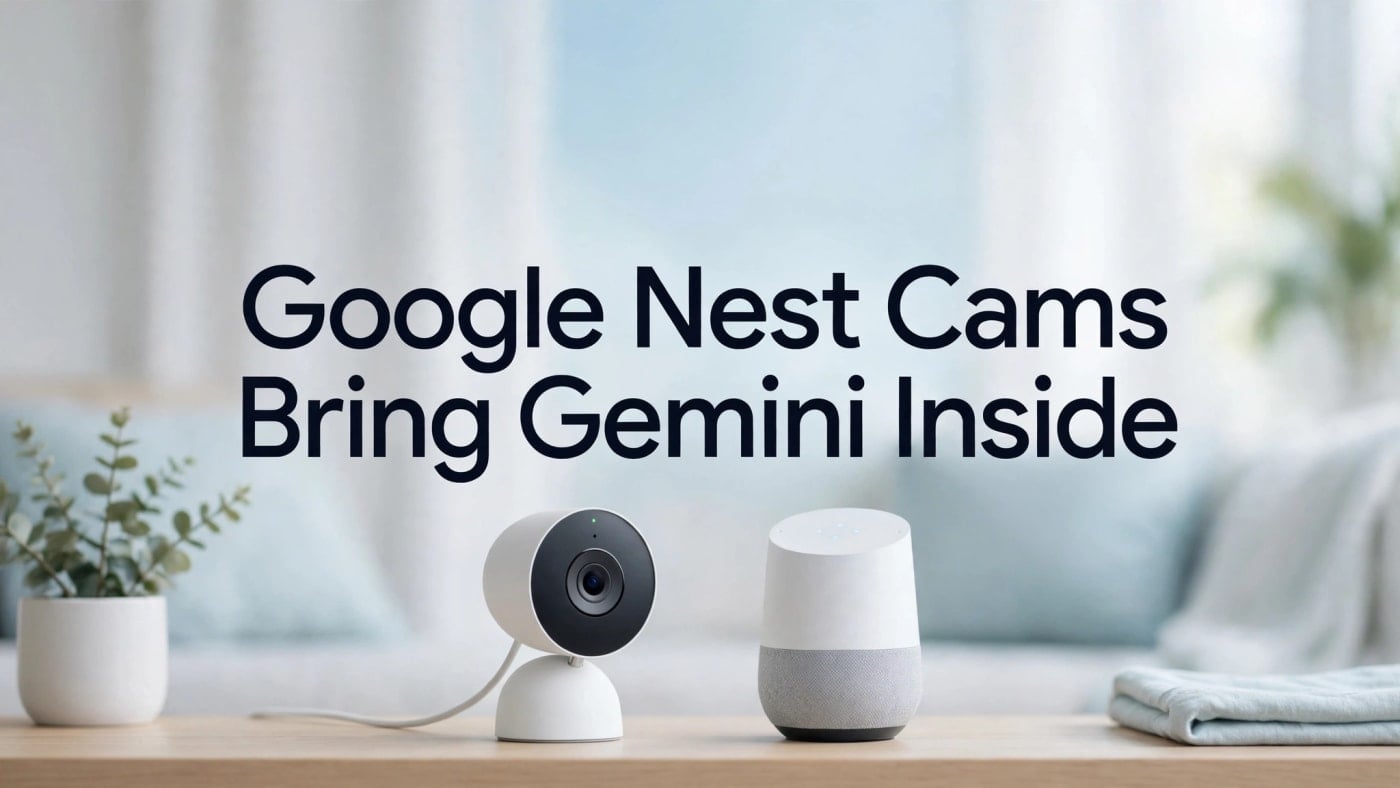
Google Brings Gemini Into the Home
Google has introduced a fresh line-up of smart home devices powered by its Gemini for Home assistant. The company wants its most capable artificial intelligence to live not only on phones and laptops, but in the hallway, by the front door and on the kitchen shelf. According to Gadgets 360, which reported the announcement on 5 November 2026, the new range includes the Nest Cam Indoor (3rd gen), the Nest Cam Outdoor (2nd gen), the Nest Doorbell (3rd gen) and a new Google Home Speaker.
A camera that can tell the difference between a delivery driver and a stranger lingering at the gate is genuinely useful. A speaker that follows a rambling, half-finished question without demanding that you start again is the kind of small improvement that changes how often you actually talk to it. The timing matters too. Most households that want a camera or a speaker already own one, so the next reason to upgrade is a device that does the job noticeably better. Google is betting that Gemini is that reason.
What Google Actually Announced
The announcement covers four devices. The Nest Cam Indoor (3rd gen) is the camera for living rooms, hallways and nurseries. The Nest Cam Outdoor (2nd gen) is built for gardens, driveways and front porches. The Nest Doorbell (3rd gen) watches the front door, where so much of daily life passes through. And the new Google Home Speaker is the voice of the whole system, the device you talk to when you want something done without reaching for your phone.
According to the report from Gadgets 360, the cameras and the doorbell come with 2K HDR video, built-in intelligent alerts and up to a 166-degree diagonal view. The speaker is built for more natural conversations, powered by Gemini, with 360-degree audio and Google TV Streamer pairing. It should sound good from anywhere in the room, hold a conversation that feels less robotic, and connect neatly with your television setup.
The Four Devices at a Glance
| Device | What it is | Known features |
|---|---|---|
| Nest Cam Indoor (3rd gen) | Indoor security camera | 2K HDR video, intelligent alerts, up to 166-degree diagonal view |
| Nest Cam Outdoor (2nd gen) | Outdoor security camera | 2K HDR video, intelligent alerts, up to 166-degree diagonal view |
| Nest Doorbell (3rd gen) | Video doorbell | 2K HDR video, intelligent alerts, up to 166-degree diagonal view |
| Google Home Speaker | Smart speaker | Gemini-powered natural conversations, 360-degree audio, Google TV Streamer pairing |
Why 2K HDR Video Matters More Than It Sounds
It is easy to shrug at a resolution bump. Most of us watch camera footage on a phone screen, and the difference between one sharp image and a slightly sharper one can feel academic. But for a security camera, resolution is not about beauty. It is about usefulness in the one moment when it matters most.
The practical payoff shows up in small things. A parcel left on the step is easier to identify, a visitor's face is clearer, and a car pulling into the drive is easier to make out. There is also a quieter benefit. When video is clear enough to trust at a glance, you check it less obsessively. You open the app, see what you need to see, and move on. Google's decision to put 2K HDR across the cameras and the doorbell suggests the company sees image quality as a baseline now, not a luxury.
Intelligent Alerts and the End of Notification Fatigue
If you have ever owned a smart camera, you will know the problem. The first week feels magical: every movement brings a helpful ping. By the third week, the magic has worn off. The camera flags a passing cat, a swaying branch and a change in the light, and your phone buzzes so often that you stop looking altogether. That is the worst possible outcome for a security device, because the one alert that matters gets buried under dozens that do not.
Earlier generations of smart cameras could already distinguish people from pets and packages from vehicles, at least some of the time. Gemini raises the ambition considerably, because it can reason about context rather than just matching shapes. It can consider where someone is standing, how long they have been there, and whether their behaviour looks ordinary or unusual. Of course, no system gets this right every time. But if Gemini can cut the noise without cutting the signal, it will have solved one of the smart home's most persistent frustrations.
A 166-Degree View Changes Where You Put a Camera
The headline figure of up to a 166-degree diagonal view deserves a moment of its own, because it changes the practical maths of covering a home. A wider view means one camera can watch a whole room instead of a corner of it, or a full driveway instead of half of one. For many households, that could mean fewer cameras doing a better job, which is cheaper, tidier and easier to manage.
There is a trade-off worth noting. Very wide lenses can distort the edges of an image, stretching faces and bending straight lines. Good software correction can manage this, but it is something to watch for in real-world testing. Placement becomes more forgiving too. A wider view gives you more room to get the position slightly wrong and still get a usable picture, which is the kind of practical kindness that decides whether a device gets installed properly or ends up gathering dust in a drawer.
The Google Home Speaker Learns to Converse
Of the four devices, the Google Home Speaker may be the most interesting, because it is the one that has to change its behaviour the most. Smart speakers have been with us for a decade, and for most of that time they have been impressive in narrow bursts and frustrating the moment a conversation got complicated. Ask for the weather and you get a crisp answer. Ask a follow-up question, change your mind halfway through, or use a vague phrase like "that thing I mentioned earlier", and the illusion breaks.
The speaker's 360-degree audio supports that ambition in a practical way. A speaker that sounds the same from every direction can sit in the middle of a room rather than against a wall, and everyone in the room gets a fair hearing. It also works better as a music device, filling a space evenly instead of blasting sound in one direction. Then there is the Google TV Streamer pairing. A speaker that pairs with your television setup can become the voice control for what you watch, or simply the easiest way to find something without scrolling through endless menus.
Gemini for Home: One Assistant Across Every Room
Step back from the individual devices and the bigger picture comes into focus. Gemini for Home is Google's attempt to give the smart home a single, coherent intelligence. Instead of each device running its own narrow set of tricks, they all draw on the same assistant, which means they can share understanding of what is happening in your home.
There is also a question of trust. An assistant that watches your cameras and listens to your conversations needs to earn its place in a way that a phone assistant never had to. Google will need to be clear about what is processed on the device, what leaves the home, and how long recordings are kept. The technology may be ready. The conversation about trust is only just beginning.
What We Still Do Not Know
Pricing and availability have not yet been announced. That gap is worth stating plainly, because smart home launches often generate a fog of speculation within hours. Unverified prices and dates circulate quickly, and they have a habit of being quoted as fact long after they have been disproved. Until Google confirms the details itself, the honest position is that we know what these devices do, but not yet what they will cost or exactly when they will reach shops.
Other details are similarly unconfirmed. The announcement, as reported, does not list colour options, exact dimensions, battery arrangements for the outdoor devices, or the full list of supported smart home standards. For now, the sensible approach is to judge the launch on what has actually been confirmed: four devices, a shared Gemini assistant, sharper video, smarter alerts, a wider view and a more conversational speaker.
Who Should Pay Attention
Not everyone needs a new camera or speaker, and it would be dishonest to pretend otherwise. If your current setup works well and you rarely think about it, there is no urgency here. The new Nest devices are most relevant to a few specific groups, and it is worth being honest about who they are.
Another group is anyone setting up a smart home for the first time. Starting fresh removes the awkward question of whether to replace something that still works, and the new range gives a first-time buyer a coherent set of devices designed to work together from day one. And then there are the sceptics, who are worth listening to as well. Some worry about cameras in the home, or about how much data a more capable assistant might collect. Those concerns are legitimate, and they will be settled by how the devices behave over months of use, not by a launch announcement.
What to Watch Next
Pricing and availability will be the next concrete facts to land, and they will shape how this launch is judged. A fairly priced range that works well together could bring Gemini into millions of homes. A premium price tag would narrow the audience to enthusiasts and early adopters, at least at first. Until Google confirms those details, any judgement about value is premature.
There is also the question of how quickly Gemini for Home improves after launch. AI assistants are not finished products; they are updated, refined and occasionally overhauled. The devices announced on 5 November 2026 will be judged not only on what they do today, but on how much better they get over the next year. For now, the facts are these. Google has introduced the Nest Cam Indoor (3rd gen), the Nest Cam Outdoor (2nd gen), the Nest Doorbell (3rd gen) and a new Google Home Speaker, all powered by Gemini for Home. Prices and release dates have not yet been announced. That is the shape of the launch, reported by Gadgets 360 on 5 November 2026 — and it is enough to make the smart home interesting again.
FAQs
What new smart home devices has Google launched?
Google has introduced the Nest Cam Indoor (3rd gen), the Nest Cam Outdoor (2nd gen), the Nest Doorbell (3rd gen) and a new Google Home Speaker. All four are powered by Gemini for Home, Google's AI assistant for the home, according to Gadgets 360, which reported the launch on 5 November 2026.
What video quality do the new Nest Cams and Doorbell offer?
The cameras and the doorbell come with 2K HDR video. The higher resolution and HDR processing are designed to keep detail visible in both bright and dark parts of a scene, such as a sunlit doorway with a dim hallway behind it, so faces and parcels are easier to identify.
What are intelligent alerts on the new Nest devices?
Intelligent alerts are notifications powered by Gemini for Home that aim to tell you only about events worth your attention, such as a person at the door, rather than every passing shadow or swaying branch. The goal is to reduce notification fatigue so the alert that matters does not get buried under dozens that do not.
How wide is the view on the new Nest cameras and doorbell?
The cameras and the doorbell offer up to a 166-degree diagonal view. That wide field of view lets a single camera cover more of a room, driveway or porch, so it can see both a visitor's face and a parcel left on the ground at the same time.
What makes the new Google Home Speaker different?
The speaker is built for more natural conversations powered by Gemini, so it should handle follow-up questions, pauses and half-finished sentences better than older smart speakers. It also offers 360-degree audio for even sound around a room and pairing with the Google TV Streamer.
How much will the new devices cost and when will they be available?
Pricing and release dates have not yet been announced, and the Gadgets 360 report from 5 November 2026 does not state them. Until Google confirms the details itself, any prices or dates circulating online should be treated as unconfirmed speculation rather than fact.
Do I need the whole range, or can I buy just one device?
You can start with a single device, since each one works on its own, but they are designed to work together through Gemini for Home. A sensible starting point is a doorbell or an indoor camera plus the speaker, adding an outdoor camera later once you know where the blind spots in your coverage are.
Was this article helpful?

Written By
TechorCoffeeContributing Writer
TechorCoffee is a technology reporter and software creator writing reviews and tutorials for TechOrCoffee.
Comments (0)
Leave a Comment
Read Next

Thu Mar 12 2026
Leaks & Rumors: MacBook Air M4 vs MacBook Neo: Full Comparison
MacBook Air M4 and MacBook Neo target different users in Apple’s lineup. Neo focuses on affordability and everyday tasks, while Air M4 delivers stronger performance, better graphics, and higher memory options for demanding workloads like coding, editing, and multitasking.

Tue Mar 03 2026
MacBook Air M5: Apple's Game-Changing 2026 Launch Review
Apple unveils the MacBook Air M5 with revolutionary 3nm chip technology, enhanced AI capabilities, improved battery life, and stunning display upgrades. This comprehensive analysis covers specifications, performance benchmarks, pricing, and this new release justifies upgrading from previous models.

Thu Mar 12 2026
Leaks & Rumors: MacBook Neo vs MacBook Air M1: Full Performance Comparison
MacBook Neo powered by the A18 Pro chip introduces a new direction for Apple laptops, competing directly with the classic MacBook Air M1. This detailed comparison explores performance benchmarks, display quality, and battery life to help buyers decide which Apple laptop delivers the best value.