iPhone 17 in 2026: Still the Best Value iPhone?

Published
The base iPhone stopped feeling like a compromise
The iPhone 17 is a substantial upgrade over the iPhone 16, even though the overall design remains familiar, according to Memeburn's 2026 review, which spent weeks with the standard iPhone 17 in daily use, camera comparisons, and battery drain tests. The biggest changes are easy to feel: ProMotion finally brings a 120Hz refresh rate to the standard model, storage starts at 256GB, the A19 chip delivers excellent CPU performance, and both rear cameras now use 48MP sensors.
That last point is the key to why the iPhone 17 matters in 2026. For years, the base iPhone was the compromise iPhone: 60Hz display, 128GB storage, a lesser ultra-wide camera, and a chip one step behind the Pro. The iPhone 17 removes most of those compromises, without raising the original US starting price — at launch. Then, in September 2026, Apple raised it by $100, to $899, the same day it discontinued the Pro models entirely, according to Memeburn. That price rise changes the value calculation, but it doesn't change the phone's core strengths.
This review, synthesised from published reviews and spec listings rather than personal hands-on testing, covers what the iPhone 17 actually offers in late 2026, what it still lacks, and whether it's still the best value iPhone — or whether a discounted Pro, or a cheaper model, makes more sense now.
Design, display, and the 120Hz upgrade
The iPhone 17 was announced on 9 September 2025, during an Apple event in the Steve Jobs Theater, and released on 19 September 2025. It's the only model in the lineup to retain Apple's familiar modern design language, according to PhoneArena, standing apart from the Pro, Pro Max, and razor-thin Air models, which all received more radical overhauls. Colours are Black, White, Mist Blue, Sage, and Lavender.
The display is a 6.3-inch Super Retina XDR OLED, with ProMotion up to 120Hz, Always-On, and up to 3,000 nits peak outdoors. That's a major upgrade over the iPhone 16's 6.1-inch 60Hz panel: larger, smoother, brighter, and always-on. For scrolling and gaming, 120Hz is the single most noticeable upgrade in the iPhone 17.
Thinner bezels make the 6.3-inch screen feel less bulky than its size suggests, and the OLED panel gives deep blacks and strong HDR for video. It's the middle size that suits most hands, without the bulk of a Pro Max or an Ultra Android phone.
A19 chip, iOS 27, and Apple Intelligence
Under the hood sits the A19 chip, with a 6-core CPU (2 performance and 4 efficiency cores), a 5-core GPU with Neural Accelerators, and a 16-core Neural Engine, with hardware-accelerated ray tracing, according to Esquire India. RAM is 8GB, storage is 256GB or 512GB — Apple eliminated the 128GB starting tier entirely, replacing it with 256GB, all without raising the launch price, according to PhoneArena.
Performance, in published reviews, is excellent for daily use, gaming, and Apple Intelligence tasks. The A19 is not the fastest chip Apple makes — the A19 Pro in the Pro models is faster, especially for sustained gaming and ray tracing — but for most users, the difference is invisible. The iPhone 17 supports Apple Intelligence and the new Siri AI, so on the software side, it's up to speed with the newest iPhones, according to PhoneArena.
Software is iOS 27, which arrived free on 14 September 2026 and runs on iPhone 11 and later. It brings new Siri AI, a dedicated Siri app, AI wallpapers, custom AirPods EQ, and automatic Safari tab grouping. An iPhone 17 bought in late 2026 runs the same iOS 27 as newer models, and should receive updates for years.
One caveat from Beebom's review: since there is no vapour chamber here, the phone does heat up after gaming for a while, on long video calls, or even when you leave the hotspot turned on. That's a thermal limitation of the base model versus the Pro, which has better cooling. For short gaming sessions and normal use, it's not an issue. For long, sustained gaming, or for using the phone as a hotspot for hours, expect warmth, and possibly throttling, where a Pro would stay cooler.
Cameras: dual 48MP, and what you still miss
The camera system is the iPhone 17's other major upgrade. The 48MP Dual Fusion system includes:
- Main: 48MP Fusion, 26mm, with a 12MP optical-quality 2x telephoto at 52mm (via sensor crop).
- Ultra Wide: 48MP Fusion, 13mm, with macro capability.
- Front: 18MP Center Stage, with autofocus, for video calls and group selfies, shooting in both landscape and portrait.
Both rear cameras now use 48MP sensors, according to Memeburn, up from a 12MP ultra-wide on the iPhone 16. That means ultra-wide shots are sharper, with more detail, and macro shots are better, because the ultra-wide sensor is no longer the weak link. The 2x telephoto, via the main sensor's crop, gives you three usable focal lengths — 13mm, 26mm, and 52mm — without a dedicated telephoto lens, according to MacObserver, which called the iPhone 17 a first-iPhone pick partly for that reason.
Video can be shot in 4K Dolby Vision, with good stabilisation, and the front camera's Center Stage keeps you in frame on video calls, even as you move. For most users — family photos, travel, social media, video calls — the iPhone 17's cameras are excellent, and the difference versus a Pro is mainly in telephoto reach and in low-light detail, not in everyday shots.
What you still miss, versus a Pro, is a dedicated telephoto camera, and faster USB data speeds. The biggest omissions are a dedicated telephoto camera and faster USB data speeds, according to Memeburn, and the USB-C port remains limited to USB 2 speeds, according to the same review. That means transferring large 4K video files to a computer is slower than on a Pro, which has USB 3 speeds. For most users, who transfer via AirDrop or iCloud, that's not a daily issue — but for videographers who move gigabytes regularly, it's a real limitation.
Battery and charging: 30 hours, 40W wired
Battery is where you stop hunting for sockets, as Esquire India put it. Apple promises up to 30 hours of video playback, or up to 27 hours when streaming, according to that summary, versus 22 hours for the iPhone 16 — up to eight more hours, according to Pandromeda's comparison. Battery capacity is listed as about 3,692mAh in one spec listing, and about 3,600mAh in another — the difference reflects measurement, not a different battery, and the rated hours are the more useful figure.
In published reviews, battery life is reliable, with long battery life listed as a strength. For most users, that's a full day with charge to spare, and often into a second day with light use, though exact life varies with use and signal.
Charging is faster than before: a 40W adapter or higher (sold separately) takes you to 50% in 20 minutes, according to Esquire India, with USB-C, MagSafe, and Qi2 charging, according to Memeburn. PhoneArena also noted faster 40W wired charging as a 2026 strength. In the box, you get the phone and a 1-metre USB-C cable — no power adapter, according to MacObserver — so factor in a 40W adapter if you don't already own one, to get the fastest charging speeds.
Price in late 2026: $799 launch, $899 now
Price is where the iPhone 17 story gets complicated in late 2026, and where you need to check current listings.
Launch price, September 2025, was $799 for 256GB in the US. On 9 September 2026, Apple raised the starting price from $799 to $899, according to Memeburn, the same day it discontinued the Pro models entirely. On Apple's own store, the base iPhone 17 (256GB) is now listed at $929 unlocked, or $899 with a carrier's $30 connectivity discount, according to Pandromeda's October 2026 comparison, with 512GB at $1,129 unlocked, or $1,099 with the discount. MacObserver's September 2026 guide also lists the pick as $899, with the note that $899 includes a $30 connectivity discount, and 256GB unlocked is recorded at $929.
In India, launch price was ₹82,900, with current listings varying: Esquire India lists ₹99,900 as the starting price in its October 2026 coverage, while Beebom lists ₹86,999 in a comparison table, and SarkariKBS lists ₹82,900 as the launch price. Prices vary by seller and by time, so check current Apple and retailer listings in your region before you buy — the $100 US rise in September 2026, and the $30 connectivity discount, mean the "starting price" you see depends on whether you're buying unlocked or with a carrier plan.
For comparison, the iPhone 16, now sold only in 128GB, sits at $829 unlocked, or $799 with the same discount — roughly $100 less, for half the storage, a smaller 60Hz display, an older A18 chip, a 12MP ultra-wide, and 22-hour battery versus 30 hours. On that comparison, the iPhone 17 is the better buy for almost everyone who can stretch to it.
Cheaper options exist: the iPhone 17e at $699 is the least Apple charges for a new iPhone, starting at 256GB, with no carrier discount needed. Check its detailed specs on Apple's page before committing. For most buyers, the iPhone 17's 120Hz display, dual 48MP cameras, and A19 chip justify the $200 gap over the 17e, if you can afford it.
Who should buy it, and who shouldn't
Buy the iPhone 17 if:
- You want the best all-around value in Apple's current non-Pro lineup: a larger, faster 120Hz display, double the starting storage, a materially better dual camera setup, a notably longer-lasting battery, and a newer A19 chip to keep pace with future iOS and Apple Intelligence features for longer, as Pandromeda put it.
- You're buying your first iPhone, or upgrading from an iPhone 14 or older, and you want a phone that will last five years or more, with iOS 27 and future updates.
- You want a complete base iPhone, without the compromises that used to define the standard model — 120Hz, 256GB, dual 48MP cameras, and 30-hour battery, in one phone.
Don't buy it if:
- You need a dedicated telephoto camera, or USB 3 transfer speeds for large video files. A Pro model, or a discounted older Pro, will serve you better for those specific needs.
- You're a heavy gamer who plays for hours at maximum settings, and you need vapour-chamber cooling. The iPhone 17 heats up under sustained gaming, according to Beebom, where a Pro stays cooler.
- You're on a tight budget, and the iPhone 17e at $699, or a discounted iPhone 16 at $799 with carrier discount, covers your needs. The iPhone 17 is better, but not $100 to $200 better for every buyer.
At $899, the iPhone 17 remains a strong buy in 2026, according to Memeburn, although the arrival of newer iPhone models changes the value calculation. At $799 launch price, it was an easy recommendation. At $899, it's still the best value iPhone for most buyers — just check whether a discounted Pro, or a cheaper 17e, fits your budget and your priorities better, before you pay the new price.
The iPhone 17 is, as PhoneArena put it, absolutely still a great phone in 2026, with ProMotion, faster charging, an improved ultra-wide camera, doubled starting storage, and Apple Intelligence and new Siri AI keeping it up to speed with the newest iPhones on the software side. That's the definition of a good base iPhone: not the cheapest, not the most powerful, but the one that gets the important things right, for the most people, for the longest time.
FAQs
When was the iPhone 17 released?
Apple announced the iPhone 17 on 9 September 2025, and it went on sale on 19 September 2025, with a 6.3-inch display, A19 chip, and dual 48MP cameras.
How much does the iPhone 17 cost in 2026?
Launch price was $799 for 256GB. On 9 September 2026, Apple raised it to $899 with a carrier discount, or $929 unlocked. Check current listings, as prices vary by region and seller.
Does the iPhone 17 have a 120Hz display?
Yes, the iPhone 17 has a 6.3-inch Super Retina XDR OLED with ProMotion up to 120Hz, Always-On display, and up to 3,000 nits peak brightness outdoors.
What cameras does the iPhone 17 have?
A 48MP Fusion main camera with 12MP 2x telephoto via crop, a 48MP Fusion Ultra Wide, and an 18MP Center Stage front camera. There is no dedicated telephoto lens.
How long does the iPhone 17 battery last?
Apple rates it for up to 30 hours of video playback, or 27 hours streamed, versus 22 hours for the iPhone 16. A 40W adapter takes it to 50% in 20 minutes.
Does the iPhone 17 support Apple Intelligence and new Siri AI?
Yes, the iPhone 17 supports Apple Intelligence and the new Siri AI in iOS 27, so it is up to speed with newer iPhones on the software side.
Is the iPhone 17 worth buying in 2026?
Yes, for most buyers, it remains a strong buy at $899, with 120Hz, 256GB, dual 48MP cameras, and 30-hour battery. Check discounted Pro models and the cheaper iPhone 17e before you commit.
Was this article helpful?

Written By
TechorCoffeeContributing Writer
TechorCoffee is a technology reporter and software creator writing reviews and tutorials for TechOrCoffee.
Comments (0)
Leave a Comment
Read Next
Thu Apr 09 2026
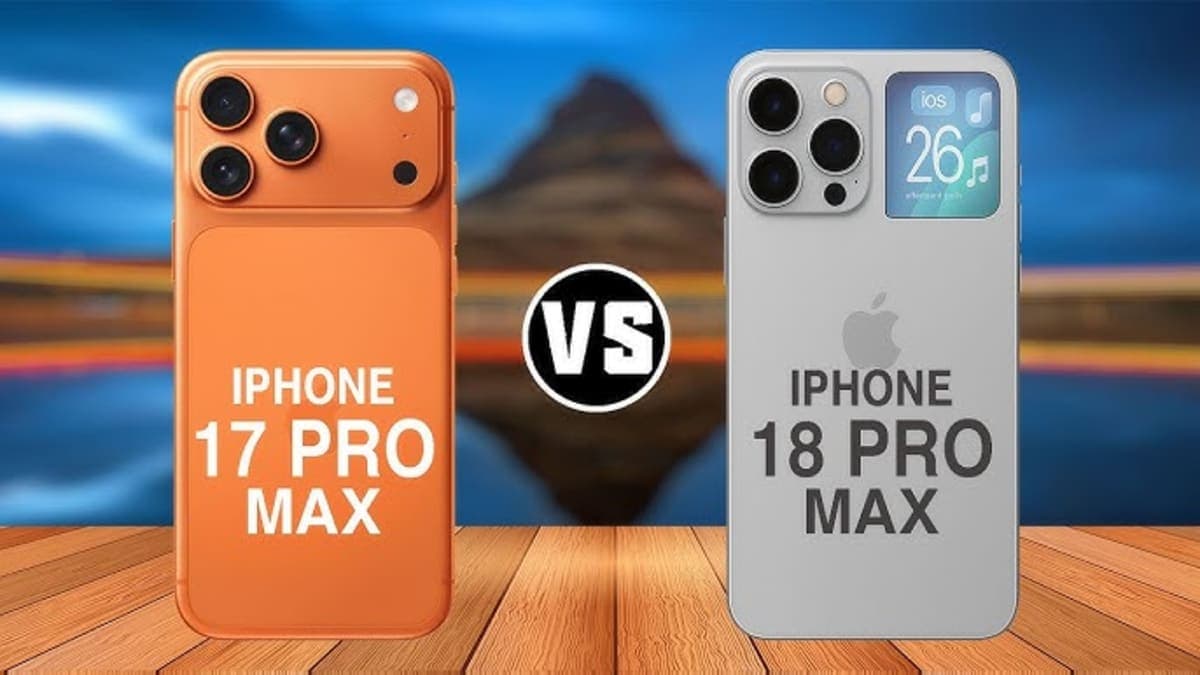
Leaks & Rumors: iPhone 18 Pro Max vs iPhone 17 Pro Max: Full Comparison
The iPhone 17 Pro Max is already a fully matured flagship—top camera, insane battery life, and stable performance. The iPhone 18 Pro Max is expected to refine the experience further, not revolutionize it.
Tue Jun 16 2026
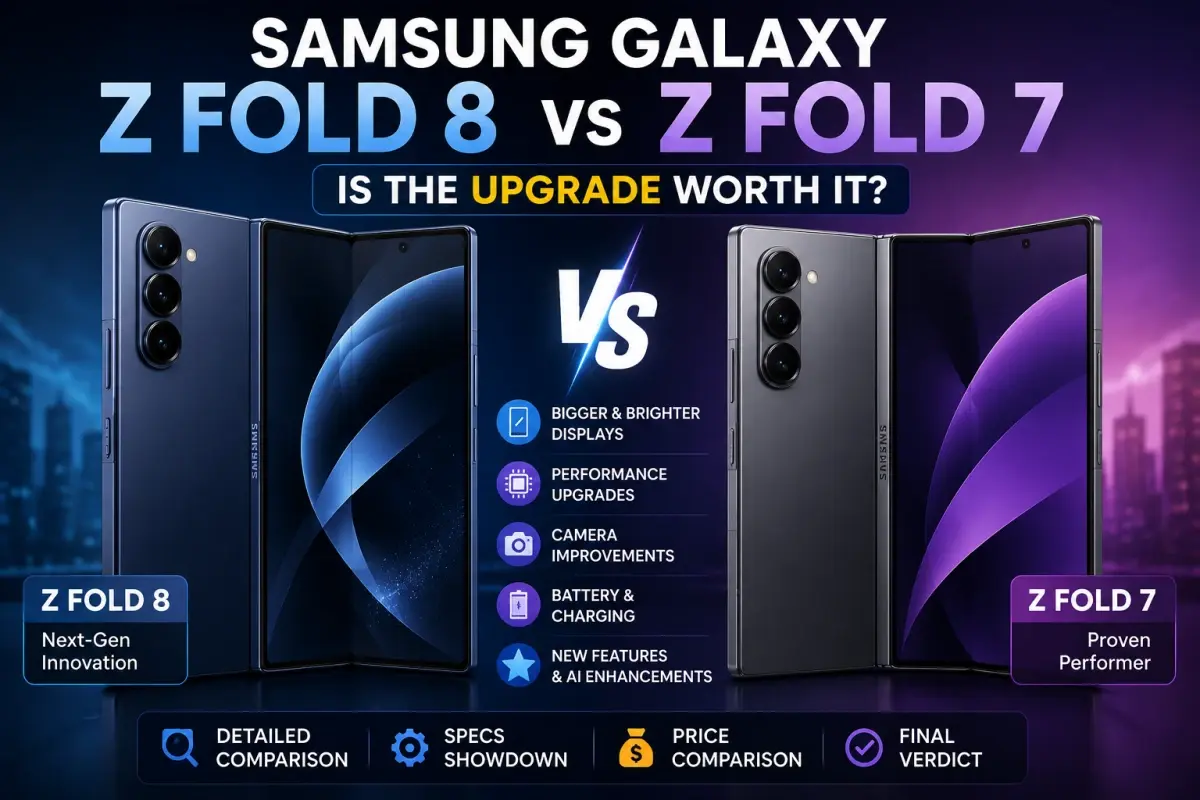
Samsung Galaxy Z Fold 8 vs Galaxy Z Fold 7:Worth to Upgrade?
Samsung Galaxy Z Fold 8 vs Galaxy Z Fold 7: Is it worth the upgrade? Compare specs, battery upgrades, 45W charging, and camera leaks before you buy.
Wed Apr 08 2026
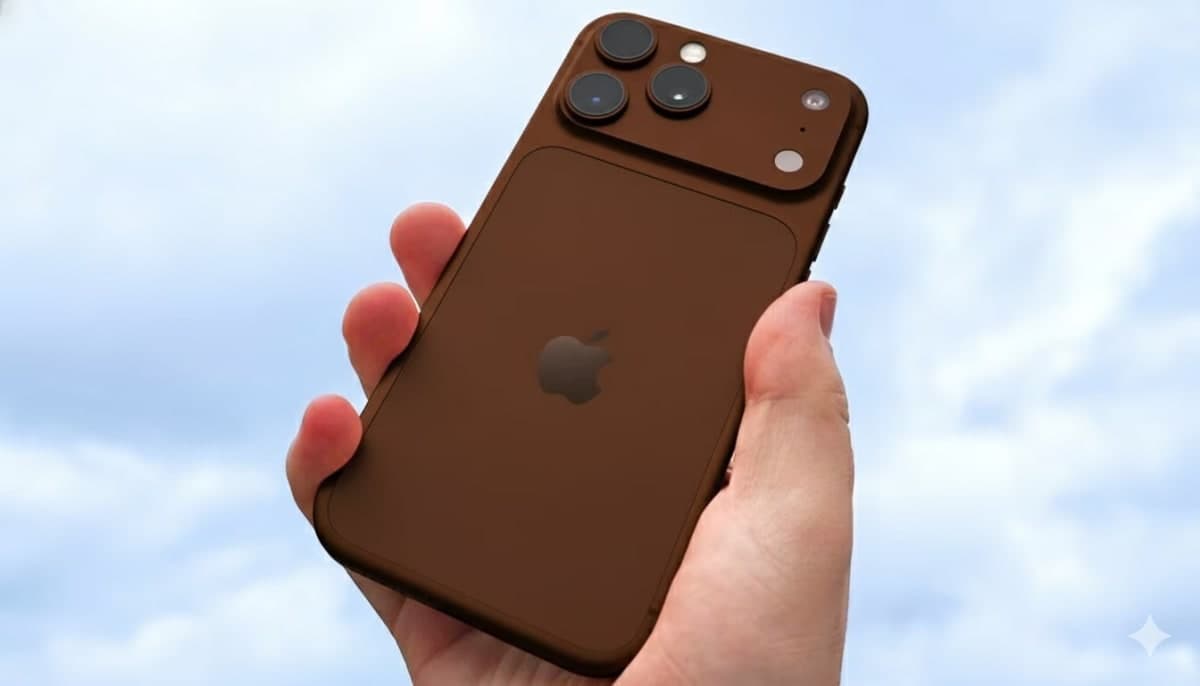
Leaks & Rumors: iPhone 18 Pro Max: Every Leak, Spec and Upgrade Confirmed
The iPhone 18 Pro Max is expected in September 2026 as Apple’s most powerful iPhone yet. It features a 6.9-inch LTPO OLED display, A20 Pro chip, 48MP camera with variable aperture, 5,100–5,200mAh battery, C2 modem with satellite support, and a starting price of $1,199.