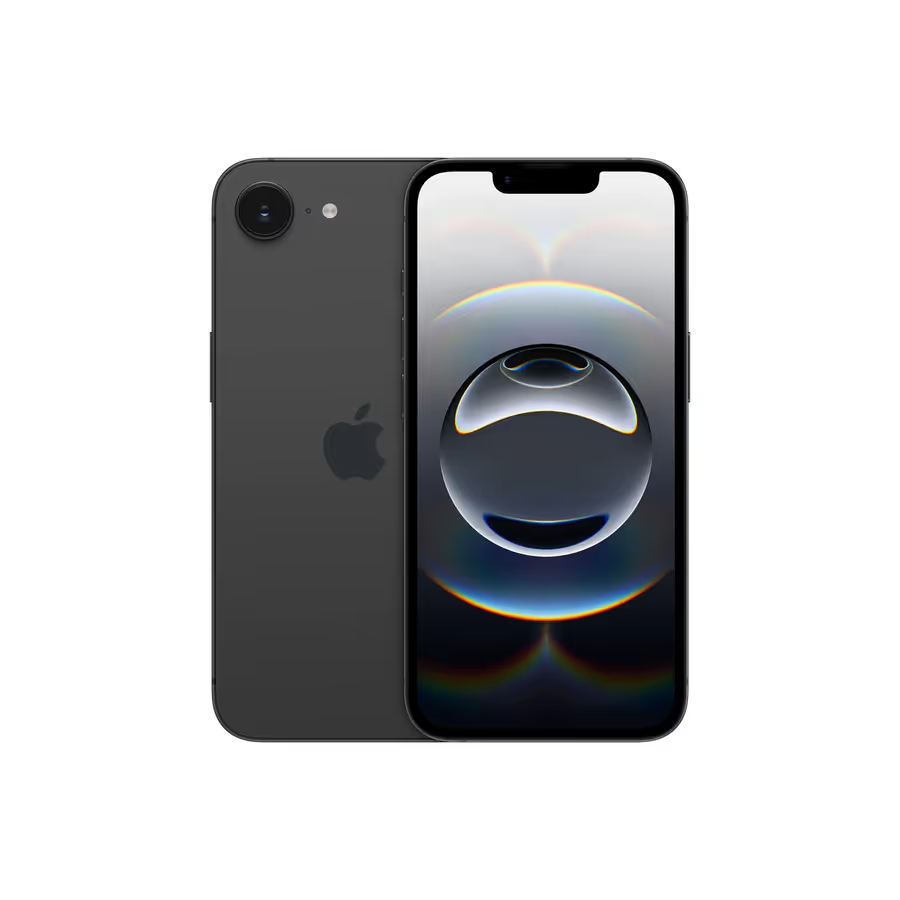
iPhone 17e: Apple's Most Affordable Flagship Phone 2026
Software Developer
⏱ 26 min read
Published on March 3, 2026Updated on March 21, 2026

iPhone 17e: The Budget Flagship That Changes Everything

Apple Rewrites Budget Smartphone Rules
Apple has officially unveiled the iPhone 17e, marking a significant shift in the company's approach to affordable smartphones. This device represents Apple's most aggressive pricing strategy in years, bringing flagship features to a $599 starting price point. The "e" designation signals "essential" or "everyone," emphasizing Apple's intention to make premium iPhone experiences accessible to broader audiences worldwide who previously found flagship models financially out of reach.
The iPhone 17e emerges at a crucial moment when smartphone markets face saturation and consumers increasingly resist ultra-premium pricing. Apple recognizes that capturing growth requires expanding addressable markets beyond traditional flagship buyers. This device targets budget-conscious consumers, first-time iPhone buyers, emerging markets, and users seeking compelling value without compromising essential features that define modern smartphone experiences.
This comprehensive review examines every aspect of the iPhone 17e experience. We'll explore the powerful A18 chip performance, impressive camera capabilities despite single-lens setup, design choices that balance cost and quality, real-world battery testing, software advantages, and pricing considerations. Whether you're considering your first iPhone or seeking maximum value from Apple's ecosystem, this guide provides the insights needed for informed purchasing decisions.
Design Philosophy: Premium Feel, Accessible Price

The iPhone 17e features an aluminum frame paired with a glass front and polycarbonate back, creating a design that feels premium while controlling manufacturing costs. The polycarbonate rear panel enables wireless charging functionality while reducing material expenses compared to glass-backed models. Apple's engineering ensures the material doesn't feel cheap—the matte finish resists fingerprints well and provides secure grip during one-handed operation and daily use scenarios.
The device measures 147.6mm x 71.6mm x 7.8mm, maintaining comfortable ergonomics for extended use without excessive bulk or weight. At 168 grams, it feels substantial without being heavy, striking an ideal balance for daily pocket portability. The rounded edges transition smoothly into the aluminum frame, creating comfortable hand feel during prolonged use. The overall design language clearly identifies it as an iPhone while distinguishing it from premium Pro models through material choices.
Color options include five vibrant choices: Midnight, Starlight, Product Red, Blue, and a new Forest Green. Each color features uniform finish across aluminum frame and polycarbonate back, creating cohesive appearance. The Product Red variant supports Apple's partnership with Global Fund fighting AIDS, allowing buyers to contribute to important causes through their purchase. The color variety ensures personalization options appealing to diverse aesthetic preferences across age groups and style sensibilities.
The 6.1-inch display features slim bezels creating modern appearance with minimal borders surrounding the screen. The notch houses Face ID components and front camera, maintaining the security and convenience of facial recognition authentication. While some competitors have moved to hole-punch or under-display camera implementations, Apple maintains the notch for reliable Face ID performance that unlocks instantly even in challenging lighting conditions or when wearing accessories like hats or glasses.
Build quality meets Apple's exacting standards despite budget positioning. The device feels solid without creaks or flex when pressure is applied to the chassis. Button placement follows iPhone conventions with power button on right edge and volume controls on left. The Lightning port transition to USB-C finally arrives in this generation, providing universal charging compatibility with modern accessories and enabling faster data transfer speeds for photographers and content creators managing large file libraries.
A18 Chip: Flagship Performance for All
The heart of the iPhone 17e is Apple's A18 chip—the same processor powering the flagship iPhone 17 models. This represents a significant departure from Apple's previous strategy of using year-old chips in budget models. The A18 features a 6-core CPU with 2 performance cores and 4 efficiency cores, delivering exceptional performance for demanding applications while optimizing battery life during routine tasks like messaging, browsing, and social media consumption.
The 5-core GPU provides graphics performance suitable for mobile gaming, photo editing, and video playback with HDR content. Popular games like Genshin Impact, Call of Duty Mobile, and Asphalt 9 run smoothly at high graphics settings with stable frame rates. The GPU also accelerates computational photography, enabling advanced camera features like Smart HDR, Night mode, and Portrait mode despite the single rear camera. This graphics capability future-proofs the device for upcoming games and applications.
The 16-core Neural Engine processes up to 17 trillion operations per second, enabling advanced machine learning features throughout iOS. This AI processing power enhances Face ID recognition, improves Siri responsiveness, enables real-time photo analysis for better image organization, and powers computational photography features that extract maximum quality from the camera hardware. The on-device processing ensures privacy while delivering instantaneous results without requiring cloud connectivity.
Benchmark testing reveals impressive performance numbers. Geekbench 6 scores reach approximately 2,800 in single-core and 7,200 in multi-core testing—matching or exceeding flagship Android competitors costing significantly more. AnTuTu scores exceed 1,000,000 points, placing the iPhone 17e among the fastest smartphones available regardless of price. These synthetic benchmarks translate to real-world snappiness—apps launch instantly, multitasking between applications feels seamless, and intensive tasks complete quickly without frustrating delays.
The A18 chip includes dedicated image signal processor accelerating camera operations. This specialized hardware enables advanced computational photography that compensates for the single camera lens through intelligent processing. Features like Deep Fusion combine multiple exposures for enhanced detail and reduced noise. Photographic Styles allow users to customize color rendering preferences while maintaining natural skin tones. Smart HDR 5 balances highlights and shadows in challenging high-contrast scenes automatically.
Memory configuration starts at 6GB RAM—adequate for iOS's efficient memory management but slightly less than flagship models' 8GB. For most users, 6GB provides smooth performance without app reloading during multitasking. Storage options include 128GB and 256GB, with the base 128GB model sufficient for users who utilize iCloud Photo Library and streaming services. The 256GB option suits users maintaining large local media libraries or shooting extensive video content.
Camera System: Computational Photography Excellence
The iPhone 17e features a single 48MP rear camera with f/1.6 aperture, representing a significant upgrade from previous budget iPhone models' 12MP sensors. The larger sensor captures more light, improving low-light performance substantially. Pixel-binning technology combines four pixels into one, producing 12MP images with enhanced dynamic range and reduced noise while retaining the option to capture full 48MP resolution when maximum detail is required for cropping or large prints.
Computational photography leverages the A18 chip's processing power to overcome single-lens limitations. The camera app offers Portrait mode with depth control, enabling professional-looking background blur effects without dedicated depth sensor. The Neural Engine analyzes scenes to distinguish subjects from backgrounds accurately, creating convincing bokeh effects even with complex edges like hair or glasses. Multiple lighting effects simulate studio lighting setups, adding versatility to portrait photography.
Night mode activates automatically in low-light conditions, combining multiple exposures to create bright, detailed images that were impossible on smartphones just years ago. The camera holds multiple frames shot at varying exposures, aligns them precisely to compensate for hand movement, and merges the results into a single image with impressive shadow detail, controlled highlights, and minimal noise. Night mode works on both rear and front cameras, enabling quality selfies even in dim restaurant or evening environments.
Video recording capabilities include 4K resolution at up to 60fps with cinematic stabilization reducing shake and jitter. The Cinematic mode introduced in previous iPhone generations brings rack focus effects to video, automatically shifting focus between subjects for professional-looking results. Video quality rivals dedicated cameras from just years ago, making the iPhone 17e legitimate tool for content creators, vloggers, and filmmakers working on budgets. Audio recording includes stereo sound capture with wind noise reduction.
The 12MP front-facing camera with f/2.2 aperture delivers excellent selfie quality with Portrait mode, Night mode, and Smart HDR. The TrueDepth camera system enables Face ID facial recognition that unlocks the phone instantly with a glance. Face ID works in complete darkness using infrared sensors and proves more secure than fingerprint authentication. The front camera supports 4K video recording at 60fps, ideal for video calls, selfies, and front-facing video content creation.
Photographic Styles represent Apple's approach to computational photography customization. Users select preferred color and tone rendering that the camera applies intelligently while maintaining natural skin tones. Unlike simple filters applied after capture, Photographic Styles analyze scenes in real-time, applying adjustments appropriately to different elements. This feature allows personalization without sacrificing the natural rendering that makes iPhone photos distinctive and appealing across diverse shooting scenarios.
Display Technology: Visual Quality
The 6.1-inch Super Retina XDR OLED display delivers exceptional image quality with deep blacks, vibrant colors, and impressive contrast ratios. The 2532 x 1170 pixel resolution provides 460 pixels per inch—delivering sharp text and detailed images that appear crisp even when viewed closely. The OLED technology enables perfect blacks by completely turning off individual pixels, creating stunning contrast particularly noticeable when viewing HDR content in dark environments.
Peak brightness reaches 800 nits for typical content and 1200 nits when displaying HDR material. This brightness ensures excellent outdoor visibility even in direct sunlight, addressing a common frustration with smartphone displays that become difficult to read outdoors. The True Tone feature automatically adjusts white balance based on ambient lighting conditions, reducing eye strain and making on-screen content appear natural regardless of viewing environment—whether in warm incandescent lighting or cool fluorescent office spaces.
The display supports HDR10 and Dolby Vision content from streaming services like Netflix, Apple TV+, and Disney+. HDR video showcases impressive dynamic range with bright highlights and deep shadows simultaneously visible without compromise. The wide P3 color gamut reproduces colors more vibrant and accurate than standard sRGB displays, particularly noticeable in nature photography and colorful content. This color accuracy makes the display suitable for photo editing where color representation matters.
Ceramic Shield glass protection introduced in previous iPhone generations returns, providing four times better drop performance than typical smartphone glass. The material resists scratches from keys, coins, and other items sharing pocket space with the phone. While not indestructible, Ceramic Shield reduces cracked screen incidents significantly compared to earlier models. Apple recommends screen protectors for maximum protection, though many users find the built-in protection adequate for careful daily use without additional accessories.
The 60Hz refresh rate represents the main display compromise compared to Pro models' 120Hz ProMotion displays. While 60Hz feels smooth for most users, those who've experienced high-refresh-rate displays may notice the difference during scrolling or gaming. However, the 60Hz limitation contributes to improved battery life, and most users acclimated to standard refresh rates won't miss the higher rates. The display remains responsive and fluid for typical usage patterns across applications and system navigation.
Battery Life and Charging

The iPhone 17e houses a battery sized to deliver all-day performance for typical users. Apple claims up to 15 hours of video playback, 10 hours of streaming video, and 50 hours of audio playback. Real-world testing with mixed usage including social media, messaging, web browsing, navigation, photography, and video streaming yields approximately 7-9 hours of screen-on time—sufficient for full workday with battery remaining for evening activities.
Charging capabilities include 20W wired fast charging via USB-C, replenishing 50% battery in approximately 30 minutes when using appropriate power adapters. MagSafe wireless charging at 15W provides convenient cable-free charging with magnetic alignment ensuring proper placement. Standard Qi wireless charging at 7.5W works with existing wireless chargers, providing compatibility with established charging accessories. The USB-C transition enables universal charging with modern laptop chargers and portable battery banks.
Battery health management features optimize long-term battery longevity through intelligent charging patterns. The system learns daily charging routines, delaying charge past 80% until shortly before typical usage begins. This minimizes time spent at maximum charge levels that accelerate battery degradation over time. Apple estimates batteries retain 80% original capacity after 500 charge cycles under normal usage—representing approximately 2-3 years before noticeable capacity reduction affects daily use patterns.
The efficient A18 chip architecture contributes significantly to battery performance. The processor completes tasks quickly then returns to ultra-low-power states, conserving energy during idle periods. Background app refresh, location services, and notification handling occur on efficiency cores consuming minimal power. The display's power efficiency combined with processor optimization enables competitive battery life despite the relatively moderate battery capacity compared to some Android competitors with larger numerical capacities.
Power-saving features built into iOS help extend battery life when needed. Low Power Mode reduces background activity, decreases display brightness, and limits performance slightly to extend runtime significantly when battery runs low. Users can enable this mode manually before extended periods away from chargers. The battery percentage indicator and usage statistics help users understand consumption patterns and identify apps consuming excessive power, enabling informed adjustments to maximize battery longevity.
iOS Integration and Software Experience
The iPhone 17e ships with iOS 18, providing the latest features, security updates, and performance optimizations from Apple. The operating system feels exceptionally smooth on the A18 chip, with animations flowing naturally and transitions appearing instantaneous. Apps launch quickly, switching between applications happens seamlessly, and system responsiveness remains excellent even after extended use without requiring restarts or performance troubleshooting that plague some Android competitors.
Apple's commitment to long-term software support means the iPhone 17e will receive iOS updates for approximately 5-6 years after launch. This extended support ensures the phone remains secure, gains new features annually, and maintains compatibility with latest apps long after purchase. The longevity represents significant value advantage over many Android devices receiving limited updates, protecting the investment and ensuring the device remains functional and secure throughout extended ownership.
Privacy features built into iOS and the A18 chip protect user data comprehensively. On-device processing for Siri requests, photo analysis, and other AI features ensures sensitive information never leaves the device unnecessarily. App tracking transparency requires apps to request permission before tracking user activity across other apps and websites. Mail Privacy Protection prevents senders from knowing when emails are opened. These privacy protections address growing consumer concerns about data collection and surveillance.
The App Store provides access to millions of high-quality applications optimized for iOS. Developers prioritize iOS due to the platform's profitability and streamlined device ecosystem. Apps often launch on iOS first or perform better compared to Android versions. The curated App Store reduces malware risks through Apple's review process, though not eliminating them entirely. The consistent iOS experience across iPhone models ensures apps perform reliably regardless of specific device.
Ecosystem integration with other Apple devices enhances functionality significantly. AirDrop enables instant file sharing with nearby Macs, iPads, and iPhones without requiring internet connectivity. Handoff continues tasks between devices—start browsing on iPhone, continue on Mac. Messages, FaceTime, and iCloud keep conversations, calls, and data synchronized across all Apple devices automatically. For users invested in Apple's ecosystem, these integration features provide compelling advantages unavailable with mixed-platform setups.
Performance in Real-World Scenarios
Daily usage reveals the iPhone 17e handles diverse tasks effortlessly. Social media apps like Instagram, TikTok, and Twitter scroll smoothly with responsive interactions. Web browsing through Safari feels fast with pages loading quickly and complex websites rendering without lag or stuttering. Email management, calendar scheduling, note-taking, and other productivity tasks execute instantly without frustrating delays common on underpowered budget smartphones from competing manufacturers.
Gaming performance impresses given the budget positioning. Graphically demanding titles like Genshin Impact, Call of Duty Mobile, and PUBG Mobile run smoothly at high graphics settings. Frame rates remain stable during intense action sequences without the stuttering or thermal throttling affecting some competitors. The A18 chip's thermal design prevents excessive heating even during extended gaming sessions. Casual games run flawlessly, and Apple Arcade titles showcase impressive graphics capabilities within the compact form factor.
Photography workflows benefit from the A18 chip's processing power. Capturing photos feels instantaneous with minimal shutter lag. The computational photography processing happens quickly—HDR merging, noise reduction, and other enhancements complete before the next shot. Editing photos in the Photos app or third-party applications like Lightroom Mobile feels responsive with filters and adjustments applying immediately. The experience rivals flagship devices costing twice as much, demonstrating Apple's software optimization advantages.
Video recording and editing prove surprisingly capable. Recording 4K video at 60fps produces smooth, detailed footage with excellent stabilization. The Cinematic mode creates professional-looking depth-of-field effects during recording. Editing videos in iMovie on the device works smoothly without frustrating lag when scrubbing through timelines or applying effects. While not matching MacBook performance, the iPhone 17e handles mobile video editing workflows admirably for content creators working on-the-go without access to desktop computers.
Multitasking between apps works well despite 6GB RAM being less than flagship models. iOS's aggressive memory management keeps recently used apps in memory, preventing constant reloading when switching between applications. Most users won't notice RAM limitations during typical usage patterns. Power users running many apps simultaneously or working with memory-intensive professional applications might occasionally encounter app reloading, though this remains relatively rare during normal usage scenarios.
Pricing Strategy and Value Analysis

The iPhone 17e pricing starts at $599 for the 128GB model—Apple's most aggressive budget flagship positioning in years. The 256GB variant costs $699, providing reasonable $100 premium for doubled storage capacity. These prices undercut the standard iPhone 17 by $200-300 while delivering the same processor and similar core experiences. The strategic pricing targets budget-conscious consumers, emerging markets, and users seeking maximum value from Apple's ecosystem without flagship pricing.
Educational pricing offers additional $50 discounts for students and educators, bringing costs to $549 for base model. Apple's trade-in program accepts eligible devices, providing credit toward iPhone 17e purchases. Older iPhones in good condition yield $100-300 credit, significantly offsetting costs for existing iPhone users upgrading from aging models. Carrier financing programs and Apple Card Monthly Installments provide 0% APR payment plans, making the device accessible through monthly payments instead of lump-sum purchases.
Value analysis reveals impressive specifications relative to price. Flagship A18 chip, OLED display, 48MP camera with computational photography, Face ID, wireless charging, and iOS updates for 5+ years create compelling package at $599. Comparable Android devices offering similar features typically cost $500-700, making the iPhone 17e competitive while providing iOS advantages, ecosystem integration, and superior long-term software support protecting the investment.
The cost savings compared to flagship iPhone 17 models primarily result from material choices (polycarbonate back versus glass), single camera instead of multiple lenses, 60Hz display versus 120Hz ProMotion, and 6GB RAM versus 8GB. For users not requiring Pro camera systems, high refresh rates, or premium materials, these compromises prove minor relative to $300+ savings. The core iPhone experience remains intact with flagship performance, excellent camera, and full iOS feature access.
Total cost of ownership favors the iPhone 17e through multiple factors. Extended software support provides 5-6 years of updates versus 2-3 years for many Android competitors, delaying replacement needs. Strong residual values mean iPhones retain higher resale percentages when upgrading, reducing effective ownership costs. Durable construction reduces repair needs compared to cheaper alternatives. These factors create better long-term value despite higher initial investment compared to budget Android phones requiring more frequent replacement.
Competition and Market Positioning
The iPhone 17e competes against Android flagships including Google Pixel 8a, Samsung Galaxy A54, OnePlus Nord 3, and Nothing Phone (2a). These Android alternatives offer competitive specifications with 120Hz displays, multiple rear cameras, and larger batteries in some cases. However, processor performance, software optimization, ecosystem integration, and long-term update support typically favor the iPhone 17e, creating value proposition extending beyond simple specification comparisons.
Performance benchmarks consistently show the A18 chip outperforming Snapdragon 7 Gen 3 and MediaTek Dimensity 8300 processors common in competing Android devices. This performance advantage translates to smoother long-term operation—Android devices often slow over time while iPhones maintain performance throughout their usable life. The optimization between Apple's hardware and software creates efficiency advantages that raw specifications don't capture, delivering superior real-world experience despite seemingly comparable specifications on paper.
Camera comparisons reveal nuanced results. Some Android competitors offer multiple rear cameras providing optical zoom and ultrawide capabilities absent from the iPhone 17e. However, Apple's computational photography often produces more pleasing images through superior processing even with single lens. Low-light performance, color accuracy, and video quality typically favor the iPhone. Users requiring optical zoom should consider Android alternatives, while those prioritizing image quality and video capabilities find the iPhone compelling despite single-lens limitation.
The iOS versus Android debate influences purchasing decisions significantly. iOS appeals through simplicity, consistent updates, better privacy protections, and ecosystem integration for users with other Apple devices. Android provides customization flexibility, wider device choice, and features like split-screen multitasking and file system access. The platform preference often outweighs specific device capabilities, making iPhone 17e the obvious choice for iOS enthusiasts seeking budget-friendly entry into Apple's ecosystem.
Price positioning relative to other iPhones creates interesting dynamics. The $599 iPhone 17e costs $200 less than standard iPhone 17 while sharing the same processor. The primary compromises—polycarbonate back, single camera, 60Hz display—prove acceptable for budget-conscious buyers. The iPhone SE occupies even lower price point but offers smaller display and older design. The iPhone 17e fills gap between SE affordability and standard iPhone 17 capabilities, creating clear positioning within Apple's lineup for value seekers.
Who Should Buy iPhone 17e?
First-time iPhone buyers find the iPhone 17e represents ideal entry point into Apple's ecosystem. The device delivers authentic iPhone experience with flagship processor, quality camera, Face ID, and years of software support at accessible pricing. The learning curve remains minimal with intuitive iOS interface. New users gain access to iMessage, FaceTime, App Store, and ecosystem benefits while establishing foundation for potential expansion into other Apple products like AirPods, Apple Watch, or iPad.
Android switchers seeking iOS experience without flagship investment discover the iPhone 17e provides smooth transition. The competitive pricing reduces financial risk if the platform switch doesn't meet expectations. The A18 processor ensures performance matching or exceeding their previous Android flagships. iOS migration tools transfer data from Android seamlessly. The device proves whether iOS suits their preferences before potentially investing in more expensive iPhone models during future upgrades.
Budget-conscious consumers requiring reliable smartphone value find the iPhone 17e delivers exceptional specifications relative to price. The $599 cost provides flagship processor, quality OLED display, capable camera, and 5+ years of software updates—creating long-term value. The device handles all modern smartphone tasks smoothly without frustration. The combination of affordable pricing and extended usable life creates superior total cost of ownership compared to cheaper alternatives requiring frequent replacement.
Students and young professionals appreciate the iPhone 17e's balance of capabilities and affordability. The device handles academic needs including research, note-taking, communication, and content creation. The camera quality suits social media sharing and documenting college experiences. The durability withstands daily student life rigors. Educational discounts further reduce costs. The device serves throughout undergraduate studies without requiring mid-college replacement, providing reliable technology enabling academic success.
Practical users prioritizing functionality over status symbols embrace the iPhone 17e's sensible compromises. The polycarbonate back doesn't diminish daily user experience. The single camera produces excellent photos for personal use and social sharing. The 60Hz display feels smooth for users not previously experiencing high-refresh alternatives. These users recognize the $300 savings versus flagship models funds other priorities while maintaining access to core iPhone capabilities that matter most.
Upgrade Recommendations
Current iPhone users with models older than iPhone 12 should seriously consider the iPhone 17e as compelling upgrade path. Devices from iPhone 11 and earlier generations show their age through dated designs, declining battery health, older cameras, and approaching end of software support. The iPhone 17e delivers transformative improvements—faster A18 processor, vastly superior camera, modern design, years of future updates, and better battery life—justifying upgrade investment for users with devices 4+ years old.
iPhone 12 and iPhone 13 owners face nuanced decisions. These models still perform adequately for most users and receive software updates through 2026-2027. The iPhone 17e offers incremental improvements—better processor, improved camera, USB-C connectivity—but not revolutionary changes warranting immediate upgrade for satisfied users. Those experiencing battery degradation, storage limitations, or desiring better cameras find logical upgrade path, while others benefit from waiting another generation for more substantial improvements.
iPhone 14 owners should generally resist upgrading unless specific needs justify the expense. The one-generation improvement from A15 to A18 brings performance gains most users won't notice during daily usage. Camera improvements prove incremental rather than transformational. The primary benefits—USB-C port and slightly better battery life—rarely justify the financial investment and environmental impact. These users should wait for iPhone 19 or iPhone 20 generation for accumulated improvements making upgrades worthwhile financially and functionally.
Android users with aging devices (3+ years old) should evaluate the iPhone 17e as compelling alternative during replacement considerations. The competitive $599 pricing makes platform switching financially viable without flagship investment. The A18 processor likely outperforms their current Android chip significantly. The iOS experience may prove refreshing after years with Android. Trade-in programs accepting Android devices offset costs, reducing financial barriers to platform experimentation. The extended software support justifies investment for users keeping devices 4-5 years.
Practical upgrade timing aligns with device condition rather than annual release cycles. Users experiencing battery degradation below 80% capacity, storage filled to capacity, cracked screens, or performance degradation should consider upgrading. Those with functioning devices meeting their needs should resist upgrade temptation driven by marketing or social pressure. The iPhone 17e's affordable pricing makes it excellent option when legitimate upgrade needs arise, but shouldn't encourage premature replacement of perfectly functional devices.
Environmental and Sustainability Considerations
Apple's environmental initiatives influence iPhone 17e production and lifecycle. The device incorporates recycled materials including rare earth elements in magnets, recycled aluminum in enclosure, and recycled tin in solder. Manufacturing facilities increasingly use renewable energy, reducing carbon footprint during production. The company aims for carbon neutrality across entire product lifecycle by 2030, with incremental progress visible in each generation including the budget-oriented iPhone 17e.
Extended software support contributes significantly to environmental sustainability by delaying replacement needs. The 5-6 years of iOS updates mean devices remain functional, secure, and capable long after purchase. This longevity reduces electronic waste, conserves resources required for manufacturing replacement devices, and decreases environmental impact compared to products requiring frequent replacement. The iPhone 17e's budget pricing combined with extended useful life creates sustainable ownership model accessible to broader audiences.
Packaging minimization reduces material usage and shipping volume, decreasing environmental impact during distribution. Apple eliminated plastic wrap, reduced box size, and removed power adapters from packaging—controversial decisions framed as environmental initiatives though also reducing costs. Users likely possess USB-C chargers from other devices, making adapter inclusion redundant for many buyers. Those requiring chargers can purchase them separately, theoretically reducing waste from unused duplicate chargers.
Trade-in and recycling programs facilitate responsible device disposal when upgrades occur. Apple accepts old devices for trade-in credit, refurbishes functional units for resale, and responsibly recycles those beyond repair. The company's Daisy robot disassembles iPhones to recover valuable materials for reuse in new products. These circular economy initiatives reduce mining requirements for raw materials while preventing electronic waste from entering landfills where toxic components can harm ecosystems.
Repairability remains challenging due to integrated design and proprietary components, though Apple expanded Self Service Repair program providing parts and instructions for DIY repairs. Screen, battery, and camera replacements prove feasible for users willing to invest time learning procedures. However, the complexity and specialized tools required make professional repair more practical for most users. Apple's repair network provides authorized service maintaining device integrity while using genuine parts ensuring quality and compatibility.
Final Verdict and Recommendations
The iPhone 17e represents Apple's most compelling value proposition in years, delivering flagship performance and core iPhone experiences at accessible $599 pricing. The device successfully democratizes iPhone ownership, bringing the ecosystem's benefits to broader audiences including first-time buyers, budget-conscious consumers, students, and emerging markets. The strategic compromises—polycarbonate back, single camera, 60Hz display—prove minor relative to $300+ savings compared to flagship models.
The A18 chip ensures the iPhone 17e won't feel outdated quickly, providing performance headroom for future iOS versions and demanding applications. The 48MP camera with computational photography produces excellent images satisfying most users' photography needs. The OLED display delivers quality viewing experiences for media consumption and daily tasks. Battery life supports full-day usage for typical users. These capabilities create smartphone experience rivaling devices costing significantly more.
For users seeking maximum iPhone value, the iPhone 17e delivers unequivocally. The combination of flagship processor, quality display, capable camera, wireless charging, Face ID, and years of software support at $599 creates market-leading value. The device proves Apple can compete aggressively on price while maintaining quality standards and ecosystem advantages. The strategic positioning fills gap between ultra-budget iPhone SE and premium flagship models, addressing previously underserved market segments.
The iPhone 17e's significance extends beyond individual device merits to represent Apple's evolving market strategy. The competitive pricing signals recognition that sustaining growth requires addressable market expansion beyond premium segments. The device positions Apple to capture users who've resisted iPhone ownership due to pricing, potentially converting them into long-term ecosystem participants who eventually upgrade to flagship models or adopt additional Apple products. This strategic thinking may influence future Apple product decisions across categories.
Conclusion
The iPhone 17e successfully redefines budget flagship smartphones through uncompromising performance, quality, and value. Apple demonstrates that accessible pricing needn't require meaningful capability sacrifices when intelligent engineering, strategic compromises, and software optimization create complete experiences. The $599 iPhone 17e delivers flagship A18 performance, excellent 48MP camera, beautiful OLED display, secure Face ID, and 5+ years of software support—previously impossible at this price point from Apple.
For consumers, the iPhone 17e represents opportunity to enter or deepen engagement with Apple's ecosystem without flagship financial commitment. The device serves students through college, professionals in their careers, families seeking reliable smartphones, and anyone prioritizing value without compromising capabilities. The accessible pricing makes iPhone ownership feasible for millions who previously considered it financially unreachable, democratizing access to platform benefits, app quality, privacy protections, and ecosystem integration that define modern iPhone experiences.
The iPhone 17e proves that premium experiences needn't require premium pricing when companies prioritize value delivery over maximum profit extraction. Apple's willingness to compete aggressively on price while maintaining quality standards creates compelling option for consumers worldwide. Whether you're considering your first iPhone, upgrading from aging device, or seeking maximum value from your smartphone investment, the iPhone 17e deserves serious consideration as potentially the best value smartphone available in 2026 regardless of platform preference.
FAQs
What does the "e" stand for in iPhone 17e ?
The "e" in iPhone 17e likely stands for "essential" or "everyone," indicating Apple's intention to make flagship iPhone experiences accessible to broader audiences at affordable pricing. It represents Apple's budget-friendly flagship model that delivers core iPhone capabilities without ultra-premium materials or features, targeting value-conscious consumers and first-time iPhone buyers.
How much does the iPhone 17e cost?
The iPhone 17e starts at $599 for the 128GB model and $699 for 256GB variant. Educational pricing offers additional $50 discounts ($549 for base model) for students and educators. Trade-in programs and carrier financing options can further reduce effective costs. This represents Apple's most aggressive budget flagship pricing, undercutting standard iPhone 17 by $200-300.
Does iPhone 17e have the same chip as iPhone 17?
Yes, the iPhone 17e features the same A18 chip as the flagship iPhone 17 models. This represents significant departure from Apple's previous strategy of using year-old processors in budget models. The A18 delivers flagship-level performance including 6-core CPU, 5-core GPU, and 16-core Neural Engine, ensuring the budget model doesn't compromise on processing power or future software compatibility.
What is the camera quality like on iPhone 17e?
The iPhone 17e features a single 48MP rear camera with f/1.6 aperture, delivering excellent photo quality through computational photography. It supports Night mode, Portrait mode, Smart HDR 5, Photographic Styles, and 4K video at 60fps with Cinematic mode. While lacking optical zoom and ultrawide capabilities of Pro models, the camera produces impressive results for social sharing, personal photos, and video content creation.
What's the difference between iPhone 17e and iPhone 17?
The main differences include: iPhone 17e has polycarbonate back (vs. glass), single 48MP camera (vs. dual camera system), 60Hz display (vs. 120Hz ProMotion), 6GB RAM (vs. 8GB), and starts $200 cheaper. Both share the same A18 chip, similar battery life, Face ID, and iOS features. The 17e targets budget-conscious buyers willing to accept minor compromises for significant savings.
Read Next

iPad Pro M5 Review: Insane Power & Performance

MacBook Neo vs MacBook Air M2:Shocking Differences check now

iPhone 17 Pro vs Pro Max: Full Comparison Guide

NVIDIA DLSS 5: AI Graphics Revolution Explained

AirPods Max 2: Features, Price & Full Review

MacBook Air M5 vs M4: Is the $100 Upgrade Worth It?

iPhone 17 vs iPhone 17e: Which One Should You Buy?

MacBook Air M4 vs MacBook Neo: Full Comparison

MacBook Neo vs MacBook Air M1:Which Budget Mac Wins in 2026?

MacBook Neo vs MacBook Air M1: Full Performance Comparison

MacBook Neo vs MacBook Air M1: Which Is Better?

Apple MacBook Neo for Students at $499 Discount

iPad Air M4 2026: Complete Review, Specs & Buying Guide

iPhone 17e Launch 2026: Apple's Most Affordable Flagship

MacBook Neo 2026 Review: Price, Specs & Features

MacBook Air M5: Apple's Game-Changing 2026 Launch Review

Is YouTube Down Right Now? Live Status, Outage & Updates

iQOO 15R: Gaming Performance & Speed Architecture

Nothing Phone 4a Pro: Transparent Design Innovation
Realme P4 Power: Complete Technical Review & Analysis
How Technology Is Reshaping the Way We Think, Work, and Live
DSA vs Development: What Really Matters for a Successful Tech Career?
Quantum Computing: Understanding the Next Revolution in Technology

Nothing Phone 4a: Features, Price & Full Review

IPL 2026 Opening Match: RCB vs SRH Preview

IPL 2026 Match Schedule Out: Teams, Dates & Fixtures

🇮🇳From Doubt to Glory: How India Won T20 World Cup 2026

India Win T20 World Cup Final in Historic Victory

India vs New Zealand: T20 World Cup Final

Who Will Win Australian GP 2026? Predictions

Australian Grand Prix 2026: Full Race Weekend Guide

India vs England Semifinal: Live Preview & Expert Analysis

Can India Qualify for the T20 World Cup Semifinal?

India vs Zimbabwe LIVE: T20 World Cup Updates

Samsung Galaxy S26 Ultra: Launch & New Features

India vs South Africa: Today’s T20 World Cup Clash

Canada vs Finland: Olympic Hockey Showdown

Jessica Pegula Stuns Anisimova in Dramatic Match Victory

Eric Dane Dies at 53: Grey’s Anatomy Star Passes Away

Canada vs Czechia Olympic Hockey: Live Quarterfinal Updates

Canada Hockey at the Olympics: Squad Strength & 2026 Outlook

India Win by 17 Runs Against Netherlands in Dominant Display

Olympic Hockey 2026: Schedule, Teams & Gold Race

India vs Netherlands: Match Preview & Analysis

India vs Netherlands Today: Live Match Analysis & Updates

Pakistan vs Namibia: Match Preview & Analysis

Arsenal vs Wigan Athletic: Match Preview & Analysis

2026 Winter Olympics: Alpine Skiing Preview

India Defeat Pakistan by 61 Runs in T20 World Cup

JEE Mains 2026 Results LIVE: Session 1 Scorecard by Feb 16

JEE Main 2026 Result to Be Announced on February 16

India vs Pakistan: High-Voltage Clash Preview

2026 Winter Olympics: Men’s Figure Skating Preview

US Tax Filing Season 2026: Deadlines, Refunds,& What to Know

श्री हनुमान चालीसा: Hanuman Chalisa Lyrics in Hindi

Nipah Virus Outbreak: Symptoms, Causes & India Alert

Top 10 Best Phones Under 20000 in 2026:Complete Buying Guide

Realme P4 Review 2026: Budget Performance King Analysis