iPhone Air: Thinnest iPhone, Biggest Trade-Offs

Published
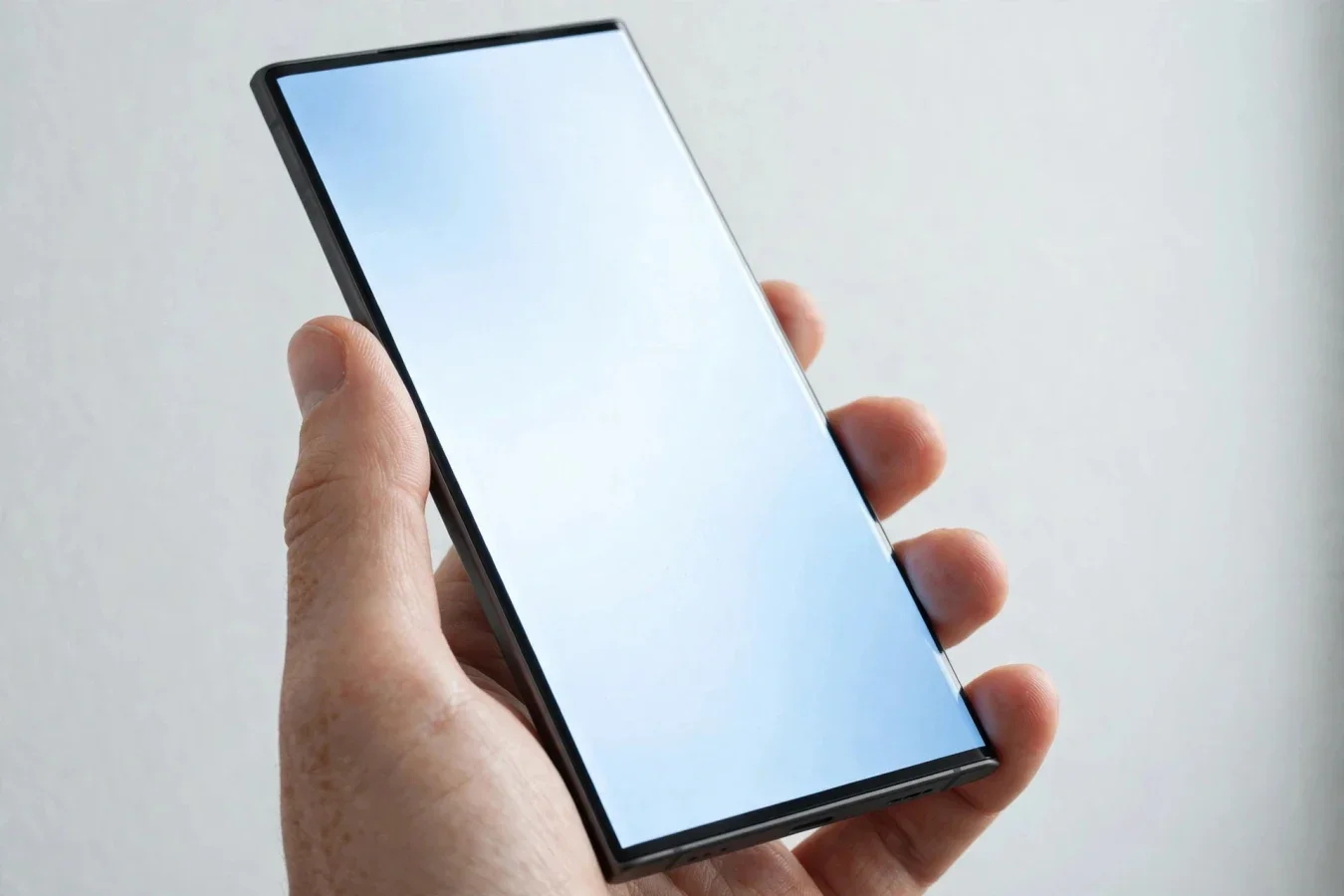
A phone you buy for how it feels, not for what it can do
Pick up an iPhone Air, and the first thing you notice isn't a spec. It's the feeling: impossibly thin, surprisingly light, and unlike any iPhone before it.
Apple announced the iPhone Air on 9 September 2025, and released it on 19 September, as the first iPhone to carry the Air name, and the thinnest iPhone ever. At 5.64mm thick and 165 grams, with a titanium frame and Ceramic Shield 2, it's a design statement — a phone built around thinness as the primary brief.
That statement comes with trade-offs, and they're not small. A single rear camera instead of two or three. A 3,149mAh battery, the smallest in Apple's 2025 lineup. One speaker instead of stereo. USB 2.0 instead of USB 3, with no wired video output. No physical SIM tray — eSIM only. And a starting price of $999, which is $200 more than the iPhone 17, and only $100 less than the iPhone 17 Pro, according to Notebookcheck's comparison.
So is the iPhone Air worth it in 2026? The honest answer, from a year of reviews and long-term reports, is: yes, but only if thinness is your top priority. For everyone else, the iPhone 17 is the better buy, and the Pro is the better camera phone. This guide explains why, with the numbers that matter and the trade-offs stated plainly.
Design: the reason this phone exists
The iPhone Air's design is remarkable, and it's worth describing before we get to the compromises.
- Thickness: 5.64mm, confirmed by Notebookcheck's measurements, though the camera plateau adds about 2.96mm and the camera itself adds about 2.7mm, for a total of about 11.3mm at its thickest point.
- Weight: 165 grams, or 5.82 ounces.
- Size: 156.2 by 74.7mm, with a 6.5-inch display.
- Frame: Grade 5 titanium, which is aerospace-grade and gives a high strength-to-weight ratio.
- Front and back: Ceramic Shield 2 on the front, Ceramic Shield on the back.
- Water resistance: IP68, rated to 6 metres for up to 30 minutes.
- Colours: Space Black, Cloud White, Light Gold, and Sky Blue.
To get the phone this thin, Apple redesigned the internal layout. Instead of layering internals like a sandwich, the main logic board and the A19 Pro chip sit at the top of the device, in a raised "plateau" that houses the camera, leaving the rest of the space for a dense battery. Long-term reviewers describe the result as feeling like a movie prop — impossibly light and thin, and a delight to use one-handed, especially for typing.
Display and performance: no compromises here
If the design is the Air's strength, performance is its surprise. Apple did not give the Air a weaker chip to make it thin. It gave it the A19 Pro.
- Chip: Apple A19 Pro, built on a 3-nanometre process.
- Memory: 12GB of RAM.
- Storage: 256GB, 512GB, or 1TB.
- Display: 6.5-inch Super Retina XDR OLED, LTPO, ProMotion up to 120Hz, Always-On, 2736 by 1260 pixels at 460 ppi, peak brightness 3,000 nits.
- Connectivity: Apple's N1 chip and C1x modem, the first iPhone to include both.
Notebookcheck's review notes that the A19 Pro in the Air is the fastest system-on-chip from Apple, but with a weaker GPU than the Pro version, and with poorer cooling, performance can fall behind the nominally weaker A19 in some sustained workloads. That's a thermal reality of a 5.6mm phone: it can't dissipate heat like a thicker phone can. For everyday use — browsing, messaging, social media, video, and most games in bursts — you won't notice. For sustained gaming or long video exports, the phone will warm up, particularly around the camera bump, as long-term reviewers note, and performance will throttle sooner than on a Pro.
The display, by contrast, is uncompromised: a large, bright, smooth OLED panel that matches the Pro for reading and video.
Camera: good for one lens, limited by one lens
The iPhone Air has one rear camera. That's the headline compromise, and it shapes everything about how the phone photographs.
- Rear: 48MP Fusion Main, 26mm, f/1.6 aperture, sensor-shift optical image stabilisation, 12MP optical-quality 2x zoom via crop (52mm), digital zoom up to 10x.
- Front: 18MP Center Stage, f/1.9 aperture, autofocus, with Dual Capture video for simultaneous front and rear recording.
- Video: 4K at 60 frames per second, front and rear, with Dolby Vision HDR and Cinematic mode.
For standard photography — daylight shots, portraits in good light, social media photos — the 48MP main camera is capable, and reviewers rate it as fine for almost everything. The 18MP front camera is, by several accounts, a generational leap for selfies, with smarter group framing and Dual Capture that are genuinely useful.
What you miss, compared with iPhone 17 or Pro, is versatility. There's no ultrawide lens, so no wide landscapes or tight interiors without stepping back. There's no telephoto lens, so zoom beyond 2x is digital and degrades quickly. There's no macro mode, and no spatial video. At concerts, as one long-term reviewer put it, better zoom is missed. In low light and in portrait mode, the single sensor — which Notebookcheck notes is the weaker sensor from the iPhone 17, not the Pro's — shows its limits compared with multi-lens systems.
If you take most of your photos in daylight, with the main lens, and you value selfies, the Air's camera will satisfy you. If photography is a primary reason you buy a phone, or you shoot a lot of ultrawide, telephoto, or low-light work, the iPhone 17's second camera, or the Pro's full system, is worth the extra bulk and, in the 17's case, the lower price.
Battery: the number everyone asks about
The battery is the Air's most debated spec, and the numbers tell two different stories depending on how you measure them.
Apple's headline figure is up to 27 hours of video playback. That's a specific, controlled test, not a promise for mixed daily use. The battery itself is 3,149mAh — smaller than the iPhone 17's 3,577mAh, and smaller than the Galaxy S25 Edge's 3,900mAh, in the comparison published by Gadget Salvation.
Real-world figures from reviews and long-term reports are more nuanced:
- Video streaming: 13 to 22 hours, depending on brightness and network, according to Gadget Salvation's summary.
- Web browsing: approximately 18 hours.
- Active use: approximately 12 hours 44 minutes, in the EU Energy Label endurance measurement cited by multiple outlets.
- Notebookcheck's verdict: battery, camera, and sound can only be described as mediocre, with the battery running out of steam by midday for power users.
Long-term reviewers split on this. One nine-month review, published in September 2026, found battery life "ok for me on most work days" — charging to 90% at night, running down to about 20% by night, with a top-up needed on heavy days, and a power bank needed by lunch on a heavy travel day with Maps, Translate, and camera use. The same reviewer found low-power mode stretched battery life surprisingly far, enough to get through a full travel day with moderate use.
For light to moderate users, the Air lasts a day. For heavy users and travellers, it may need a top-up, a battery pack, or low-power mode. Apple sells a dedicated battery pack for an extra $99, which adds bulk — the very thing the Air avoids. Charging reaches 50% in 30 minutes with a 20W or higher adapter, but the wired port is USB 2.0 only, with no wired video output, which reviewers consistently flag for a $999 phone.
Sound, speakers, and the small cuts that add up
The Air has a single speaker, not stereo. Reviewers describe the output as noticeably weaker than dual-speaker rivals, and Notebookcheck rates sound as mediocre. For calls and notifications, it's fine. For watching video or listening to music without headphones, it's a step down from the iPhone 17 and Pro.
Those cuts define it: a phone that trades versatility for thinness, at every turn.
Price: full price is hard to justify, discounted price is easier
At launch, the iPhone Air started at $999 for 256GB, $1,199 for 512GB, and $1,399 for 1TB. That's $200 more than the iPhone 17 at $799, and only $100 less than the iPhone 17 Pro, in Notebookcheck's comparison — a comparison that makes the Air's value proposition hard to defend on specs alone.
In practice, prices have fallen. A long-term review in September 2026 noted official resellers in the reviewer's market listing the Air at $875, tax included, by December 2025, with similar prices globally in 2026. Swappa's guide, updated 29 October 2026, put average sale prices in September 2026 at $712 for 256GB, $752 for 512GB, and $944 for 1TB in the resale market. Those are resale averages, not retail prices, but they show the direction: the Air is cheaper to buy in 2026 than it was at launch, and the gap to the iPhone 17 narrows or reverses in some markets.
Notebookcheck's verdict captures the consensus: not worth it at full MSRP, at least from a technical standpoint, because the limitations are too great for the price. At a lower price, it becomes a matter of taste — and anyone who has held the Air will quickly appreciate why someone might choose it anyway.
Who should buy it, and who shouldn't
Buy the iPhone Air if:
- Thinness and light weight are your top priorities, above camera versatility and battery capacity.
- You mainly use your phone one-handed, for calls, messaging, browsing, and social media.
- You take most photos in daylight with the main camera, and you value the 18MP front camera for selfies and video calls.
- You can live with eSIM only, a single speaker, and USB 2.0, or you don't use those features heavily.
- You find it at a discounted price, or you value design enough to pay a premium for it.
Buy the iPhone 17 instead if:
- You want the best value in Apple's lineup: a larger battery, a second ultrawide camera, stereo speakers, and faster charging, for $200 less at launch pricing.
- You travel, game heavily, or use your phone intensively away from chargers.
- You need a physical SIM tray, or you use wired video output.
Buy the iPhone 17 Pro instead if:
- Photography is a priority, and you need ultrawide, telephoto, and the Pro camera system.
- You need sustained performance and better cooling for gaming or video work.
- You want the best battery life in a current iPhone, and you're willing to carry a thicker, heavier phone for it.
The verdict, after a year
A year after launch, the iPhone Air has proven two things. First, that Apple can make a phone this thin without making it fragile or slow for everyday use — the titanium frame, the A19 Pro, and the OLED display are all genuinely good. Second, that thinness, pursued this far, requires compromises that most buyers will feel, in battery, camera, sound, and connectivity.
It's not the best iPhone, or the best value iPhone. It's the thinnest iPhone, and for a specific kind of buyer — someone who notices how a phone feels more than how many lenses it has — that's enough. For everyone else, the iPhone 17 does more, for less, and the Pro does more still.
If you pick up an Air and it makes you smile, and you can live with a power bank on heavy days and a single camera, buy it. If you pick it up and immediately wonder where the second camera and the bigger battery went, buy the 17 instead. Your hand will tell you which buyer you are, faster than any spec sheet will.
FAQs
How thin is the iPhone Air?
The iPhone Air is 5.64mm thick and weighs 165 grams, making it Apple's thinnest iPhone ever, with a grade 5 titanium frame.
What chip does the iPhone Air use?
It uses the Apple A19 Pro chip on a 3-nanometre process, with 12GB of RAM, plus Apple's N1 chip and C1x modem.
How many cameras does the iPhone Air have?
One rear camera: a 48MP Fusion Main with 2x optical-quality zoom via crop, plus an 18MP Center Stage front camera. There is no ultrawide or telephoto lens.
How good is the iPhone Air battery life?
Apple claims up to 27 hours of video playback, but real-world active use is around 12 hours 44 minutes in EU endurance measurements, and heavy users may need a midday top-up or power bank.
How much does the iPhone Air cost?
At launch it started at $999 for 256GB, $1,199 for 512GB, and $1,399 for 1TB. Prices have fallen in many markets in 2026, so check current retail prices.
Does the iPhone Air have a physical SIM tray?
No, the iPhone Air is eSIM-only, with no physical SIM tray. Check your carrier's eSIM support before buying.
Should I buy the iPhone Air or iPhone 17?
Buy the Air if thinness and light weight are your top priorities. Buy the iPhone 17 if you want a larger battery, a second ultrawide camera, stereo speakers, and lower launch pricing.
Was this article helpful?

Written By
TechorCoffeeContributing Writer
TechorCoffee is a technology reporter and software creator writing reviews and tutorials for TechOrCoffee.
Comments (0)
Leave a Comment
Read Next

Thu Apr 09 2026
Leaks & Rumors: iPhone 18 Pro Max vs iPhone 17 Pro Max: Full Comparison
The iPhone 17 Pro Max is already a fully matured flagship—top camera, insane battery life, and stable performance. The iPhone 18 Pro Max is expected to refine the experience further, not revolutionize it.
Tue Jun 16 2026
Samsung Galaxy Z Fold 8 vs Galaxy Z Fold 7:Worth to Upgrade?
Samsung Galaxy Z Fold 8 vs Galaxy Z Fold 7: Is it worth the upgrade? Compare specs, battery upgrades, 45W charging, and camera leaks before you buy.

Wed Apr 08 2026
Leaks & Rumors: iPhone 18 Pro Max: Every Leak, Spec and Upgrade Confirmed
The iPhone 18 Pro Max is expected in September 2026 as Apple’s most powerful iPhone yet. It features a 6.9-inch LTPO OLED display, A20 Pro chip, 48MP camera with variable aperture, 5,100–5,200mAh battery, C2 modem with satellite support, and a starting price of $1,199.