iPhone Duo Review: Design, Camera & Is It Worth It? XAi

Published
How TechOrCoffee Evaluated & Tested This
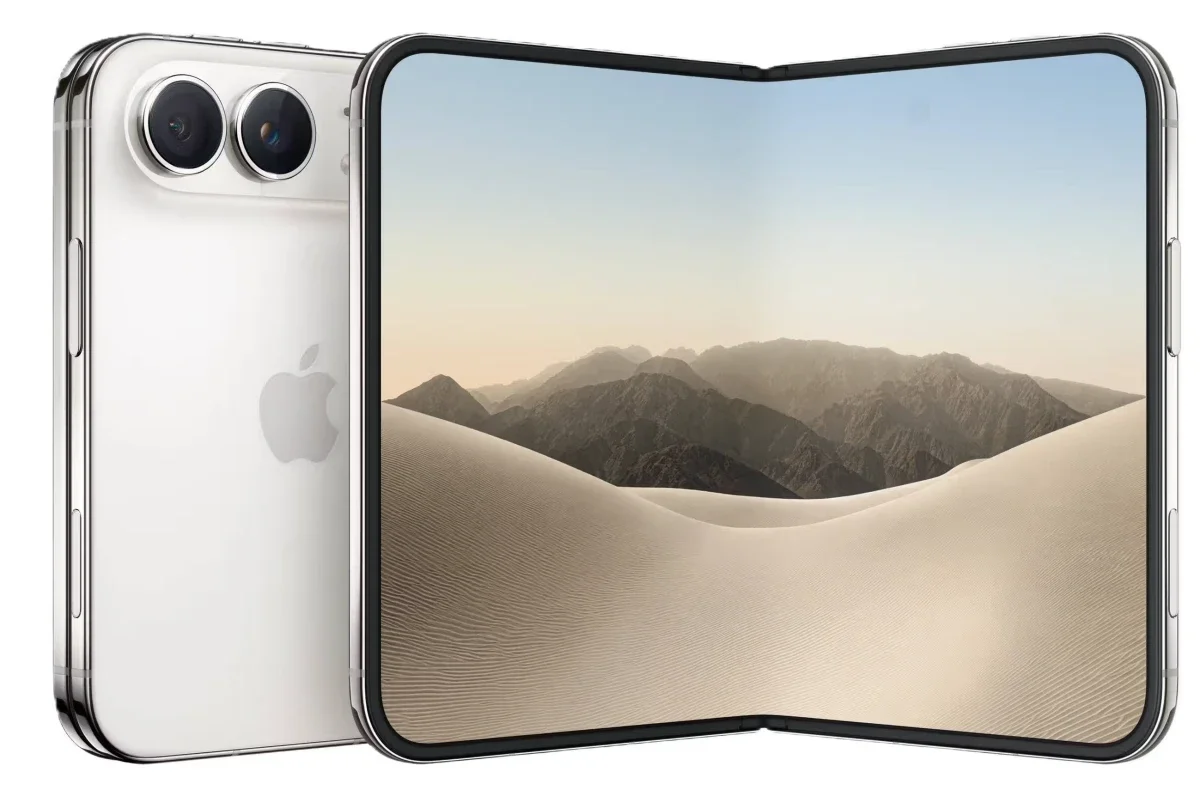
Apple’s first foldable iPhone is finally here. The iPhone Duo, announced on September 9, 2026, opens into a large tablet-like display while folding down to a compact, pocketable form. This iPhone Duo review examines the design, camera system, performance, battery life, software experience, and overall value so you can decide whether it is worth buying.
The device starts at $1,999 for 256GB of storage. Pre-orders begin October 16, 2026, with availability on October 23 in more than 70 countries. It is not a minor update. It is Apple’s most significant redesign of the iPhone in years. The following sections separate official specifications from early hands-on observations reported by reputable technology outlets.
iPhone Duo Design and Build Quality
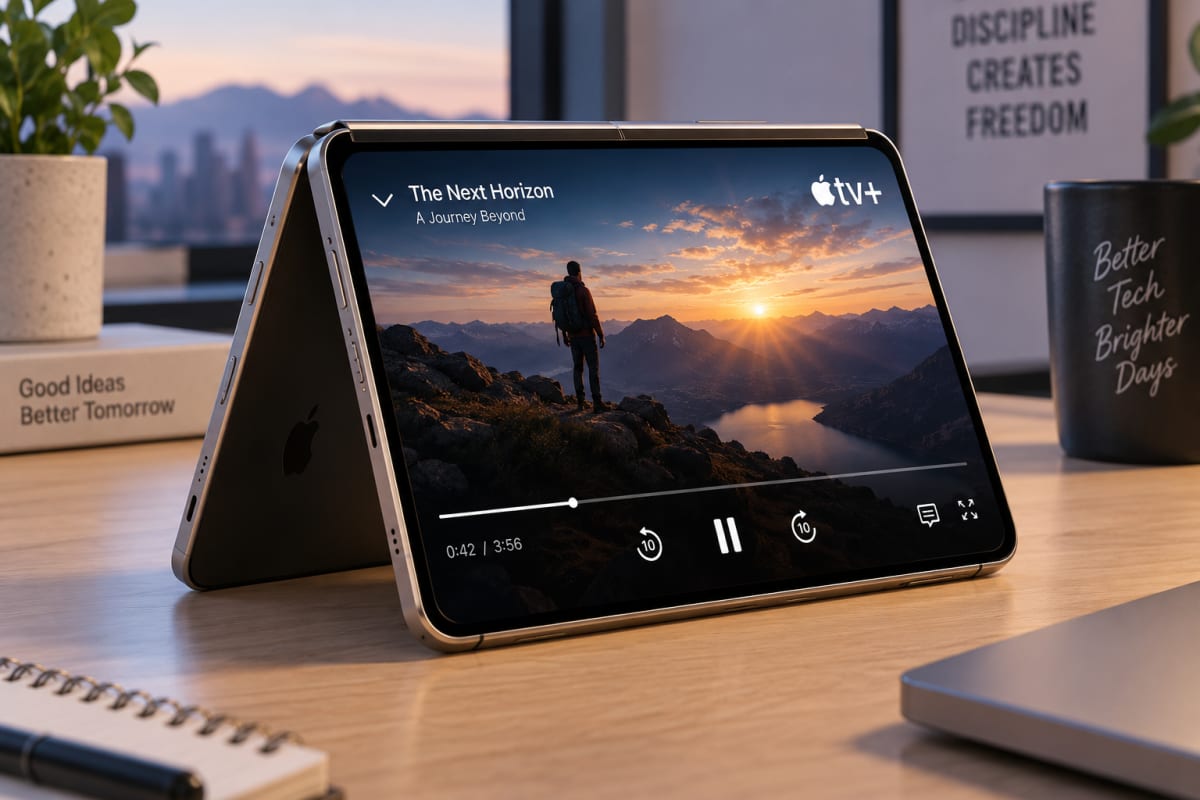
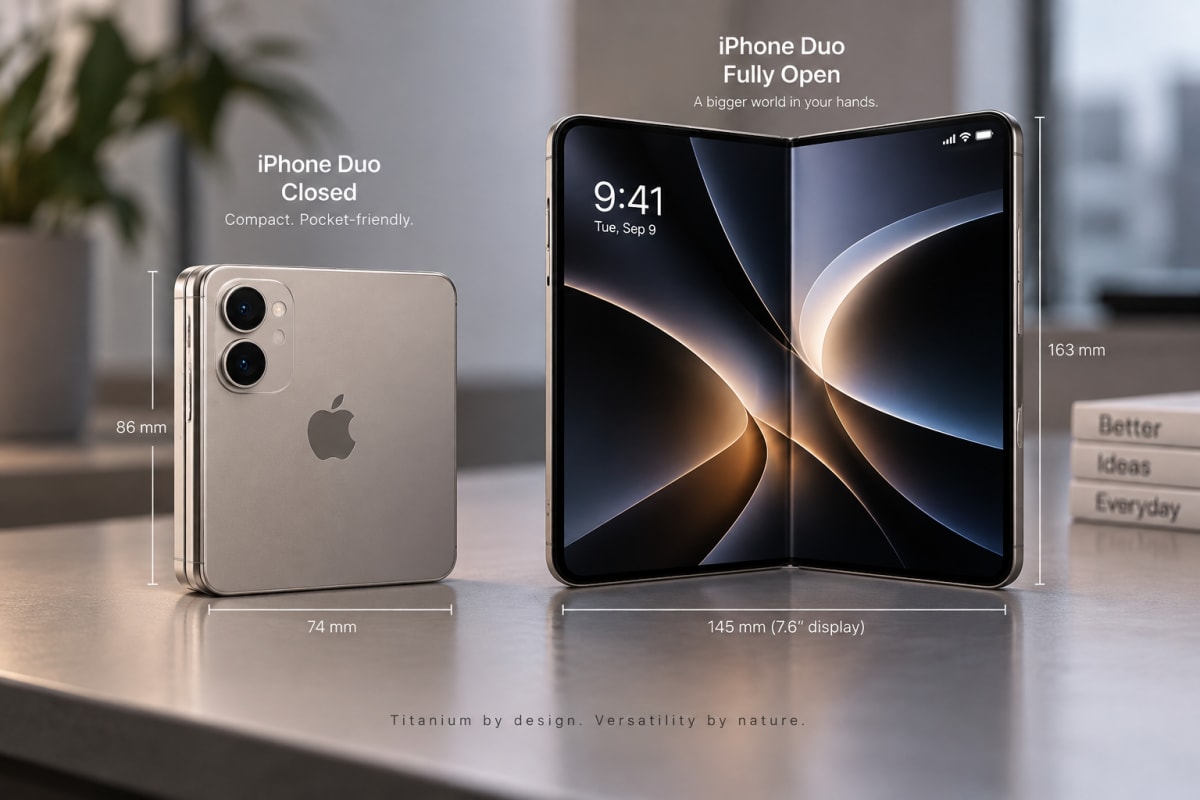
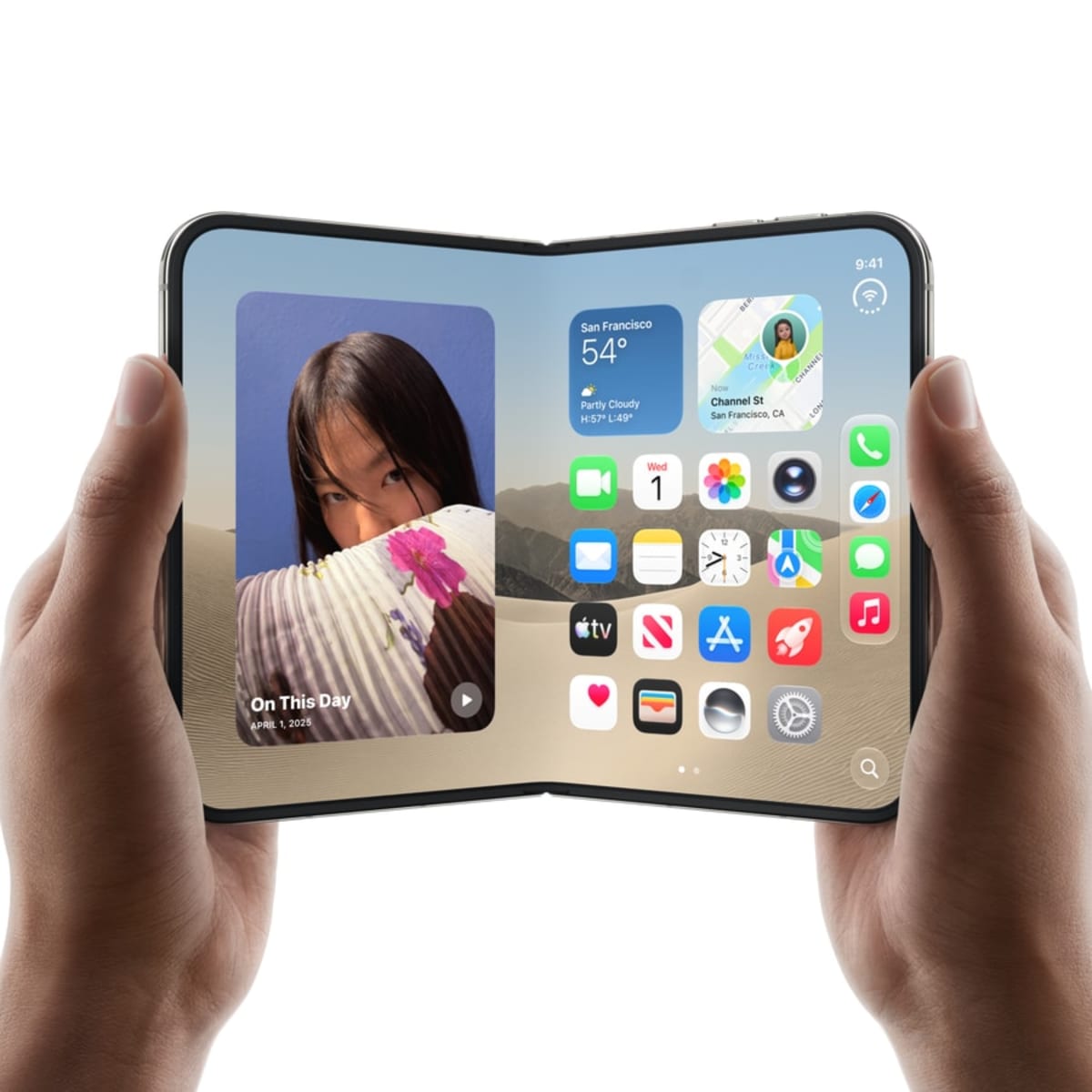
The iPhone Duo uses a book-style foldable design made from grade 5 titanium with a mirror-polished finish. It comes in two colors: Star White and Night Sky. Closed, it measures roughly 3.31 by 4.64 by 0.44 inches (84.1 by 117.8 by 11.3 mm) and weighs 254 grams. Opened, it becomes the thinnest iPhone Apple has made at 5.2 mm thick, measuring 6.48 by 4.64 by 0.21 inches (164.6 by 117.8 by 5.2 mm).
The outer 5.4-inch Super Retina XDR display provides about 90 percent of the screen area of an iPhone 18 Pro in a form that fits comfortably in a pocket. The inner 7.6-inch Super Retina XDR display is 50 percent larger than the iPhone 18 Pro Max. Both displays share the same aspect ratio so content scales cleanly when the phone opens or closes. They support ProMotion up to 120 Hz, Always-On, True Tone, and peak outdoor brightness of 3,000 nits.
Apple rates the device IP68 for dust and water resistance, a step ahead of many competing foldables that lack full dust protection. Ceramic Shield protects the back, while Ceramic Shield 2 covers the outer display with improved scratch resistance. The precision hinge supports the center of the inner display to keep it flat and includes magnets for a secure close. Early hands-on reports note that the crease is visible under certain lighting but is barely perceptible to the touch.
One notable change is the absence of Face ID. Authentication relies on Touch ID built into the side button, which works whether the device is open or closed. Users can also unlock with an Apple Watch. The phone supports Apple Pencil (USB-C) later this year for note-taking and markup on either display.
Display Quality and Everyday Usability
Both screens are Super Retina XDR OLEDs with high contrast, wide color, and adaptive refresh rates. The inner display receives a nano-texture finish designed to reduce glare and make the crease less noticeable. Early impressions describe the transition between closed and open as smooth, with content adapting to the new orientation and fold angle.
When open, the larger canvas suits media consumption, reading, multitasking, and light productivity. Controls in iOS 27 shift to the side of the screen to free vertical space. The outer display is usable one-handed for messaging, quick apps, and notifications. The consistent aspect ratio helps maintain visual continuity when moving between the two screens.
Camera Performance
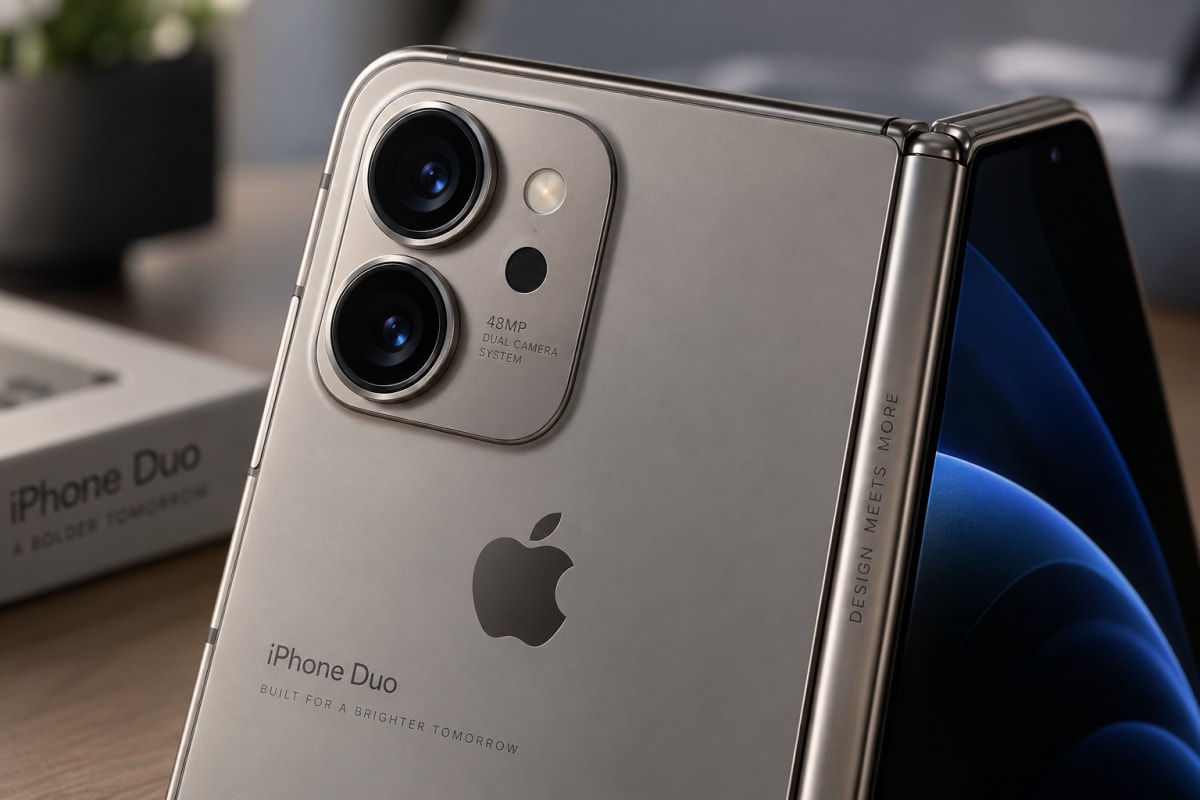
The iPhone Duo features a dual 48MP Fusion camera system on the rear: a 48MP main camera (26 mm, f/1.6) with sensor-shift optical image stabilization that also delivers optical-quality 2x telephoto shots at 12MP, and a 48MP ultra-wide camera (13 mm, f/2.2) with macro capability. There is no dedicated telephoto lens, a clear difference from the iPhone 18 Pro models.
Front-facing options include a 12MP Center Stage camera on the outer display and an under-display FaceTime camera on the inner display that remains hidden when not in use. Video recording reaches 4K Dolby Vision at up to 120 fps on the main camera, with cinematic mode, Action mode, and spatial audio support.
The foldable form factor enables new capture modes. Smart Take uses on-device AI to detect when subjects are posed and capture photos automatically. Duo Preview shows a live viewfinder on the outer display so subjects can see the framing. Kid Cue displays animations on the outer screen to attract children’s attention. Users can also take selfies with the higher-resolution rear cameras while previewing on the outer display, and Duo FaceTime allows a second person to join a call via the outer screen and camera.
Early hands-on coverage indicates solid image quality in daylight and respectable low-light performance from the main sensor, though the lack of a true telephoto and the absence of the latest variable-aperture hardware found on the iPhone 18 Pro series represent clear compromises for photographers who prioritize zoom reach or maximum low-light flexibility.
Processor, Performance, and Thermal Behavior
Inside is the A20 Pro chip, the same silicon used in the iPhone 18 Pro models. It features a 6-core CPU, 7-core GPU with neural accelerators, and dual 16-core Neural Engines. Apple states up to 35 percent higher sustained performance compared with the previous generation Pro chip under certain conditions, aided by a custom vapor chamber and dual-battery thermal design.
Hands-on reports describe responsive multitasking and smooth graphics in games. Sustained performance is expected to be slightly more constrained than on a non-foldable Pro model because of the thinner thermal envelope, but early impressions still place it well ahead of older iPhones. The device includes 12GB of RAM and storage options of 256GB, 512GB, 1TB, and 2TB.
Battery Life and Charging
Apple rates the dual-battery system for up to 24 hours of typical use. Video playback reaches up to 44 hours on the outer display and 31 hours on the inner display. Streamed video is rated at up to 37 hours outer and 26 hours inner.
Wired charging can reach 50 percent in about 20 minutes with a 60W or higher adapter and the included USB-C cable. MagSafe and Qi2 wireless charging support up to 25W. Real-world battery life will vary with heavy use of the larger inner display and multitasking, so independent testing after the October 23 release will provide clearer data.
iOS Experience and Useful Features
iOS 27 is adapted specifically for the foldable form. Side-mounted controls, a redesigned Dynamic Island, and flexible status indicators free more screen space. Two apps can run side by side with easy drag-and-drop of content between them. The interface responds to fold angle, orientation, and which display is active.
Apple Intelligence and the updated Siri AI are available, bringing more contextual and conversational assistance. Several third-party apps, including Netflix, Zoom, and Slack, already support the dual-display layout. Later support for Apple Pencil expands note-taking and creative use cases.
Speakers, Connectivity, and Everyday Features
The iPhone Duo includes stereo speakers, Wi-Fi 7, Bluetooth 6, the second-generation Ultra Wideband chip, and Apple’s C2 modem with 5G (including mmWave on supported models). It is eSIM-only. MagSafe, USB-C with DisplayPort and USB 3 support, and satellite connectivity features (Emergency SOS, Crash Detection, Messages via satellite) round out the package.
What Is Better Compared With Older iPhones
Compared with previous iPhones, the Duo delivers a substantially larger usable canvas when open, seamless multitasking, unique dual-display camera modes, and a durable titanium foldable design with full IP68 protection. The A20 Pro chip brings the latest performance and AI capabilities. The experience of carrying a near-iPad Mini sized screen that folds into a compact phone is the clearest advantage.
Biggest Weaknesses and Compromises
The most significant drawbacks are the $1,999 starting price, greater thickness and weight when closed compared with the lightest Android foldables, the lack of a dedicated telephoto camera, and the switch from Face ID to Touch ID. Storage upgrades raise the price further, reaching $3,199 for 2TB. Long-term durability of the hinge and inner display will only be proven after months of real-world use.
Aspect | Strength | Compromise |
|---|---|---|
Design | Premium titanium, IP68, smooth hinge | Heavier and thicker when closed than some rivals |
Display | Large 7.6-inch inner screen, high brightness | Visible crease under certain conditions |
Camera | Unique dual-display features, solid dual 48MP system | No dedicated telephoto, not the absolute latest Pro hardware |
Battery | Strong rated endurance from dual batteries | Real-world results still pending full reviews |
Price | Competitive with high-end Android foldables | $1,999 entry point limits broad appeal |
Price-to-Performance and Value Analysis
At $1,999 for 256GB, the iPhone Duo sits in the same premium foldable range as recent Galaxy Z Fold and Pixel Fold models. Higher storage options increase the cost significantly. For users who will regularly use the larger screen for multitasking, media, and creative work, the value is clearer. For those who mainly need a high-end phone with the best cameras, the conventional iPhone 18 Pro models offer stronger camera hardware at a lower price.
iPhone Duo vs Competing Smartphones
Against the latest Galaxy Z Fold series, the Duo matches or exceeds in software polish, IP68 rating, and seamless iOS integration, while trading some thinness, weight, and camera versatility. Versus the iPhone 18 Pro and Pro Max, it offers a transformative form factor and multitasking advantages at the cost of camera reach, thickness when closed, and a higher price. Versus previous iPhones, it is a clear leap in screen real estate and new interaction models, though it is not a pure performance or camera upgrade for every user.
Who Should Buy the iPhone Duo and Who Should Skip It
Buy the iPhone Duo if you want the largest practical iPhone display that still fits in a pocket, value polished multitasking and dual-screen camera features, and are willing to pay a premium for Apple’s first foldable. Skip it if you prioritize the absolute best camera system, prefer the thinnest and lightest possible phone, or find the $1,999 starting price difficult to justify for the added versatility.
Final Verdict
The iPhone Duo is a polished and thoughtful first foldable from Apple. Early impressions praise the build quality, display experience, software adaptation, and unique camera modes. It is not the thinnest or lightest foldable, nor does it carry the full camera suite of the Pro models, and the price is high. For users who will take advantage of the large inner screen and multitasking capabilities, it is a compelling and potentially transformative device. For others, a standard iPhone 18 Pro remains the more practical choice.
Pre-orders open October 16, 2026. Waiting for full independent battery and long-term durability tests after the October 23 launch is advisable before committing, especially at this price point.
FAQs
When does the iPhone Duo go on sale?
Pre-orders start October 16, 2026, at 5 a.m. Pacific Time. The phone becomes available on October 23, 2026, in more than 70 countries, with additional markets following on October 30.
How much does the iPhone Duo cost?
It starts at $1,999 for 256GB. Higher capacities are priced at $2,199 (512GB), $2,599 (1TB), and $3,199 (2TB). Monthly financing and leasing options are available in the US.
Does the iPhone Duo have Face ID?
No. It uses Touch ID in the side button, which works both open and closed. Unlocking with an Apple Watch is also supported.
How big are the iPhone Duo displays?
The outer display is 5.4 inches and the inner display is 7.6 inches. Both are Super Retina XDR panels with ProMotion, Always-On, and up to 3,000 nits peak brightness.
Is the iPhone Duo water resistant?
Yes. It carries an IP68 rating for dust and water resistance (up to 6 meters for 30 minutes under IEC standard 60529).
Does the iPhone Duo support Apple Pencil?
Yes. Support for Apple Pencil (USB-C) is planned later in 2026 for note-taking, sketching, and document markup on either display.
Is the iPhone Duo worth buying in 2026?
It is worth considering if you want a large, high-quality foldable display with refined iOS multitasking and are comfortable with the premium price and the trade-offs in camera zoom and closed-device thickness. For many users focused on the best cameras or lower cost, a standard iPhone 18 Pro remains the better match.
Was this article helpful?

Written By
TechorCoffeeContributing Writer
TechorCoffee is a technology reporter and software creator writing reviews and tutorials for TechOrCoffee.
Comments (0)
Leave a Comment
Read Next

Thu Apr 09 2026
Leaks & Rumors: iPhone 18 Pro Max vs iPhone 17 Pro Max: Full Comparison
The iPhone 17 Pro Max is already a fully matured flagship—top camera, insane battery life, and stable performance. The iPhone 18 Pro Max is expected to refine the experience further, not revolutionize it.
Tue Jun 16 2026
Samsung Galaxy Z Fold 8 vs Galaxy Z Fold 7:Worth to Upgrade?
Samsung Galaxy Z Fold 8 vs Galaxy Z Fold 7: Is it worth the upgrade? Compare specs, battery upgrades, 45W charging, and camera leaks before you buy.

Wed Apr 08 2026
Leaks & Rumors: iPhone 18 Pro Max: Every Leak, Spec and Upgrade Confirmed
The iPhone 18 Pro Max is expected in September 2026 as Apple’s most powerful iPhone yet. It features a 6.9-inch LTPO OLED display, A20 Pro chip, 48MP camera with variable aperture, 5,100–5,200mAh battery, C2 modem with satellite support, and a starting price of $1,199.