Jensen Huang Resigns as NVIDIA CEO: Colette Kress Takes Over

Published (Updated )
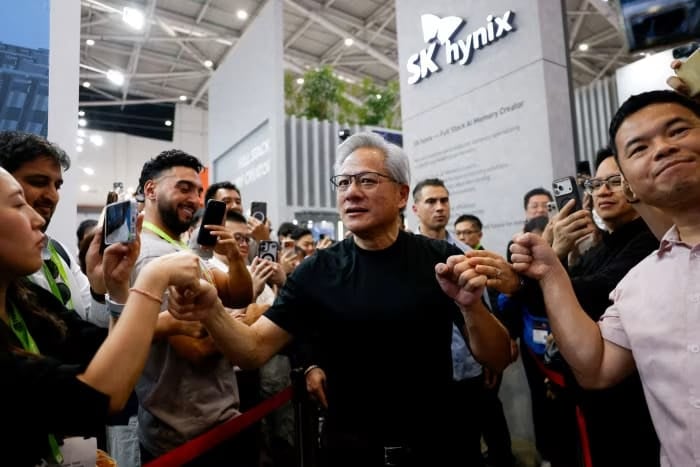
NVIDIA CEO Jensen Huang has stepped down after more than three decades at the company. CFO Colette Kress will serve as interim CEO as the chipmaker faces an independent investigation and an important leadership transition.
NVIDIA is facing one of the most significant leadership changes in its history. Jensen Huang, the co-founder and longtime chief executive who helped transform the company into a central player in the global artificial intelligence industry, has resigned from his position with immediate effect.
The company confirmed the development on November 12, 2026, announcing that Colette Kress, NVIDIA's current Executive Vice President and Chief Financial Officer, would take over as interim CEO while the board searches for a permanent successor.
Huang has also stepped down as a member of NVIDIA's board of directors. The announcement follows several days of controversy surrounding the company's leadership, including reports about Huang's personal relationships and concerns that he may have been targeted by a foreign intelligence operation.
Although NVIDIA has confirmed the leadership transition, the company has not publicly provided a specific reason for Huang's resignation.
Jensen Huang Steps Down After More Than 30 Years at NVIDIA
Jensen Huang co-founded NVIDIA in 1993 and spent more than three decades leading the company. Under his leadership, NVIDIA evolved from a graphics processing unit manufacturer primarily associated with gaming into a major provider of the computing infrastructure powering modern artificial intelligence.
The company's GPUs have become essential components in AI training, inference, data centres, autonomous systems and high-performance computing.
Huang's leadership also helped NVIDIA build a broader software and hardware ecosystem, including its CUDA platform, which has become an important part of the AI development industry.
His departure therefore represents more than a routine executive transition. It creates a significant change at a company whose identity, long-term strategy and public image have been closely associated with its co-founder.
NVIDIA's board thanked Huang for his contributions, describing his impact on the company and the wider technology industry as profound.

Colette Kress Appointed Interim CEO
Following Huang's resignation, NVIDIA's board appointed Colette Kress as interim chief executive officer.
Kress joined NVIDIA in September 2013 as Executive Vice President and Chief Financial Officer. Before joining the company, she spent nearly 25 years working in finance roles at major technology companies, including Cisco and Microsoft.
During her time at NVIDIA, she played an important role in managing the company's finances and supporting its growth as demand for AI computing increased.
According to NVIDIA's announcement, Kress will continue serving as CFO while taking on the interim CEO position.
The board has also confirmed that it will begin searching for a permanent chief executive, considering both internal and external candidates.
Harvey C. Jones, a longtime NVIDIA director and former Synopsys executive, has been appointed as the company's first-ever chair of the board.
The appointment puts an experienced financial executive in charge during a particularly important period for NVIDIA.
Why Did Jensen Huang Resign? Understanding the Investigation
Huang's departure comes after a series of reports raised questions about his personal relationships and possible national security implications.
On November 8, 2026, NVIDIA's board publicly announced that it would launch an independent investigation following reports that Huang had been the target of a foreign intelligence effort.
The board appointed a committee of independent directors, supported by external legal counsel, to oversee the investigation.
NVIDIA also stated that it had no reason to believe that national security or company secrets had been compromised. Huang supported the review and committed to cooperating with the investigation.
On November 10, the independent members of NVIDIA's board announced that they had retained Joon H. Kim, a former acting U.S. Attorney for the Southern District of New York, and the law firm Wachtell, Lipton, Rosen & Katz to conduct the investigation.
The controversy also involved reporting about alleged personal relationships, including one involving a Chinese businesswoman whom U.S. authorities reportedly suspected of having links to Chinese intelligence.
Beijing has denied allegations that the woman was a spy. Separately, reporting raised questions about another alleged relationship involving an NVIDIA employee.
Huang also issued an internal message on November 8 acknowledging infidelity and apologising to his family and colleagues.
Importantly, the existence of an investigation does not establish that corporate information was compromised or that the reported foreign intelligence allegations have been proven.
NVIDIA's November 12 resignation announcement did not directly connect Huang's departure to a particular investigation finding or explain the specific reason for his decision.
What Does Jensen Huang's Departure Mean for the AI Industry?
NVIDIA occupies a particularly important position in the global AI ecosystem.
Its hardware is used by major cloud providers, technology companies, AI research organisations and businesses developing generative AI products. The company's GPUs and networking products are central to the infrastructure supporting increasingly demanding AI workloads.
This is why a leadership change at NVIDIA could have consequences beyond the company itself.
1. Uncertainty Around NVIDIA's Future Leadership
Huang has been one of the most recognisable executives in the technology industry. His departure creates questions about how the next CEO will manage NVIDIA's long-term strategy.
The permanent successor will need to maintain relationships with major technology companies while continuing to invest in GPU development, networking, software and AI infrastructure.
2. Continued Importance of the CUDA Ecosystem
NVIDIA's competitive position is not based solely on its GPUs.
Its CUDA software ecosystem, developer tools, networking technology and integrated AI infrastructure have helped establish strong relationships with developers and enterprise customers.
These products and technologies will remain important considerations during the leadership transition.
There has been no announcement of a fundamental change to NVIDIA's software or product strategy.
3. Investor Confidence and Market Uncertainty
Leadership stability is particularly important for a company operating in an industry experiencing rapid growth and significant investment.
Reuters reported that NVIDIA shares experienced a sharp decline following the announcement, although losses narrowed during Thursday's trading session.
Investors will be watching how the board handles succession, whether the investigation creates additional corporate or regulatory challenges, and whether the company continues meeting its financial and technology commitments.
For competitors such as AMD and Broadcom, any prolonged uncertainty at NVIDIA could create opportunities. However, a change in leadership does not automatically mean that NVIDIA will lose its competitive position.
Will NVIDIA's AI Products and Business Operations Change?
For customers, developers and businesses using NVIDIA technology, the immediate question is whether Huang's resignation will affect product availability, software development or existing partnerships.
At present, NVIDIA has not announced any major changes to its product roadmap or customer commitments.
In its November 12 announcement, the board expressed confidence in Kress and the existing leadership team. It also stated that company operations, customer commitments and the product roadmap were expected to continue without interruption.
This suggests that NVIDIA intends to maintain business continuity throughout the transition.
However, the longer-term direction will depend on the permanent CEO appointment and the board's ability to maintain confidence among employees, investors, customers and technology partners.
What Happens Next at NVIDIA?
There are several important developments to watch in the coming days.
Permanent CEO selection: NVIDIA's board will consider internal and external candidates to find Huang's permanent replacement. Colette Kress will lead the company in the interim.
Independent investigation: The investigation overseen by independent directors and external legal counsel will examine the concerns raised in earlier reporting.
Financial performance: NVIDIA is scheduled to announce its third-quarter fiscal 2027 financial results on November 17, 2026. Investors will be paying close attention to its financial performance and management's comments about the transition.
Company leadership: NVIDIA's next phase will depend on whether its existing leadership team can maintain execution and confidence during a period of uncertainty.
Final Thoughts
Jensen Huang's resignation marks a major turning point for NVIDIA and the wider AI industry.
For more than three decades, Huang helped build the company into one of the most influential technology businesses in the world. His leadership played a significant role in the development of modern GPU computing and the infrastructure behind today's AI boom.
Colette Kress now faces the challenge of maintaining that momentum while NVIDIA manages an independent investigation and searches for its next permanent CEO.
The company's immediate priority will be maintaining operational stability, protecting investor confidence and continuing its AI technology roadmap.
One thing is clear: NVIDIA's next chapter will be closely watched by the global technology industry. The leadership transition could become an important test of whether the AI infrastructure giant can continue its growth and influence beyond the founder who built it.
This article was prepared using publicly available company announcements and reporting available as of November 13, 2026. The investigation and related allegations remain subject to verification.
FAQs
Why did Jensen Huang resign from NVIDIA?
NVIDIA announced Huang's resignation on November 12, 2026, but did not provide a specific reason. The departure followed media reports about alleged personal relationships and an independent board investigation into reports that Huang had been targeted by a foreign intelligence effort.
Who is the new CEO of NVIDIA?
Colette Kress, NVIDIA's CFO and Executive Vice President, has been appointed interim CEO. The company is searching for a permanent replacement.
Is Jensen Huang leaving NVIDIA completely?
According to the November 12 announcement, Huang resigned as President, CEO and a member of NVIDIA's board. The company has not announced any continuing executive position for him.
Will NVIDIA's GPUs and AI products be affected?
NVIDIA has not announced changes to its product roadmap. Its board expects operations, customer commitments and product development to continue without interruption.
When will NVIDIA announce its next financial results?
NVIDIA is scheduled to report its third-quarter fiscal 2027 results on November 17, 2026.
Was this article helpful?

Written By
TechorCoffeeContributing Writer
TechorCoffee is a technology reporter and software creator writing reviews and tutorials for TechOrCoffee.
Comments (0)
Leave a Comment
Read Next
Sat Oct 31 2026
NVIDIA RTX 60 Series vs RTX 50 Series: What to Expect
NVIDIA RTX 60 vs RTX 50 preview: rumours, AI, memory, GPU, thermals, power and price for buyers in 2026 right now today, all unconfirmed.

Fri Oct 30 2026
NVIDIA in 2026: No New Gaming GPU, AI Takes Over
NVIDIA 2026 explained: no new gaming GPU, RTX 60 delayed to 2028, Rubin CPX for AI inference, memory shortage, and what PC gamers should buy now in 2026.
Sat Oct 31 2026
How Much Does GPU TGP Affect Gaming Laptop Performance?
How GPU TGP affects gaming laptop performance: wattage, FPS, thermals, battery, cooling and price for laptop buyers in 2026 right now today.