OpenAI Daybreak Brings AI Cyber Defence to NATO Allies

Published (Updated )
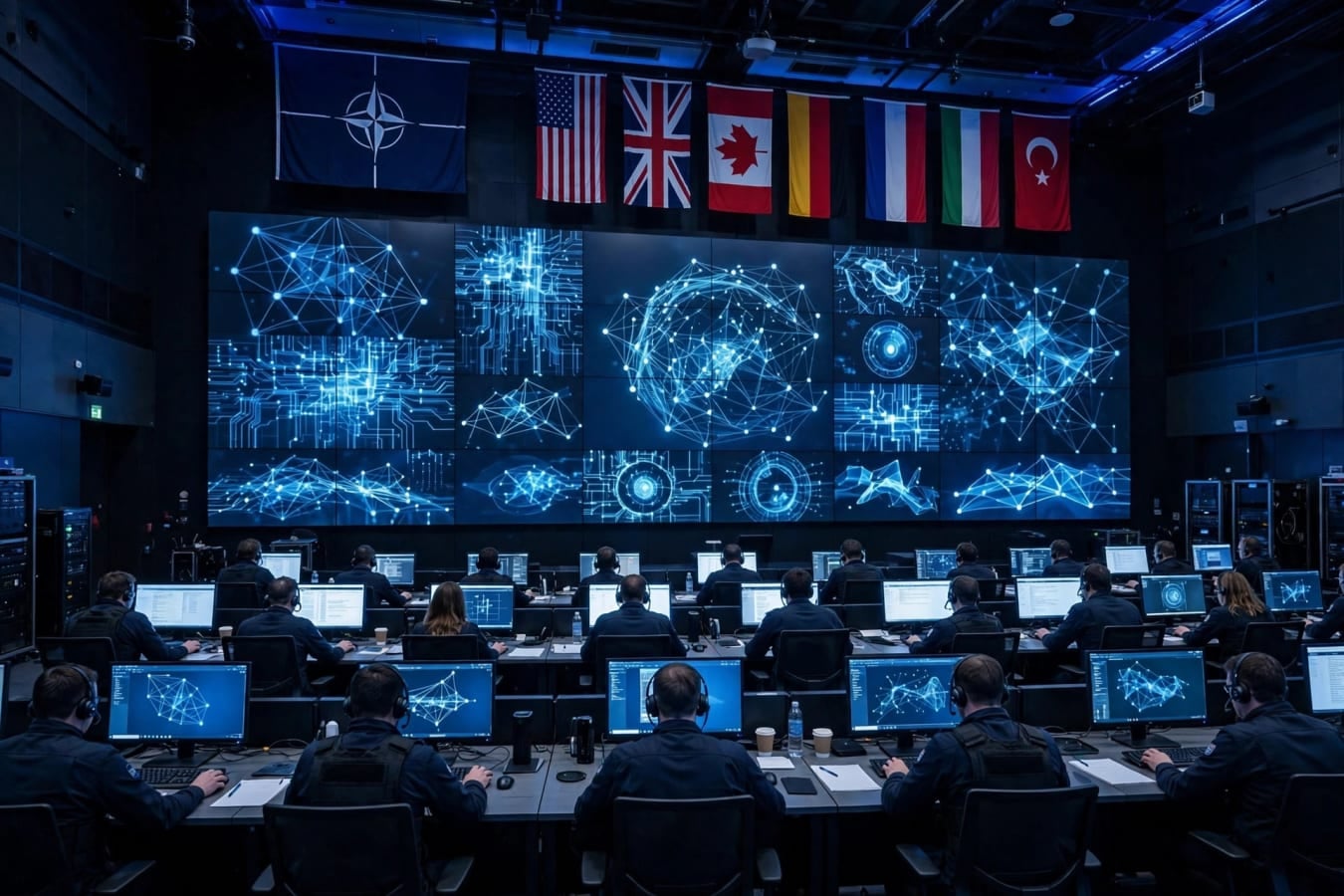
NATO's cyber defenders are getting AI backup. OpenAI announced on 17 November 2026 that it is working with NATO's Communications and Information Agency (NCIA) to give the alliance's core institutions access to advanced cybersecurity models through Daybreak, its programme for vetted defenders doing authorised security work.
This is a significant step for AI in defence — but it is not a finished procurement, and it comes with no hard results from NATO itself yet. Here is what was actually announced, what the numbers mean, and what is still unknown.
The quick answer:
- OpenAI is giving NATO's core institutions access to cybersecurity AI models through its Daybreak programme
- The models help with code review, investigating suspicious activity, validating suspected vulnerabilities, and developing and testing fixes
- NATO has used up to 300 billion raw input and output tokens a month — a usage figure, not a count of attacks stopped
- No price, contract value, duration, model names, or start date have been disclosed
- NCIA is still studying usage and costs and will evaluate competing solutions before any procurement decision
- Access has also gone to ENISA, national cyber agencies in France, Germany and Poland, and Ukraine's Ministry of Digital Transformation
What OpenAI announced
Daybreak is OpenAI's programme for vetted defenders carrying out authorised security work. Under the new arrangement, NATO's core institutions get access to advanced cybersecurity models through it, with NCIA — the alliance's technology and cyber arm — as the partner on the NATO side.
The work the models are being used for covers four areas:
- Reviewing software for security weaknesses
- Investigating suspicious activity on networks and systems
- Validating suspected vulnerabilities to check whether they are real
- Developing and testing fixes for confirmed problems
That list matters, because it shows where AI fits in a defender's day. The models are not replacing human analysts. They are doing the heavy reading — scanning code, triaging alerts, and drafting fixes — while people make the decisions.
OpenAI did not disclose which specific models NATO is using, how much the arrangement costs, how long it runs for, or when access began. Those details are not public, and this article does not guess at them.
The 300 billion token figure — and what it does not mean
One number in the announcement has already travelled widely: NATO has used up to 300 billion raw input and output tokens a month.
Here is what that figure is, and what it is not:
- It is a usage figure. Tokens are the units AI models process — the text and code fed in, and the text and code generated in response. 300 billion tokens a month is a very large volume of work.
- It is not a count of attacks stopped. It says nothing about how many intrusions were blocked, how many vulnerabilities were found, or how much faster fixes were shipped.
- It comes from OpenAI, not from NCIA. NATO's own agency has not published its own figures on results.
That distinction is important. Heavy usage shows the tools are being used at scale inside NATO's institutions. It does not, by itself, prove they are making NATO measurably safer. No vulnerabilities-found count and no fix-time figures have come from NATO itself, and this article does not treat usage as a substitute for results.
NCIA's position: adoption underway, not a closed deal
Dr Dylan Browne, NCIA's general manager, said the models "accelerate vulnerability discovery" — and that NCIA will study usage and costs to evaluate competing solutions before procurement decisions are made.
Read that carefully, because it frames the whole story:
- NATO is already using the tools in live defensive work
- The agency is measuring what they cost and what they deliver
- Other vendors will be evaluated before any buying decision
- This is adoption in progress, not a signed, closed procurement
That is a normal and sensible way for a large institution to adopt new technology. It is also the opposite of a done deal. Any report that describes this as NATO "buying" OpenAI's tools is getting ahead of the facts.
The ENISA and CERT-EU joint advisory: the clearest evidence so far
The most concrete evidence for what these models can do comes not from NATO itself, but from a Joint Advisory published on 12 November 2026 by ENISA — the European Union Agency for Cybersecurity — and CERT-EU, the EU institutions' incident response team.
Their findings, from scanning 27 codebases:
- Models flagged 220 potential security issues
- Code owners had reviewed 88 of them so far
- 95% of the reviewed findings were confirmed as real
- Four new CVE identifiers were assigned as a result
- The scans cost about $7,700 (€6,648.90) in total
- That works out to roughly $153 (€132.27) per 10,000 lines of code
- The scans used 611,486,042 tokens
But the advisory also came with honest limits, and they are worth stating plainly:
- 60% of the findings were still awaiting human review when the advisory was published
- The models tended to overrate the severity of the issues they found
- A flagged issue is not a confirmed vulnerability until a human checks it
That combination — a high confirmation rate on reviewed findings, plus overrated severity and a large unreviewed backlog — is a fair picture of where AI-assisted code review stands today. It is genuinely useful, and it still needs people in the loop.

CERT Polska and the MikroTik flaws
There is also a concrete case from a national agency. CERT Polska, Poland's national computer emergency response team, used OpenAI models to help uncover six flaws in MikroTik RouterOS, the operating system that runs MikroTik's widely used network routers.
Two of those six flaws were chained together in live attacks — meaning attackers were already combining them to break into systems. Finding flaws that are actively being exploited is exactly the kind of defensive work Daybreak is built for, and it is the clearest example so far of the programme producing results that matter outside a lab.
RouterOS runs on equipment used by businesses and internet providers across Europe and the US, so the finding has practical relevance well beyond Poland.
Crossed Swords 2026: AI agents in a live exercise
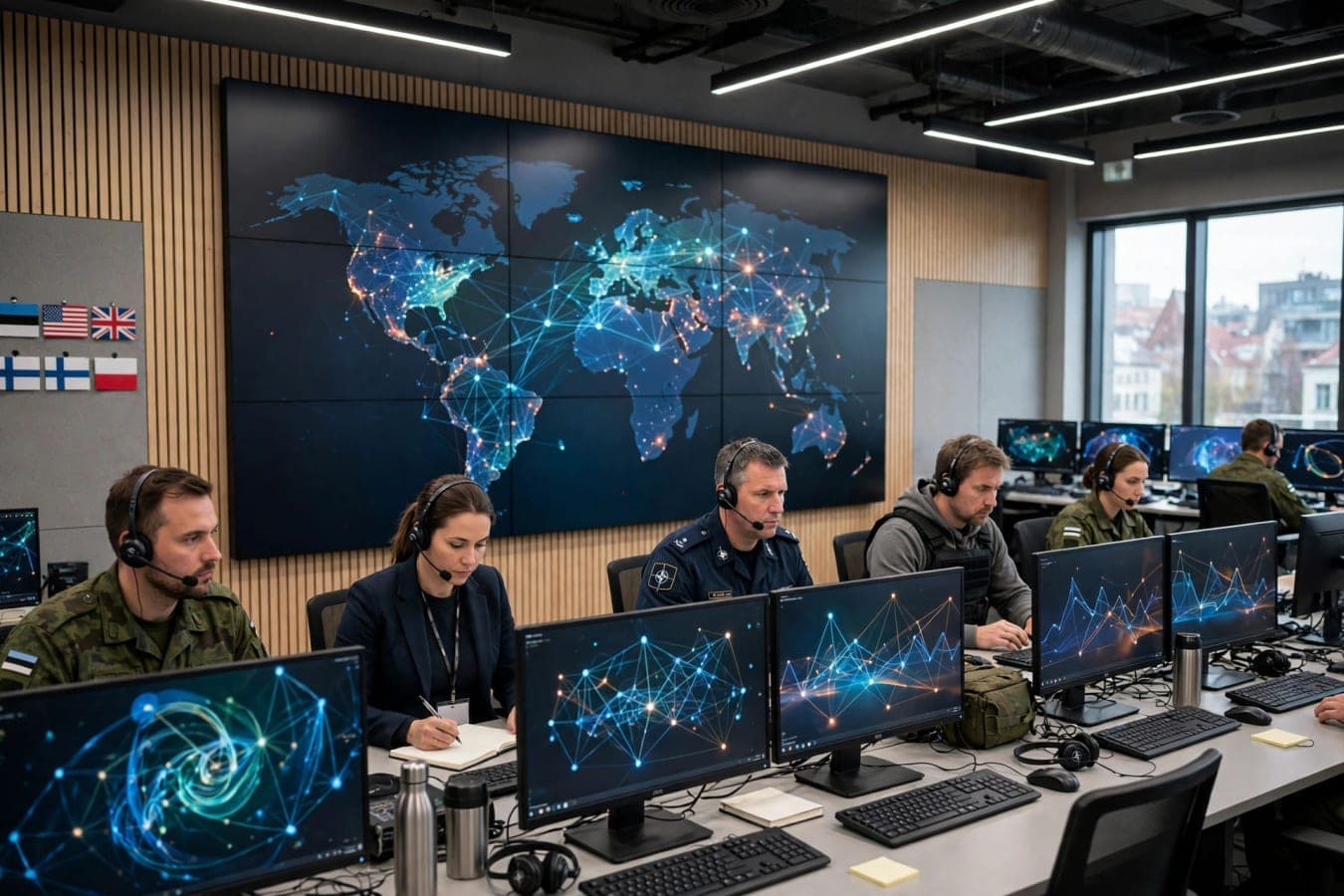
Daybreak was also used in NATO's Crossed Swords 2026 exercise, held in Tallinn, Estonia, from 2 to 6 November 2026. The exercise is run by the NATO Cooperative Cyber Defence Centre of Excellence (CCDCOE), and this year's edition brought together more than 250 participants from over 40 countries.
Key points about the exercise:
- Daybreak was used in the exercise's technical environment for the first time
- A new training stream covered AI agents for cyber operations, with human oversight built in
- The focus was on how defenders use AI agents in realistic scenarios, not on letting the models act alone
The human oversight point is the one to remember. Every serious deployment of AI in cyber defence today pairs the model with a person who checks its work. Crossed Swords tested that pairing under exercise conditions, and that is where the lessons for real operations will come from.
Who else has access
NATO is not the only institution in the programme. OpenAI has also given Daybreak access to:
- ENISA, the EU's cybersecurity agency
- National cyber agencies in France, Germany and Poland
- Ukraine's Ministry of Digital Transformation, which uses Daybreak to defend civilian infrastructure
The Ukraine detail is notable. Defending civilian infrastructure — power, water, communications, hospitals — is a different job from defending a military network, and it is happening under active attack. If AI-assisted defence proves its value anywhere, it will be in environments like that one.
For readers in the US, UK and Europe, the France, Germany and Poland angle is the most directly relevant. Those are three of Europe's largest economies, and their national cyber agencies are now working with the same tools NATO is testing.
How Daybreak got here
The NATO announcement did not come out of nowhere. Daybreak has been building for most of 2026:
- May 2026 — Daybreak launched, giving vetted defenders access to OpenAI's cybersecurity models
- 22 June 2026 — OpenAI expanded the programme with GPT-5.5-Cyber, a model tuned for security work, and Patch the Planet, a project run with security firm Trail of Bits
- 13 January 2026 — NATO adopted its Alliance Digital Strategy, the policy backdrop for bringing AI into the alliance's operations
- October 2026 — NCIA carried out pre-competitive market engagement for a NATO Integrated Cyber Defence Centre, the kind of groundwork that comes before a formal procurement
Put together, that timeline shows a programme that started with defenders, added a dedicated security model and a patching project, and is now being tested inside the world's largest military alliance while NCIA prepares the ground for a future cyber defence centre.
What is still unknown
Honest reporting means saying what we do not know. Here is the list:
- No measurable NATO results yet. NATO itself has published no count of vulnerabilities found, no fix-time figures, and no assessment of whether the models have stopped attacks.
- No commercial terms. Price, contract value, duration and start date are all undisclosed.
- No model names. OpenAI has not said which specific models NATO is using.
- No classification details. The classification level of the work and which networks are covered have not been disclosed.
- The 300 billion token figure is OpenAI's. It has not been independently confirmed by NCIA.
None of that makes the announcement unimportant. It makes it early. The story to watch is what NCIA concludes when it finishes studying usage and costs — and whether competing vendors get a fair look before any procurement decision.
What this means for cyber defence
Three things are worth taking away:
- AI code review is moving from experiment to institution. When NATO, ENISA and three national agencies are all using the same class of tools, it is no longer a pilot project. It is becoming part of how European cyber defence works.
- Humans are still the bottleneck — and the safeguard. 60% of the ENISA findings were still awaiting review, and the models overrated severity. The tools find things fast; people still have to check them. That is a feature, not a failure, but it means AI does not remove the need for skilled analysts.
- Cost is low enough to scale, but value is still being proven. About $7,700 (€6,648.90) to scan 27 codebases is a small sum in defence terms. The open question is not whether the scans are affordable — it is whether they find the flaws that matter, and whether defenders can act on them fast enough.
What to watch next
- NCIA's evaluation of usage and costs, and whether it leads to a formal procurement — and which vendors are considered
- Results from the Crossed Swords 2026 training stream on AI agents, and whether the lessons change how exercises are run
- Whether Ukraine's use of Daybreak on civilian infrastructure produces public results
- The next ENISA and CERT-EU advisory, and whether the review backlog shrinks and the severity ratings improve
- Patch the Planet's progress with Trail of Bits, and whether it produces fixes for widely used open-source software
The announcement on 17 November 2026 is best read as the start of a test, not the end of one. NATO is using the tools, measuring them, and keeping its options open. The results that matter — vulnerabilities found, fixes shipped, attacks stopped — have not been published yet. When they are, that will be the real story.
FAQs
What is OpenAI Daybreak?
Daybreak is OpenAI's programme that gives vetted defenders doing authorised security work access to advanced cybersecurity models. It launched in May 2026 and was expanded in June 2026 with GPT-5.5-Cyber and Patch the Planet.
What is NATO using Daybreak for?
NATO's core institutions are using the models to review software, investigate suspicious activity, validate suspected vulnerabilities, and develop and test fixes — working with NATO's Communications and Information Agency (NCIA).
Has NATO stopped attacks using Daybreak?
There is no published evidence of that yet. NATO has used up to 300 billion tokens a month, but that is a usage figure, not a count of attacks stopped or vulnerabilities found. No measurable results from NATO itself have been disclosed.
What did the ENISA and CERT-EU advisory find?
Across 27 codebases, the models flagged 220 potential issues. Of the 88 reviewed so far, 95% were confirmed as real, and four new CVE identifiers were assigned. The scans cost about $7,700 (€6,648.90). However, 60% of findings were still awaiting human review, and the models tended to overrate severity.
Is this a done deal — has NATO bought OpenAI's tools?
No. NCIA is studying usage and costs and will evaluate competing solutions before any procurement decision. This is adoption underway, not a closed procurement.
Which other countries and agencies use Daybreak?
ENISA, national cyber agencies in France, Germany and Poland, and Ukraine's Ministry of Digital Transformation, which uses it to defend civilian infrastructure. CERT Polska used OpenAI models to help uncover six MikroTik RouterOS flaws, two of which were chained in live attacks.
Was this article helpful?
Explore Specs, Comparisons & Related Topics

Written By
TechorCoffeeEditorial Team
The TechOrCoffee Editorial Team covers consumer hardware, artificial intelligence, software engineering, and regional smartphone & laptop market analysis.
Comments (0)
Leave a Comment
Read Next
Fri Oct 30 2026
DeepSeek V4.1 Flash 1017: Cheap Coding AI Explained
DeepSeek V4.1 Flash 1017 explained for developers: 77.0 DeepSWE score, faster shorter outputs, Search and Fetch APIs, MIT open weights, and off-peak pricing.

Fri Nov 06 2026
AI Hackers Target Banks at Machine Speed, CERT-In Warns
CERT-In warns 'Crafty Falcon' is using AI tools to breach Indian lenders, fintech and crypto firms at machine speed. What the advisory says.

Fri Oct 30 2026
GPT-6.1 Terra: Faster Agents at Half the Price
OpenAI GPT-6.1 Terra explained: half-price API, faster computer use, 1.05M-token context, Codex and ChatGPT Work availability, benchmarks and safety limits.