OpenAI's First Smartphone: Foxconn to Build the AI Phone

Published (Updated )
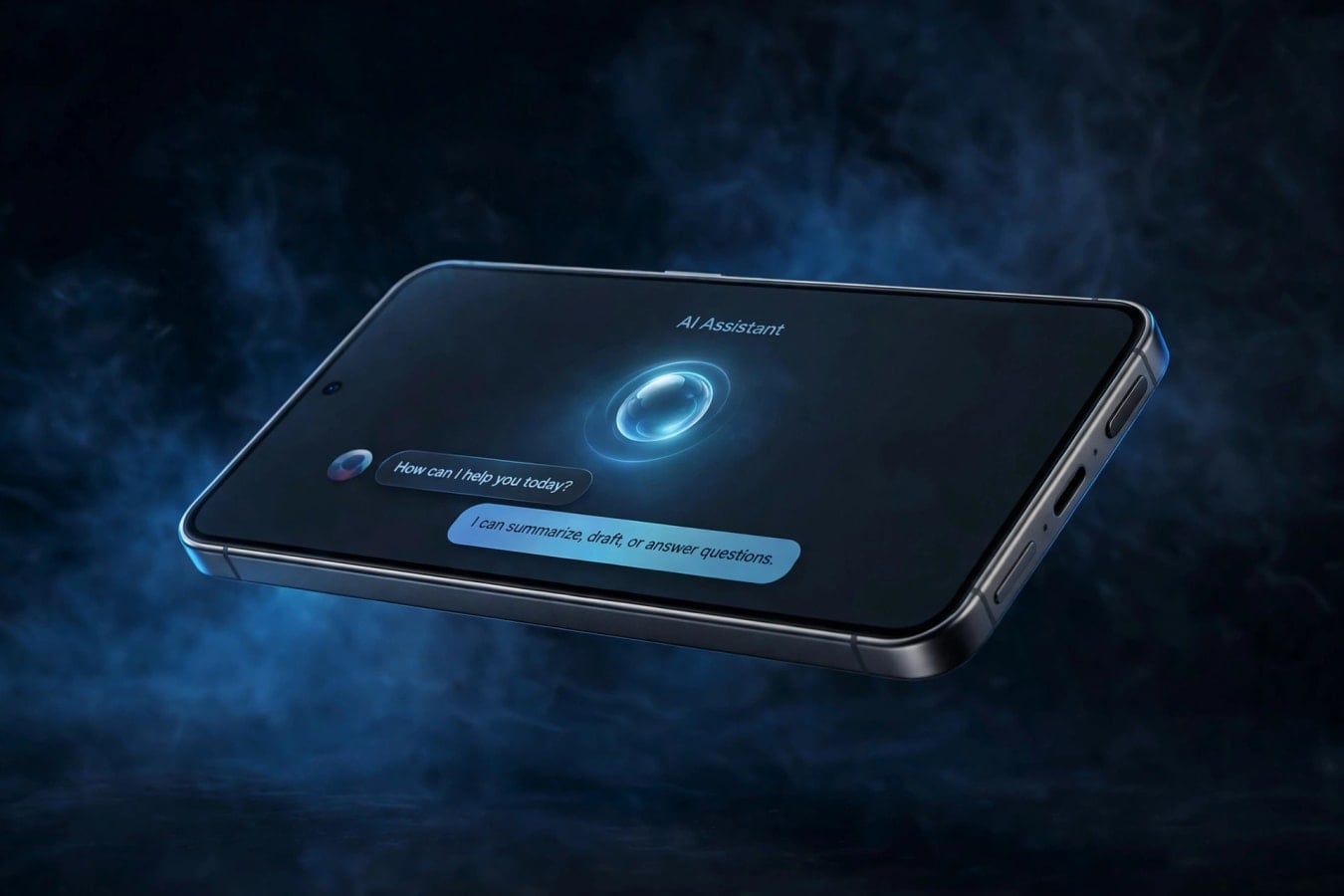
OpenAI may be about to do something it has never done before: put its name on a phone. Reports from China this week say Foxconn subsidiary FIH Mobile has won the order to assemble OpenAI's first smartphone — a device built around AI agents rather than apps. Nothing is confirmed. OpenAI has not announced a phone, Foxconn has not confirmed an order, and there is no design, price or launch date on the record. But the reports, the supply chain names attached to them, and the analysts backing them make this the most concrete sign yet that an OpenAI phone is real — and coming sooner than most people expected. Here is the quick answer:
- What is reported: FIH Mobile, a Hong Kong-listed Foxconn subsidiary, has secured orders to assemble OpenAI's first smartphone, according to China's Securities Times, citing supply-chain sources.
- When it could arrive: Cailian Press reports the phone could reach the market in late 2027 or 2028. Analyst Ming-Chi Kuo has said mass production could be fast-tracked to the first half of 2027.
- What is inside (reportedly): A custom MediaTek Dimensity 9600-based chipset, two dedicated AI processing units, LPDDR6 memory and UFS 5.0 storage.
- What is confirmed: Nothing about a phone. Neither OpenAI nor Foxconn has publicly confirmed the project, a design, a price or a launch date.
- Why it matters: If true, OpenAI would be taking on Apple, Google and Samsung in hardware — built, ironically, on the same manufacturing base Apple relies on. Treat everything below that is not labelled as confirmed as a rumour. This article separates what has been reported from what has actually been said on the record.
What the reports actually say
The story broke in China. Securities Times, citing supply-chain sources, reported on November 19-20, 2026 that FIH Mobile had secured orders to assemble OpenAI's first smartphone. The report was picked up the same day by Gadgets 360, Business Today, Trusted Reviews, Digit and The Outpost, which is how the story reached readers in the US, UK and Europe. FIH Mobile is not a household name, but it should be familiar to anyone who follows phone manufacturing. It is a Hong Kong-listed subsidiary of Foxconn (stock code 02038.HK) that designs, manufactures and assembles smartphones for other brands. It is part of the world's biggest electronics manufacturing empire — the same empire that builds the iPhone. That is the core of the report, and it is worth stating plainly what it is not: it is not a confirmation. Securities Times cited unnamed supply-chain sources. No contract has been shown. No executive at OpenAI or Foxconn has confirmed an order, a phone, a design, a price, a production quantity or a production start date. OpenAI has not disclosed any of those things. Cailian Press, another Chinese outlet, added the timing: the phone could reach the market in late 2027 or 2028. That is the furthest-out estimate in circulation, and it matters, because it conflicts with a much earlier date suggested by the best-known analyst covering this story.
The analyst view: a custom chip and a faster timeline
Ming-Chi Kuo, the analyst whose supply-chain reporting on Apple hardware is closely followed across the industry, has been tracking the OpenAI phone for months. His notes sketch a very different kind of smartphone.
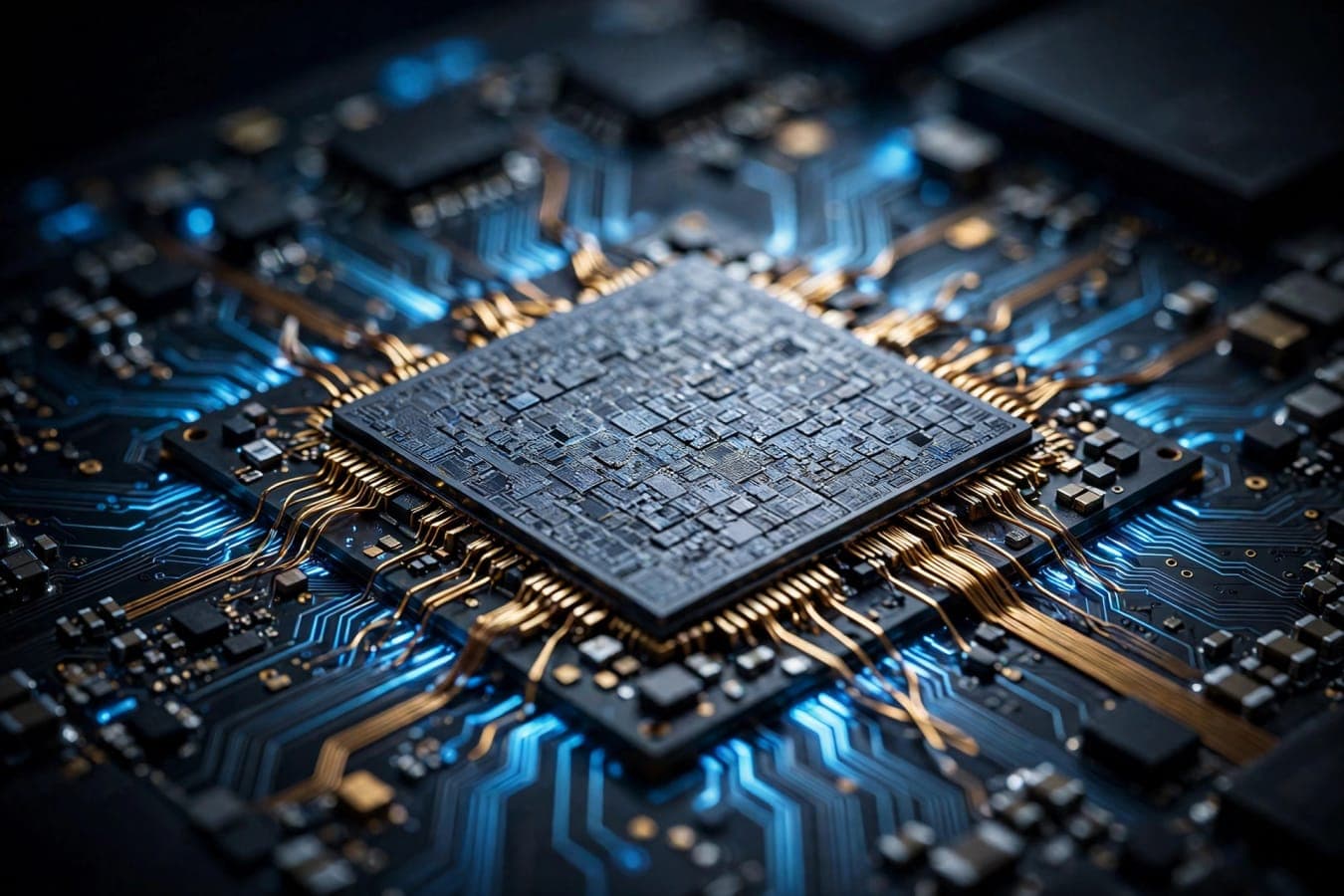
- Custom silicon: The phone will reportedly run a custom chipset based on MediaTek's Dimensity 9600, possibly built on a TSMC 2nm-class process. MediaTek is now reported to be the exclusive chip supplier for the device.
- Dedicated AI hardware: Two dedicated AI processing units are said to sit alongside the main chip, built to run AI agents on the device rather than in the cloud.
- Fast memory and storage: LPDDR6 RAM and UFS 5.0 storage are reportedly on the spec sheet — the fastest memory and storage standards available for phones.
- Production timing: Kuo said in May 2026 that mass production could be fast-tracked to the first half of 2027, pulled forward from an earlier 2028 estimate.
- Scale: Kuo estimated shipments of 30 million units across 2027 and 2028 if development stays on track. That last number deserves a pause. Thirty million phones in two years would make OpenAI a serious smartphone maker from day one — roughly the scale of a major flagship launch, not a niche experiment. It is an estimate, not a commitment, and it depends on development staying on schedule. Hardware history is full of ambitious first-year targets that never survived contact with reality. Note also that the chip story has shifted. Earlier Kuo notes also mentioned Qualcomm as a possible chip partner. The newer reporting says MediaTek is now the exclusive supplier. That kind of change is normal in hardware development — suppliers are swapped as designs evolve — but it is a reminder that nothing here is locked in.
Who else is reportedly in the supply chain
FIH Mobile would not be working alone. Other Apple suppliers are reportedly in the component pipeline for the OpenAI phone:
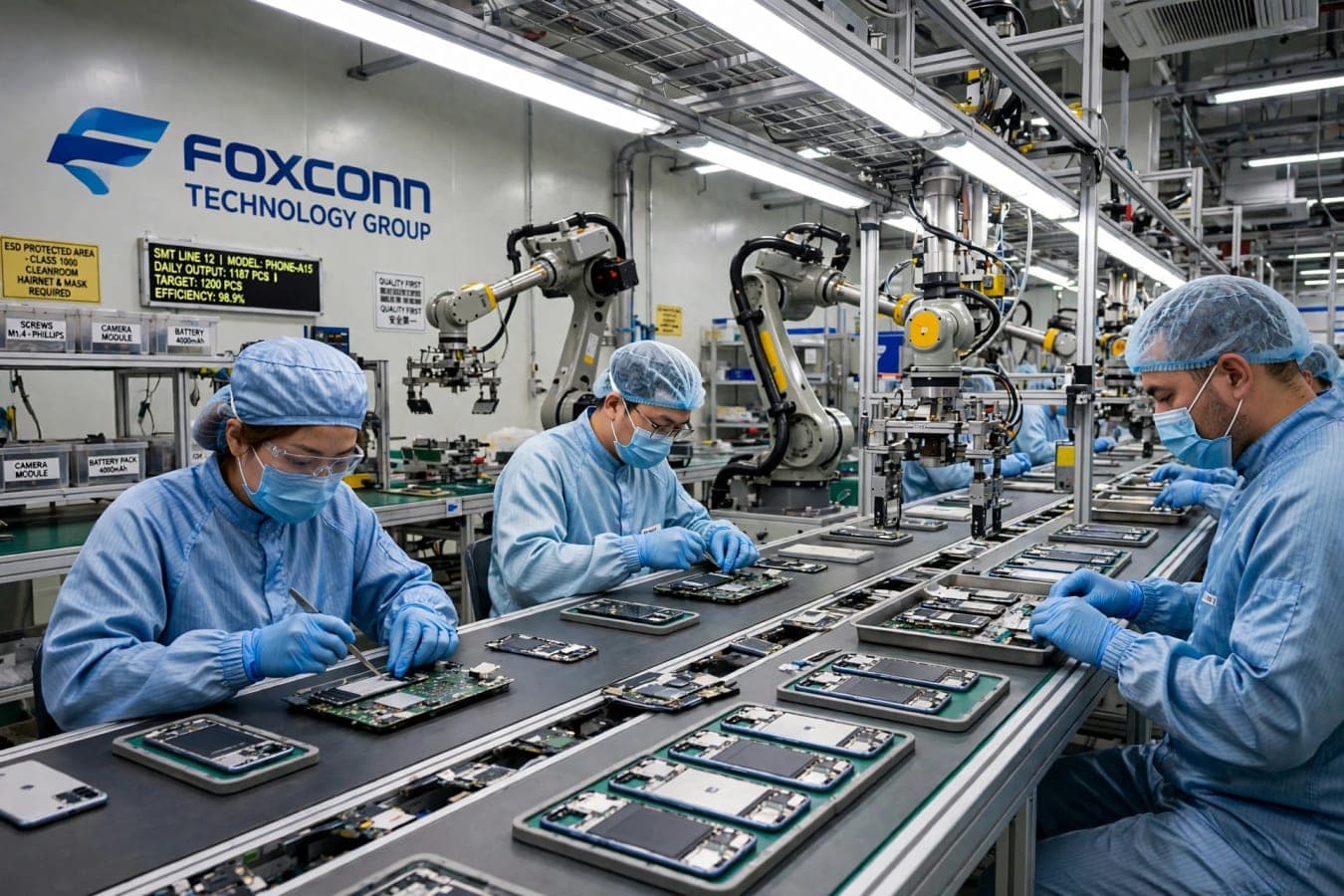
- Luxshare Precision — a major Apple assembler and component maker
- Lingyi iTech — a precision components supplier
- AAC Technologies — a supplier of acoustic and haptic components Here the reporting gets messy, and honesty demands we say so. Kuo said in April 2026 that Luxshare was the exclusive design and manufacturing partner for the OpenAI phone. The newer reports cast Luxshare as a component supplier and FIH Mobile as the assembler. Those two accounts do not sit neatly together. There are innocent explanations. Roles in a supply chain can change as a project moves from design to production. A company can be the design partner at one stage and a component supplier at another. Or one of the reports may simply be wrong. What we can say with confidence is that several of Apple's own suppliers are reportedly involved in the OpenAI phone, whichever role each one ends up playing. That is a story in itself.
The agentic phone: what would it actually do?
The most interesting part of this story is not who builds the phone. It is what the phone is supposed to be. The device is reportedly an "agentic" phone. Instead of a home screen full of app icons that you tap one by one, the phone would run AI agents that complete tasks for you directly. You would ask for something — book a table, sort out a trip, handle a message, compare a price — and the agent would do it, across apps and services, without you opening each one yourself. That is a big idea, and it is also an idea the industry has been circling for years without landing it. Amazon tried with the Fire Phone. Essential tried with a different kind of phone. Rabbit and Humane tried with AI gadgets that promised to replace the phone and mostly proved how hard that is. The smartphone is one of the hardest markets in technology to break into, and no newcomer has cracked it easily. Apple, Samsung and Google dominate the premium market in the US and Europe, and they have spent a decade building the app ecosystems, carrier relationships and retail presence a new phone needs. OpenAI would be starting from zero on all of that. What it has instead is the most powerful AI brand in the world and a product — ChatGPT — that hundreds of millions of people already use every day. The bet, if the reports are right, is that an AI-first phone could be different enough to matter. There is an important distinction to make here. This reported smartphone is separate from the screenless device OpenAI is developing with io, the company founded by former Apple design chief Jony Ive. That device has been described as a screen-free companion gadget, not a phone. The two projects are different products, with different teams and different goals, and they should not be confused with each other.
Why Foxconn, and why now?
OpenAI and Foxconn are not strangers. The two companies already partner on AI data-centre equipment, an agreement announced last year. Foxconn chairman Young Liu said in late October 2026 that the two companies were discussing more joint projects — without naming a phone. For Foxconn, an OpenAI phone would be a major win. The company has spent years trying to reduce its dependence on Apple, and a flagship order from the world's most talked-about AI company would be exactly the kind of diversification it wants. For OpenAI, Foxconn offers something no startup can: the ability to build tens of millions of complex devices, at quality, on a schedule. There is also an irony here that should not be missed. Apple builds its iPhones on Foxconn's lines. If OpenAI's phone is built on the same manufacturing base, the company taking on Apple in hardware would be doing it with Apple's own factory partner. That is not unusual in electronics — Samsung supplies screens to Apple, and TSMC builds chips for almost everyone — but it is a striking detail in this particular rivalry.
The Apple lawsuit: the other side of the story
No honest account of OpenAI's hardware ambitions can skip the legal backdrop. Apple sued OpenAI over alleged trade-secret theft involving former employees. In October 2026, a federal judge granted Apple limited expedited discovery in the case. This is reported context, not a finding of wrongdoing, and the case is still in its early stages. But it matters for two reasons. First, it shows how seriously Apple takes OpenAI as a competitive threat — companies do not sue over trade secrets they consider unimportant. Second, it is a reminder that OpenAI's move into hardware is happening against a backdrop of real tension with the company it would be challenging.
What a phone like this might cost — and why we do not know
There is no reported price for the OpenAI phone, and anyone quoting one is guessing. What we can do is look at the market it would enter.
- Premium flagship phones in the US typically start at around $799 and run to $1,199 or more for top models.
- In the UK, flagship prices commonly start at around £799, with top models above £1,199.
- In Europe, flagship phones typically start at around €899, with premium models above €1,299.
- AI-focused devices from smaller companies have usually launched at lower prices — but they have also usually failed to find a mass market. If OpenAI prices its phone like a flagship, it would be competing directly with the iPhone Pro and Samsung's Galaxy Ultra range on their own turf. If it prices lower, it would need to explain why a cheaper phone deserves a place in a buyer's pocket next to a device they already trust. Either way, price will be one of the most important decisions OpenAI makes — and it is a decision nobody has reported yet. The same applies to the launch date. Late 2027 or 2028, per Cailian Press, is a long way away in technology. A first half of 2027 production start, per Kuo, is much closer. Both could be right at different stages — production starting early, a market launch later — or one could be wrong. Until OpenAI says something on the record, treat every date as a rumour.
Should you believe it?
Here is where the evidence stands, honestly weighed. In favour of the story being real:
- Multiple outlets reported the FIH Mobile order within the same 24-hour window, all pointing to supply-chain sources.
- Ming-Chi Kuo, a credible supply-chain analyst, has been reporting on the device for months, with specific and consistent technical details.
- OpenAI and Foxconn already work together, and Foxconn's chairman has publicly said more joint projects are being discussed.
- OpenAI has been openly building hardware with io, so a phone is a natural extension of a strategy that already exists. Against taking it at face value:
- Neither OpenAI nor Foxconn has confirmed anything about a phone.
- The reports disagree on Luxshare's role, and the chip supplier story has already changed once.
- The launch timing in the reports spans more than a year, from the first half of 2027 to 2028.
- No design, no price, no production quantity and no production start date have been disclosed.
- The smartphone market has humbled every newcomer that has tried it, including companies with far more hardware experience than OpenAI. The most likely reading is that OpenAI is genuinely working on a phone, and that the supply chain is genuinely being lined up — but that the final product, its timing and its price are all still moving targets. That is how hardware development works. Phones are not announced when the first supplier is signed; they are announced when the product is ready. We are a long way from that point.
What happens next
If the reports are right, the next year will bring more leaks, more supplier names and eventually — if the project survives — a real announcement. Watch for these signals:
- Any comment from OpenAI or Foxconn, on the record, about a phone or a hardware partnership
- Further reporting from Kuo or other supply-chain analysts, especially if the chip or assembler details change again
- Job listings, regulatory filings or certification records that point to a phone-shaped product
- News from the io project, which may hint at the design language OpenAI wants for its hardware Until then, this is a rumour — but it is a rumour with a supply chain behind it, and that makes it worth watching. The smartphone market has not had a genuinely new entrant with this much momentum behind it in years. If OpenAI does launch a phone, and if it is built by Foxconn, the biggest story in consumer technology in 2027 may not be a new iPhone or a new Galaxy. It may be the first phone from a company that, until recently, only made software.
FAQs
Is OpenAI really making a smartphone?
It has been reported, but not confirmed. China's Securities Times, citing supply-chain sources, reported in November 2026 that Foxconn subsidiary FIH Mobile had secured orders to assemble OpenAI's first smartphone. Neither OpenAI nor Foxconn has publicly confirmed the project, a phone, a design, a price or a launch date.
Who is building the OpenAI phone?
FIH Mobile, a Hong Kong-listed Foxconn subsidiary that designs, manufactures and assembles smartphones, is reported to be the assembler. Other Apple suppliers — Luxshare Precision, Lingyi iTech and AAC Technologies — are reportedly in the component pipeline. Note that earlier reporting described Luxshare as the exclusive design and manufacturing partner, so the exact roles are still unclear.
When could the OpenAI phone launch?
Reports differ. Cailian Press reports the phone could reach the market in late 2027 or 2028, while analyst Ming-Chi Kuo has said mass production could be fast-tracked to the first half of 2027. No launch date has been confirmed.
What chip will the OpenAI phone use?
According to analyst Ming-Chi Kuo, the phone will use a custom chipset based on MediaTek's Dimensity 9600, possibly built on a TSMC 2nm-class process, with two dedicated AI processing units, LPDDR6 RAM and UFS 5.0 storage. MediaTek is now reported to be the exclusive chip supplier.
What is an "agentic" phone?
An agentic phone is one where AI agents complete tasks for you directly — booking, messaging, comparing prices and more — instead of you tapping through a grid of app icons. It is the concept reportedly behind OpenAI's phone, and it is separate from the screenless device OpenAI is developing with Jony Ive's company io.
How much will the OpenAI phone cost?
No price has been reported or confirmed. For context, premium flagship phones in the US typically start at around $799 and run to $1,199 or more for top models, with UK prices commonly starting around £799 and European prices around €899.
Was this article helpful?

Written By
TechorCoffeeContributing Writer
TechorCoffee is a technology reporter and software creator writing reviews and tutorials for TechOrCoffee.
Comments (0)
Leave a Comment
Read Next
Thu Aug 13 2026
iPhone 18 Leaks and Rumors: Everything Apple’s 2026 iPhone
iPhone 18 leaks reveal rumored specs, A20 Pro chip, camera upgrades, smaller Dynamic Island, AI features, price, launch date and more.
Sat Oct 31 2026
Apple M7 vs M6: What Could Change?
Apple M7 vs M6 preview: rumours, AI, memory, GPU, design, thermals, power and price for Mac buyers in 2026 right now today, all unconfirmed.
Sat Oct 31 2026
Intel Next-Generation Core Ultra vs AMD Ryzen AI
Intel Next-Gen Core Ultra vs AMD Ryzen AI preview: rumours, cores, AI, GPU, power and price for buyers in 2026 today, all unconfirmed.