Optimizely Hack: 178 Sites Served Malware to Visitors

Published (Updated )
Quick answer
- On November 16, 2026, attackers injected malicious JavaScript into Optimizely Web Experimentation scripts.
- Visitors to sites run by at least 178 organisations received the code, including CNN, the BBC and Zoom.
- The malware swapped crypto wallet addresses, skimmed card details and targeted iPhones with exploit kits.
- Optimizely says it fixed the flaw and removed the code. The attackers stole roughly $7,000 in crypto.
- The campaign has been dubbed OPTIMJACK by researchers.
What happened
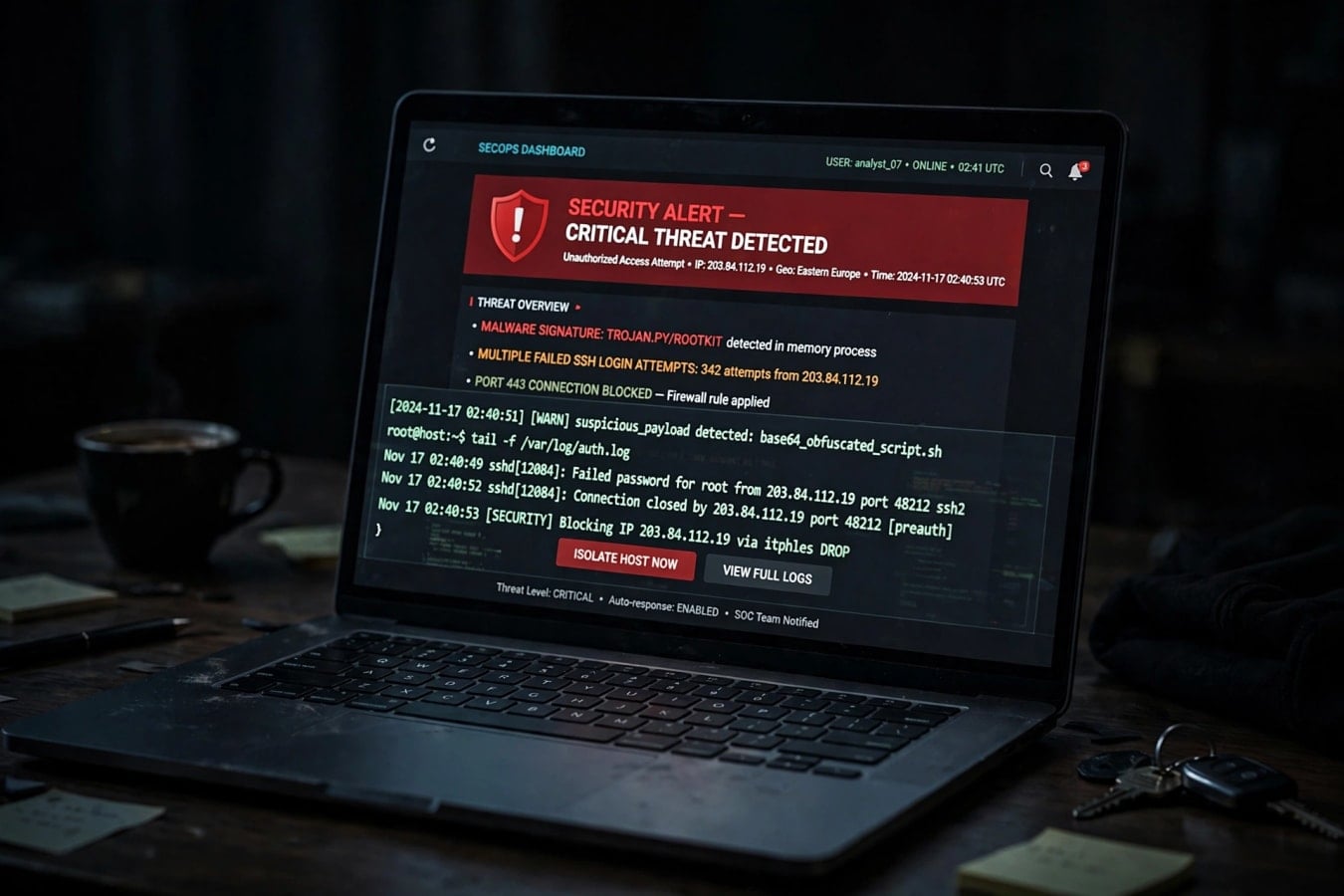
Some of the world's most popular websites spent Monday, November 16, 2026, serving malware to their own visitors — and none of those sites had been hacked directly. The attack targeted Optimizely, a widely used A/B testing and personalisation service. Many large websites load a small JavaScript snippet from Optimizely's content delivery network, cdn.optimizely.com, on every page. That snippet runs the site's experiments and lets businesses tweak page content and layout without changing their own code. An attacker exploited a flaw in Optimizely Web Experimentation and wrote malicious code into the "Project JavaScript" field of customer projects — a custom-code field that customers use to run their own scripts alongside experiments. Because the snippet was still served from cdn.optimizely.com with Optimizely's own certificate, every page that loaded it also ran the attacker's loader. Security researcher Scott Helme, of the firm Report URI, spotted the injected code the same day. Optimizely confirmed the breach in an incident notice posted at 01:02 UTC on November 17, saying an unauthorised party had "exploited a vulnerability in Experimentation and used it to add malicious JavaScript to some customer projects."
How big was the attack
Report URI checked 1,611 Optimizely snippets, mostly identified through its own crawl data, and found malicious code in 188 of them, belonging to 178 organisations. The firm says the real number is likely higher, because it could only check the snippets it found in time. The affected list mixes household names with crypto and finance companies. By sector: News and media — CNN, BBC, Fox News; Video and calls — Zoom, Peacock; Technology and SaaS — Salesforce, GitLab; Retail — IKEA; Banking and finance — HSBC, Equifax, Air France-KLM, Ledger, OANDA, IG; Telecom — TalkTalk. By sector, the largest groups were banking and finance (32 organisations), technology and SaaS (23), retail and fashion (20), streaming and entertainment (12) and news and media (10). Notably, the malicious code was also found in Optimizely's own website and login portal snippets. The first injection was seen at 04:21 UTC on November 16, in the BBC's snippet. The payload domain, 1688360.cc, had been registered at 05:23 UTC the same day. By 21:52 UTC that evening, only one snippet — TalkTalk's — was still infected, down from 169 at 20:56 UTC. Report URI's monitoring found the infected files clean by 23:11 UTC on November 16, and Optimizely's status page still listed the incident as monitoring at 07:30 UTC on November 17. One early estimate put the code's reach at roughly 34 million page visits, with a wide range of 6 million to 150 million. Those figures are preliminary estimates from external scanning, not Optimizely's own numbers.
What the malware did
The injected code was a multi-purpose kit, and every part of it was active at once. The payload, a file called track.js of about 30 KB, had three independent blocks.
- Crypto wallet swapping. The code replaced valid crypto wallet addresses with the attacker's own addresses in page text, forms, links, the clipboard and outgoing requests. Anyone copying a wallet address from an affected page could have sent funds to the attacker instead.
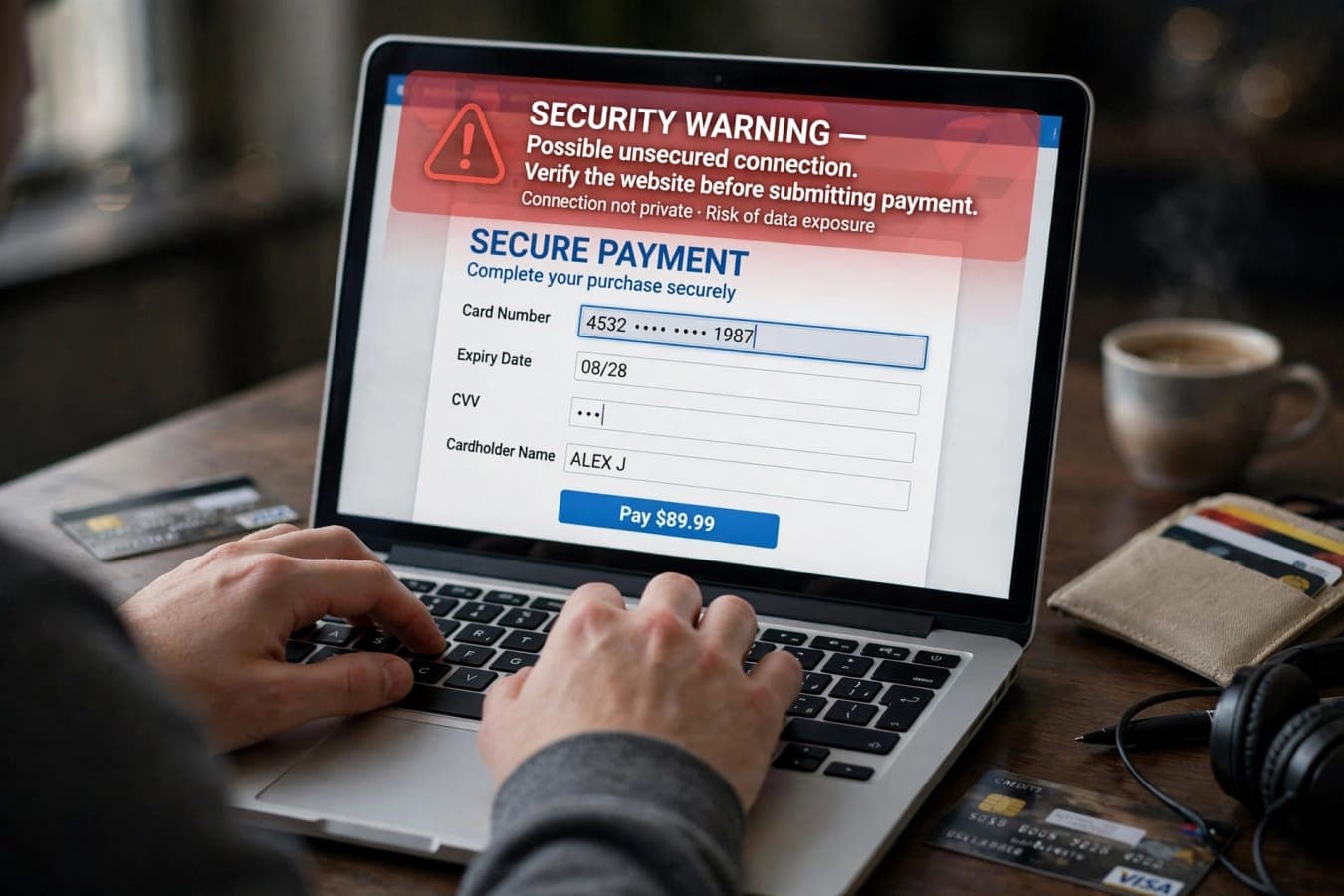
- Card skimming. The code was built to capture card details typed into a site's own payment forms.
- Data theft. It also stole non-HttpOnly cookies and took screenshots of pages.
- iOS exploit kits. On iPhones and iPads, the code was set up to load a second stage that Report URI identifies as the Coruna and DarkSword iOS exploit kits, as documented by Google researchers. Report URI says no iPhones were actually taken over. The loader came in three versions. Most snippets loaded 1688360.cc/track.js directly. One version hid that address in base64 so a text search for the domain would miss it. Another carried a full copy of the payload that runs even if the domain is blocked. The payload was rebuilt 26 times during the day.
How much was stolen
As of 19:25 UTC on November 16, the attacker's wallets had received about $7,040 in cryptocurrency, all within roughly nine hours that day. The wallets collecting BTC, ETH and LTC had been emptied by 05:39 UTC the next morning. Divided across the 178 organisations in Report URI's list, the crypto loss works out to about $40 per affected site — a small haul for an attack of this scale. But the firm cannot see how many card numbers were exposed to the attacker, so the full damage may be larger than the crypto figure suggests. The payload domain was put on registry hold at 00:37 UTC on November 17 and no longer resolves.
Why this attack worked
The attack is a textbook supply-chain attack, and it worked because of trust. None of the affected sites had to be breached. The attacker only had to change what the trusted vendor was serving. Three things made it especially dangerous:
- Trusted source. The malicious code arrived from cdn.optimizely.com, signed with Optimizely's certificate, from a host every affected site had already decided to trust.
- Invisible injection. The attacker left the rest of each snippet untouched, so the sites' own experiments kept working normally. Nothing looked broken.
- Wide reach. Optimizely runs on about 190,000 live sites, according to BuiltWith, so a single compromised vendor field could reach visitors across the web. Report URI does not know how the attacker got write access to so many unrelated customer projects. It lists a compromised Optimizely system, a compromised credential with cross-customer access, or something else, and says that is for Optimizely to explain. Optimizely's incident notice does not say how the flaw worked, how many projects were changed, when the fix went in, whether the attacker still has any access, or what customers should do.

What stopped it for some sites
Not every affected organisation was equally exposed. Report URI found that 24 organisations blocked the malicious code because their Content Security Policy (CSP) script-src rules listed only the hosts they actually needed. CSP is a browser security feature that lets a site declare exactly which domains are allowed to run scripts on its pages. A tight CSP can stop a compromised third-party script from loading new code from an attacker's domain — which is exactly what happened here. The lesson is one security teams have heard before, but rarely this clearly: a strict CSP is one of the few controls that can limit the damage when a trusted supplier is compromised.
What Optimizely has said
Optimizely has said it fixed the vulnerability and removed the injected code from affected projects. The vendor has also taken steps to secure affected user accounts and added protections to stop unauthorised code from being delivered. What the company has not yet explained is how the attacker gained access, how many projects were modified, or what affected customers should do now. Until the vendor publishes which projects were changed, an affected operator cannot fully rule out a return of the attack.
What you should do
If you visited any of the affected sites on November 16, 2026, a few precautions are worth taking:
- Check crypto transactions. If you copied a wallet address from a website that day and sent funds, verify the destination address matches the one you intended.
- Watch your cards. If you entered card details on an affected site, monitor your statements for unfamiliar charges and consider asking your bank for a replacement card.
- Update your iPhone. If you browsed on an iPhone or iPad, make sure iOS is fully up to date. No iPhones were reported taken over, but keeping the device patched is the safest step.
- Use a password manager. If you logged in to any affected site, changing that password is a sensible precaution, especially if you reuse passwords across sites. For website owners, the incident is a reminder to review third-party scripts, tighten Content Security Policy rules, and check whether tools with write access to live pages have the protections they need.
The bottom line
OPTIMJACK shows how fragile the modern web's trust model can be. One flaw in one vendor's experimentation tool turned 178 of the world's biggest websites into malware dispensers for a day — and the sites themselves did nothing wrong. The crypto haul was small, but the attack's reach was enormous, and the unanswered questions matter more than the money. Until Optimizely explains how the attacker got in, every organisation that loads third-party scripts should treat this as a warning: the code you trust is only as safe as the vendor that serves it.
FAQs
What is OPTIMJACK?
OPTIMJACK is the name researchers gave to the November 16, 2026 supply-chain attack in which malicious JavaScript was injected into Optimizely Web Experimentation scripts and served to visitors of at least 178 organisations.
Which websites were affected?
At least 178 organisations, including CNN, the BBC, Fox News, Zoom, Salesforce, GitLab, IKEA, HSBC, Equifax, Air France-KLM, Ledger and Peacock. Report URI published the full list of affected domains.
What did the malware do?
It swapped crypto wallet addresses for the attacker's own, skimmed card details typed into payment forms, stole cookies and screenshots, and tried to load iOS exploit kits on iPhones and iPads.
How much money was stolen?
About $7,040 in cryptocurrency had reached the attacker's wallets by 19:25 UTC on November 16, 2026. It is not known how many card numbers were exposed.
Has Optimizely fixed the problem?
Optimizely says it fixed the vulnerability and removed the injected code from affected projects, and added protections to stop unauthorised code being delivered. It has not explained how the attacker gained access.
What should I do if I visited an affected site on November 16?
Check any crypto transactions made that day, monitor your card statements, update your iPhone or iPad to the latest iOS, and consider changing passwords for accounts you logged into.
Was this article helpful?
Explore Specs, Comparisons & Related Topics

Written By
TechorCoffeeEditorial Team
The TechOrCoffee Editorial Team covers consumer hardware, artificial intelligence, software engineering, and regional smartphone & laptop market analysis.
Comments (0)
Leave a Comment
Read Next

Thu Oct 22 2026
PHP Security Vulnerabilities: Key Risks for Websites
Learn why PHP security matters, how website vulnerabilities can create risks, and what website owners can do to keep their systems secure.

Fri Nov 06 2026
AI Hackers Target Banks at Machine Speed, CERT-In Warns
CERT-In warns 'Crafty Falcon' is using AI tools to breach Indian lenders, fintech and crypto firms at machine speed. What the advisory says.

Fri Oct 30 2026
Gemini 4 Carbon: Google New No. 1 AI, Nobody Can Use Yet
Gemini 4 Carbon explained: Google second frontier model in two weeks, top benchmark scores, cybersecurity focus, Fairwind-only access, and price.