Pixel 10 Pro in 2026: Still Worth Buying?

Published
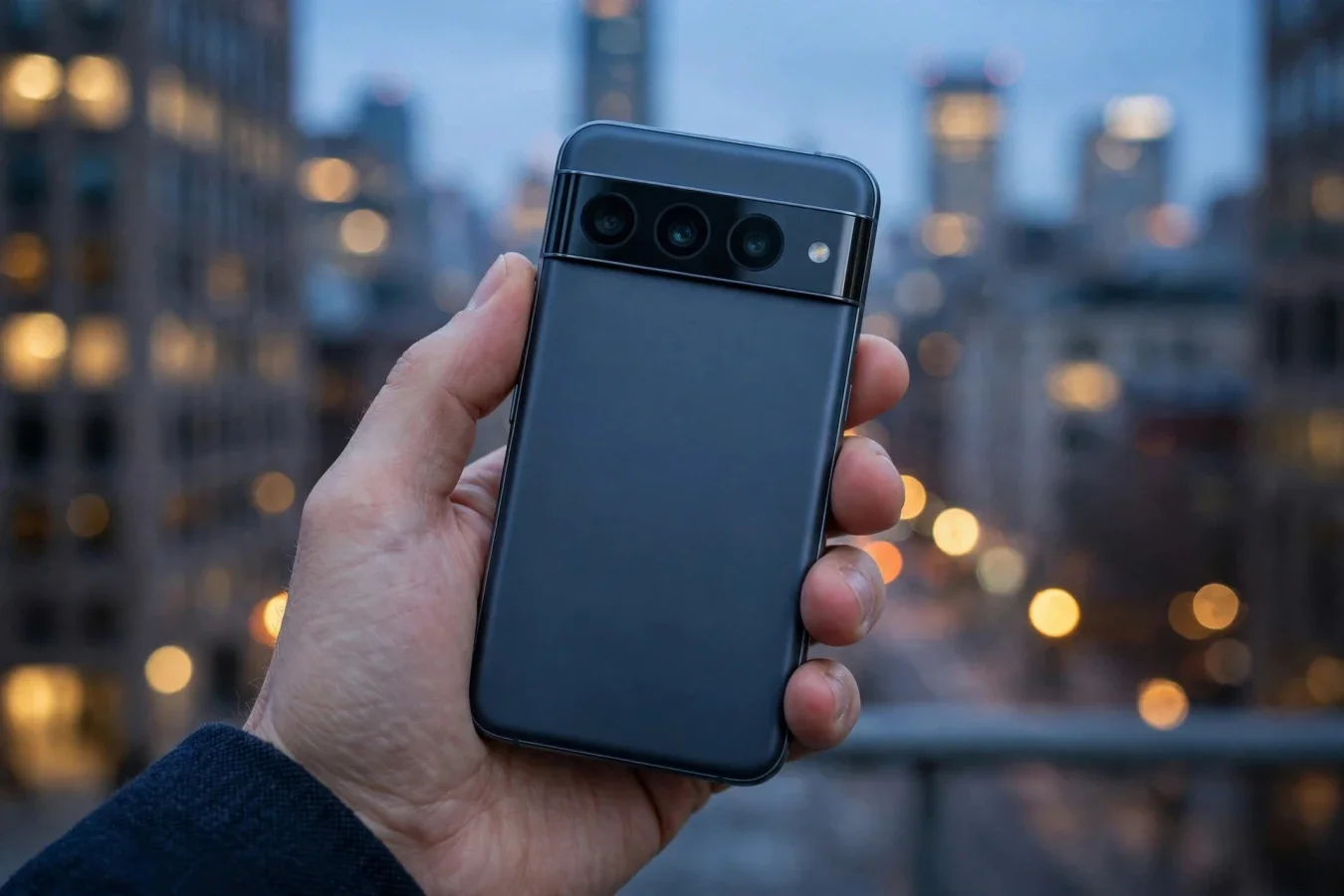
The Pixel 10 Pro is last year's phone — and that's exactly why it's interesting
The Google Pixel 10 Pro launched in August 2025 at $999. A year later, the Pixel 11 Pro has arrived with Tensor G6, the 10 Pro is no longer sold directly by Google, and retailers are discounting the remaining stock — PhoneArena reported a $300 discount, to $699 for the 128GB Obsidian model, in late 2026 coverage, calling it a rare deal after price hikes elsewhere.
That changes the question. At $999, the Pixel 10 Pro was a polished but evolutionary flagship. At $699, or at the discounted prices listed by retailers in October 2026 (GSMArena affiliate listings showed $549.90 for 128GB in some regions, though prices vary by market and seller), it's a different proposition: a compact flagship with excellent cameras, 16GB of RAM, a bright display, and years of updates left, for significantly less than a current flagship.
This guide, synthesised from published reviews and spec listings rather than personal hands-on testing, breaks down what the Pixel 10 Pro actually offers in 2026, where it falls short, and who should buy it — and who should buy the Pixel 11 Pro instead.
Design and display: small, premium, and very bright
The Pixel 10 Pro is a compact flagship by 2025 and 2026 standards: 152.8 by 72.0 by 8.5mm, 207 grams, with a glass front and back (Gorilla Glass Victus 2) and an aluminium frame, and IP68 dust and water resistance (immersible up to 1.5 metres for 30 minutes). It looks nearly identical to the Pixel 9 Pro — same camera bar, same flat sides, same clean Pixel design — in colours including Obsidian, Moonstone, Jade, and Porcelain. AndroidHeadlines, which reviewed a Moonstone unit, called it the most polished Pixel yet, even if it looks nearly identical to last year's model.
The display is a 6.3-inch LTPO OLED, 120Hz, HDR10+, 1280 by 2856 (495ppi), 2,200 nits in high-brightness mode, and 3,300 nits peak — up from the Pixel 9 Pro's 3,000 nits, per Google's comparison. It stays readable in sunlight, and HDR pops. It's not the largest screen — the XL is 6.8 inches — but for one-handed use, 6.3 inches is a sweet spot few flagships still offer.
One genuinely new hardware feature is Pixelsnap: built-in Qi2 magnets for magnetic charging and accessories, similar in concept to Apple's MagSafe. The Pixel 9 Pro didn't have it. Pixelsnap means magnetic chargers, wallets, and mounts snap on without a magnetic case, and it makes wireless charging alignment painless. It's a small feature that you notice daily, once you've used it.
Tensor G5: cooler, not dramatically faster
The headline chip change is Tensor G5, Google's first Tensor built by TSMC on a 3nm process (N3E), rather than Samsung's foundry. The chip is octa-core: one Cortex-X4 at 3.78GHz, five Cortex-A725 at 3.05GHz, and two Cortex-A520 at 2.25GHz, with a PowerVR GPU, and 16GB of RAM across all storage tiers (128GB, 256GB, 512GB, 1TB).
On paper, Google claims a 34% faster CPU than Tensor G4. In real use, reviewers found it hard to notice, according to October 2026 comparisons. Geekbench scores cited by AndroidHeadlines — 1,708 single-core, 4,441 multi-core — are about 16% faster single-core and 29% faster multi-core than the previous generation in that review's testing, but the GPU was underclocked at review time, so those scores should be treated with care.
The bigger win is heat. TSMC now makes the chip, and early testing found the G5 runs cooler than the G4 did in everyday use, according to Technwz's October 2026 comparison — fixing the overheating complaints that plagued earlier Pixels in hot climates, as noted in Pakistan-market coverage. That's the difference you'll actually feel: a phone that doesn't get uncomfortably warm on a long video call, or throttle during a hot afternoon, rather than a phone that feels dramatically faster in normal apps.
Gaming is still the weak spot. The GPU trails rival chips from Qualcomm and Apple, and demanding games like Genshin Impact can't hold 60fps at max settings, according to the same comparison. If mobile gaming at max settings is your priority, a Snapdragon or Apple-silicon phone will serve you better. For everything else — browsing, messaging, photography, AI features — Tensor G5 is ample, and its on-device AI performance, with Gemini Nano, is where Google positions its advantage: features that rely on on-device smarts feel quicker and more consistent, from call assistance to photo editing.
Cameras: the same hardware, smarter software
The Pixel 10 Pro's camera hardware is identical to the Pixel 9 Pro's — and that's not a criticism, because it was already excellent. The triple rear system is:
- Main: 50MP, f/1.7, 25mm, 1/1.31-inch sensor, 1.2µm pixels, dual-pixel autofocus, optical image stabilisation.
- Ultrawide: 48MP, f/1.7, 123-degree field of view, 1/2.55-inch, dual-pixel autofocus.
- Telephoto: 48MP, f/2.8, 113mm periscope, 5x optical zoom, 1/2.55-inch, dual-pixel autofocus, OIS.
- Front: 42MP, f/2.2, 17mm ultrawide, autofocus.
Video: rear 8K at 30fps via cloud-based upscaling, 4K at 24/30/60fps, 1080p up to 240fps, with gyro-EIS, OIS, and 10-bit HDR; front 4K at 30/60fps.
What changed is software, powered by Tensor G5 and Gemini. Camera Coach, new in the Pixel 10 series, uses Gemini to analyse the shot and give you useful suggestions — framing, lighting, composition — like having a pro photographer in your pocket, according to Google and PhoneArena. Pro Res Zoom now goes up to 100x, up from 20x on the 9 Pro, using AI to enhance detail at extreme zoom (treat 100x as a computational zoom, not optical — the optical limit is still 5x, and quality drops sharply beyond about 30x). High-Res Portrait Mode captures 50MP detail, Add Me and Best Take are smarter, and you can resize and move subjects in photos with Magic Editor tools.
In published reviews, the Pixel 10 Pro matched the Pixel 9 Pro's overall camera score (151 in one benchmark cited by PhoneArena, against a current best of 158). If you already own a 9 Pro, the camera alone is not a reason to upgrade. If you're coming from an older phone, its computational photography — Night Sight, Astrophotography, Real Tone, Face Unblur — remains among the best, especially for point-and-shoot reliability.
Battery, charging, and software: the long game
Battery is 4,870mAh (typical, 4,707mAh minimum), up from the Pixel 9 Pro's 4,700mAh. Google claims 24-plus hours with regular use, and up to 100 hours with Extreme Battery Saver. In practice, reviewers found a comfortable full day, with the efficient Tensor G5 and LTPO display stretching the cell, even if 4,870mAh is modest on paper compared with some rivals' 5,000mAh-plus cells.
Charging is the weak point: 30W wired (55% in 30 minutes, per GSMArena), 15W Qi2 wireless with Pixelsnap magnets, and reverse wireless charging. A full charge takes roughly an hour and a half, according to Pakistan-market coverage — slow next to the 100W rivals at this price. If you charge overnight, that doesn't matter. If you top up in 15 minutes before heading out, it does.
Software is where its long-term value lies. It launched on Android 16, with up to 7 major Android upgrades promised — updates through about 2032 from its August 2025 launch. In late 2026, roughly six years remain, plus Pixel Drops adding new AI tools. That's longer than most Android rivals, and a major reason to buy a discounted 10 Pro over a cheaper phone with a shorter window.
AI features include Magic Cue, Call Assist and real-time call translation, Gemini Live, Pixel Studio, Magic Editor, Best Take, and Photo Unblur. Magic Cue isn't available on older Pixels — a reason to choose the 10 Pro over a discounted 9 Pro, if you use it daily.
Price in 2026: what to pay, and what to avoid
Launch price was $999 for 128GB. In late 2026, the picture is:
- US: PhoneArena reported a $300 discount to $699 for 128GB Obsidian at Amazon, valid while supplies last, and noted the phone is no longer sold directly by Google — so once retailer stock is gone, it could disappear entirely.
- UK and Europe: GSMArena affiliate listings in October 2026 showed £552.38 for 128GB and £750 for 256GB in some listings, though affiliate prices vary and should be checked at purchase.
- India: Smartprix listed ₹94,990 for 256GB in October 2026, with the price last changed on 9 October 2026, and the phone out of stock at that listing; Beebom listed ₹99,849. Prices vary by seller and availability.
Treat all of these as snapshots, not guarantees. The key point is the direction: the 10 Pro is getting cheaper, while the Pixel 11 Pro is at full price. If you find a 10 Pro at $699 or below, with a warranty, from a reputable retailer, that's a strong deal for a flagship with 16GB RAM and six years of updates left. If it's still near $999, buy the Pixel 11 Pro instead — you'll get Tensor G6, a newer camera system, and a full seven years of updates from 2026, for the same money.
Also check storage: the base 128GB model is the one most discounted, and it's fine if you use cloud photos and streaming. If you shoot a lot of 4K video, or keep large games and offline maps, 256GB is worth the step up — and it's worth noting, as PhoneArena did, that the cheapest Pixel 10 Pro packs 16GB of RAM, four more than an entry-level Pixel 11 Pro configuration with higher storage, according to that coverage. RAM matters for AI features and multitasking, so don't dismiss the 10 Pro on RAM grounds.
Who should buy it, and who shouldn't
Buy the Pixel 10 Pro in 2026 if:
- You want a compact flagship with excellent cameras, and you don't need the largest screen.
- You find it at a genuine discount ($699 or below in the US, or equivalent in your market), with warranty, from a reputable retailer.
- You value clean Android, Gemini AI features, and a long update window — six years left is still excellent.
- You had heat issues with an older Pixel, and you want the cooler TSMC-built Tensor G5.
- You want Pixelsnap magnetic charging, which the 9 Pro lacks.
Buy the Pixel 11 Pro instead if:
- The 10 Pro is still near full price in your market — the 11 Pro gives you a newer chip and a full update window for the same money.
- You need the latest camera hardware, or you want Tensor G6's AI performance.
- You want a phone sold directly by Google, with full support and availability, rather than remaining retailer stock.
Buy the Pixel 9 Pro instead if:
- It's significantly cheaper than the 10 Pro in your market, and you don't need Magic Cue, Pixelsnap, or the cooler G5 chip. The cameras, screen size, and RAM are the same, and it also gets seven years of updates from its 2024 launch.
Don't buy the Pixel 10 Pro if:
- Mobile gaming at max settings is your priority — the GPU trails Snapdragon and Apple chips.
- You need the fastest possible charging — 30W wired is slow for this price.
- You want a large screen — the 6.3-inch display is compact, not expansive, and the XL is the large-screen option.
For most people looking for a smart Android buy in late 2026, the Pixel 10 Pro at a discount is hard to turn down, as PhoneArena put it: a small, gorgeous, camera-first flagship, with a cooler chip, a brighter screen, and years of updates left, for hundreds less than its successor. Just don't pay full price for last year's phone — the discount is the whole point.
FAQs
When was the Pixel 10 Pro released?
The Pixel 10 Pro launched in August 2025 at $999, with Tensor G5, a 6.3-inch LTPO OLED display, and a triple 50MP + 48MP + 48MP camera system.
How much does the Pixel 10 Pro cost in 2026?
Launch price was $999. In late 2026, retailers discounted it to about $699 in the US for 128GB, with prices varying by market and seller. Check current retailer prices before buying.
What is different about the Pixel 10 Pro vs Pixel 9 Pro?
Tensor G5 on TSMC 3nm (cooler, not dramatically faster), a brighter 3,300-nit display, a slightly larger 4,870mAh battery, Pixelsnap magnetic charging, Camera Coach, and Pro Res Zoom up to 100x. Camera hardware is identical.
Is the Pixel 10 Pro still worth buying in 2026?
Yes, at a genuine discount, for its cameras, compact size, 16GB RAM, and remaining update window. At full price, buy the Pixel 11 Pro instead.
How long will the Pixel 10 Pro get updates?
Google promises up to 7 major Android upgrades from its August 2025 launch, so updates through about 2032. In late 2026, roughly six years remain.
Is Tensor G5 good for gaming?
No, gaming is the weak spot. The GPU trails Qualcomm and Apple chips, and demanding games cannot hold 60fps at max settings. For browsing, photography, and AI, it is ample.
Should I buy Pixel 10 Pro or Pixel 11 Pro?
Buy the 10 Pro if it is significantly discounted with warranty. Buy the 11 Pro if the 10 Pro is near full price, or if you want Tensor G6, newer cameras, and a full seven years of updates from 2026.
Was this article helpful?

Written By
TechorCoffeeContributing Writer
TechorCoffee is a technology reporter and software creator writing reviews and tutorials for TechOrCoffee.
Comments (0)
Leave a Comment
Read Next

Thu Apr 09 2026
Leaks & Rumors: iPhone 18 Pro Max vs iPhone 17 Pro Max: Full Comparison
The iPhone 17 Pro Max is already a fully matured flagship—top camera, insane battery life, and stable performance. The iPhone 18 Pro Max is expected to refine the experience further, not revolutionize it.
Tue Jun 16 2026
Samsung Galaxy Z Fold 8 vs Galaxy Z Fold 7:Worth to Upgrade?
Samsung Galaxy Z Fold 8 vs Galaxy Z Fold 7: Is it worth the upgrade? Compare specs, battery upgrades, 45W charging, and camera leaks before you buy.

Wed Apr 08 2026
Leaks & Rumors: iPhone 18 Pro Max: Every Leak, Spec and Upgrade Confirmed
The iPhone 18 Pro Max is expected in September 2026 as Apple’s most powerful iPhone yet. It features a 6.9-inch LTPO OLED display, A20 Pro chip, 48MP camera with variable aperture, 5,100–5,200mAh battery, C2 modem with satellite support, and a starting price of $1,199.