Pixel 11 Pro: Compact AI Phone to Beat?

Published
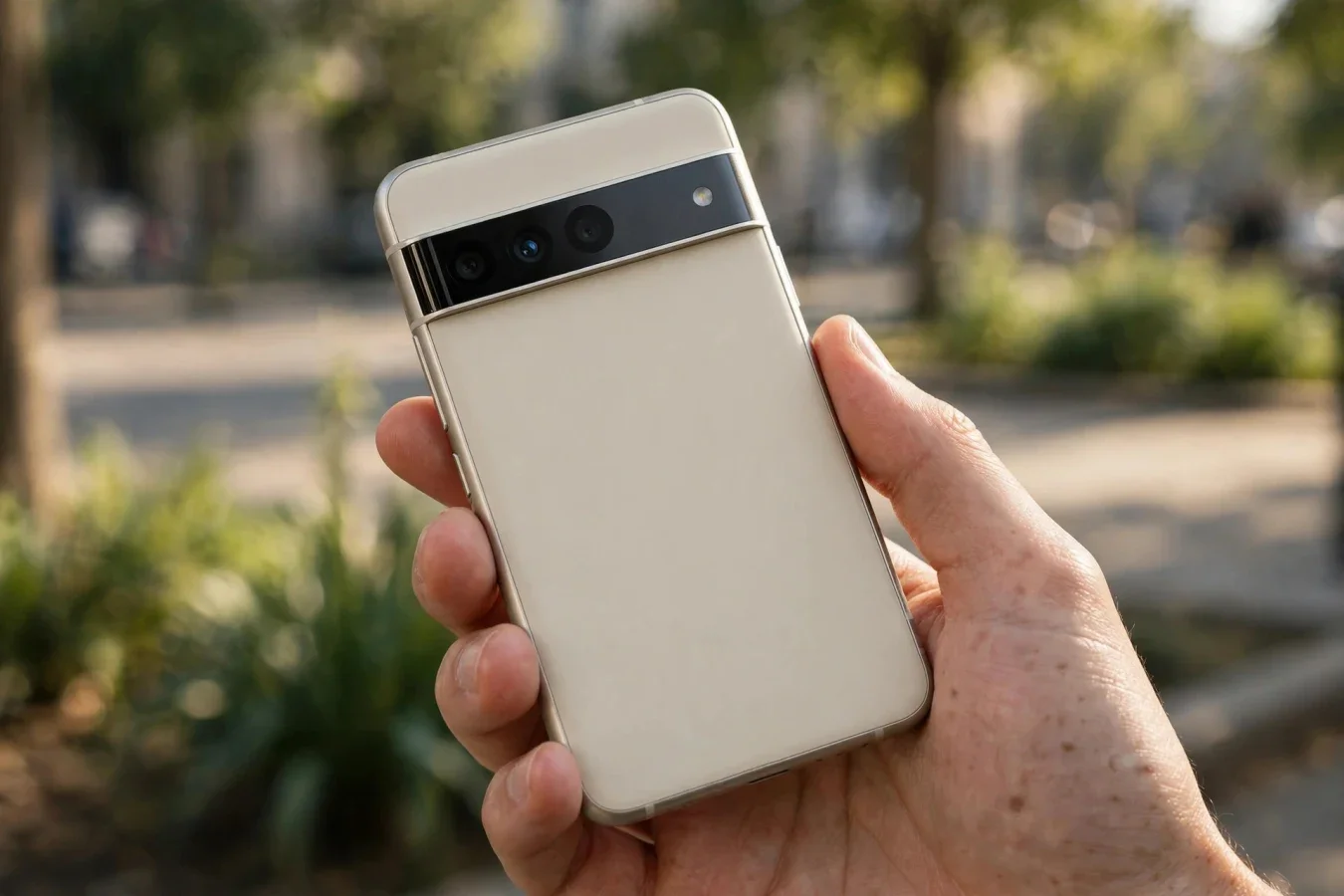
The compact flagship that doesn't feel like a compromise
The Google Pixel 11 Pro is a difficult phone to review, because the specification sheet does not fully explain why people like it. PhonesGate's editorial overview put it that way, and it's accurate: on paper, the Pixel 11 Pro is slower than the Galaxy S26 Ultra, smaller than most flagships, and — at launch — $100 more expensive than its predecessor. In use, according to published reviews, it's one of the best compact camera phones you can buy, with Android 17, genuinely useful AI tools, and a price that fell to $849 in October 2026, $250 below launch.
This review, synthesised from published reviews and spec listings rather than personal hands-on testing, covers what the Pixel 11 Pro actually is: a 6.3-inch, 204-gram flagship that trades benchmark bragging rights for camera intelligence, software longevity, and a size you can actually hold.
Design, display, and size: pocketable, finally
The Pixel 11 Pro does not reinvent Google's industrial design. The horizontal camera bar remains, but the overall finish is cleaner and more mature, with edge-to-edge glass around the camera area, polished metal edges, and a matte rear finish, according to PhonesGate. It's available in Canyon, Olive, Fog, and Obsidian.
At approximately 152.7 by 71.9 by 8.4mm and 204 grams, the Pixel 11 Pro is one of the few genuinely compact premium phones left. Compare that with the Galaxy S26 Ultra at 163.6 by 78.1 by 7.9mm and 214 grams, or the Pixel 10 Pro at 152.8 by 72 by 8.5mm and 207 grams — the 11 Pro is slightly smaller and lighter than its predecessor, and noticeably smaller than Samsung's Ultra. For one-handed use, for a jacket pocket, or for a smaller hand, that difference is not trivial. It's the reason many buyers choose a Pixel Pro over a larger flagship, even when the larger phone has a bigger battery or a more powerful chip.
The display is a 6.3-inch Super Actua LTPO OLED, 1280 by 2856, 1 to 120Hz adaptive refresh, with Gorilla Glass Victus 2. Peak brightness is reported as 2,450 nits in one summary and 3,300 nits in a deal listing — measurement method differs, so treat both as "very bright". Reviewers found it bright, vibrant, and smooth, with LTPO saving battery by dropping to 1Hz when static.
Built-in Pixelsnap magnets mean magnetic chargers, wallets, and mounts snap on reliably, a feature the Galaxy S26 Ultra lacks.
Tensor G6: excellent daily performance, not the benchmark king
Google's Tensor G6, paired with the Titan M3 security coprocessor, is the heart of the Pixel 11 Pro, and it's also the most misunderstood part of it. Independent reviewers generally report smooth, reliable everyday performance, but Tensor G6 does not suddenly turn the Pixel into the fastest Android phone in synthetic benchmarks or sustained gaming, according to PhonesGate. Android Authority praised real-world smoothness and a much-improved modem, while still noting that Tensor G6 itself is not a huge raw-performance leap.
That framing matters. If you buy a phone for benchmark scores, or for sustained high-end gaming at maximum settings, the Snapdragon 8 Elite Gen 5 in the Galaxy S26 Ultra will beat Tensor G6, and Tom's Guide's reported Geekbench 6 scores — 2,649 single-core and 7,164 multi-core, plus 3,113 in 3DMark Wildlife Extreme Unlimited at an average 18.65fps — confirm the Pixel is a step behind the fastest Android chips on raw numbers. Its Geekbench AI score was 9,148, which is more relevant to what Tensor G6 is actually for.
Google's answer, as GadgetScout put it, is characteristically different: use Tensor G6 not to chase the largest benchmark figure, but to make the camera and Gemini tools feel more woven into daily tasks. Tensor G6's ML accelerator powers Magic Capture (below), on-device Gemini features, Call Assist, and camera processing that would be slower or cloud-dependent on other chips. The chip is built on a 2-nanometer process in one review summary, and 3nm TSMC in another — the discrepancy reflects different sources, but both agree it's a newer, more efficient process than the Samsung-built Tensor G5, with a seven-core layout (1 by 4.11GHz, 4 by 3.38GHz, 2 by 2.6GHz in one listing) and an Imagination GPU.
Storage starts at 256GB — Google killed off the 128GB tier entirely — with 12GB of RAM on the 256GB model, and 16GB on 512GB and 1TB models, using Zoned UFS storage in one listing. That's a sensible base in 2026, though the 12GB versus 16GB split is worth noting: if you keep a phone for seven years, the 512GB model with 16GB RAM may age better for AI features, even if you don't need the extra storage.
Cameras and Magic Capture: the reason to buy a Pixel
The rear camera system is the Pixel 11 Pro's strongest argument:
- Main: 50MP, f/1.68, with autofocus.
- Ultrawide: 48MP, f/1.7.
- Telephoto: 48MP periscope, 5x optical zoom, up to 120x Pro Zoom (digital).
- Front: 42MP, f/2.2, autofocus.
The genuinely new 48MP periscope telephoto lens is the centrepiece, extending reach noticeably past what last year's Pro offered, according to Dev.to's review summary. The 5x optical zoom is now backed by a larger sensor, so zoomed shots are sharper and less noisy than on the Pixel 10 Pro, and 120x Pro Zoom — while digital, and best used with a tripod and good light — gives you reach that most flagships can't match for a distant subject.
The headline software feature is Magic Capture. When activated, the phone runs two simultaneous pipelines — one capturing continuous video and a second capturing high-resolution stills — and Tensor G6's ML accelerator analyses every frame in real time to extract the optimal 12-megapixel HDR+ shot, according to TechTimes' deal coverage. Google has confirmed Magic Capture will not be extended to any prior Pixel model, so it's a genuine 11 Pro exclusive, not a software update you can get on an older Pixel.
In practice, Magic Capture is for moments you can't re-shoot: a child jumping into a pool, a pet mid-leap, a street scene that changes in a second. Instead of choosing between video and stills, or hoping you tapped the shutter at the right instant, you get both, and the phone picks the best frame. It's not perfect — AI frame selection can pick a slightly different moment than you would — but for unpredictable subjects, it's a meaningful advantage over a traditional camera app.
Beyond Magic Capture, the Pixel's computational photography remains its core strength: HDR+ processing, Night Sight, and Google's colour science produce consistent, shareable photos with minimal editing, especially for point-and-shoot users. Reviewers called the cameras fantastic, and Android Police's deal coverage noted the phone "has fantastic cameras, and the software is always evolving" — a fair summary of why Pixel buyers stay with Pixel, even when rivals have faster chips.
Battery, charging, and software: 30-plus hours, seven years
Battery capacity actually dropped slightly this generation, landing at 4,850mAh — a small dip rather than the growth people generally expect from a flagship refresh, according to Dev.to. Yet Google rates it at 30-plus hours, and reviewers found all-day battery in normal use, thanks to the more efficient Tensor G6 and LTPO display. The dip is worth noting, but in practice, the 11 Pro lasts a full day for most users, and often into a second day with light use.
Charging is quick wired and wireless, with Pixelsnap magnetic wireless charging, though exact wattage varies by source and region — check Google's specs for your configuration. USB-C 3.2 is the port, with fast data transfer for video and photos.
Software is Android 17, with seven years of Android OS, security, and Pixel Drop updates, which The Guardian reported would run through August 2033, according to GadgetScout. That's one of the longest update commitments in Android, and it's a major reason to buy a Pixel over a rival with a shorter window: a phone bought in late 2026 should still be receiving OS updates in 2033, with new Pixel Drop features along the way. One UI 8.5 on Samsung is also long, but Google's Pixel Drops — quarterly feature updates that add new AI tools, camera features, and software improvements — are a distinct advantage for Pixel owners who like their phone to get better over time.
Price in October 2026: $1,099 launch, $849 deal
The Pixel 11 Pro starts at $1,099 in the US, $100 more than the previous generation's starting position, although base storage now begins at 256GB, according to PhonesGate. UK RRP at launch was £1,079 for 256GB, and India price as of 30 October 2026 started at ₹119,999, according to Gadgets360.
Then came the deals. On 6 October 2026, Android Police reported the Pixel 11 Pro was hard to resist with its new $849 price — $250 off launch, for the base 256GB model, with no trade-in, no carrier commitment, and no installment plan, during Amazon Prime Big Deal Days, for Prime members, covering all four colourways. TechTimes reported the same $849 all-time low on 7 October, with the 512GB model at $969 (down from $1,219), and the standard Pixel 11 at $749 (down from $899). The sale ran through 11:59 p.m. ET on the final day, and prices have since fluctuated — a brief pre-Prime Day low was around $979, according to TechTimes.
At $849 with no strings attached, the Pixel 11 Pro enters a price tier that last housed Google's previous compact flagship, according to TechTimes — and at that price, it's an easy recommendation. At $1,099, it's still a good phone, but the value argument is weaker against a discounted Galaxy S26 Ultra at $949, or a discounted Pixel 10 Pro at $699 or less. If you're buying in late 2026, check current retailer prices before you pay launch price — the $849 deal may return, or a similar discount may be available from another retailer.
Who should buy it, and who shouldn't
Buy the Pixel 11 Pro if:
- You want a compact premium phone — 6.3 inches, 204 grams — that you can actually use one-handed, with a top-tier camera system and seven years of updates.
- Photography, especially unpredictable subjects, matters to you, and Magic Capture's dual video-plus-stills pipeline appeals to you.
- You want Google's AI tools woven into daily tasks — Gemini, Call Assist, camera processing — without relying on the cloud for everything.
- You want Pixelsnap magnets, Android 17, and Pixel Drops that add features over time, at a deal price around $849.
Don't buy it if:
- You want the fastest Android chip, or sustained high-end gaming at maximum settings. Tensor G6 is smooth daily, but Snapdragon 8 Elite Gen 5 is faster on benchmarks and sustained gaming.
- You want a large screen, a larger battery, or an S Pen. The Galaxy S26 Ultra offers all three, at a larger size and weight.
- You need a phone with a 1TB model at the lowest RAM tier, or you want a microSD slot. The 11 Pro has no expandable storage, and 256GB comes with 12GB RAM, not 16GB.
- You're paying full $1,099 launch price and a discounted rival flagship is available for less. Wait for a deal, or compare street prices before you commit.
The Pixel 11 Pro is, as Android Police put it, the Android phone to get in 2026 — for buyers who want a pocketable Android flagship centred on photography, voice-led Google software, and seven years of updates, as GadgetScout framed it. It's not the fastest phone, and it's not the cheapest flagship at launch price. At $849, though, it's hard to resist — and even at $1,099, it's the compact AI phone to beat.
FAQs
When was the Pixel 11 Pro released?
Google announced the Pixel 11 series on 12 August 2026, and the Pixel 11 Pro went on general sale on 20 August 2026 in the UK and US.
How much does the Pixel 11 Pro cost?
Launch price was $1,099 for 256GB in the US. In October 2026, Amazon Prime Big Deal Days dropped it to $849, $250 off, with 512GB at $969. Check current retailer prices.
What chip does the Pixel 11 Pro use?
Google Tensor G6, paired with the Titan M3 security coprocessor. It is smooth for daily use and AI features, but not the fastest Android chip on benchmarks.
What is Magic Capture on the Pixel 11 Pro?
A camera feature that runs video and stills pipelines at once, with Tensor G6 analysing every frame in real time to extract the optimal 12-megapixel HDR+ shot. Google says it will not come to older Pixels.
How long will the Pixel 11 Pro get updates?
Seven years of Android OS, security, and Pixel Drop updates, reported to run through August 2033.
How big is the Pixel 11 Pro?
6.3 inches, 152.7 by 71.9 by 8.4mm, 204 grams, with a Super Actua LTPO OLED display at 1-120Hz and Gorilla Glass Victus 2.
Is the Pixel 11 Pro better than the Galaxy S26 Ultra?
For compact size, camera intelligence, and Google AI, yes. For raw speed, larger screen, larger battery, and S Pen, the Galaxy S26 Ultra is better. Choose by size and priorities, not by spec sheet alone.
Was this article helpful?

Written By
TechorCoffeeContributing Writer
TechorCoffee is a technology reporter and software creator writing reviews and tutorials for TechOrCoffee.
Comments (0)
Leave a Comment
Read Next

Thu Apr 09 2026
Leaks & Rumors: iPhone 18 Pro Max vs iPhone 17 Pro Max: Full Comparison
The iPhone 17 Pro Max is already a fully matured flagship—top camera, insane battery life, and stable performance. The iPhone 18 Pro Max is expected to refine the experience further, not revolutionize it.
Tue Jun 16 2026
Samsung Galaxy Z Fold 8 vs Galaxy Z Fold 7:Worth to Upgrade?
Samsung Galaxy Z Fold 8 vs Galaxy Z Fold 7: Is it worth the upgrade? Compare specs, battery upgrades, 45W charging, and camera leaks before you buy.

Wed Apr 08 2026
Leaks & Rumors: iPhone 18 Pro Max: Every Leak, Spec and Upgrade Confirmed
The iPhone 18 Pro Max is expected in September 2026 as Apple’s most powerful iPhone yet. It features a 6.9-inch LTPO OLED display, A20 Pro chip, 48MP camera with variable aperture, 5,100–5,200mAh battery, C2 modem with satellite support, and a starting price of $1,199.