RAM Prices Have Exploded: The 2027 Memory Shortage

Published (Updated )
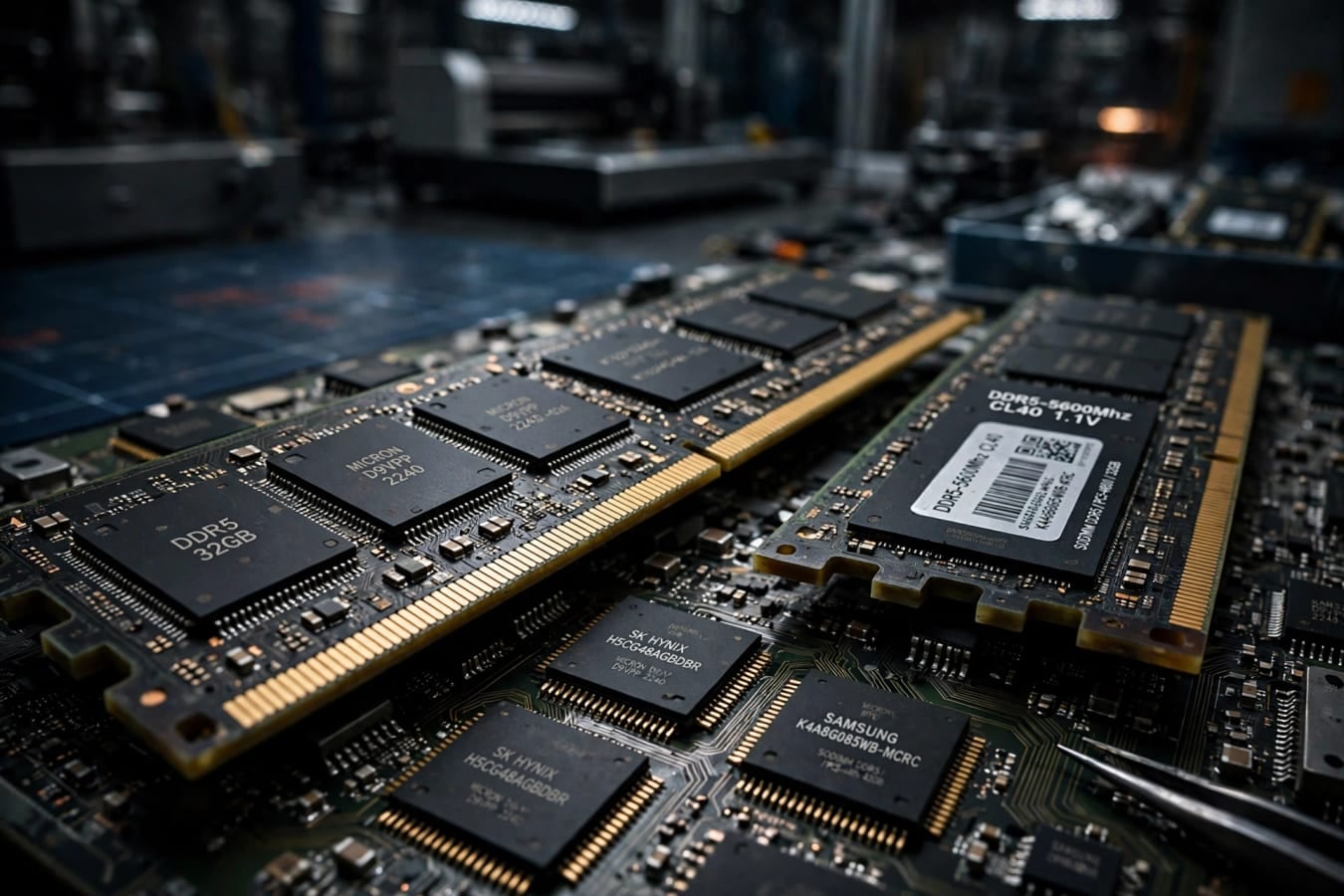
The quick answer
- RAM and SSD prices have exploded in a matter of months.
- A 32GB DDR5 kit that cost $91 in August 2026 now costs about $394.
- A 2TB Samsung 990 Pro SSD that cost about $119 last year now costs about $572.
- Samsung, SK Hynix and Micron make over 90% of the world's DRAM.
- Their 2027 production is effectively sold out, booked through long-term agreements.
- KB Securities forecasts DRAM prices will rise another 40% in 2027, and NAND flash 30%.
- The cause is AI: data centres are buying memory faster than factories can make it.
- HBM memory for AI chips now takes about 20% of all DRAM capacity, rising to about 30% in 2027.
- The shortage is expected to get worse in 2027, not better, and HPE's CEO has warned it could persist until at least the second half of 2028.
- In short: if you need RAM or storage, buy sooner rather than later — and do not expect big Black Friday discounts on memory this year.
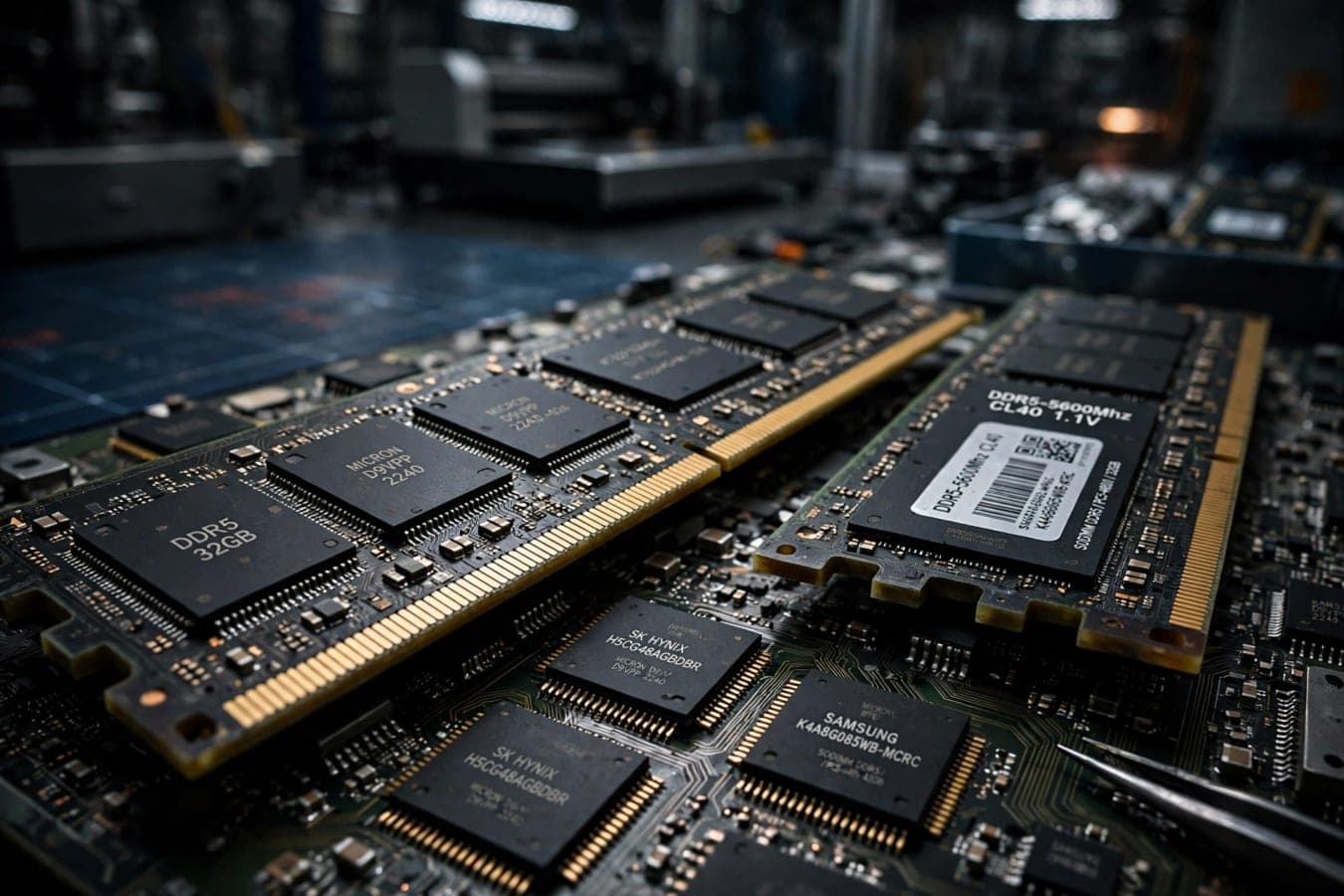
What "sold out" actually means
- When a factory sells out, it usually means the shelves are empty for a few weeks.
- This is different.
- Samsung, SK Hynix and Micron — the three companies that make over 90% of the world's DRAM — have effectively sold out their entire 2027 production.
- That production is booked through long-term supply agreements with big customers.
- Samsung has about 80% of its planned 2027 memory capacity locked into long-term deals, according to KB Securities, via Yonhap News.
- About 70% of its standard DRAM and NAND output is walled off in multi-year contracts of up to five years.
- That leaves very little for the open market, so smaller buyers, PC builders and retailers are competing for the scraps — and that is why shop prices have moved so fast.
- Samsung itself expects the crisis to get worse in 2027.
- Kim Jaejune, a senior manager in Samsung's memory division, told Reuters the gap between supply and demand will widen further and prices will keep rising.
- It is a structural shortage: the world's three biggest memory makers have already promised next year's output to someone else.
The price explosion in numbers
- The numbers from the shops tell the story better than any forecast.
- Here is what has happened to real prices:
- 32GB of DDR5 RAM: $91 in August 2026, about $394 now, according to Notebookcheck.
- That is more than four times the price in about three months.
- A 2TB Samsung 990 Pro SSD: about $119 last year, about $572 now.
- That is nearly five times the price.
- 16GB of RAM: $40 to $50 not long ago, about $200 now, according to a Hong Kong retailer cited by The Outpost.
- A 32GB DDR5-6000 kit: about $100 in February 2025, about $600 now.
- These are crisis-level jumps, and the forecasts say the worst is still ahead.
- KB Securities published its forecast on November 20, 2026.
- It expects DRAM average selling prices to rise 40% in 2027 compared with 2026.
- NAND flash prices are forecast to rise 30% over the same period.
- Those are market averages; the prices shoppers actually pay could move even faster.
- Demand is simply growing much faster than supply.
- Global DRAM demand is expected to grow 25% in 2027.
- Supply is expected to grow only 18%.
- That gap is the whole story.
- KB Securities also warns that major customers may secure only about 70% of the DRAM they actually need.
- When even the biggest buyers cannot get enough, smaller buyers feel it first.
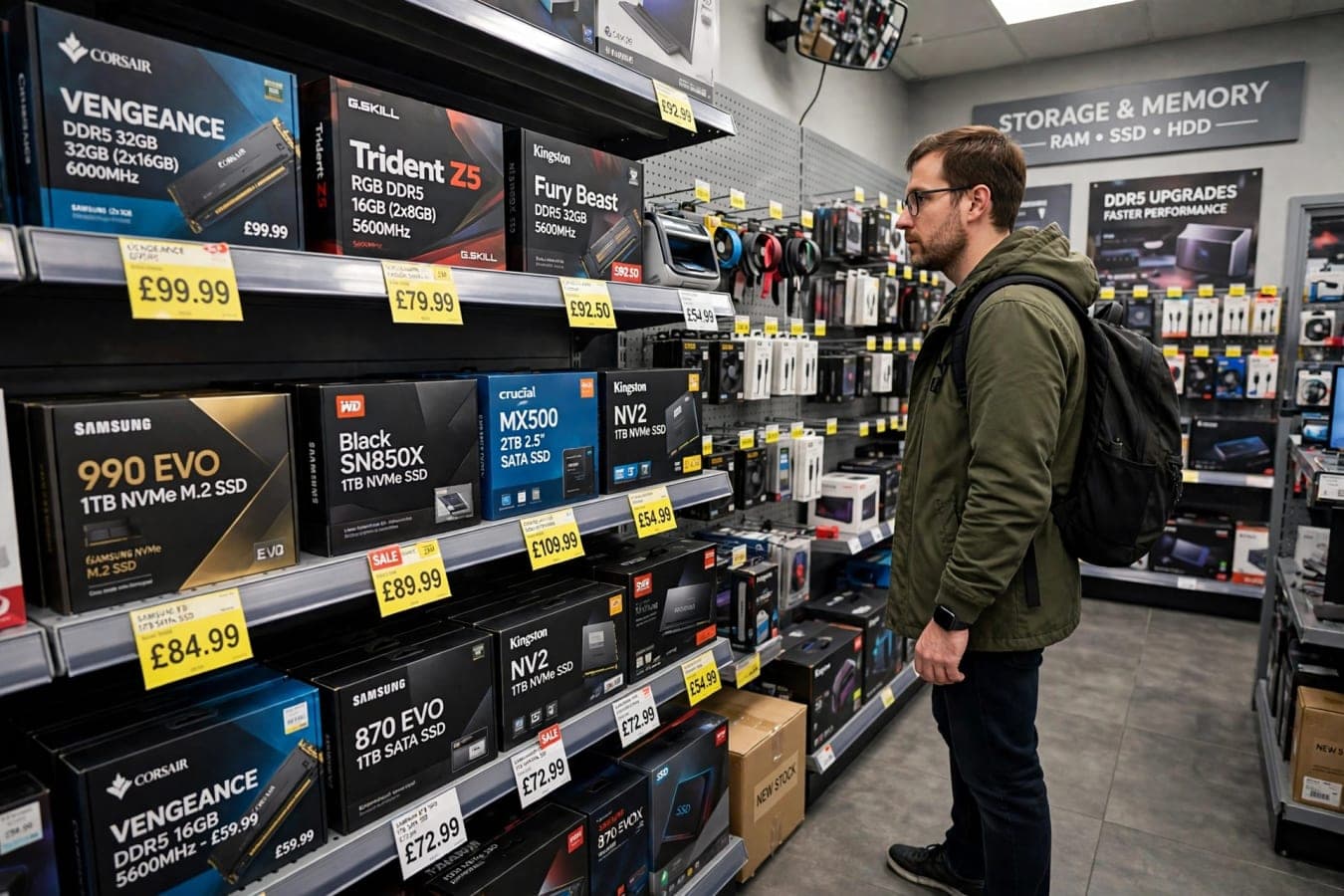
Why AI is eating the memory supply
- The shortage is not caused by people buying more laptops.
- It is caused by AI data centres.
- Training and running AI models needs a special kind of memory called high-bandwidth memory, or HBM.
- HBM is stacked memory that sits next to AI chips from companies like Nvidia.
- It is fast, it is expensive, and it eats up factory capacity.
- Making HBM takes up the same production lines that make ordinary DRAM.
- Every wafer used for HBM is a wafer that cannot become the RAM in your laptop.
- HBM now takes about 20% of all DRAM capacity in 2026.
- That share is expected to rise to about 30% in 2027.
- The HBM supply shortfall is about 35% in 2026.
- It is expected to be over 40% in 2027.
- In other words, AI chipmakers want far more HBM than factories can produce.
- KB Securities forecasts HBM demand will jump 56% in 2027.
- Enterprise SSD demand is forecast to rise 54% in the same year.
- Data centres are buying SSDs in huge volumes too.
- One industry estimate puts the Stargate AI project's monthly HBM needs at about 900,000 wafers.
- That is close to twice current global HBM production.
- Whatever the exact figure, AI demand is growing faster than any memory factory can keep up with.
- Memory makers are prioritising their biggest, most profitable customers.
- Those customers are the AI giants, not PC makers or retailers.
- That is why your next RAM upgrade costs four times what it did in August.
Why new factories will not save 2027
- The obvious fix is to build more factories.
- The memory makers are doing that.
- But new semiconductor plants take years to build and start producing.
- SK Hynix is investing 54 trillion won — about $38.3 billion — in two new semiconductor plants in South Korea.
- Construction starts in 2027 and is due to finish by 2029.
- New capacity from those plants will not arrive before 2028.
- Even factories already under construction will not ease the crunch next year.
- SK Hynix's own CEO is blunt about it.
- Kwak Noh-jung said next year will be "the worst year in the industry's history from the supply perspective".
- He also warned that demand may exceed supply beyond 2030.
- HPE chief executive Antonio Neri has warned that memory and NAND shortages will persist to at least the second half of calendar 2028.
- They are describing orders and capacity they can already see.
- For 2027, the supply is essentially fixed.
- The only question is how high prices go, and who gets what is available.
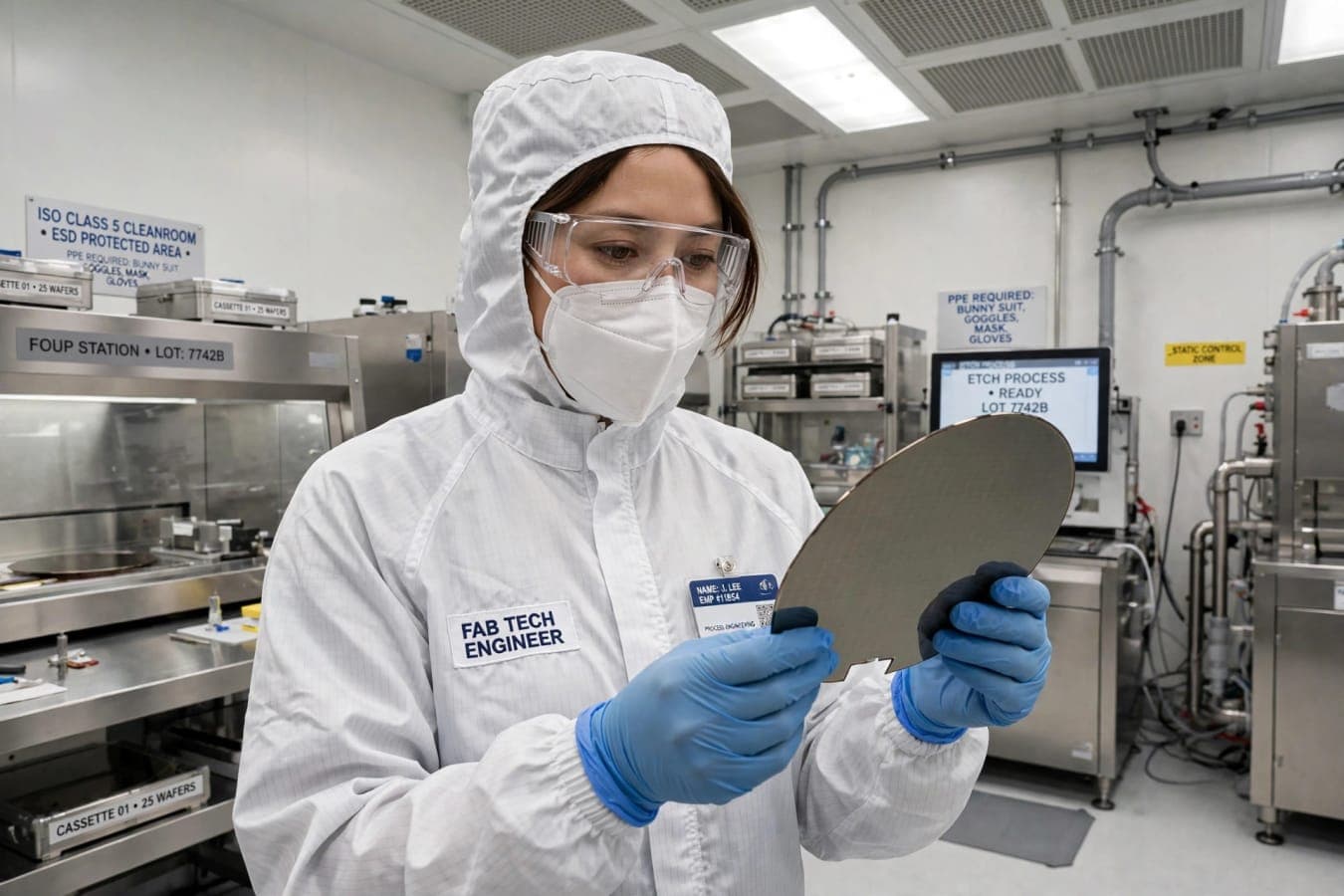
What it means for PC, laptop and phone prices
- Memory is in almost everything with a chip.
- When memory prices quadruple, the price of finished devices follows.
- The effects are already visible.
- Apple raised Mac and iPad prices by 15% to 25% earlier in 2026, as reported by Memeburn.
- Google's Pixel 11 got a price bump tied to memory costs, also reported by Memeburn.
- Those are premium brands with room to absorb some costs, yet they still passed the increase on to buyers.
- Budget laptops and phones have far less room to absorb it, so expect cheaper devices to get more expensive or ship with less memory.
- A laptop that came with 16GB of RAM may now come with 8GB at the same price.
- A phone that came with 256GB of storage may drop to 128GB.
- Or the same specification simply costs more than it did last year.
- Fewer devices will be sold as well.
- IDC projects global PC shipments will fall 11.3% in 2026, as reported by Memeburn.
- Smartphone shipments are projected to fall 8.4% in 2026.
- Those forecasts were made before the worst of the price rises.
- The shortage is now a drag on the whole tech industry.
- It is not just a problem for people building their own PCs.
- Anyone buying a laptop, a phone, a tablet or a games console in 2027 will feel it.
- Games consoles, smart TVs, cars and home routers use the same memory — the crunch reaches far beyond the PC parts shelf.
Black Friday: do not expect memory bargains
- Black Friday falls on November 27 this year.
- In a normal year, RAM and SSDs are among the best Black Friday deals.
- This is not a normal year.
- Retailers cannot discount stock they cannot get.
- Memory that cost $91 in August now costs about $394.
- A retailer selling it at a big discount would be selling at a loss.
- Some shops may still advertise memory deals — read them carefully.
- A "deal" on a 32GB kit may still cost far more than the same kit cost in the summer.
- Older, slower memory may be discounted more.
- But the fast DDR5 kits and large SSDs that most buyers want are the ones in shortest supply.
- The same logic applies after Black Friday.
- There is no reason to expect prices to fall in December or January.
- Every forecast points the other way.
- If you see a fair price on the RAM or SSD you actually need, waiting for a sale that may never come is a gamble.
- That said, do not panic-buy: buy what you need at a price you can accept. Stocking up on memory you do not need is a bet that prices keep rising, and nobody can guarantee that.
What to do if you are buying now
- The shortage changes the maths of buying a PC.
- Here is how to think about it:
- If you need a new PC or laptop now, buy it now.
- Waiting until 2027 is likely to mean paying more for the same machine.
- Check how much RAM and storage the machine actually has.
- 16GB of RAM and 512GB of storage is a sensible minimum for most people in 2026.
- 8GB of RAM is now a false economy on a new machine.
- Upgrading it later could cost far more than buying it built in today.
- If you already own a good PC, check whether it can take more RAM.
- A RAM upgrade is one of the cheapest ways to extend a PC's life.
- But only if you buy before prices rise further.
- Do not buy the cheapest memory you can find.
- Check that it matches your motherboard and your existing RAM.
- Mixing speeds and timings can cause crashes and wasted money.
- For SSDs, a mid-range drive is fast enough for most people — paying a premium for the fastest model makes little sense when prices are this high.
- Back up your data before any upgrade: a failed drive during a shortage is a much bigger problem, because replacements are expensive and delivery can be slow.
- If you can wait, wait — but wait with your eyes open: waiting only helps if prices fall, and every forecast says they will rise in 2027.
- For businesses, the advice is similar: order the hardware you need for the next year sooner rather than later.
- Lead times are already stretching.
- A laptop that arrived in a week may now take a month.
- Plan upgrades around what is actually in stock, not what you wish was in stock.
The price-fixing allegation
- There is one more twist to this story.
- In June 2026, a class-action lawsuit was filed against Samsung, SK Hynix and Micron.
- Seventeen plaintiffs brought the case.
- The lawsuit alleges the three companies coordinated to fix memory prices.
- That is an allegation, not a proven fact.
- No court has ruled on it.
- The companies have not been found guilty of anything.
- The allegation matters because the three companies control over 90% of DRAM production.
- When three companies control a market, any suggestion of coordination draws attention.
- But an allegation is not evidence: the supply and demand numbers tell their own story, and AI demand has genuinely outgrown factory capacity.
- The lawsuit is still working its way through the courts.
- Watch for any ruling or settlement, but do not treat the allegation as settled fact.
What to watch next
- Several things will decide how bad 2027 gets.
- The first is the KB Securities forecast itself: a 40% rise in DRAM prices and a 30% rise in NAND prices would be painful.
- Actual contract prices in early 2027 will show whether that forecast was right.
- The second is HBM.
- If HBM takes 30% of DRAM capacity as expected, ordinary RAM gets even scarcer.
- The third is the big AI projects.
- Stargate and other data centre builds are the largest single source of new demand.
- Any delay to those projects would ease the pressure.
- Any acceleration would make it worse.
- The fourth is the new factories.
- SK Hynix's plants are due to finish by 2029.
- Other makers are expanding too.
- None of that capacity helps 2027.
- But announcements of faster construction could calm prices.
- The fifth is device prices: if Apple, Samsung and the big PC makers raise prices again, the crunch is biting harder; if they hold steady, they secured enough supply.
- The honest summary is that 2027 looks worse than 2026: Samsung says so, SK Hynix's CEO says so, and HPE's CEO says so.
The bottom line
- Samsung, SK Hynix and Micron have effectively sold out their 2027 memory production.
- The three companies make over 90% of the world's DRAM.
- KB Securities forecasts DRAM prices up 40% and NAND prices up 30% in 2027.
- Demand is growing 25% while supply grows only 18%.
- AI is the cause: HBM already takes about 20% of DRAM capacity, rising to about 30% in 2027.
- Consumer prices have already exploded — 32GB of DDR5 RAM is up from $91 in August to about $394 now.
- A 2TB Samsung 990 Pro SSD is up from about $119 last year to about $572.
- New factories will not help before 2028.
- HPE's CEO warns shortages could last until at least the second half of 2028.
- Apple and Google have already raised device prices because of memory costs.
- Do not expect big Black Friday memory discounts this year.
- If you need RAM, an SSD or a new PC, buy sooner rather than later — and buy the specification you actually need.
FAQs
Why have RAM prices exploded in 2026?
AI data centres are buying memory faster than factories can make it. Samsung, SK Hynix and Micron — who make over 90% of the world's DRAM — have effectively sold out their 2027 production through long-term agreements. HBM memory for AI chips now takes about 20% of all DRAM capacity, leaving less for ordinary RAM and SSDs, so prices have soared.
How much have RAM and SSD prices risen?
A 32GB DDR5 RAM kit cost $91 in August 2026 and now costs about $394, according to Notebookcheck. A 2TB Samsung 990 Pro SSD cost about $119 last year and now costs about $572. A 32GB DDR5-6000 kit cost about $100 in February 2025 and about $600 now.
Will memory prices fall in 2027?
The forecasts say no. KB Securities, in a forecast published on November 20, 2026, expects DRAM prices to rise 40% in 2027 and NAND flash prices to rise 30%. Samsung says the gap between supply and demand will widen further, and HPE's CEO has warned shortages could last until at least the second half of 2028.
What is HBM and why does it matter?
HBM, or high-bandwidth memory, is fast stacked memory used alongside AI chips. It takes about 20% of all DRAM factory capacity in 2026, rising to about 30% in 2027, and its supply shortfall is expected to be over 40% in 2027. Every wafer used for HBM is one that cannot become ordinary RAM.
Will there be Black Friday deals on RAM and SSDs this year?
Big discounts are unlikely. Black Friday falls on November 27, but retailers cannot discount stock they cannot get, and memory prices have already quadrupled. Any "deal" may still cost far more than the same product cost in the summer, so compare prices against what you would have paid a few months ago.
Should I buy RAM or a new PC now, or wait?
If you need it now, buy it now — forecasts point to higher prices in 2027, not lower. Make sure a new machine has at least 16GB of RAM and 512GB of storage, and check that any RAM upgrade matches your motherboard. Do not panic-buy memory you do not need.
When will the memory shortage end?
Not before 2028, on current evidence. SK Hynix's two new plants in South Korea, a 54 trillion won (about $38.3 billion) investment, start construction in 2027 and finish by 2029, so new capacity will not arrive before 2028. HPE's CEO warns shortages could persist until at least the second half of 2028, and SK Hynix's CEO has said demand may exceed supply beyond 2030.
Was this article helpful?
Explore Specs, Comparisons & Related Topics
Mentioned Devices & Benchmarks

Written By
TechorCoffeeEditorial Team
The TechOrCoffee Editorial Team covers consumer hardware, artificial intelligence, software engineering, and regional smartphone & laptop market analysis.
Comments (0)
Leave a Comment
Read Next
Fri Oct 30 2026
GPU and RAM Prices 2026: Why AI Ate Your Upgrade
GPU and RAM prices in 2026 explained: AI memory shortage, DDR5 and RTX 50 price rises, RTX 50 Super delay, and when relief may come.
Fri Oct 30 2026
Samsung Galaxy S27 Ultra vs OnePlus 16: Expected Differences
Galaxy S27 Ultra vs OnePlus 16 expected differences: leaked Samsung vs China gaming phone, price compared.
Fri Oct 30 2026
Best Gaming Flagship Phones 2026: OnePlus vs iQOO vs Samsung
Best gaming flagship phones 2026 compared: OnePlus vs iQOO vs Samsung, chip, display, battery and price.