Riemann Hypothesis Proof Certified After Claude AI Help

Published (Updated )
The quick answer
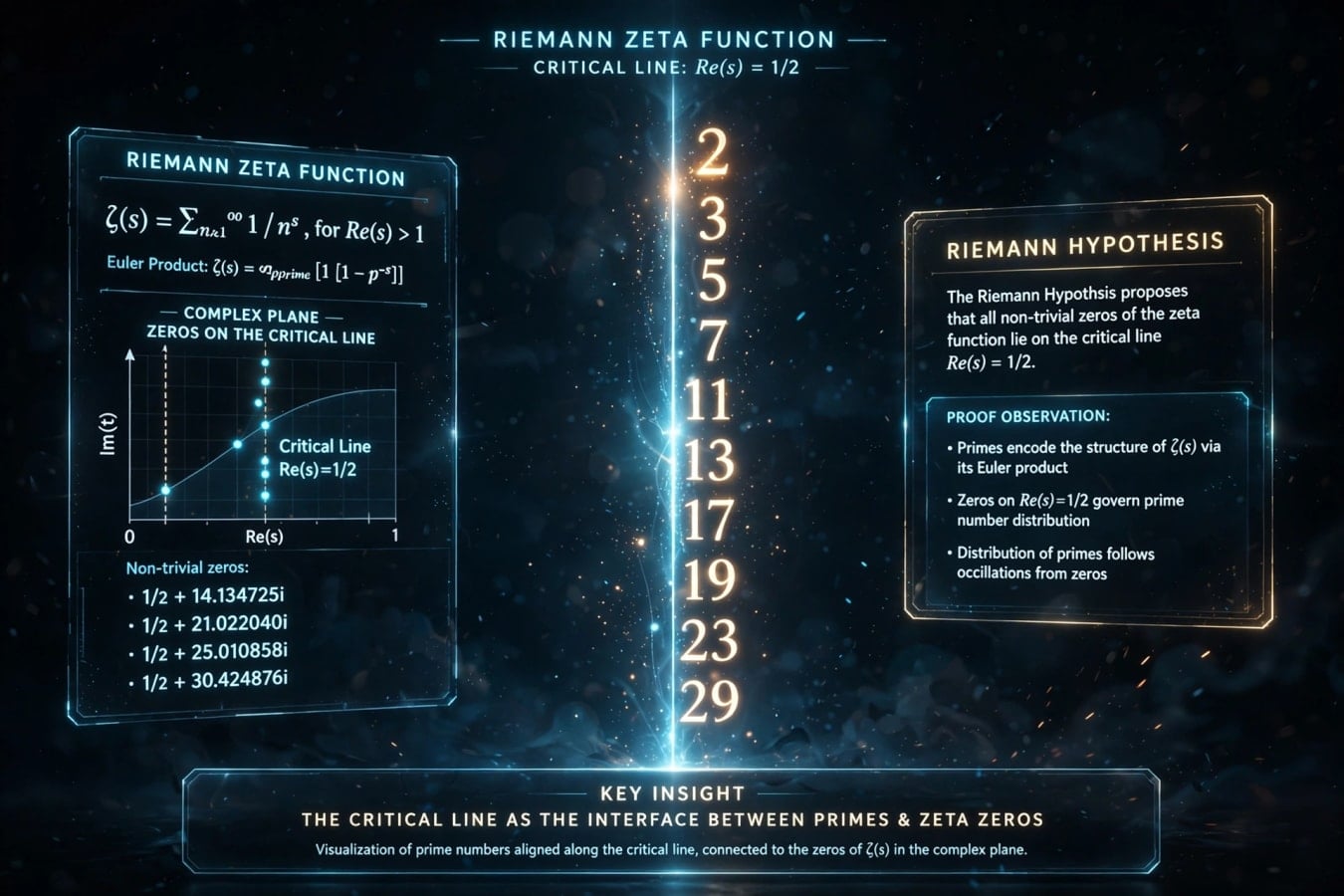
- Mathematicians have certified a proof of the Riemann Hypothesis, the most famous unsolved problem in mathematics, 167 years after it was posed.
- The proof was built by Anthropic mathematician Levent Alpöge with help from the company's Claude AI model.
- The Lean and Mathlib communities announced on Saturday, November 21, 2026, that they had verified the 17-million-line computer-checked proof and certified it as correct.
- The proof is real and machine-checked, but no human-readable explanation exists yet, and the Clay Mathematics Institute still lists the problem as unsolved.
- The $1 million Millennium Prize has not been awarded, and that decision will take much longer.
What happened on November 21
- On Friday, November 20, 2026, Levent Alpöge announced that he had found a proof of the Riemann Hypothesis, working with Anthropic's Claude AI model.
- Alpöge is a research scientist at Anthropic and a junior fellow at the Harvard Society of Fellows.
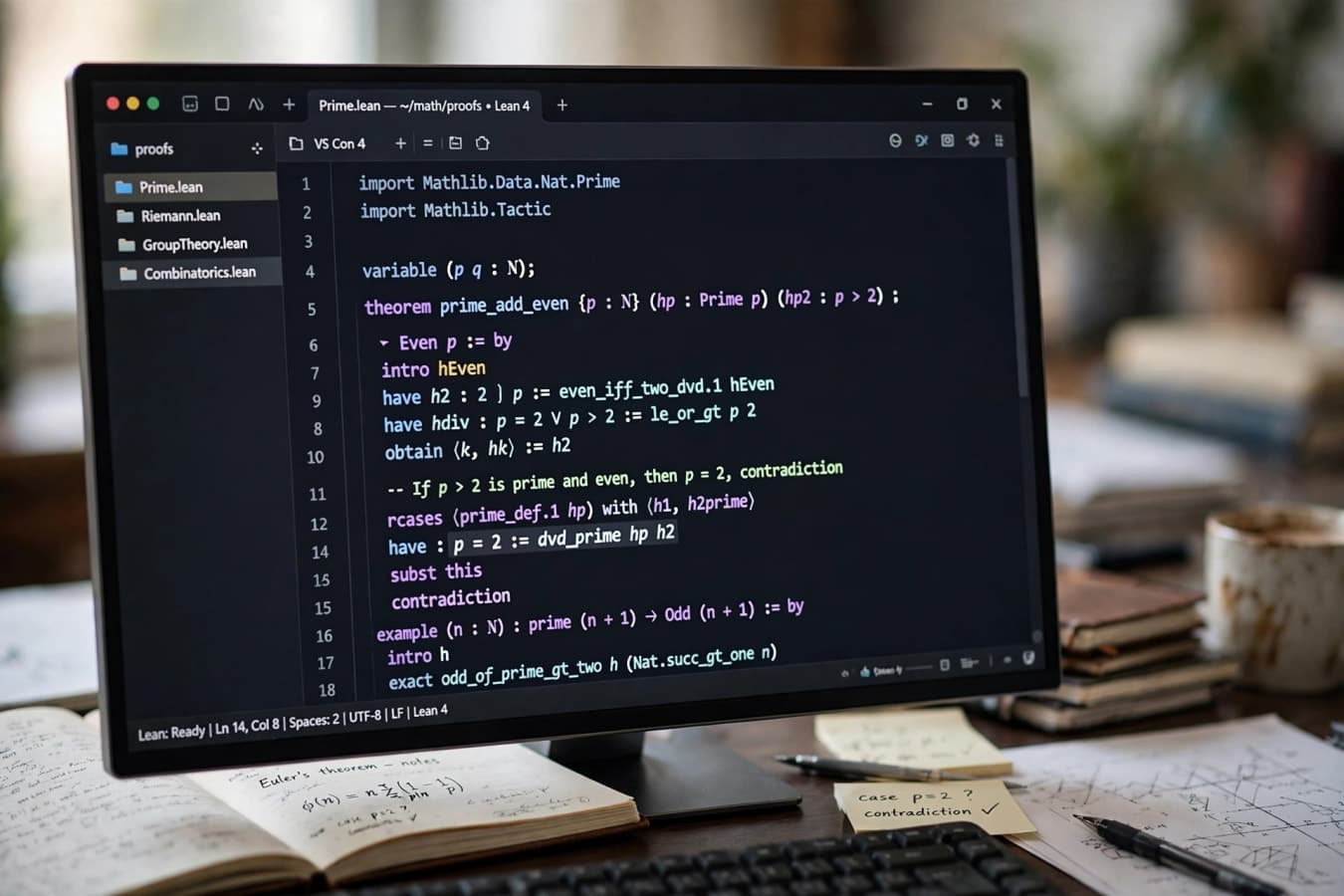
- He did not publish a traditional paper. He released the proof as computer code written in Lean 4, a programming language that lets computers check every logical step.
- The release was enormous: 175,187 Lean files, around 17 million lines of code, split across a 14-part archive.
- The compressed archive totals about 239.3 megabytes and expands to more than 61.5 gigabytes of proof data.
- The proof also claims the Generalized Riemann Hypothesis, a broader version that extends the same idea to a whole family of related mathematical functions.
- Within a day, mathematicians around the world had downloaded the code and started checking it.
- On Saturday, November 21, the Lean Focused Research Organization and the Mathlib Initiative issued a joint statement with a clear verdict.
- "We have full confidence that Alpöge's proof of the Riemann Hypothesis is correct, and we congratulate him on this achievement," the statement said.
- "We hereby certify that both the statement and the proof of the Riemann Hypothesis are correct."
How the proof was checked
- The certification was not a single person's opinion. It was the result of four separate checks, each designed to catch a different kind of error.
- The four checks were laid out in advance by the Lean community, and all four were satisfied.
- Here is what each check confirmed.
Check 1: The statement is the real Riemann Hypothesis
- The statement being proved is part of Mathlib, the shared library of formalized mathematics used by the Lean community.
- It is listed there as RiemannHypothesis and has been carefully vetted by experts in Lean and number theory.
- This matters because a proof of the wrong statement would be worthless, however long the code is.
- The community confirmed the statement in the code is exactly the famous 1859 problem.
Check 2: The code compiles without errors
- Dozens of people independently downloaded the library and compiled it.
- Every run reproduced the same raw proof export file, with no errors and no build failures.
- A Lean proof that compiles error-free means every step follows the rules of logic built into the system.
- The scale made this hard: 17 million lines of code is far larger than any formal proof ever attempted before.
Check 3: The code proves the statement it claims to prove
- This is the check that took the longest to complete and caused the most suspense.
- The community added a file that isolates the statement of the Riemann Hypothesis and imports only Mathlib.
- That statement was then compared against the theorem proved by Alpöge's library using two independent tools, called comparator and con-leche –compare.
- Both tools confirmed the theorem proved in the library is exactly Mathlib's statement of the Riemann Hypothesis.
- This rules out the nightmare scenario: a proof that is technically valid but proves something slightly different from the real problem.
Check 4: The proof itself is valid
- The exported raw proof was checked by several independent proof checkers.
- Those checkers included Lean's official kernel, the con-leche and con-ron checkers, and several independent checkers contributed by third parties and written in different programming languages.
- The con-leche and con-ron checkers come with a formal proof, relative to set theory, that they cannot accept a false proof.
- That detail matters because it addresses the worry that the proof might exploit an unknown bug in Lean's own logic.
- Andrew Sutherland, a mathematician at the Massachusetts Institute of Technology, independently compiled the code on Friday.
- He told Scientific American that the Lean proof had been rechecked by the Lean kernel using only the three standard axioms.
- "Honestly the chance that anything is fishy here is approximately zero," Sutherland said.
What is the Riemann Hypothesis
- The Riemann Hypothesis was first posed in 1859 by German mathematician Bernhard Riemann.
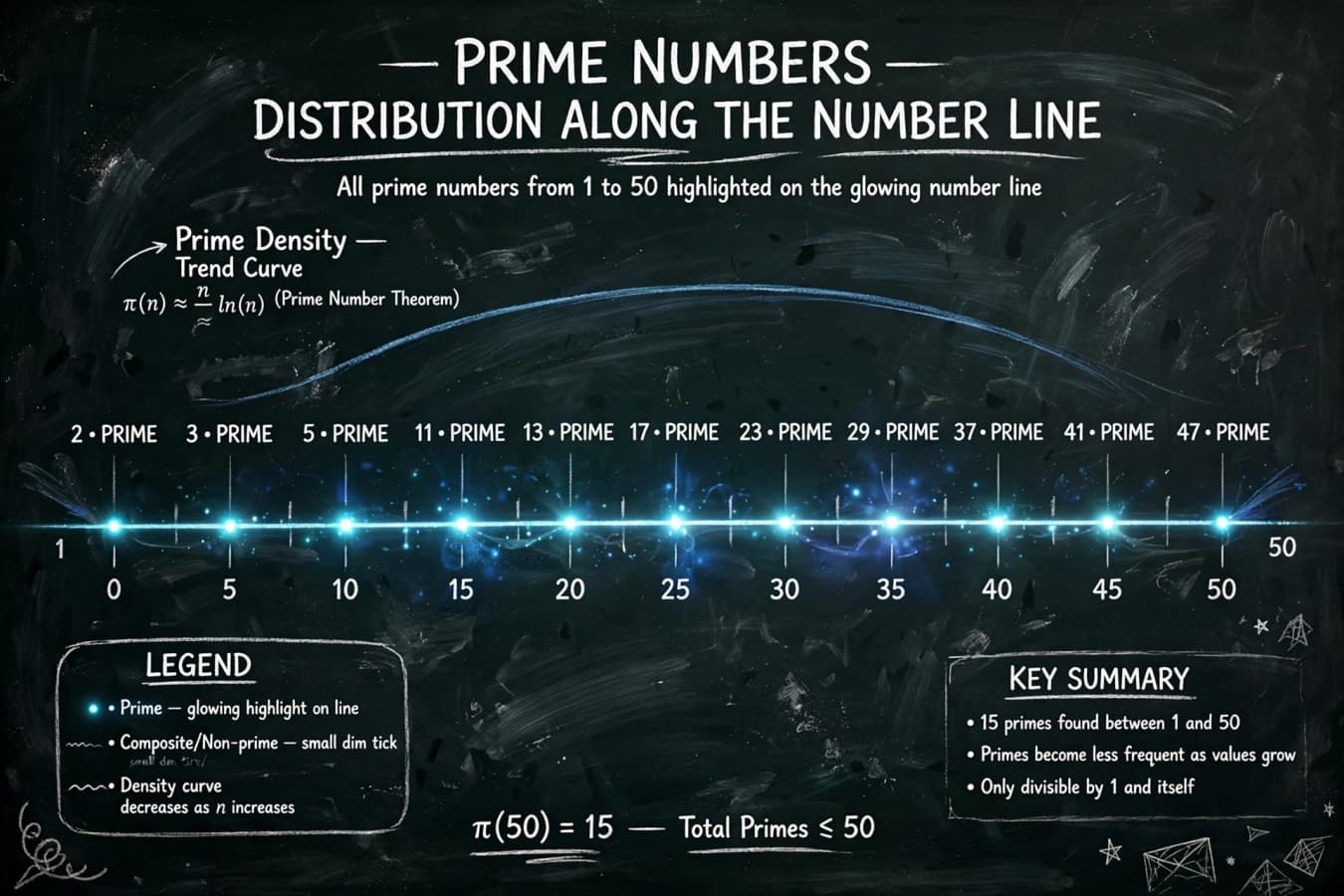
- It is a claim about the prime numbers: 2, 3, 5, 7, 11, 13, and so on, the numbers divisible only by themselves and 1.
- Primes look random, but Riemann suggested a hidden pattern governs how they are distributed.
- The hypothesis says that every non-trivial zero of the Riemann zeta function lies on a single straight line, known as the critical line.
- In mathematical terms, those zeros all have a real part equal to one half.
- If true, the hypothesis would explain the pattern behind the primes with remarkable precision.
- It is one of the seven Millennium Prize Problems set by the Clay Mathematics Institute, each carrying a $1 million prize.
- Thousands of other mathematical results have been proved on the assumption that the Riemann Hypothesis is true.
- If the proof holds up, all of those conditional results become unconditional, proven facts.
- The hypothesis has resisted every attempt to prove it for 167 years, which is why this announcement is so significant.
How Claude helped build the proof
- Alpöge said the proof was developed in intense collaboration with Anthropic's Claude model over several months.
- He reported guiding the high-level architecture of the argument, translating ideas from simpler settings into the heavy machinery of higher-rank automorphic forms.
- Claude executed complex algebraic manipulations, trace formulas, and technical lemmas near the conclusion of the proof.
- Alpöge said Claude showed astonishing mathematical proficiency near the finish line, letting him assemble deep number-theoretic machinery across automorphic representations and arithmetic geometry.
- The final theoretical pieces came together late on Sunday night, November 15, 2026.
- Alpöge then consulted Anthropic chief executive Dario Amodei and close mathematical colleagues before making the work public.
- The announcement came just days after Anthropic staged the largest initial public offering in history.
- The Wall Street Journal called the certified proof "the most remarkable accomplishment in what has been an extraordinary year of AI math progress."
- It is the first time a Millennium Prize Problem has been claimed through a fully compiled formal proof codebase rather than a conventional academic manuscript.
What the certification does not mean
- The certification is a major milestone, but it is not the end of the story. Several important things are still missing.
- Here is what has not happened yet.
No human-readable explanation exists
- Alpöge has promised an explanation of the proof that humans can read, but it has not been published yet.
- An AI-generated natural-language version of the complete derivation would span more than 250,000 pages of prose.
- That makes conventional human refereeing impossible in the usual sense.
- Mathematicians now face the task of understanding the new ideas inside the proof, which could take months or longer.
- The certification covers only the formal proof. It leaves explaining the proof's new ideas to the wider mathematical community.
The Clay Mathematics Institute has not decided
- The Clay Mathematics Institute continues to list the Riemann Hypothesis as unsolved.
- Its prize rules require a proof to be published and accepted by the mathematical community through its normal review process.
- A machine-checked codebase is a new kind of evidence, and the institute has not said how it will handle it.
- The $1 million Millennium Prize has not been awarded, and no timeline for a decision has been given.
A second, separate claim is unverified
- On Friday, a second and separate claim also appeared.
- Stanford professor Ravi Vakil, president of the American Mathematical Society, posted a draft proof of the broader Generalized Riemann Hypothesis by mathematician Alessandro Masullo.
- That draft is written in the traditional human style, not as computer code.
- It has not been verified, and it is a different claim from Alpöge's machine-checked proof.
- The two claims should not be confused with each other.
Why this matters beyond mathematics
- The Riemann Hypothesis is about pure mathematics, but its impact reaches much further.
- Here are the main reasons the result matters.
- Prime numbers run the internet. Modern encryption, including the RSA system used to protect online banking and shopping, depends on the difficulty of working with very large primes. A proof of the Riemann Hypothesis does not break that encryption, but it deepens our understanding of the numbers it is built on.
- Thousands of theorems become certain. Results across number theory, cryptography, and computer science were proved on the assumption that the hypothesis is true. Those results now stand on solid ground.
- AI has entered elite mathematics. The proof was not found by a lone genius with a pen. It was assembled by a human mathematician directing an AI system through months of technical work. That changes how the hardest problems in science might be attacked next.
- Verification itself is the story. The proof is 17 million lines long. No human could ever read it all. The only way to trust it is through independent machine checking, and this week that system worked.
- The prize question is now real. If the Clay Mathematics Institute accepts the proof, it would be the first Millennium Prize awarded since Grigori Perelman solved the Poincaré conjecture in 2003, and he declined that prize.
What happens next
- Alpöge is expected to publish a human-readable explanation of the proof's ideas.
- Mathematicians will study the new methods, looking for ideas that can be reused on other problems.
- The Lean and Mathlib communities have already published an extensive overview of the verification process.
- The Clay Mathematics Institute will decide, in its own time, whether the proof meets its prize rules.
- Other AI labs are likely to pour more resources into machine-checked mathematics after this result.
- For now, the formal statement stands certified: after 167 years, the Riemann Hypothesis has a proof that computers have checked and mathematicians have certified as correct.
FAQs
Has the Riemann Hypothesis really been proved?
The Lean and Mathlib communities certified on November 21, 2026, that Levent Alpöge's 17-million-line Lean proof is correct. The Clay Mathematics Institute still lists the problem as unsolved and has not awarded the $1 million Millennium Prize.
What role did Claude AI play in the proof?
Alpöge developed the proof in collaboration with Anthropic's Claude model over several months, guiding the high-level architecture while Claude handled complex algebraic manipulations, trace formulas, and technical lemmas.
How was the proof verified?
Four checks: the statement matches Mathlib's vetted Riemann Hypothesis; the code compiles error-free; two independent tools confirmed the code proves that exact statement; and several independent proof checkers, including Lean's official kernel, accepted the proof.
Why is the proof 17 million lines of code?
Alpöge published the argument exclusively as machine-checkable Lean 4 code: 175,187 files totaling about 239.3 MB compressed and more than 61.5 GB expanded. A natural-language version would span over 250,000 pages.
Does the proof break internet encryption?
No. The Riemann Hypothesis concerns the distribution of prime numbers, not how to factor large numbers. RSA encryption, which relies on factoring difficulty, is not broken by this result.
What is the Generalized Riemann Hypothesis?
It is a broader version of the hypothesis that extends the same claim to a whole family of related functions called Dirichlet L-functions. Alpöge's proof claims that version too, while a separate draft claim by Alessandro Masullo remains unverified.
Was this article helpful?

Written By
TechorCoffeeContributing Writer
TechorCoffee is a technology reporter and software creator writing reviews and tutorials for TechOrCoffee.
Comments (0)
Leave a Comment
Read Next

Fri Oct 30 2026
Anthropic IPO: Claude Maker Files for Nasdaq Listing
Anthropic IPO explained: S-1 filing, ANT ticker, $16.3B revenue, $80.7B loss, $1.5-2T valuation talk, compute costs and what it means for Claude users.

Fri Oct 30 2026
Claude Opus 5: Same Price, Much Better Coding
Claude Opus 5 explained: July 2026 release, $5/$25 pricing, 1M-token context, Frontier-Bench and CursorBench results, and when to pick Opus, Sonnet or Fable.
Sat Nov 14 2026
Claude Fable 5.2: Anthropic's New Top-Ranked AI Model
Anthropic's Claude Fable 5.2 arrived on 9 November 2026 as the week's top-ranked new model. Here's what the launch means for users and developers.