SpaceX Starship Flight 15 Deploys 26 Starlink Satellites

Published (Updated )

SpaceX Starship Flight 15 Deploys 26 Starlink Satellites
SpaceX flew Starship on its fifteenth test flight on Friday, 13 November 2026, and this one did something only one earlier Starship flight had done. It reached low Earth orbit, and then it went to work, releasing 26 new Starlink V3 satellites over about 42 minutes.
The launch took place from Starbase in Boca Chica, South Texas, at 5:47pm ET, which was 22:47 UTC. The vehicle lifted off from Orbital Launch Pad 2. For a programme that has spent years working through test flights, each one building on the last, the headline was straightforward: the ship got to orbit, and the payload got out.
That does not tell the whole story. The flight also included the first planned attempt to catch both parts of the vehicle back at the launch site, the Super Heavy booster and the Starship upper stage. The booster did not make it back to the tower. The ship, meanwhile, was set for a long trip around Earth, with its own catch attempt planned for the following afternoon.

A fifteenth flight, and a fourth for Starship V3
Flight 15 was the fifteenth Starship test flight. It was also the fourth flight of Starship V3, the current version of the vehicle. The booster on this flight was Booster 22, described as the first Super Heavy V3 booster.
That version detail matters because Starship is not a finished rocket being flown again and again in the same form. Each version brings changes, and each flight is a test of those changes as much as it is a delivery run. A new booster version on a flight that also carries a real payload puts both jobs together: prove the hardware, and deliver the satellites.
Before launch, one question was still open. The mission page said SpaceX was preparing to launch as soon as Friday, 13 November, pending regulatory approval, and the FAA licence question was pending before launch. The launch went ahead that Friday evening from Starbase, and the early part of the flight followed the plan that had been laid out for it.
Only the second time Starship has reached orbit
Reaching orbit at about 275 km is worth pausing on, because it has happened only once before in the Starship programme. Only the second time Starship has reached orbit, this flight put the ship where a payload can actually be released into a useful path around Earth, rather than on a shorter arc that ends soon after launch.
That is the basic job of an orbital rocket, and it is also the part that has taken Starship the longest to repeat. Getting to orbit is not the same as getting to space for a few minutes. It means travelling fast enough, and high enough, to stay up there, circling the planet rather than falling back down.
The ship's path after reaching orbit was a long one. It was due to circle Earth about 14 times over more than 21 to 22 hours. That meant the ship would spend most of a day in orbit, with its systems being watched over that whole period, before the next big moment of the flight was due.
The Starlink payload: 26 V3 satellites
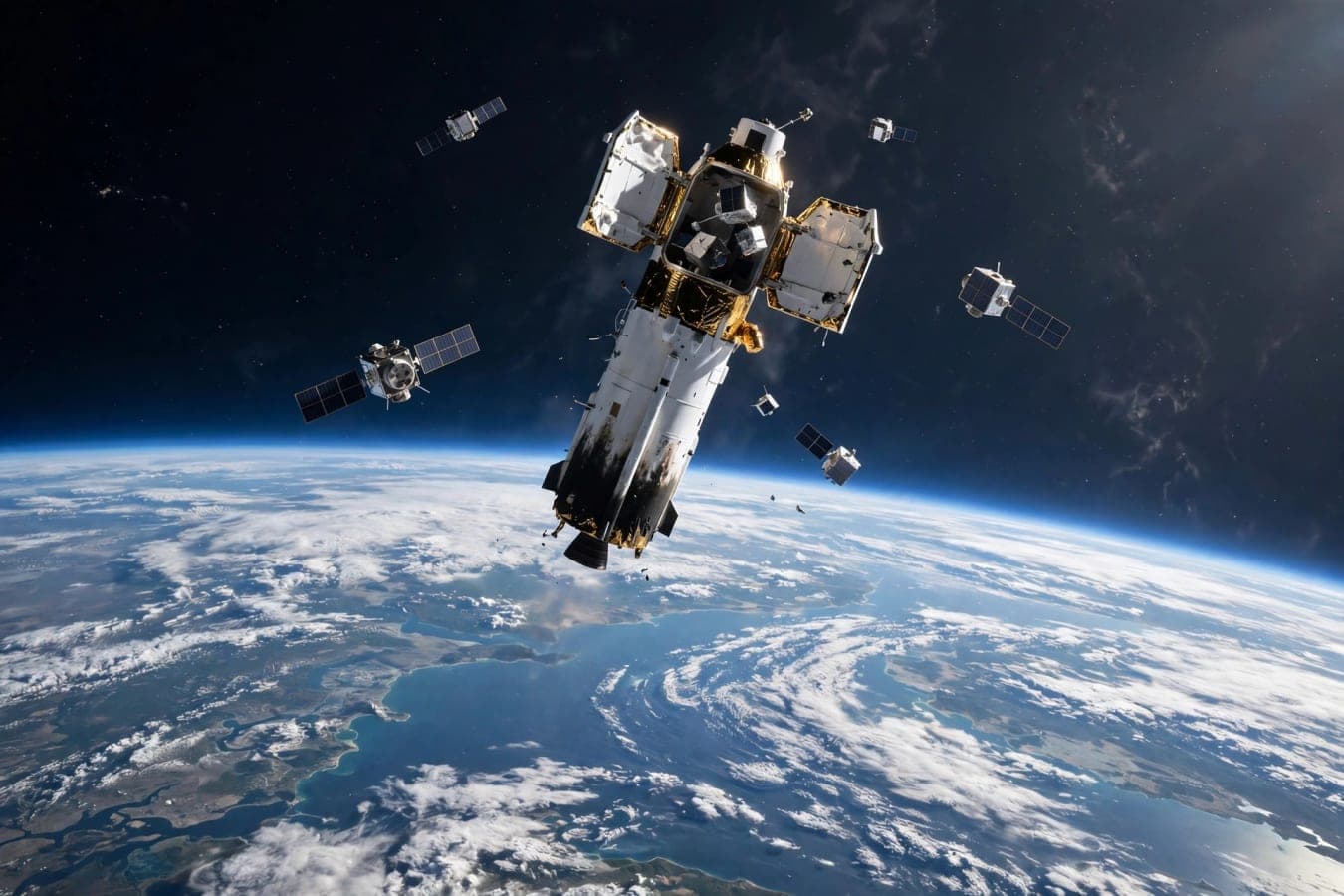
The payload on Flight 15 was 26 Starlink V3 satellites, flying as Starlink Group 31-2. Deployment began 35 minutes after launch and went on for about 42 minutes. By about 7:09pm ET, all 26 had been deployed and had made contact.
That sequence matters for a simple reason. A launch is not finished when the satellites leave the rocket. Each satellite has to be released cleanly, and then it has to be heard from. Contact confirms that the satellite is alive and responding after deployment. On this flight, all 26 were deployed and all 26 had made contact by about 7:09pm ET, which closed out the deployment phase on a clear note.
Three of the 26 satellites carry cameras to scan the heat shield. That is a small detail with a practical purpose. The heat shield is the part of the ship that has to survive the return through the atmosphere, and cameras on the satellites offer a way to look at it from outside the vehicle. It is a reminder that a test flight carries test equipment as well as its main payload, and that the team is still gathering information about how the ship holds up.
What one batch of V3 satellites adds
The reason Starship is carrying Starlink satellites at all is capacity. SpaceX says each V3 satellite adds about 1 Tbps of capacity. A batch of 26 therefore adds about a terabit of capacity in a single flight.
Put another way, SpaceX says this one batch is roughly equal to 10 Falcon 9 launches of the older V2 Mini satellites. That comparison gives a sense of scale. Ten launches of the older satellites, compressed into one Starship flight, is a large step up in how much capacity can be added at once.
The satellites could start serving customers a few weeks after launch, once checkouts are done. That timing is worth noting. Deployment is the start of the process, not the end of it. Each satellite still has to go through checks before it begins serving customers, and that takes a few weeks. The capacity is real, but it does not switch on the moment the satellites leave the ship.
That capacity joins a constellation that is already large. SpaceX's constellation already includes over 11,000 active satellites in low Earth orbit. Adding 26 more V3 satellites does not change that total by much on its own. What changes is the kind of capacity being added. The V3 satellites are a newer generation, and each one carries far more capacity than the older V2 Mini satellites they are being compared with. Over time, as more V3 batches fly, the mix of the constellation shifts toward the newer, higher-capacity satellites.
The booster catch that did not happen
The booster part of the flight did not go as planned. The flight was the first planned attempt to catch both the Super Heavy booster and the Starship upper stage at the launch site. The booster catch was missed.
Instead of returning to the tower for a catch, the booster was diverted from the tower catch and made a controlled splashdown in the Gulf of Mexico. A controlled splashdown is not the same as a failure to control the vehicle. It means the booster was guided down to the water in a planned way, rather than being caught by the tower arms. It still means the catch did not happen, and the booster was not recovered at the launch site.
That distinction matters for how the flight is judged. The booster was not lost in an uncontrolled way. It was diverted, and it came down in the Gulf in a controlled splashdown. But the goal for the booster on this flight was a tower catch, and that goal was not met. The booster will not be standing back at Starbase waiting to fly again. It ended its flight in the water.
Trying to catch both stages for the first time
The plan to catch both stages on the same flight was new. Flight 15 was the first planned attempt to catch both the Super Heavy booster and the Starship upper stage at the launch site.
The booster comes back soon after launch. The ship comes back much later, after its time in orbit. Planning both catches on one flight means the launch site has to be ready for the first return, and then ready again, many hours later, for the second. It also means both vehicles have to be in good enough shape to attempt a catch, which is not a given on a test flight.
On this flight, the first of those two attempts did not work out. The booster was diverted and splashed down in the Gulf. The second attempt, for the ship, was still ahead at the time the booster came down. It was planned for about 4:17pm ET on Saturday, 14 November, after the ship had spent more than 21 to 22 hours in orbit and circled Earth about 14 times.
That second attempt was gated on the ship's systems being healthy. In plain terms, the catch would only go ahead if the ship was in good condition after its long time in orbit. If the systems were not healthy, the attempt would not happen. That condition is a sensible one for a test flight. A tower catch is a precise manoeuvre, and it should only be tried when the vehicle is ready for it.
Reusability is still the point
Reusability is the idea at the centre of Starship. The vehicle is designed to be caught, recovered, and flown again, rather than thrown away after one flight. A rocket that can be caught and reused changes the cost of getting to orbit, because the most expensive parts do not have to be built again for every flight. Flight 15 showed both sides of that idea in a single day: the ship reached orbit and delivered its payload, while the booster did not come back to the tower.
What to watch next
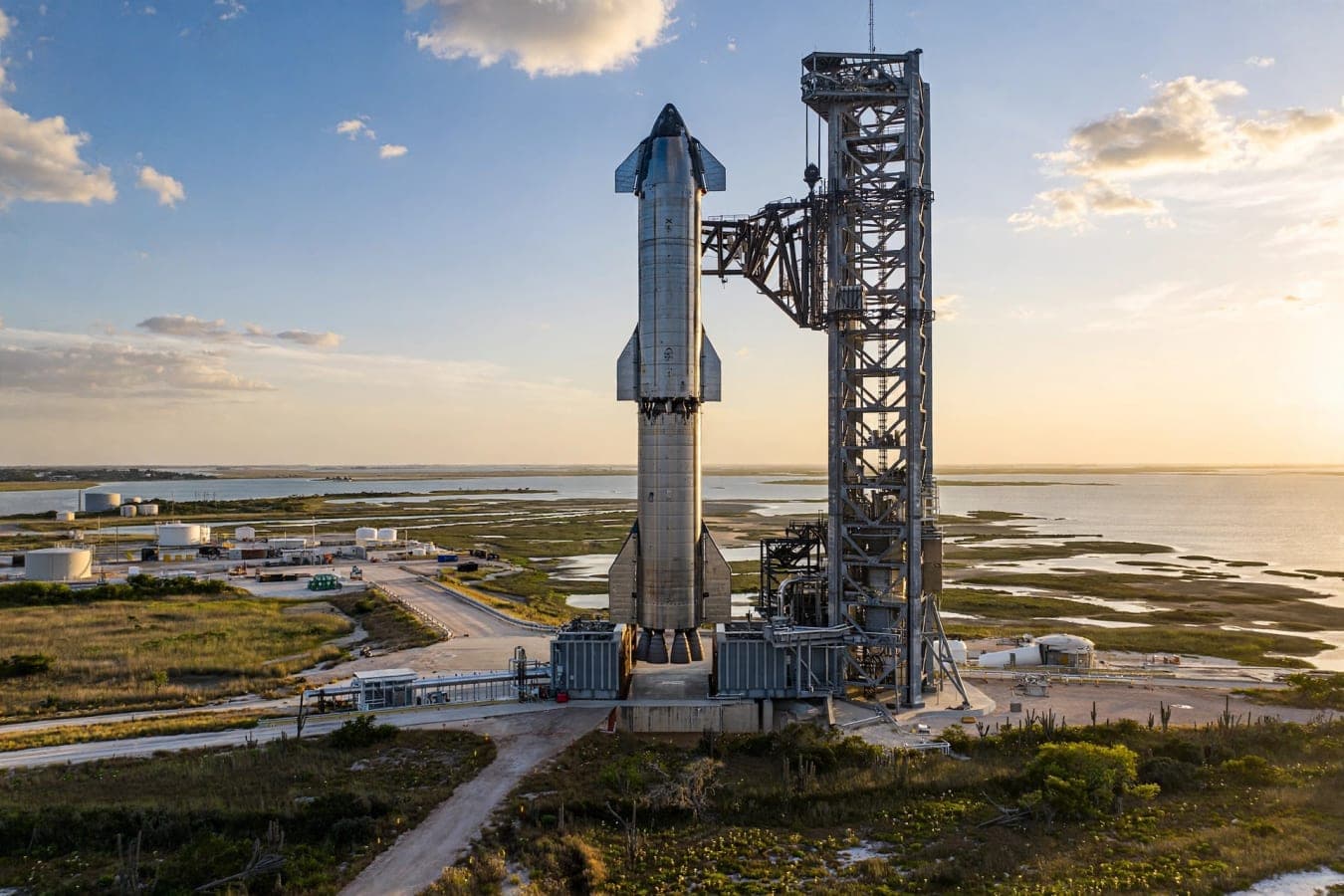
Flight 15 leaves a few clear things to watch. The first is the ship catch attempt planned for about 4:17pm ET on Saturday, 14 November. That is the second half of the first planned attempt to catch both stages, and it is the part of the flight that was still to come when the booster splashed down.
The second is the Starlink V3 satellites themselves. All 26 were deployed and had made contact by about 7:09pm ET on Friday. The next step is the checkout period, after which the satellites could start serving customers a few weeks after launch. That is when the capacity added by this flight, about a terabit from a single batch, begins to show up in the service.
Starship has now reached orbit twice. The second time, it also delivered a full batch of 26 Starlink V3 satellites, each adding about 1 Tbps of capacity. That is a working mission, not just a test of getting off the ground. Flight 15, then, is best read as a flight with a solid centre and an unfinished edge. The launch worked. The ship reached orbit. The satellites were deployed and contacted. The booster did not make it back to the tower. The ship's return was still to come.
FAQs
When did SpaceX fly Starship Flight 15?
SpaceX flew Starship Flight 15 on Friday, 13 November 2026, lifting off from Starbase in Boca Chica, South Texas, at 5:47pm ET (22:47 UTC) from Orbital Launch Pad 2.
How many Starlink satellites did Flight 15 deploy?
Flight 15 deployed 26 Starlink V3 satellites, flying as Starlink Group 31-2. Deployment started 35 minutes after launch and took about 42 minutes, and all 26 had been deployed and had made contact by about 7:09pm ET.
How much capacity does a batch of 26 Starlink V3 satellites add?
SpaceX says each V3 satellite adds about 1 Tbps of capacity, so the batch adds about a terabit of capacity. SpaceX says that is roughly equal to 10 Falcon 9 launches of the older V2 Mini satellites.
Did Starship reach orbit on Flight 15?
Yes. The ship reached low Earth orbit at about 275 km. It was only the second time Starship has reached orbit.
What happened to the Super Heavy booster on Flight 15?
The booster catch was missed. The booster was diverted from the tower catch and made a controlled splashdown in the Gulf of Mexico. The booster was Booster 22, the first Super Heavy V3 booster.
Was Flight 15 meant to catch both stages?
Yes. It was the first planned attempt to catch both the Super Heavy booster and the Starship upper stage at the launch site. The ship catch attempt was planned for about 4:17pm ET on Saturday, 14 November, gated on the ship's systems being healthy.
When could the new Starlink V3 satellites start serving customers?
SpaceX says the satellites could start serving customers a few weeks after launch, once checkouts are done. Three of the 26 carry cameras to scan the heat shield.
Was this article helpful?

Written By
TechorCoffeeContributing Writer
TechorCoffee is a technology reporter and software creator writing reviews and tutorials for TechOrCoffee.
Comments (0)
Leave a Comment
Read Next

Thu Mar 12 2026
Leaks & Rumors: MacBook Air M4 vs MacBook Neo: Full Comparison
MacBook Air M4 and MacBook Neo target different users in Apple’s lineup. Neo focuses on affordability and everyday tasks, while Air M4 delivers stronger performance, better graphics, and higher memory options for demanding workloads like coding, editing, and multitasking.

Tue Mar 03 2026
MacBook Air M5: Apple's Game-Changing 2026 Launch Review
Apple unveils the MacBook Air M5 with revolutionary 3nm chip technology, enhanced AI capabilities, improved battery life, and stunning display upgrades. This comprehensive analysis covers specifications, performance benchmarks, pricing, and this new release justifies upgrading from previous models.

Thu Mar 12 2026
Leaks & Rumors: MacBook Neo vs MacBook Air M1: Full Performance Comparison
MacBook Neo powered by the A18 Pro chip introduces a new direction for Apple laptops, competing directly with the classic MacBook Air M1. This detailed comparison explores performance benchmarks, display quality, and battery life to help buyers decide which Apple laptop delivers the best value.