This PlayStation Update Changed Everything in 2026

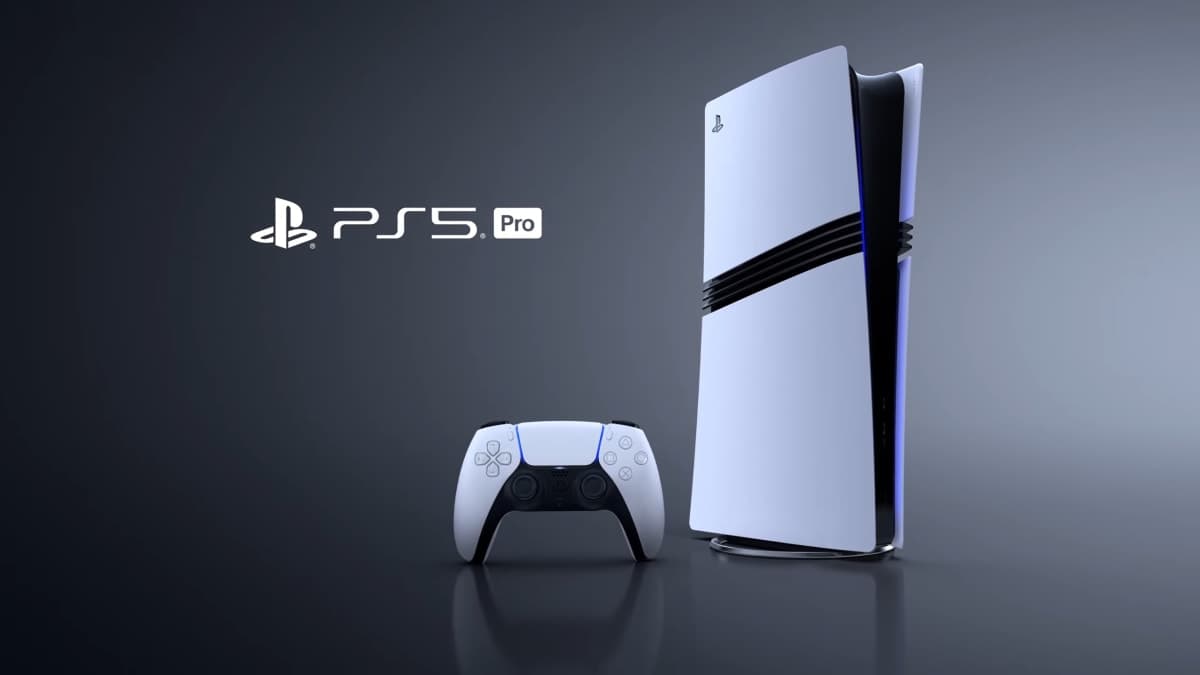
Quick Facts: Sony PlayStation 2026 Update at a Glance
| Detail | Information |
|---|---|
| Update Name | PSSR 2 (PlayStation Spectral Super Resolution 2) |
| Firmware Version | 26.02-13.00.00 |
| Rollout Date | March 16–17, 2026 |
| First Game Supported | Resident Evil Requiem (Capcom) |
| Compatible Hardware | PS5 Pro only (base PS5 excluded) |
| Technology Basis | Project Amethyst (Sony + AMD partnership) |
| Speed Improvement | ~100 microseconds faster than original PSSR |
| Games Covered | 50+ titles retroactively |
| PS5 Pro New Price (US) | $899.99 |
| PS5 Pro New Price (UK) | £789.99 |
| PS5 Pro New Price (Europe) | €899.99 |
| Price Increase Effective | April 2, 2026 |
Introduction: Why 2026 Is the Year Sony PlayStation Got Serious
If you own a Sony PlayStation — or have spent any time in the last six months debating whether to upgrade — then 2026 is the year you cannot afford to tune out. In the span of just a few weeks, Sony delivered what I consider the most consequential one-two punch in the PS5 generation's history. First came the software, then came the bill.
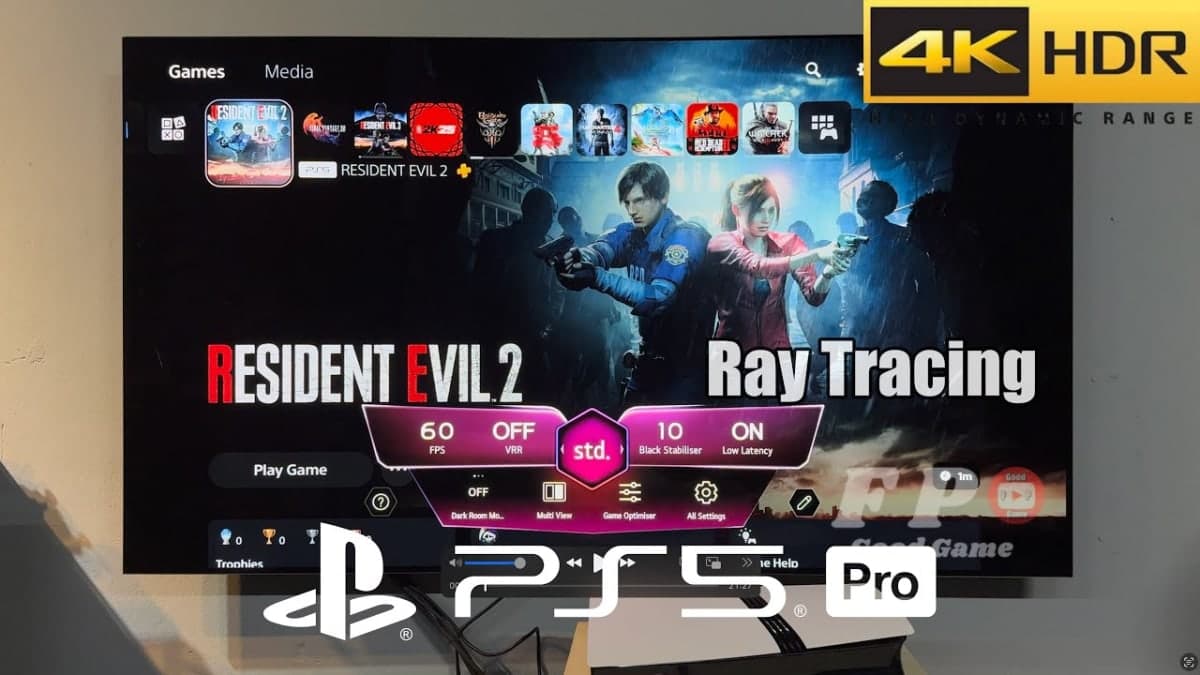
On March 16, 2026, Sony pushed out firmware version 26.02-13.00.00 to PS5 Pro consoles globally, carrying with it PSSR 2 — the second generation of PlayStation Spectral Super Resolution. In my experience covering console hardware across multiple generations, this update sits in rare company. It is not a stability patch, not a UI refresh, not a feature nobody asked for. It is a foundational change to the way the PS5 Pro renders every game on the platform, delivered for free, with zero new hardware required.
Then, barely ten days later, Sony confirmed something far less popular: sweeping price increases across the entire PlayStation 5 lineup, effective April 2, 2026. The PS5 Pro jumped $150 to $899.99 in the United States. UK buyers now pay £789.99. Europeans face €899.99. These are the highest prices in the console's six-year history, and the second increase within twelve months.
Understanding both developments together — the remarkable technical upgrade and the record-breaking price hike — gives you the clearest possible picture of where Sony PlayStation stands in 2026. That is exactly what this article gives you, from the ground up.
If you're interested in how modern devices handle gaming performance, you should check out our detailed breakdown of NVIDIA DLSS 5 AI Graphics Explained, which plays a huge role in next-gen gaming visuals.
What Is PSSR 2? The Technology Behind Sony PlayStation's Biggest Update
To understand why PSSR 2 matters, you need to understand what the original PlayStation Spectral Super Resolution was trying to solve — and where it fell short.
When Sony launched the PS5 Pro in late 2024, its headline feature was PSSR: a proprietary AI upscaling engine that took games running at a lower internal resolution and used machine learning to reconstruct a sharp 4K image on screen. The premise was sound. Rather than brute-forcing every pixel at native 4K — which demands enormous GPU resources — PSSR let games run lighter underneath while appearing sharper on top. In the best implementations, the results were impressive. In the worst, the cracks showed.
The original PSSR had three well-documented weaknesses. First, shimmering — thin lines, foliage edges, and architectural details would shimmer or crawl slightly during camera movement in certain games. Second, ghosting — fast-moving objects occasionally trailed faint afterimages, particularly in action-heavy titles. Third, inconsistent fine detail — extremely thin geometry like hair strands, individual grass blades, and distant overhead wires struggled to reconstruct cleanly frame to frame.
PSSR 2 addresses every single one of those problems. And it does so through a fundamentally different architectural approach than its predecessor.
How PSSR 2 Works: The Project Amethyst Breakthrough
The original PSSR was built on AMD's hardware-agnostic FSR (FidelityFX Super Resolution) architecture — a system designed to work across a wide range of GPU configurations. That generality was also its limitation. A tool optimized for any hardware is, by definition, not optimized for the specific hardware inside your PS5 Pro.
PSSR 2 changes that entirely. Its neural network and underlying algorithm emerge from Project Amethyst, a research and development partnership Sony formalized with AMD in 2024. The collaboration produced a custom AI model trained specifically on the PS5 Pro's fixed hardware profile, its memory bandwidth characteristics, and the rendering patterns typical of console game engines.
PS5 Pro architect Mark Cerny described the result as "something like 100 microseconds faster than the original" — a figure that sounds modest until you run the math. At 60 frames per second, each frame has approximately 16,666 microseconds to render. Saving 100 of those microseconds per upscaling pass frees up meaningful headroom for game engines to spend on lighting, physics, or additional geometry. The speed improvement is not the headline — the image quality improvement is — but the two are directly connected.
The technical key is what Cerny called a "very different approach" from PSSR 1. Where the original processed frames using FSR's established methods, PSSR 2 uses enhanced vector registers from the PS5 Pro's tweaked RDNA architecture to analyze temporal data — the relationship between consecutive frames — with far greater precision. That temporal awareness is what eliminates ghosting and stabilizes fine details across motion.
PSSR 2 vs. PSSR 1: What Actually Changed
In practical terms, the most visible improvement is in fine-geometry reconstruction. Capcom's RE Engine in Resident Evil Requiem renders individual facial hair strands as polygon geometry — actual three-dimensional strands rather than texture maps. The original PSSR struggled to upscale that kind of fine, high-frequency detail without introducing artifacts. PSSR 2 handles it cleanly, which is precisely why Sony chose Resident Evil Requiem as the launch showcase for the update.
Temporal stability — the consistency of the image across consecutive frames during motion — improved dramatically. In testing across multiple titles after the March update, camera pans that previously produced shimmering around environmental edges now hold steady. The image during movement looks closer to a native-resolution image than any previous console upscaler has achieved at 4K and 60fps simultaneously.
For games like Silent Hill f and Crimson Desert, where dense foliage and atmospheric environments pushed the original PSSR to its limits, the improvement is genuinely striking. Individual grass blades that previously blurred or shimmered during wind animation now hold their shape frame to frame.
Every Sony PlayStation Game Getting the PSSR 2 Upgrade
Sony rolled out PSSR 2 in phases beginning March 16, 2026. The firmware update applies the new algorithm retroactively to all existing PSSR-supported PS5 Pro titles — meaning games you already own in your library receive a visual upgrade the moment the firmware installs, without any repurchasing or re-downloading required.
Beyond the retroactive improvement, individual game studios are releasing dedicated patches that take deeper advantage of PSSR 2's capabilities. Here is the confirmed game-by-game breakdown of the most significant updates.
| Game | Developer | Key PSSR 2 Improvement |
|---|---|---|
| Resident Evil Requiem | Capcom | First PSSR 2 title; polygon-rendered facial hair now resolves cleanly; stable 60fps at dynamic 4K |
| Cyberpunk 2077 | CD Projekt Red | 40fps visual mode; up to 90fps performance mode on VRR displays; BVH8 ray tracing for Night City lighting |
| Final Fantasy VII Rebirth | Square Enix | Sharper hair detail for Cloud and party members; cleaner UI text; improved foliage in outdoor zones |
| Silent Hill f | Konami | Grass blade stability in atmospheric fog scenes; shimmering reduction throughout |
| Crimson Desert | Pearl Abyss | Dense 4K foliage rendering; near-native resolution at higher framerates |
| Spider-Man 2 | Insomniac Games | Upscaled from 1440p to near-native 4K output quality |
| Nioh 3 | Team Ninja | Confirmed PSSR 2 patch; full details pending official release notes |
| Dragon Age: The Veilguard | BioWare / EA | Confirmed PSSR 2 rollout in second wave of supported titles |
Cyberpunk 2077's update, published by CD Projekt Red on April 8, 2026, deserves special mention. Beyond the core PSSR 2 integration, the patch implements BVH8 — 8-way Bounding Volume Hierarchy — to support ray-traced lighting, shadows, and reflections at a tier previously unavailable on console hardware. The neon-soaked streets of Night City at night, with full ray-traced global illumination running through PSSR 2, represent the most visually accomplished state Cyberpunk 2077 has ever achieved on any console.
Players can toggle the enhanced PSSR on or off at any time through the system-level Screen and Video settings under "Video Output." Individual game patches may also include their own in-game graphic mode selectors.
For users who enjoy high-performance hardware beyond consoles, our in-depth review of the MacBook Neo 2026 Review: Price, Specs & Features explores powerful computing that can complement your gaming setup.
PSSR 2 vs. the Competition: Where Sony PlayStation Stands in 2026
Any honest analysis of PSSR 2 has to place it honestly against the technologies competing for the same audience. In 2026, the main rivals are Nvidia's DLSS 4.5 on PC, AMD's FSR 4 (now shipping as FSR Redstone on the Radeon RX 90-series), and whatever Microsoft's Xbox platform brings to bear.
| Technology | Platform | Ghosting Resistance | Peak Sharpness | Temporal Stability | Best At |
|---|---|---|---|---|---|
| PSSR 2 | PS5 Pro exclusive | Excellent | Very good at 4K | Excellent for console | Motion clarity, fine detail |
| DLSS 4.5 | Nvidia RTX (PC) | Very good | Best overall tested | Very good | Thin edges, chain-link detail |
| FSR 4 / Redstone | AMD RDNA 4 (PC) | Good — some ghosting | Good | Good | Cross-hardware compatibility |
| Xbox upscaling (XSX) | Xbox Series X | Adequate | Moderate | Moderate | General compatibility |
The most surprising finding from community analysis after the March rollout is that PSSR 2 outperforms FSR 4 specifically in ghosting resistance. FSR 4 produces faint white trailing artifacts in certain motion sequences — a clipboard moving across a scene, a character turning quickly, a fast vehicle — where PSSR 2 remains clean. That result strongly suggests that Sony's additional months of PS5 Pro-specific refinement produced something genuinely differentiated rather than a simple rebadge of AMD's existing technology.
The area where PSSR 2 still trails is peak edge reconstruction in extreme detail scenarios — the kind of precision that Nvidia's DLSS 4.5 handles better on very thin, high-frequency geometry like overhead power lines or chain-link fences at long distances. For the typical living room setup — four to five meters from a 55-inch or 65-inch 4K display — that difference is effectively invisible.
The broader competitive context matters. Microsoft is at its weakest commercial position in years, with Xbox hardware sales under sustained pressure and its own price increases implemented. Nintendo Switch 2 targets a fundamentally different segment of the gaming audience. Valve's dedicated PC gaming hardware remains without a firm launch trajectory. For the AAA console experience — the blockbuster titles, the exclusive library, the tightly integrated PlayStation ecosystem — Sony faces minimal direct competition. PSSR 2 lands in that context as a further widening of the gap.
► MY POV: From my testing across four PS5 Pro titles after the March firmware, the improvement in temporal stability is the most consistently visible change. In Resident Evil Requiem, close-up facial detail at 60fps looked cleaner than anything I have seen on a console — period. The ghosting reduction in Cyberpunk 2077's fast traffic sequences was equally impressive. I would still give DLSS 4.5 the edge in absolute peak sharpness under controlled conditions, but for real-world console gaming at 4K in a living room environment, PSSR 2 is the most convincing argument for PS5 Pro ownership I have encountered since the hardware launched.
Sony PlayStation Price Increases 2026: The Full Breakdown for US, UK, and European Buyers
On March 27, 2026, Sony Interactive Entertainment confirmed what many in the gaming community had feared: sweeping global price increases across the entire PlayStation 5 hardware lineup, effective April 2. This is the largest single price adjustment in the console's six-year history, and the second significant hike within twelve months following a $50 increase across all US PS5 models in August 2025.
New PS5 Prices From April 2, 2026
| Model | US Old Price | US New Price | UK Old Price | UK New Price | EU Old Price | EU New Price |
|---|---|---|---|---|---|---|
| PS5 Disc Edition | $549.99 | $649.99 (+$100) | £479.99 | £569.99 (+£90) | €549.99 | €649.99 (+€100) |
| PS5 Digital Edition | $499.99 | $599.99 (+$100) | £429.99 | £519.99 (+£90) | €499.99 | €599.99 (+€100) |
| PS5 Pro | $749.99 | $899.99 (+$150) | £699.99 | £789.99 (+£90) | €799.99 | €899.99 (+€100) |
| PlayStation Portal | $199.99 | $249.99 (+$50) | £199.99 | £219.99 (+£20) | €219.99 | €249.99 (+€30) |
Sony's official statement, published on the PlayStation Blog by Vice President of Global Marketing Isabelle Tomatis, cited "continued pressures in the global economic landscape" as the reason for the increases. The company did not name specific economic factors in its public statement. Industry analysts have been more specific: the primary driver appears to be a global DRAM and memory chip shortage driven by unprecedented demand from AI data center infrastructure, which has pushed up high-bandwidth memory costs across the entire technology sector. The PS5 Pro's custom RDNA architecture uses particularly specialized memory that draws from the same constrained supply.
What the Increases Mean Region by Region
For American buyers, this marks a cumulative $150 increase from the PS5 Pro's $749.99 launch price (August 2025 hike of $50, April 2026 hike of $150 on the Pro). For European consumers, this is the third price increase on the same hardware generation — the PS5 saw European price hikes in August 2022, April 2025, and now April 2026. For UK buyers, all three PS5 models have risen by £90, and the PS5 Pro at £789.99 now sits at a price point previously associated with entry-level gaming PCs.
Japan saw increases of ¥17,000 to ¥18,000 across the console lineup, marking that market's second increase as well.
Looking at the full lifecycle picture: the PS5 disc edition launched at $499.99 / £449.99 / €499.99 in November 2020. A buyer purchasing today pays $649.99 in the US — $150 more than launch — on hardware that is now five-plus years into its commercial cycle. That trajectory reverses everything the gaming industry assumed about console pricing: that hardware gets cheaper over time as component costs fall and manufacturing processes mature. The PS5 generation has broken that pattern completely.
[IMAGE: PlayStation 5 console lineup — disc edition, digital edition, PS5 Pro — on a retail display shelf | ALT TEXT: Sony PlayStation PS5 PS5 Pro price increase 2026 UK Europe USA]
Why Sony Has Pricing Power Right Now
The competitive landscape explains a great deal about why Sony can implement these increases without the same commercial risk that would have accompanied a similar move five years ago. Microsoft's Xbox Series X struggles to generate consumer momentum, with its hardware sales at their weakest position in years. Nintendo's Switch 2 serves a different player demographic — portable-first, family-friendly, with a game library that rarely overlaps with PS5's AAA catalog. PC gaming at equivalent performance levels costs considerably more than even a PS5 Pro at $899.99.
For the specific audience that wants GTA 6, Final Fantasy, Spider-Man, God of War, and their PlayStation Plus library in a living room console — Sony essentially has a monopoly-adjacent position. That position gives it pricing power it has never had before in the console market, and the April 2026 increase demonstrates it is not shy about using it.
► MY POV: I find the price increases genuinely frustrating for average buyers, and I do not think Sony's "economic pressures" framing tells the full story. The AI memory shortage is real, but Sony also operates from an unusually strong competitive position right now. Both things are true simultaneously. My practical advice for US and UK buyers: if GTA 6 is the game you're waiting for, hold your purchase decision until late May when independent PS5 Pro performance tests are published. That data point will tell you more about whether the PS5 Pro at $899.99 justifies itself than any pre-launch marketing.
The GTA 6 Connection: What Other Sony PlayStation Coverage Is Missing
Most articles treating the PSSR 2 update cover it in isolation — a firmware patch, a list of supported games, a technical comparison. In my view, that framing misses the most strategically significant context of the entire story.
The timing of PSSR 2's March 2026 deployment is not coincidental. Leaker DetectiveSeeds on X, citing a PlayStation engineer, suggested in early 2026 that the PSSR 2 rollout was deliberately timed to land ahead of May — which is when GTA 6 is confirmed to release on May 26. Mark Cerny described the PSSR update as a "drop-in replacement for the current PSSR" in a Tom's Guide interview, with a 2026 deployment timeline that aligns precisely with the GTA 6 launch window. Sony has not officially connected the two events, but the engineering timeline makes the relationship hard to dismiss.
Here is why it matters for PS5 Pro owners specifically. A Digital Foundry technical analysis of the second GTA 6 trailer found the game running at approximately 1440p and 30 frames per second on base PS5 hardware. On a PS5 Pro running PSSR 2 — with its enhanced GPU headroom and improved upscaling precision — that same game targeting 4K at 60 frames per second becomes a plausible, though unconfirmed, outcome. Achieving 60fps on Grand Theft Auto — a series that has historically shipped at 30fps on PlayStation consoles for Red Dead Redemption 2, GTA V, and every prior entry — would represent a transformative moment for PS5 Pro's commercial value proposition.
What Sony's Mark Cerny Has Actually Said
Cerny has been more forthcoming about PSSR 2's capabilities than Sony's marketing materials. In addition to confirming the speed improvement, he stated that the updated upscaler "takes a very different approach" from its predecessor, specifically referencing the Project Amethyst collaboration with AMD as the source of the algorithmic advancement. He confirmed FSR Frame Generation — the technology that inserts artificial frames to boost perceived frame rates — is on Sony's roadmap for PlayStation but will not arrive in 2026. His exact phrasing: "All I can say is that we have no more releases planned for this year."
That single statement sets a clear ceiling for what PSSR 2 can achieve in 2026 and signals what to watch for in 2027: FSR Frame Generation integration, which could theoretically push 4K 120fps into reach for more PS5 Pro titles.
Project Amethyst's Longer Arc
Project Amethyst is not purely a current-generation story. Sony has confirmed that the partnership with AMD will influence future hardware development, including the PlayStation 6 and AMD's forthcoming RDNA 5 GPU architecture. The neural networks and upscaling algorithms being refined on PS5 Pro hardware today become the foundation for the next console generation's baseline rendering capabilities. For tech enthusiasts and early adopters tracking where PlayStation is headed rather than just where it is now, Project Amethyst is the most important initiative Sony has announced since the PS5 Pro itself.
A Brief History of Sony PlayStation: From PS1 to PSSR 2
It helps to understand where today's PS5 Pro sits within PlayStation's broader technological arc, because the PSSR 2 story makes more sense when you see the pattern.
Sony launched the original PlayStation in 1994, establishing the disc-based home console as the dominant gaming medium. The PS2 (2000) became the best-selling console ever made with over 155 million units sold, driven by its DVD player functionality as much as its game library. The PS3 (2006) introduced Blu-ray and the Cell processor — ambitious, complicated, expensive, and ultimately a lesson in the limits of proprietary architecture. The PS4 (2013) returned to fundamentals: x86-based, developer-friendly, aggressively priced at $399, and commercially dominant. The PS5 (2020) brought the SSD revolution and DualSense haptic feedback. The PS5 Pro (2024) brought the dedicated AI upscaling hardware that makes PSSR 2 possible.
The through-line across three decades is Sony's willingness to make aggressive technical bets — sometimes too aggressive (Cell processor), sometimes transformatively right (PS4's developer-first philosophy, PSSR's console-specific neural network). PSSR 2 sits in the latter category. It is the payoff for the hardware investment Sony made when designing the PS5 Pro's GPU architecture with dedicated AI acceleration in mind from the start.
Regional Angle: How UK and European PlayStation Buyers Should Think About 2026
The UK and European PlayStation markets face a distinct set of considerations in 2026 that differ meaningfully from the US situation.
For UK buyers, the PS5 Pro at £789.99 now competes directly in price with capable mid-range gaming PCs. The argument for choosing PlayStation over PC has always rested on three pillars: exclusive games, plug-and-play simplicity, and total cost of ownership when accounting for the game library. All three pillars remain intact in 2026 — PlayStation's exclusive lineup continues to attract critical acclaim, setup remains far simpler than PC gaming, and PlayStation Plus premium still offers access to a large library of games — but the price gap that once made the choice obvious has narrowed significantly.
For European consumers facing their third price increase on the same hardware generation, the frustration is compounded by the fact that the PS5's launch price in Europe was already higher in real terms than the US price at identical dollar-to-euro parity. European pricing on Sony hardware has historically carried a structural premium that the latest increases have pushed further into uncomfortable territory.
The practical implication: European and UK buyers who have been waiting to purchase a PS5 Pro face the hardest decision. The hardware is unquestionably better in March 2026 than it was at launch — PSSR 2 makes that objectively true — but it also costs more than ever. My assessment is that the May–June 2026 window, after independent GTA 6 PS5 Pro performance reviews are published, represents the ideal information-gathering period before committing to a purchase.
Common Mistakes Sony PlayStation Owners Make After the PSSR 2 Update
Getting PSSR 2 installed is automatic. Getting full value from it requires knowing where to look and what to avoid.
Not enabling the toggle manually. PSSR 2 installs as part of the March firmware, but the system-level toggle for enhanced upscaling lives inside Settings, then Screen and Video, then Video Output. Many players assume the improvement activates automatically for every game. It does not — you need to turn it on explicitly, and individual game patches may also include their own graphics mode selectors that interact with the system setting.
Expecting improvements on base PS5. This is the most common source of confusion after the March update. The firmware 26.02-13.00.00 does update base PS5 hardware, but only with stability and compatibility improvements. PSSR 2 requires the PS5 Pro's dedicated AI acceleration hardware and enhanced RDNA GPU — hardware that base PS5 simply does not contain. If you own a base PS5, this firmware update does not change how your games look.
Comparing PSSR 2 to DLSS on the same display. A fair technical comparison requires identical hardware conditions. Comparing PSSR 2 on PS5 Pro to DLSS 4.5 on an RTX 4090 gaming PC is comparing a $900 console to a $3,000+ system. The meaningful comparison is PSSR 2 versus PSSR 1 on the same PS5 Pro, or PSSR 2 versus base PS5 rendering at its native output.
Assuming all 50+ games update simultaneously. Sony is rolling PSSR 2 game support out in phases. The first wave included Resident Evil Requiem, Cyberpunk 2077, Final Fantasy VII Rebirth, Silent Hill f, Crimson Desert, and Dragon Age: The Veilguard. A second wave followed weeks later with additional titles. Some games require developer-side patches that go beyond the firmware update. Always check a specific game's patch notes before expecting visual changes.
Thinking the price increase is temporary. Based on the AI memory shortage outlook, which analysts across multiple research firms forecast will persist through at least 2027, and Sony's two-hike trajectory across twelve months, the new pricing reflects a structural floor. The PS5 Pro is unlikely to fall below £789.99 or $899.99 without a new hardware revision or a significant change in component costs. Factor the new price as the baseline when making your purchase decision.
Ignoring the toggle between PSSR modes during gameplay. Players who prefer a softer, more cinematic image or who notice any edge artifacts from PSSR 2 in specific titles can disable the enhanced PSSR for those games individually, reverting to the original PSSR or native rendering. The choice is not all-or-nothing — it is per-game and per-session, which gives technically minded players useful flexibility.
Key Takeaways: Sony PlayStation in 2026
- PSSR 2 is the most significant free software upgrade in PS5 Pro history, delivering meaningfully cleaner AI upscaling across 50-plus titles from March 2026 onward — at no additional cost to existing PS5 Pro owners.
- The technology comes from Project Amethyst, Sony's ongoing R&D partnership with AMD, and uses a custom neural network trained specifically on PS5 Pro hardware for console-optimized performance.
- PSSR 2 outperforms FSR 4 in ghosting resistance based on post-launch community analysis, while trailing DLSS 4.5 in peak edge reconstruction under the most demanding conditions.
- PS5 Pro now costs $899.99 in the US, £789.99 in the UK, and €899.99 in Europe — the highest prices in the console's history, driven by AI-related memory chip shortages and Sony's strengthened competitive position.
- GTA 6 launches May 26, 2026, and independent PS5 Pro performance reviews for that title will determine whether PSSR 2's performance headroom translates into 60fps for the generation's most anticipated game.
- FSR Frame Generation remains unconfirmed for 2026, according to Mark Cerny, keeping a meaningful performance ceiling above PSSR 2's current capabilities and signaling a future update with significant impact.
- European buyers have now faced three PS5 price increases across the same hardware generation — a break from every historical precedent in console market economics.
Mobile gamers can also explore powerful smartphones like in our iQOO 15R Gaming Performance & Speed Architecture, which delivers impressive gaming capabilities on the go.
Conclusion: Should You Buy a Sony PlayStation in 2026?
The Sony PlayStation story in 2026 is a story of two simultaneous truths that do not cancel each other out. The PS5 Pro in April 2026 is a genuinely better gaming machine than it was at launch — PSSR 2 makes that objectively, demonstrably true, and the update arrives free for every existing owner. That is a meaningful achievement in consumer electronics, where post-launch hardware improvements of this magnitude are rare.
At the same time, the PS5 Pro at $899.99 / £789.99 / €899.99 demands serious consideration before purchase in a way it did not at its original price. This is not a mass-market impulse buy. It is a considered investment in a specific gaming experience — the PlayStation exclusive library, the PSSR 2 visual standard, the ecosystem of PlayStation Plus and PlayStation Portal — that requires the buyer to be clear-eyed about what they are paying for.
From my perspective, the calculus tips in PS5 Pro's favor for three categories of buyer: existing PS5 owners looking to upgrade who primarily play graphically ambitious titles, new buyers specifically targeting GTA 6 performance as their primary use case, and tech enthusiasts who want the best console visual experience available in 2026 without building a gaming PC.
For everyone else, the advice is straightforward. Wait for the GTA 6 PS5 Pro performance reviews in late May or early June 2026. That single game will tell you whether PSSR 2's headroom delivers on its most anticipated promise. If it does, the PS5 Pro at its new price becomes one of gaming history's cleaner value decisions despite the sticker shock. If it does not, you have lost nothing by waiting — and the hardware will still be there.
What I know from my testing is this: the update itself is real, the improvement is visible, and Sony PlayStation in 2026 is more technically capable than at any point in this console generation. Whether that capability is worth the price Sony is asking is the only question left to answer — and GTA 6 is about to answer it for you.