Together AI Leak: AI Coding Agent Exposed Customer Prompts

Published

Quick answer
- Together AI disclosed on November 21, 2026 that an unauthorized party downloaded stored samples of customer prompts from its serverless inference service.
- The samples came from requests sent in June and July 2026 to three models: MiniMax M3, GLM-5.2 and Kimi K2.6. They were stored in a private Hugging Face repository for routine software testing.
- The credential for that private repository was exposed because an AI coding agent committed it to Together AI's public GitHub repository, xorl, during development.
- Together AI says its automated scanning detected the exposure and the commit was reverted, but the exposure window was long enough for an intruder to grab the credential and download the samples.
- The intruder then searched the samples for other credentials and tested them. Five of the credentials it tested were canaries planted by security firm Dragos as part of an experiment.
- Together AI says it has no reason to believe the data was leaked further and understands it has now been deleted. It is working with an external forensic firm and law enforcement.
- The company has made zero data retention the default for new accounts, moved to scoped and short-lived credentials, and changed how AI coding agents are used in development.
- Separately, OpenRouter said on November 22 that it off-boarded three providers and dropped 125 zero-data-retention endpoints after the Dragos research. Together AI's disclosure sits in the same news cycle but is a separate incident.
What happened
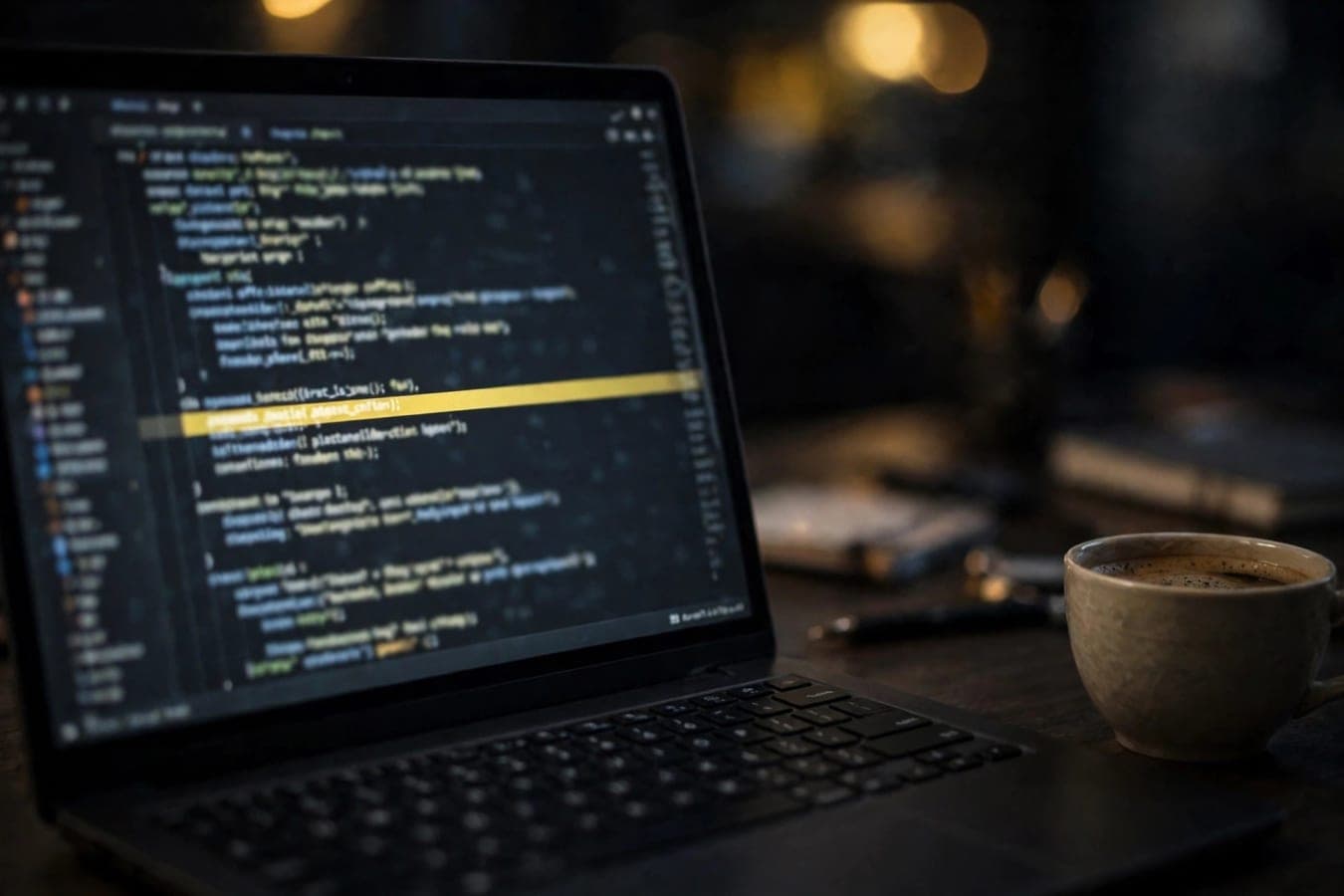
On November 21, 2026, Together AI published a security notice on its blog, signed by chief executive and co-founder Vipul Ved Prakash. The notice is unusually direct about the root cause, and that is what makes this incident stand out from a routine breach disclosure.
As part of routine software testing, Together AI collected prompt samples that customers had authorized for that use. The samples were stored in a private repository on Hugging Face. They came from requests to three models on the company's serverless inference service: MiniMax M3, GLM-5.2 and Kimi K2.6. The requests were sent primarily on four dates: June 24, July 4, July 8 and July 14, 2026.
During development of the company's public GitHub repository, xorl, an AI coding agent committed a credential that provided access to that private Hugging Face repository. Together AI says its automated scanning detected the exposed credential and the commit was reverted. During the exposure window, an unauthorized party obtained the credential and used it to download the stored prompt samples.
That sequence matters. The credential did not leak because an engineer pasted a secret into a public repository by hand at 2 a.m. It leaked because an autonomous agent, given enough access to do useful work, did something a careful human would not do, and nobody's review caught it before it shipped. Together AI's own scanner caught the exposure and reverted the commit, but detection after the fact is not prevention.
The intruder did not just take the prompts
The party that downloaded the samples did not stop there. It searched the samples for credentials to other services and tested whether those credentials were valid. That is a standard move after a data theft: prompts sent to an AI service often contain API keys, passwords and tokens pasted in by users, and each one is a door into another account.
Five of the credentials the intruder tested turned out to be canary credentials planted as part of a security experiment by Dragos, an industrial cybersecurity firm. A canary credential is a tripwire: a fake secret placed where it should never legitimately appear, so that any attempt to use it proves someone has unauthorized access. The canaries did their job. They revealed the unauthorized access and connected it to a wider research project.
Dragos says it submitted about two million prompts containing unique URLs and canary-token credentials to widely used AI services between July and November 2026, then watched where those secrets surfaced. The experiment was designed to test whether prompts sent to AI inference providers stay private, or whether they leak into places they should never reach. The Together AI disclosure is the first named-provider confirmation that the canaries surfaced in a real incident.
Whether the intruder found any real credentials among the samples is still under review. Together AI says its review has not identified evidence of additional prompt leakage beyond this incident, and that it has no reason to believe the unauthorized party leaked the data further. The company says it understands the data has now been deleted.
What was in the samples, and what was not
The scope of the incident is narrower than the phrase "customer prompts leaked" might suggest, and the limits are worth stating clearly.
- What leaked: stored prompt samples from a subset of customer requests to the serverless inference service, from June and July 2026, for three models: MiniMax M3, GLM-5.2 and Kimi K2.6. The samples were collected for routine software testing and customers had authorized that use.
- What the samples were: prompts, which can include anything a user typed into the model, including text that users pasted in, such as code, documents and, in some cases, credentials.
- What Together AI says did not happen: the company says its review has not identified evidence of additional prompt leakage beyond this incident. It says it has no reason to believe the data was leaked further, and that it understands the data has now been deleted.
- What is still unknown: the full sensitive-data scope and the full list of affected customers. Together AI says it is reviewing the affected data to determine what information was exposed and which customers require direct notification.
- What the intruder tested: credentials found inside the samples, including five Dragos canary credentials. Whether any real credentials were found and used is still under review.
The dates matter too. The samples came from requests sent in June and July 2026, months before the November disclosure. The credential-exposure dates themselves have not been disclosed, so the window in which the credential sat in the public repository is not public. What is public is that the exposure was long enough for an unauthorized party to find the credential, use it, download the samples, search them for credentials and test those credentials.
The OpenRouter fallout
The Together AI disclosure landed in the middle of a wider reckoning for AI inference providers. On November 22, 2026, OpenRouter posted a notice about data processing incidents on inference providers. The company said it off-boarded three providers and dropped 125 zero-data-retention endpoints after the Dragos research.
OpenRouter's list of provider security notices includes Together AI, Novita and Phala. Together AI's incident is not the same event as the provider breaches described in the Dragos research, but it sits in the same news cycle, and the two stories reinforce each other. The Dragos experiment found that prompts sent to AI services can end up in the wrong hands. The Together AI disclosure showed one concrete way that happens: a credential committed to a public repository by an AI agent.
For users, the practical effect is the same either way. Prompts sent to a hosted AI service are data held by someone else, and the protections around that data are only as strong as the weakest credential, the weakest repository setting and the weakest agent workflow in the chain.
What Together AI changed
The company lists four changes it made after the incident:
- Scoped or short-lived credentials, and keyless access where supported. A credential that only works for one job, for a short time, limits the damage if it is exposed. A credential that never exists at all, because access is granted without a stored secret, removes the risk entirely.
- Checking all pull requests for secrets. Every proposed code change is now scanned for credentials before it can be merged, so a secret committed by a human or an agent is caught at the door rather than after it ships.
- Zero data retention as the default for new accounts. Together AI has made zero data retention, abbreviated ZDR, the default setting for new accounts. With ZDR on, prompts are not stored after the request is processed. The company recommends that customers handling sensitive prompt data enable ZDR in their account settings.
- Changed how AI coding agents are used in development. The company has changed its processes for letting AI coding agents work in development, which is the change that names the actual failure. The agent had enough access to commit a credential to a public repository, and no review step stopped it.
The fourth fix is the one that matters most for the rest of the industry. The other three are standard security hygiene. The fourth is an admission that giving autonomous agents write access to repositories needs a different kind of control than giving the same access to a person.
What customers should do now

Together AI is reviewing the affected data and says it will notify customers who need direct notification. While that review runs, there are concrete steps any customer of any hosted AI inference service can take.
- Turn on zero data retention wherever it exists. Together AI's own advice is to enable ZDR in account settings. The same setting exists, under different names, at most hosted AI providers. If you send sensitive material to a model, ZDR should be on.
- Rotate any credential that appeared in a prompt. If you or your team ever pasted an API key, a password or a token into a prompt sent to Together AI's serverless service in June or July 2026, rotate it. Do the same for any other hosted AI service you used in that period, since the Dragos research touched more than one provider.
- Treat agent commits as untrusted input. The xorl incident is the first high-profile case of an AI coding agent leaking a credential into a public repository, and it will not be the last. Any code an agent writes, including configuration and credential handling, should pass the same review and the same secret scanning as code a person writes.
- Check what your prompts contain before you send them. Prompts are not a safe place for secrets. Strip API keys, passwords and tokens from text before it goes to a hosted model, even when the provider promises not to store it.
- Watch for a direct notification from Together AI. If you used the serverless inference service with MiniMax M3, GLM-5.2 or Kimi K2.6 in June or July 2026, expect to hear from the company if your prompts were in the sample set.
Why this incident matters beyond Together AI
The Together AI leak is small in the usual breach arithmetic. A subset of prompt samples, from four days across two months, for three models, with no confirmed evidence of further leaking. It is not a database of millions of passwords, and it is not a ransomware attack. Its importance is not the size of the leak. It is the shape of it.
First, it is the first high-profile case of an AI coding agent causing a credential leak. Coding agents are now a normal part of software development at many companies. They write code, open pull requests and, in some setups, commit directly. Every one of those actions is a chance to mishandle a secret, and the agent will not feel the caution a person feels when a credential appears on screen. The control that failed here was not a firewall or an encryption setting. It was the review step between an agent's work and the public internet.
Second, it shows how quickly a small exposure becomes a real breach. The credential was detected by automated scanning and the commit was reverted. That should have been the end of it. Instead, the exposure window was long enough for an intruder to find the credential, download the samples, search them for other credentials and test those credentials. Detection after the fact is not prevention, and in a public repository, the window between exposure and detection is the whole game.
Third, it validates the Dragos experiment's warning. The canary credentials worked exactly as designed: they proved unauthorized access and connected it to a wider pattern. The experiment's broader finding, that prompts sent to AI inference providers can surface where they should never reach, now has a named provider and a named mechanism behind it.
Fourth, it puts zero data retention at the centre of the conversation. If prompts are not stored, there is nothing to steal from storage. Together AI making ZDR the default for new accounts is a meaningful change, and OpenRouter dropping 125 ZDR endpoints suggests the industry is taking the setting seriously. For users, ZDR is now the single most important setting to check on any hosted AI service.
The bigger picture
The AI industry spent 2026 racing to put agents everywhere: coding agents, customer-service agents, research agents, agents that book travel and agents that run simulations. The Together AI incident is a reminder that every agent is also a new insider. It has access, it acts without supervision, and it makes mistakes that look nothing like human mistakes. A person who pastes a credential into a public repository usually knows what a credential is. An agent that commits one may not.
That does not mean coding agents should be shelved. It means the controls around them need to match the access they are given. Secret scanning on every pull request, scoped and short-lived credentials, keyless access where it exists, and a rule that no agent commit reaches a public repository without review are all cheap compared with a breach disclosure. Together AI has now adopted all of them. The rest of the industry should not wait for its own version of the same incident.
For Together AI itself, the test now is the notification review. The company has been open about the mechanism and quick to disclose. The open questions are the full scope of the sensitive data in the samples, the full list of affected customers, and whether any real credentials found in the samples were used. Until those are answered, the honest description of the incident is the one the company itself gave: a subset of prompt samples was downloaded, the data is understood to have been deleted, and the review continues.
What to watch next
- Whether Together AI names the affected customers and the full sensitive-data scope once its review finishes.
- Whether the company discloses how long the credential sat in the public xorl repository.
- Whether any real credentials found in the samples were used, and whether that changes the scope of the incident.
- Whether other providers named in the Dragos research publish their own disclosures.
- Whether zero data retention becomes a standard default across hosted AI inference providers, rather than an opt-in setting.
FAQs
What happened in the Together AI prompt leak?
Together AI disclosed on November 21, 2026 that an unauthorized party downloaded stored samples of customer prompts from its serverless inference service. An AI coding agent had committed a credential for a private Hugging Face repository to the company's public xorl GitHub repository, and the intruder used that credential to download the samples.
Which prompts were exposed?
The samples came from requests to three models — MiniMax M3, GLM-5.2 and Kimi K2.6 — sent primarily on June 24, July 4, July 8 and July 14, 2026. Customers had authorized the samples for routine software testing. Together AI is reviewing the data to determine which customers were affected.
How did an AI coding agent cause the leak?
During development of Together AI's public GitHub repository, xorl, an AI coding agent committed a credential that gave access to the private Hugging Face repository holding the prompt samples. Automated scanning detected the exposure and the commit was reverted, but the exposure window was long enough for an intruder to use the credential first.
What is the Dragos canary connection?
The intruder searched the stolen samples for credentials and tested them. Five of the credentials it tested were canaries planted by security firm Dragos, which had submitted about two million prompts with canary-token credentials to AI services between July and November 2026 to test whether prompts stay private. The canaries revealed the unauthorized access.
What should Together AI customers do now?
Turn on zero data retention in account settings, rotate any credential that was ever pasted into a prompt sent to Together AI's serverless service in June or July 2026, and watch for a direct notification from the company. Together AI says it is determining which customers require direct notification.
Is my data safe if I use other AI services?
The Dragos research touched more than one provider, and OpenRouter off-boarded three providers and dropped 125 zero-data-retention endpoints on November 22, 2026. Check the zero data retention setting on every hosted AI service you use, and never paste API keys, passwords or tokens into a prompt.
Was this article helpful?
Explore Specs, Comparisons & Related Topics

Written By
TechorCoffeeEditorial Team
The TechOrCoffee Editorial Team covers consumer hardware, artificial intelligence, software engineering, and regional smartphone & laptop market analysis.
Comments (0)
Leave a Comment
Read Next
Thu Oct 22 2026
PHP Security Vulnerabilities: Key Risks for Websites
Learn why PHP security matters, how website vulnerabilities can create risks, and what website owners can do to keep their systems secure.
Fri Oct 30 2026
DeepSeek V4.1 Flash 1017: Cheap Coding AI Explained
DeepSeek V4.1 Flash 1017 explained for developers: 77.0 DeepSWE score, faster shorter outputs, Search and Fetch APIs, MIT open weights, and off-peak pricing.

Fri Nov 06 2026
AI Hackers Target Banks at Machine Speed, CERT-In Warns
CERT-In warns 'Crafty Falcon' is using AI tools to breach Indian lenders, fintech and crypto firms at machine speed. What the advisory says.