Xiaomi 18 Pro Max vs Samsung Galaxy S26 Ultra

Published
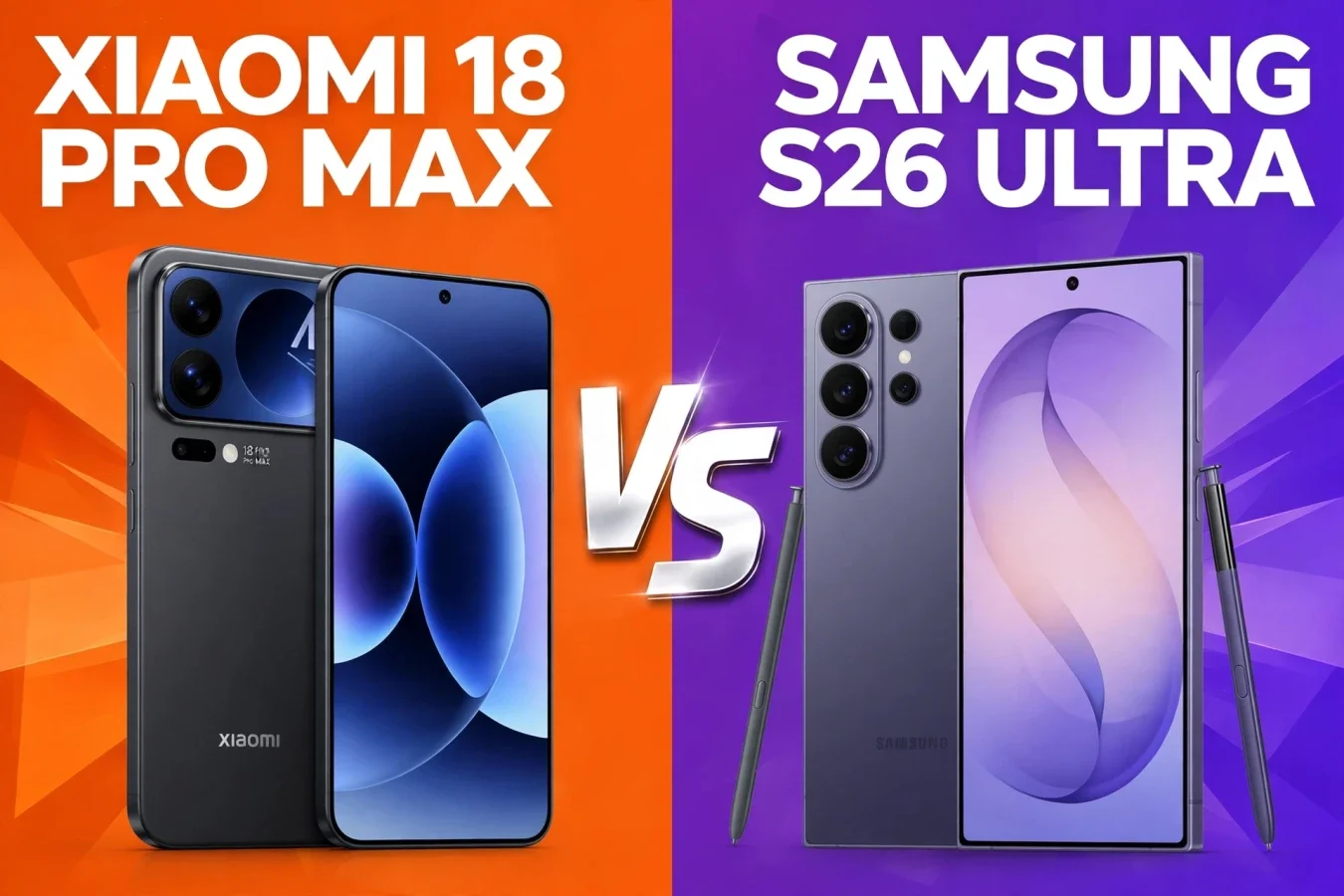
Leica extremes vs Samsung versatility
Xiaomi 18 Pro Max vs Samsung Galaxy S26 Ultra is a clash between a China-first extreme flagship and a globally established Ultra. Xiaomi, launched in China on 23 September 2026, offers dual 200MP Leica cameras, a 2.9-inch rear display, and an 8,500mAh China battery. Samsung, launched in India on 25 February 2026, offers a quad-camera system with dedicated 3x and 5x telephoto lenses, a built-in S Pen, Galaxy AI, and a Privacy Display.
The availability gap is again decisive in India. Samsung is confirmed, on sale in India, and its current India listing is a known quantity. Xiaomi Pro Max has a confirmed global launch for later in 2026, but no confirmed India date or price, and one report says only the Xiaomi 18 Pro may come to India. This article therefore compares China Xiaomi specs with India Samsung specs, and flags every figure that does not transfer across regions.
At a glance
| Xiaomi 18 Pro Max | Samsung Galaxy S26 Ultra | |
|---|---|---|
| Launch | China 23 September 2026; global later in 2026 | India 25 February 2026 |
| Chip | Snapdragon 8 Elite Extreme Gen 6, 2nm | Snapdragon 8 Elite Gen 5 for Galaxy |
| Display | 6.9-inch LTPO AMOLED, 120Hz, plus 2.9-inch rear display | 6.9-inch QHD+ Dynamic AMOLED 2X, 120Hz, up to 2,600 nits peak |
| Rear cameras | 200MP main, 200MP periscope telephoto, 50MP ultrawide (Leica) | 200MP main f/1.4, 50MP ultrawide, 50MP 5x telephoto, 10MP 3x telephoto |
| Front camera | 50MP | 12MP |
| Battery | 8,500mAh China; global may be smaller per reports | 5,000mAh, up to 31h video playback (Samsung-rated) |
| Charging | 100W wired, 50W wireless (China) | 60W wired, up to 75% in ~30 minutes with compatible charger |
| Special features | Rear display, Leica tuning, HyperOS 4 | Built-in S Pen, Privacy Display, Galaxy AI, One UI 8.5, DeX |
| India | No confirmed date or price | Current listing ₹1,54,999 for 256GB; festive effective price ₹79,999 only with full exchange + cashback |
Cameras: dual 200MP vs four lenses
Xiaomi's system is high-resolution and Leica-tuned: 200MP Light Fusion 960L main, 200MP periscope telephoto (1/1.56-inch, 75mm, 3.2x optical, 12cm macro focus), 50MP ultrawide, 8K at 30fps. Samsung's system is more versatile: 200MP main (f/1.4, 1/1.3-inch), 50MP ultrawide, 50MP periscope telephoto with 5x optical zoom, and 10MP telephoto with 3x optical zoom, plus 100x digital zoom in Samsung's marketing and up to 10x optical-quality zoom in spec listings.
That gives Samsung two native telephoto focal lengths where Xiaomi gives one, and Samsung's quad system is better for a photographer who wants both 3x portraits and 5x distant shots without digital cropping. Xiaomi's advantage is resolution and Leica colour on its two 200MP sensors, plus the rear display for rear-camera selfies. Neither system wins on megapixels alone — Samsung also has a 200MP main — and no controlled side-by-side test between these two phones was reviewed here. Choose by zoom style: dual telephoto versatility (Samsung) vs Leica dual-200MP and rear-screen shooting (Xiaomi), and check independent samples for the regional model you would buy.
Video is another split. Xiaomi offers 8K at 30fps and Leica video tuning. Samsung offers Galaxy AI video tools, Super Steady video, and a mature editing and sharing workflow with DeX and Samsung's ecosystem. If video is your main use, test both in store for stabilisation, low-light and audio, rather than trusting a resolution headline.
Performance: newer chip vs tuned chip
Xiaomi uses the newer Snapdragon 8 Elite Extreme Gen 6, the higher tier above the Snapdragon 8 Elite Gen 6 in the standard Xiaomi 18 Pro. Samsung uses the Snapdragon 8 Elite Gen 5 for Galaxy, a tuned version of the previous generation's flagship chip, with up to 16GB RAM and 1TB storage. On chip generation alone, Xiaomi is ahead. In daily use, that gap may not be visible for most tasks — messaging, browsing, photography and social apps do not stress either chip — and Samsung's One UI 8.5, Galaxy AI and long update support (security updates listed until 28 February 2033 in one spec source) are part of its performance story over years, not just launch day.
No retail benchmark comparison between these two phones was reviewed, so no speed winner is claimed. For heavy gaming, wait for sustained-performance and thermal tests on regional models, because a newer chip that throttles is not automatically faster in a 30-minute game session.
Display, S Pen and rear screen: two different extras
Both phones have 6.9-inch displays at 120Hz. Samsung's is QHD+ Dynamic AMOLED 2X with up to 2,600 nits peak and a built-in Privacy Display, which helps keep on-screen content private from onlookers. Xiaomi's is LTPO AMOLED with a 2.9-inch rear display, which helps for selfies, notifications and quick controls without turning the phone over.
The extras are the real choice here. Samsung's S Pen is built in, with note-taking, drawing, sketching and productivity features, plus DeX for a desktop-like experience. Xiaomi's rear display is more of a camera and notification tool. If you take handwritten notes, annotate documents or draw, Samsung's S Pen has no equivalent on Xiaomi. If you take rear-camera selfies or want a second screen for notifications, Xiaomi's rear display has no equivalent on Samsung. Neither extra is a gimmick, but they serve different users.
Battery and charging: size vs efficiency
On paper, Xiaomi's China battery is dramatically larger: 8,500mAh vs Samsung's 5,000mAh, with 100W wired charging vs Samsung's 60W. That is a 70% capacity gap, and it is real for China buyers.
For global and Indian buyers, the gap is unconfirmed, because reports say global Xiaomi versions may use smaller batteries, and no confirmed global figure was reviewed. Samsung's 5,000mAh is confirmed for India, with Samsung-rated video playback up to 31 hours and 60W wired charging claiming up to 75% in around 30 minutes with a compatible charger. Samsung's efficiency, One UI optimisation and smaller display power draw also mean its 5,000mAh may last longer than a raw mAh comparison suggests — but it will not match an 8,500mAh cell for heavy use if Xiaomi's global model keeps that capacity. Again, compare regional spec sheets and battery tests, not China vs India figures.
Software: HyperOS vs One UI
Xiaomi ships HyperOS 4, with Android 17 underneath in one report. Samsung ships Android 16-based One UI 8.5, with Galaxy AI, Samsung Wallet, Samsung Health, SmartThings and DeX. Samsung's software support duration is a clear advantage in the sources reviewed: security updates listed until 28 February 2033, which is a long commitment for a phone launched in February 2026. Xiaomi's India update duration was not confirmed in the sources reviewed, so check Xiaomi India's commitment before buying.
If you already use Samsung accessories, a Galaxy Watch, Buds or a Samsung tablet, staying with Samsung gives smoother pairing and sharing. If you prefer Xiaomi's customisation or already use Xiaomi's ecosystem, HyperOS will feel more familiar. Either way, budget a week to learn the new skin's notification and AI settings.
India price and availability: known vs unknown
- Samsung Galaxy S26 Ultra in India: Launched 25 February 2026. Some older coverage lists ₹1,39,999 as a starting price, but Samsung's current listing, per Comparos, shows ₹1,54,999 for 256GB. A Diwali effective price of ₹79,999 was advertised, but that is not a flat price — it assumes up to ₹60,000 exchange value plus ₹15,000 instant cashback, as Times Now and Cashify both explain. Do not quote ₹79,999 as the price without those conditions.
- Xiaomi 18 Pro Max in India: No confirmed date or price. Estimates range from around ₹89,999–₹99,999 to ₹1,30,000–₹1,50,000 across third-party databases and reports, a spread that proves no one outside Xiaomi knows yet. One report also says only the 18 Pro may come to India.
So for Indian buyers today, Samsung is the only confirmed purchase in this pair, at a known current listing price, with festive deals that depend on exchange and cashback. Xiaomi may become cheaper or more capable if it launches in India, but until Xiaomi India confirms, buying Samsung is the only decision you can actually make.
Verdict
- Buy Xiaomi 18 Pro Max if: you want Leica dual-200MP cameras, a rear display, the newer Snapdragon 8 Elite Extreme Gen 6, and the largest China battery — and you are buying in China or a global market where Xiaomi confirms those specs and a price you accept.
- Buy Samsung Galaxy S26 Ultra if: you want quad-camera zoom versatility, a built-in S Pen, Privacy Display, Galaxy AI and DeX, long security-update support, or a confirmed India purchase today at the current ₹1,54,999 listing (with festive effective pricing only on exchange + cashback terms).
- Wait if: you are in India and Xiaomi's India launch matters, because its price and global battery are unconfirmed, and a confirmed Xiaomi India launch could change the value verdict.
On hardware extremes, Xiaomi's battery and rear screen stand out. On versatility, productivity and buying certainty in India, Samsung's quad cameras, S Pen and confirmed availability stand out. That is the comparison in one line: an extreme China flagship vs a versatile global Ultra you can buy today.
FAQs
Which phone has better cameras?
Samsung offers quad cameras with 3x and 5x telephoto; Xiaomi offers dual 200MP Leica cameras and a rear display. No controlled test was reviewed, so choose by zoom versatility vs Leica/rear-screen preference.
Which has a bigger battery?
China Xiaomi 8,500mAh vs Samsung 5,000mAh. Global Xiaomi battery may be smaller per reports, so compare regional spec sheets.
Which chip is newer?
Xiaomi uses Snapdragon 8 Elite Extreme Gen 6; Samsung uses Snapdragon 8 Elite Gen 5 for Galaxy. No retail benchmark comparison was reviewed.
Is Xiaomi 18 Pro Max launched in India?
Not confirmed. Global launch is later in 2026, but India date and price are unconfirmed, and one report says only the 18 Pro may come to India.
What is Samsung Galaxy S26 Ultra price in India?
Current listing ₹1,54,999 for 256GB. The advertised ₹79,999 Diwali effective price requires full exchange value plus cashback, not a flat price.
Does Samsung have an S Pen?
Yes, built-in, with note-taking, drawing and DeX productivity features. Xiaomi has no S Pen equivalent, but offers a rear display instead.
Which should I buy in India today?
Samsung, because it is confirmed and on sale. Wait for Xiaomi India's announcement if Xiaomi's Leica cameras, rear display or battery matter more.
Was this article helpful?

Written By
TechorCoffeeContributing Writer
TechorCoffee is a technology reporter and software creator writing reviews and tutorials for TechOrCoffee.
Comments (0)
Leave a Comment
Read Next

Thu Apr 09 2026
Leaks & Rumors: iPhone 18 Pro Max vs iPhone 17 Pro Max: Full Comparison
The iPhone 17 Pro Max is already a fully matured flagship—top camera, insane battery life, and stable performance. The iPhone 18 Pro Max is expected to refine the experience further, not revolutionize it.
Tue Jun 16 2026
Samsung Galaxy Z Fold 8 vs Galaxy Z Fold 7:Worth to Upgrade?
Samsung Galaxy Z Fold 8 vs Galaxy Z Fold 7: Is it worth the upgrade? Compare specs, battery upgrades, 45W charging, and camera leaks before you buy.

Wed Apr 08 2026
Leaks & Rumors: iPhone 18 Pro Max: Every Leak, Spec and Upgrade Confirmed
The iPhone 18 Pro Max is expected in September 2026 as Apple’s most powerful iPhone yet. It features a 6.9-inch LTPO OLED display, A20 Pro chip, 48MP camera with variable aperture, 5,100–5,200mAh battery, C2 modem with satellite support, and a starting price of $1,199.