XREAL Aura Android XR Glasses Start Shipping This Month

Published (Updated )
XREAL Aura Android XR Glasses Start Shipping This Month
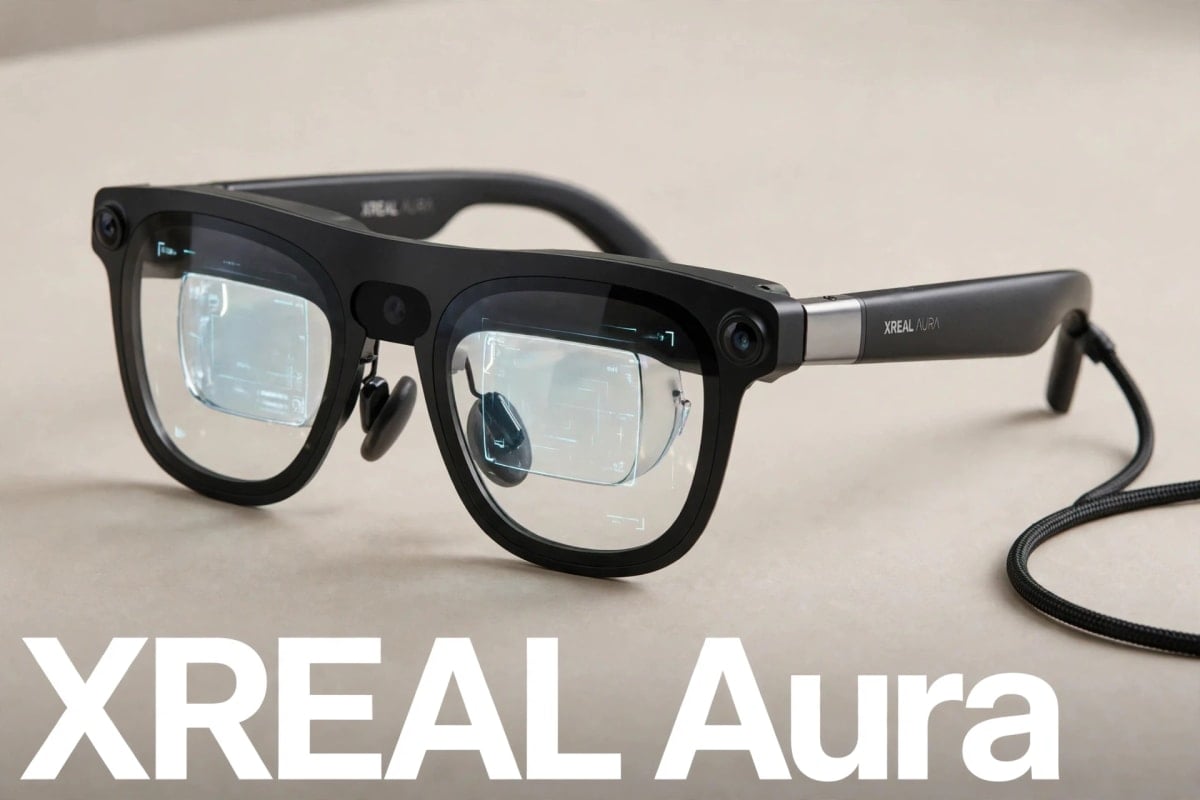
14 November 2026 — XREAL Aura is about to move from announcement to something you can actually wear.
The glasses are the first wired optical see-through glasses powered by Android XR, developed with Google and Qualcomm. They add a digital layer to the world you can still see, rather than blocking it out like a headset.
Orders opened on 28 October 2026 in the United States, Canada and South Korea. Orders in Japan followed on 2 November 2026. Shipping begins in mid-November 2026, on a rolling basis.
Aura is a real product, with a real price, shipping in real weeks. It is also still an early-adopter product. There are no full independent reviews yet as of 14 November 2026. Keep that in mind before you spend more than a thousand dollars.
What XREAL Aura Actually Is
Aura looks like glasses first and technology second. The frame holds the displays and sensors. A separate compute puck, connected by cable, does much of the heavy work.
You wear the light part on your face. You carry the heavier part in a pocket or hold it in your hand.
Android XR is the software platform underneath it all. Google built it for this kind of device. Qualcomm supplies the chip platform. XREAL supplies the optics, the glasses design and the spatial coprocessor in the frame.
The result is meant to feel closer to normal glasses than to a headset. You can still see the room and the person in front of you. Digital windows, apps and media sit in your view, rather than replacing it.
That approach has limits. Optical see-through glasses cannot block out bright light the way a closed headset can. XREAL answers part of that with lens dimming, covered below. The trade-off stays: openness and comfort on one side, immersion on the other.
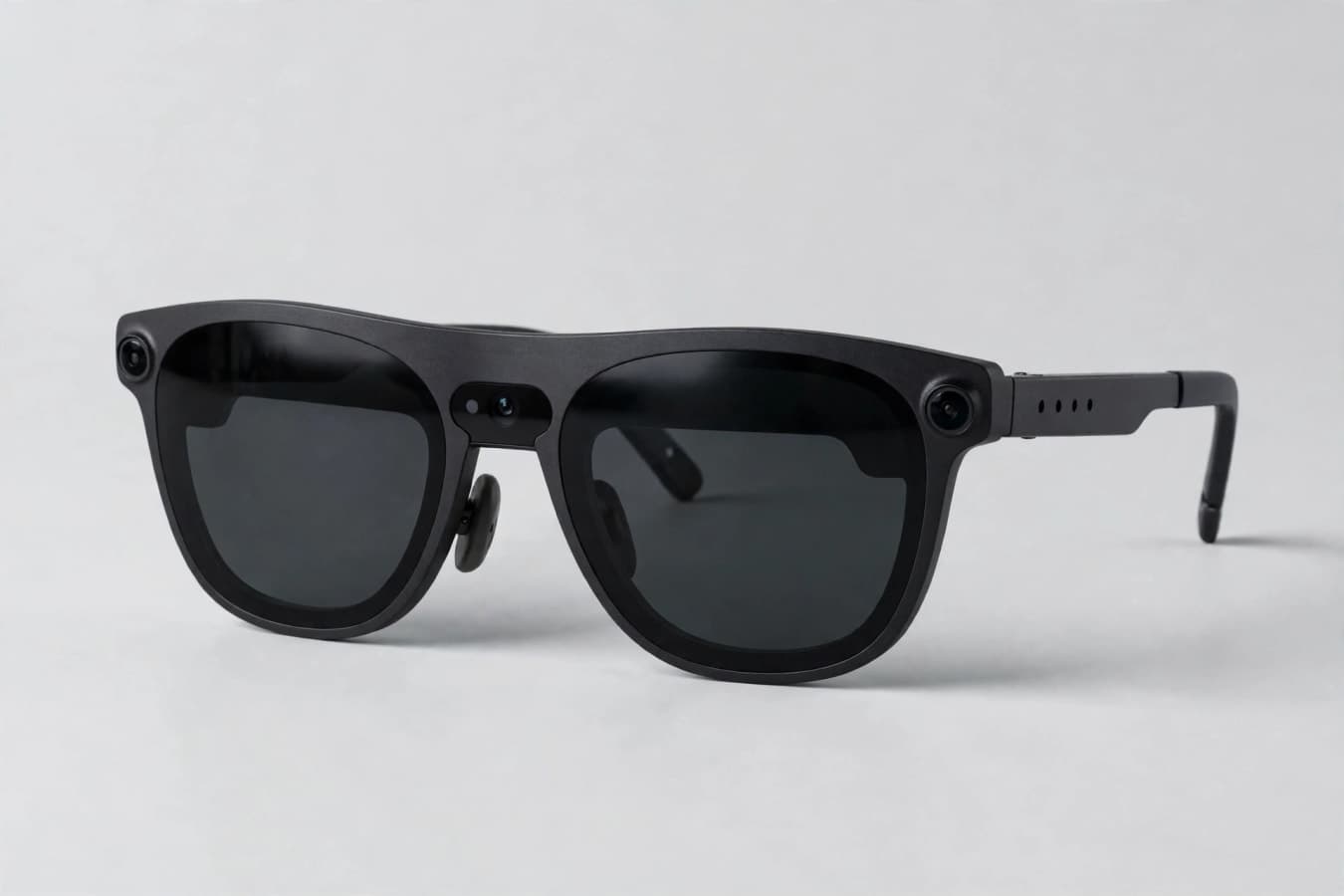
Earlier XREAL glasses worked mainly as a display for a phone or computer. Aura is meant to be a standalone Android XR device, with its own apps, tracking and assistant, even if the puck stays in the loop. Think of it as a large, private screen that follows you, plus apps that can sit in space around you.
Shipping And Price
The rollout is staggered by country. Orders opened on 28 October 2026 in the US, Canada and South Korea, and on 2 November 2026 in Japan. Shipping begins in mid-November 2026, on a rolling basis.
Rolling basis means shipments go out in waves, not all on one day. Early orders should go first. XREAL has not published a single fixed ship date for every region in the verified material for this article, so expect a mid-November start rather than a guaranteed delivery day. Check the checkout page for your country before you pay.
| Version | Launch price through Dec 2026 | Regular price |
|---|---|---|
| 12GB RAM / 256GB storage | $1,099 | $1,279 |
| 16GB RAM / 512GB storage | $1,299 | $1,499 |
Those are US prices. The launch saving is $180 on the base model and $200 on the higher model. The lower launch prices run through December 2026, then the regular prices apply.
The base 12GB / 256GB model should suit most early users who want to try Android XR, watch media and use apps. The 16GB / 512GB model suits people who keep a lot of media locally, run more apps at once, or plan to keep the device longer.
Neither choice fixes the bigger question: whether the software library at launch is wide enough for you. Hardware specs do not answer that.
The Displays
The displays are the strongest part of the spec sheet. Each eye gets a Sony Micro-OLED panel at 1,920 by 1,200 pixels. The refresh rate goes up to 120Hz. The field of view is 70 degrees. Pixel density is 32 pixels per degree. Peak brightness reaches up to 1,050 nits.
Colour coverage is listed at 100% sRGB. Colour accuracy is claimed at Delta E below 3. Those are company claims, not independent lab results yet. On paper, the combination is sharp, bright and colour-rich for glasses this size.
Five levels of lens dimming help in bright rooms and outdoors. Dimming does not turn the glasses into a closed headset. It makes the virtual image easier to see when the light behind it is strong. A see-through display lives or dies by contrast, and bright daylight is its hardest test.
The 70-degree field of view is wide for optical see-through glasses. Digital windows can feel larger and less boxed in. You will still see the frame edge and the real world around the image. For films and large virtual screens, that should help. For full immersion, a closed headset still has the advantage.
Design, Puck And Performance
The glasses weigh about 95 grams. That is heavier than normal glasses, but far lighter than a headset. For short and medium sessions, that weight should be manageable. For all-day wear, fit will matter as much as the number.
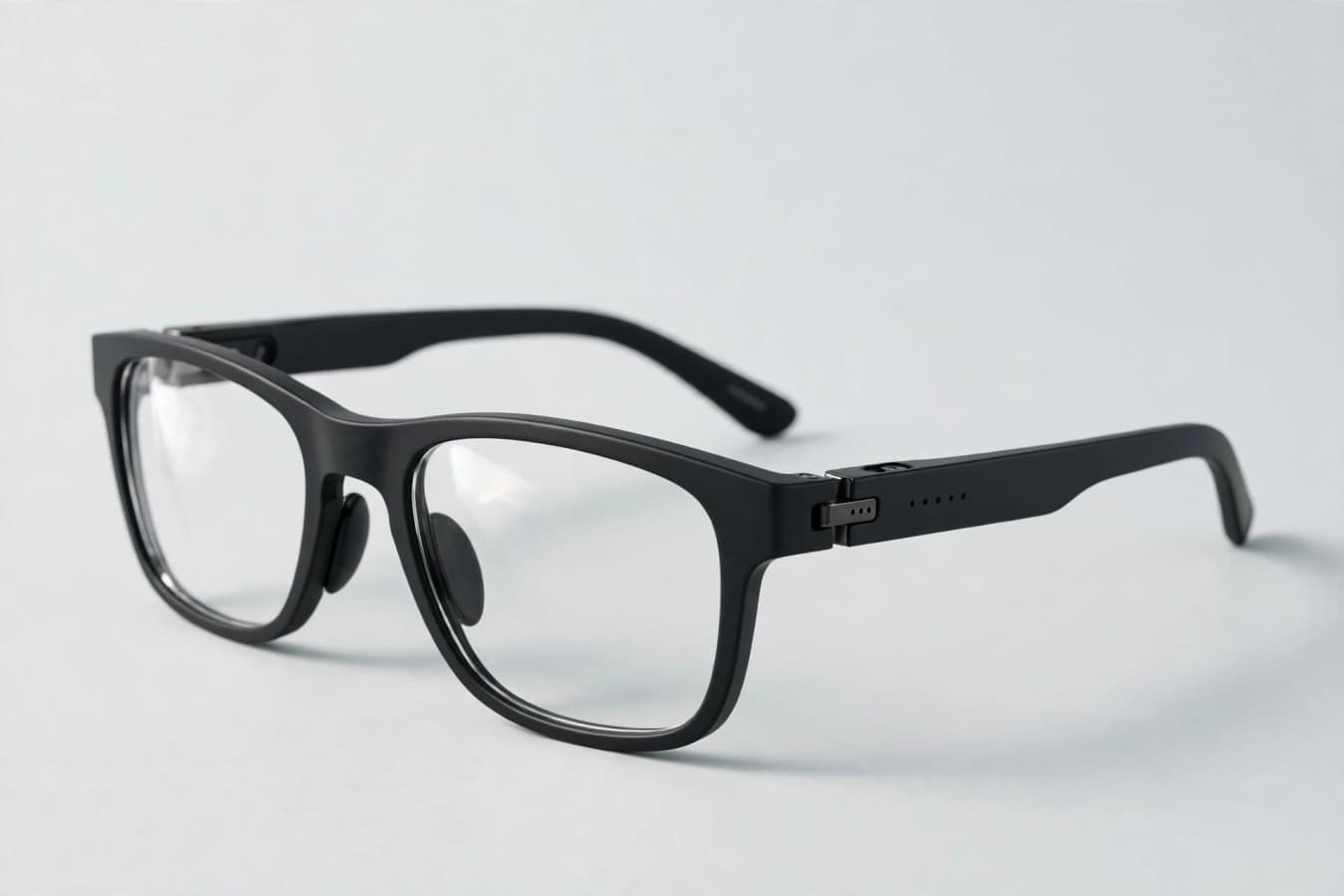
XREAL offers two fit sizes. Prescription inserts are supported. That matters, because XR glasses only work well if they sit correctly, and prescription support removes one barrier for people who wear glasses every day.
The compute puck weighs 265 grams. It connects by cable and holds the battery, the main chip platform, the touchpad and the ports. That split is deliberate. Put everything in the glasses and they get heavy and hot. Move the compute and battery to a puck and the glasses stay light, but you carry a cable and a second device.
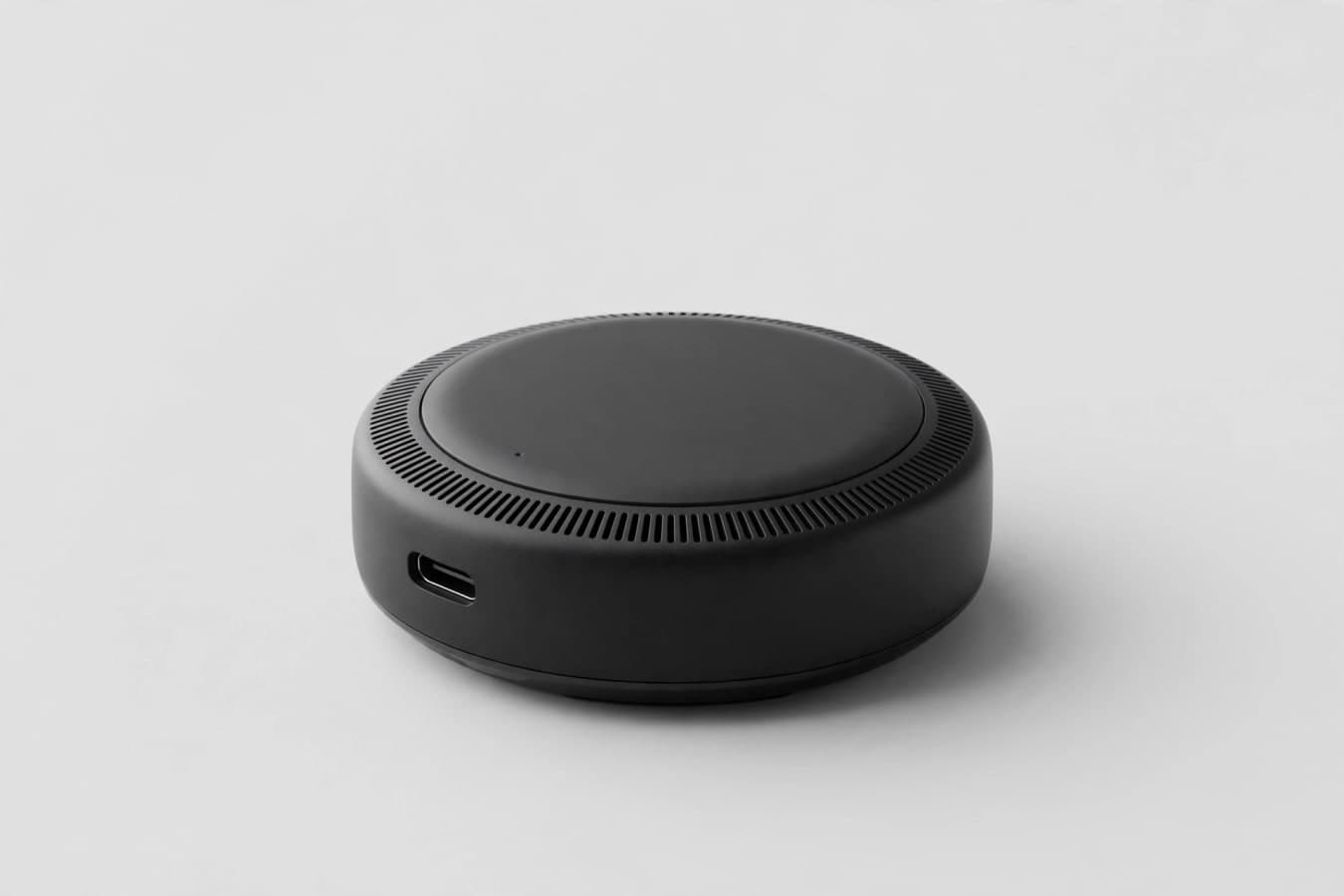
Inside the puck is the Snapdragon Reality Elite platform, with 48 TOPS of AI performance. Inside the glasses is the XREAL X1S spatial coprocessor. Together they handle tracking, rendering and on-device AI tasks. Claimed motion-to-photon latency is 3 milliseconds, the delay between moving your head and the image updating. Low latency matters, because high latency can feel laggy and uncomfortable.
Connectivity includes Wi-Fi 6 and 6E, Bluetooth 5.3, and two USB-C ports. There is no cellular connection, so Aura relies on Wi-Fi or a connected phone for data away from a network.
Battery Life
Battery needs the most careful reading. The puck has a 4,455mAh battery, rated at 34.84Wh. It supports up to 57W charging. Those numbers are clear.
Battery life is not as simple. XREAL has not published one simple real-world figure. The company estimate is 4 to 5 hours for streaming, and 3 to 4 hours for typical use. Treat that as an untested company estimate.
Real life will vary with brightness, app mix, hand tracking, Wi-Fi use and how many windows you keep open. Streaming is often lighter than heavy spatial apps. Plan for sessions, not a full workday on one charge, and charge between uses. The 57W charging support helps, because a short top-up can add useful time.
Controls, Gemini And Audio
Aura supports hand tracking, voice, the puck touchpad, and Bluetooth keyboards, mice and controllers. That range is useful. Hand tracking is natural for short tasks but can get tiring. A keyboard and mouse suit longer work. A controller suits games.
Gemini on Android XR is the assistant layer. It can help with tasks, answer questions and work inside supported apps. The exact depth of Gemini integration at launch, and which apps support it on day one, will become clearer once early users test it. Do not assume every Android app works the same way in XR on day one.
The spatial photo gallery is a planned feature for later in 2026, not available at launch. If that is a key reason you want Aura, wait until it is actually live. Google lists Aura for users aged 18 and older, with setup and a compatible account required.

Audio comes from Bose-tuned open-ear speakers. You can still hear the room around you, which fits the see-through design. People nearby may hear some sound leakage at higher volumes. Four microphones support voice input and calls.
Aura holds five TUV Rheinland certifications, including Eye Comfort 5 Star. That is a useful signal for eye comfort testing, but not a promise that long sessions will feel comfortable for everyone. Take breaks, especially in the first week.
What To Know Before You Order
Aura is exciting because it is first, and risky for the same reason. There are no full independent reviews yet as of 14 November 2026. That means no independent battery test, no independent display measurement, no long-term comfort test, and no full app library check.
If you enjoy new hardware, understand the limits, and can use the launch price, Aura may be worth it for you. If you need a proven daily device, a wide app library and tested battery life, waiting for the first reviews is the safer choice.
Check three things before you order: the shipping timing for your country, the return policy where you buy, and whether the apps you need are confirmed for Android XR at launch. Those checks matter more than any single spec number. Aura shows where Android XR glasses are heading: lighter, more wearable, and built around AI and spatial apps.
FAQs
When does XREAL Aura start shipping?
Shipping begins in mid-November 2026, on a rolling basis. Orders opened on 28 October 2026 in the US, Canada and South Korea, and on 2 November 2026 in Japan.
How much does XREAL Aura cost?
The 12GB / 256GB version is $1,099 at launch through December 2026, then $1,279. The 16GB / 512GB version is $1,299 at launch, then $1,499.
What makes Aura different from earlier XREAL glasses?
Aura is the first wired optical see-through glasses powered by Android XR, developed with Google and Qualcomm. It is meant to run Android XR apps and Gemini, rather than acting only as an external display.
How long does the battery last?
XREAL has not published one simple real-world figure. The company estimate is 4 to 5 hours for streaming and 3 to 4 hours for typical use. Treat that as an untested company estimate.
How heavy are the glasses?
The glasses weigh about 95 grams. The separate compute puck weighs 265 grams and connects by cable.
Who can use XREAL Aura?
Google lists Aura for users aged 18 and older, with setup and a compatible account required. Two fit sizes are offered, and prescription inserts are supported.
Is the spatial photo gallery available at launch?
No. The spatial photo gallery is a planned feature for later in 2026, not available at launch.
Was this article helpful?

Written By
TechorCoffeeContributing Writer
TechorCoffee is a technology reporter and software creator writing reviews and tutorials for TechOrCoffee.
Comments (0)
Leave a Comment
Read Next

Thu Mar 12 2026
Leaks & Rumors: MacBook Air M4 vs MacBook Neo: Full Comparison
MacBook Air M4 and MacBook Neo target different users in Apple’s lineup. Neo focuses on affordability and everyday tasks, while Air M4 delivers stronger performance, better graphics, and higher memory options for demanding workloads like coding, editing, and multitasking.

Tue Mar 03 2026
MacBook Air M5: Apple's Game-Changing 2026 Launch Review
Apple unveils the MacBook Air M5 with revolutionary 3nm chip technology, enhanced AI capabilities, improved battery life, and stunning display upgrades. This comprehensive analysis covers specifications, performance benchmarks, pricing, and this new release justifies upgrading from previous models.

Thu Mar 12 2026
Leaks & Rumors: MacBook Neo vs MacBook Air M1: Full Performance Comparison
MacBook Neo powered by the A18 Pro chip introduces a new direction for Apple laptops, competing directly with the classic MacBook Air M1. This detailed comparison explores performance benchmarks, display quality, and battery life to help buyers decide which Apple laptop delivers the best value.