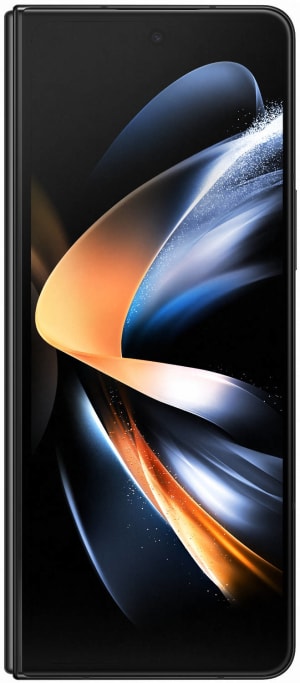
Samsung Galaxy Z Fold 4 5G
₹88,999
Ahead on 5 of 11 specs
Samsung Galaxy Z Fold 4 5G leads on AnTuTu score, RAM, storage and screen size, while Xiaomi Redmi Note 17 Pro Max 5G leads on price, battery, wired charging and peak brightness. Below: prices, key differences, benchmarks and every listed specification side by side.
Here is how they compare:
Performance: Samsung Galaxy Z Fold 4 5G scores 1,024,312 in AnTuTu against 992,266 for Xiaomi Redmi Note 17 Pro Max 5G, making Samsung Galaxy Z Fold 4 5G the faster phone on benchmarks.
Display: Samsung Galaxy Z Fold 4 5G has the bigger screen at 7.6 inches (19.3 cm), against 6.83 inches (17.35 cm) on Xiaomi Redmi Note 17 Pro Max 5G. Both refresh at 120 Hz.
Rear camera: Both top out at 50 MP.
Front camera: Xiaomi Redmi Note 17 Pro Max 5G has the higher resolution at 32 MP, against 10 MP on Samsung Galaxy Z Fold 4 5G, which suits selfies and video calls.
Battery: Xiaomi Redmi Note 17 Pro Max 5G has the bigger battery at 10000 mAh, against 4400 mAh on Samsung Galaxy Z Fold 4 5G, which usually means longer battery life. Xiaomi Redmi Note 17 Pro Max 5G also charges faster at 100 W against 25 W.
Storage: Samsung Galaxy Z Fold 4 5G offers up to 256 GB, 512 GB, 1 TB of storage, against 256 GB on Xiaomi Redmi Note 17 Pro Max 5G.
Price: Xiaomi Redmi Note 17 Pro Max 5G is cheaper at ₹49,499, against ₹88,999 for Samsung Galaxy Z Fold 4 5G.
₹88,999
Ahead on 5 of 11 specs
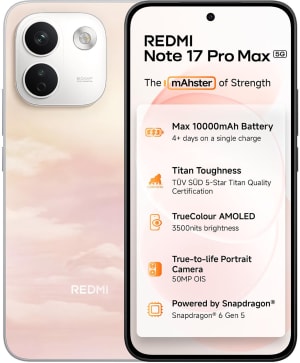
₹49,499 at Flipkart
Ahead on 6 of 11 specs
| Spec | Samsung Galaxy Z Fold 4 5G | Xiaomi Redmi Note 17 Pro Max 5G |
|---|---|---|
| Price (India)Xiaomi Redmi Note 17 Pro Max 5G costs ₹39,500 less. | ₹88,999 | ₹49,499 |
| Launch dateXiaomi Redmi Note 17 Pro Max 5G is the newer phone. | August 16, 2022 | September 15, 2026 |
| AnTuTu scoreSamsung Galaxy Z Fold 4 5G is 32,046 points more (3%). | 1,024,312 | 992,266 |
| BatteryXiaomi Redmi Note 17 Pro Max 5G is 5,600 mAh more (127%). | 4400 mAh | 10000 mAh |
| Wired chargingXiaomi Redmi Note 17 Pro Max 5G is 75 W more (300%). | 25 W | 100W |
| RAMSamsung Galaxy Z Fold 4 5G is 4 GB more (50%). | 12 GB | 8 GB |
| StorageSamsung Galaxy Z Fold 4 5G is 768 GB more (300%). | 256 GB, 512 GB, 1 TB | 256 GB |
| Screen sizeSamsung Galaxy Z Fold 4 5G is 0.77 inches bigger (11%). | 7.6 inches (19.3 cm) | 6.83 inches (17.35 cm) |
| Refresh rateBoth have 120 Hz. | 120 Hz | 120 Hz |
| Peak brightnessXiaomi Redmi Note 17 Pro Max 5G is 2,300 nits more (192%). | 1200 nits | 3500 nits |
| Main rear cameraBoth have 50 MP. | 50 MP + 12 MP + 10 MP | 50 MP + 8 MP |
| Front cameraXiaomi Redmi Note 17 Pro Max 5G is 22 MP more (220%). | 10 MP + 4 MP | 32 MP |
| WeightXiaomi Redmi Note 17 Pro Max 5G is 34 g lighter (15%). | 263 grams | 229 g |
| ThicknessSamsung Galaxy Z Fold 4 5G is 2.35 mm slimmer (37%). | 6.3 mm | 8.65 mm |
The highlighted value is the higher or lower number where that is an advantage (for example, more battery capacity or less weight). Things that come down to taste are not judged.
Samsung Galaxy Z Fold 4 5G
Launch price ₹88,999
Store prices are checked automatically and can change. Some links are affiliate links: we may earn a commission at no extra cost to you.
Higher is better. Scores are measured benchmark results tracked per device.
Tap a phone to vote and see what others picked.
| Specification | Samsung Galaxy Z Fold 4 5G | Xiaomi Redmi Note 17 Pro Max 5G |
|---|---|---|
| Operating System | Android v12L | Android v16 |
| Custom UI | Samsung One UI | HyperOS |
| Security Updates | 5 Years | 6 Year |
| OS Updates | 4 Years | 4 Year |
| Launch Status | Launched | Launched |
| Launch Date | 16 August 2022 | 15 September 2026 |
| Specification | Samsung Galaxy Z Fold 4 5G | Xiaomi Redmi Note 17 Pro Max 5G |
|---|---|---|
| RAM | 12 GB | 8 GB |
| Chipset | Qualcomm Snapdragon 8 Plus Gen 1 | Qualcomm Snapdragon 6 Gen 5 |
| Processor | Octa core (3.18 GHz, Single Core, Cortex X2 + 2.7 GHz, Tri Core, Cortex A710 + 2 GHz, Quad Core, Cortex A510) | Octa core (2.6 GHz, Quad core, Cortex A78 + 2 GHz, Quad core, Cortex A55) |
| Graphics (GPU) | Adreno 730 | Adreno |
| Architecture | 64 bit | 64 bit |
| Fabrication | 4 nm | 4 nm |
| RAM Type | LPDDR5X | LPDDR5X |
| Clock Speed | 3.18 GHz | 2.6 GHz |
| Cooling Technology | Not listed | Vapor Chamber Cooling |
| CPU Cores | Not listed | Octa Core |
| Specification | Samsung Galaxy Z Fold 4 5G | Xiaomi Redmi Note 17 Pro Max 5G |
|---|---|---|
| Screen Size | 7.6 inches (19.3 cm) | 6.83 inches (17.35 cm) |
| Resolution | 1812 x 2176 pixels | 1280x2772 px (FHD+) |
| Pixel Density | 373 ppi | 447 ppi |
| Display Type | Dynamic AMOLED 2x | AMOLED |
| Screen to Body Ratio (calculated) | 90.76% | 89.32 % |
| Bezel-less Display | Yes, with Punch-hole | Yes with punch-hole display |
| Aspect Ratio | 21.6:18 | 19.5:9 |
| Refresh Rate | 120 Hz | 120 Hz |
| Screen Protection | Gorilla Glass Victus | Corning Gorilla Glass Victus 2 |
| Peak Brightness | 1200 nits | 3500 nits |
| HDR 10 / HDR+ Support | HDR10+ | Yes, HDR 10+ |
| Touch Sampling Rate | Not listed | 240 Hz |
| HBM Brightness | Not listed | 2000 nits |
| PWM Dimming | Not listed | 3840 Hz |
| Specification | Samsung Galaxy Z Fold 4 5G | Xiaomi Redmi Note 17 Pro Max 5G |
|---|---|---|
| Thickness | 6.3 mm | 8.65 mm |
| Weight | 263 grams | 229 g |
| Height | 155.1 mm | 163.44 mm |
| Width | 130.1 mm | 78.27 mm |
| Build Material | Gorilla Glass | Back: Metal |
| Water Resistance | IPX8, Water Resistant, Yes | Yes, Water resistant, IP68, IP66, IP69K, IP69 |
| Form Factor | Foldable Touch | Not listed |
| Dimensions | 155.1 x 130.1 x 6.3 mm | 163.44 x 78.27 x 8.65 mm |
| Ruggedness | Not listed | Dust proof |
| Specification | Samsung Galaxy Z Fold 4 5G | Xiaomi Redmi Note 17 Pro Max 5G |
|---|---|---|
| Rear Camera | 50 MP + 12 MP + 10 MP | 50 MP + 8 MP |
| Lenses | Primary: 50 MP, f/1.8, Wide Angle, 1/1.56", 1.0 µm, 24 mm, Samsung ISOCELL S5KGN3, up to 30x Digital ZoomSecondary: 12 MP, f/2.2, Ultra-Wide Angle, 1/4", 1.12 µm, 12 mm, Sony IMX258Tertiary: 10 MP, f/2.4, Telephoto, 1/3.94", 1.0 µm, 66 mm, Samsung S5K3K1, up to 30x Digital Zoom, 3x Optical Zoom | Primary: 50 MP, f/1.8Ultra-Wide Angle: 8 MP, f/2.2 |
| Flash | LED Flash | Not listed |
| Autofocus | Yes, Phase Detection autofocus, Dual Pixel, Laser AF | Not listed |
| Camera Features | Digital Zoom, Auto Flash, Face detection, Touch to focus | Digital Zoom, Auto Flash, Face detection, Touch to focus |
| Image Resolution | 8150 x 6150 Pixels | 8000 x 6000 Pixels |
| Shooting Modes | Continuous Shooting, High Dynamic Range mode (HDR), Burst mode, Exposure compensation, ISO control | Continuous Shooting, High Dynamic Range mode (HDR) |
| Settings | Exposure compensation, ISO control | Exposure compensation, ISO control |
| OIS | Yes | Yes |
| Video Recording Features | Dual Video Recording, Slow Motion, Video HDR | Dual Video Recording |
| Specification | Samsung Galaxy Z Fold 4 5G | Xiaomi Redmi Note 17 Pro Max 5G |
|---|---|---|
| Front Camera | 10 MP + 4 MP | 32 MP |
| Lenses | Primary: 10 MP, f/2.2, Wide Angle, 1/3.24", 1.22 µm, 26 mm, Sony IMX374Secondary: 4 MP, f/1.8, Wide Angle, 1/3", 2.0 µm, 26 mm | Primary: 32 MP, f/2.2 |
| Video Recording | 3840x2160 @ 30 fps | Full HD @30 fps |
| Flash | Not listed | Screen flash |
| Autofocus | Not listed | No |
| Camera Type | Not listed | Primary Camera |
| Specification | Samsung Galaxy Z Fold 4 5G | Xiaomi Redmi Note 17 Pro Max 5G |
|---|---|---|
| Capacity | 4400 mAh | 10000 mAh |
| Quick Charging | Yes | Yes |
| Battery Type | Li-ion | Silicon Carbon |
| Reverse Charging | Yes | Yes, 27W Reverse Charging |
| Wireless Charging | Yes | No |
| TalkTime | up to 39 hours (4G) | Not listed |
| Wireless Reverse Charging | Yes | Not listed |
| Charging Watt | 25 W | 100W |
| Charge Time Claim | 50% in 30 minutes | Not listed |
| Charging Name | Not listed | Hyper Charging |
| Specification | Samsung Galaxy Z Fold 4 5G | Xiaomi Redmi Note 17 Pro Max 5G |
|---|---|---|
| Internal Storage | 256 GB, 512 GB, 1 TB | 256 GB |
| Expandable Storage | No | No |
| Storage Type | UFS 3.1 | UFS 4.1 |
| Specification | Samsung Galaxy Z Fold 4 5G | Xiaomi Redmi Note 17 Pro Max 5G |
|---|---|---|
| Network Support | 5G, 4G | 5G, 4G |
| SIM Slot(s) | Dual SIM, SIM1: Nano, SIM2: eSIM | Dual SIM |
| Bluetooth | v5.2 | v6.0 |
| SIM Type | SIM1: Nano, SIM2: eSIM | SIM1: Nano, SIM2: Nano |
| Wi-Fi | Wi-Fi 6 (802.11 a/b/g/n/ac/ax) 5GHz | Wi-Fi 6 (802.11 a/b/g/n/ac/ax) |
| Wi-Fi Features | Wi-Fi Direct, Mobile Hotspot | Wi-Fi Direct, Mobile Hotspot |
| VoLTE | Yes | Yes |
| GPS | Yes, with A-GPS, Glonass | Yes with A-GPS, Glonass |
| NFC | Yes | No |
| SAR Value | Head: 1.324 W/kg | Not listed |
| USB Type | USB Type-C | USB Type-C |
| 5G Support | Yes | Yes |
| IR Blaster | Not listed | Yes |
| Specification | Samsung Galaxy Z Fold 4 5G | Xiaomi Redmi Note 17 Pro Max 5G |
|---|---|---|
| Audio Jack | USB Type-C | USB Type-C |
| Audio Features | Dolby Atmos | Dolby Atmos |
| Specification | Samsung Galaxy Z Fold 4 5G | Xiaomi Redmi Note 17 Pro Max 5G |
|---|---|---|
| Fingerprint Sensor | Yes | Yes |
| Other Sensors | Light sensor, Proximity sensor, Accelerometer, Barometer, Compass, Gyroscope | Light sensor, Proximity sensor, Accelerometer, Compass, Gyroscope |
| Fingerprint Sensor Position | Side | On-screen |
| Fingerprint Sensor Type | Not listed | Optical |
Xiaomi Redmi Note 17 Pro Max 5G is cheaper at ₹49,499, against ₹88,999 for Samsung Galaxy Z Fold 4 5G. Xiaomi Redmi Note 17 Pro Max 5G costs ₹39,500 less.
Xiaomi Redmi Note 17 Pro Max 5G has the bigger battery: 10000 mAh against 4400 mAh.
Samsung Galaxy Z Fold 4 5G scores 1,024,312 in AnTuTu, against 992,266 for Xiaomi Redmi Note 17 Pro Max 5G.
Both top out at 50 MP.
Xiaomi Redmi Note 17 Pro Max 5G supports 100 W wired charging, against 25 W.
Samsung Galaxy Z Fold 4 5G has the bigger screen: 7.6 inches (19.3 cm) against 6.83 inches (17.35 cm).
Samsung Galaxy Z Fold 4 5G runs on Qualcomm Snapdragon 8 Plus Gen 1, while Xiaomi Redmi Note 17 Pro Max 5G is powered by Qualcomm Snapdragon 6 Gen 5.
Both phones feature a 120 Hz refresh rate display.
Samsung Galaxy Z Fold 4 5G leads on AnTuTu score, RAM, storage and screen size, while Xiaomi Redmi Note 17 Pro Max 5G leads on price, battery, wired charging and peak brightness.
 OPPO F35 ProVS
 Xiaomi Redmi Note 17 Pro Max 5G
 OPPO Reno16c 5GVSXiaomi Redmi Note 17 Pro Max 5G
 Tecno Pova 8 Pro 5GVSXiaomi Redmi Note 17 Pro Max 5G
 vivo V70 FEVSXiaomi Redmi Note 17 Pro Max 5G
 Tecno Camon 50 UltraVSXiaomi Redmi Note 17 Pro Max 5GRedmi K100VSXiaomi Redmi Note 17 Pro Max 5G
 vivo S2 FE 5GVSXiaomi Redmi Note 17 Pro Max 5G
 POCO X8 Power 5GVSXiaomi Redmi Note 17 Pro Max 5G
 Motorola Edge 30 Ultra 5GVS
 Samsung Galaxy Z Fold 4 5GSamsung Galaxy Z Fold 4 5GVS
 vivo X90 Pro
 Apple iPhone 13 MiniVSSamsung Galaxy Z Fold 4 5G
 Samsung Galaxy S23 FEVSSamsung Galaxy Z Fold 4 5G
Comparison updated on November 19, 2026

