Amazon Workers Push Back on AI Data Center Buildout

Published (Updated )
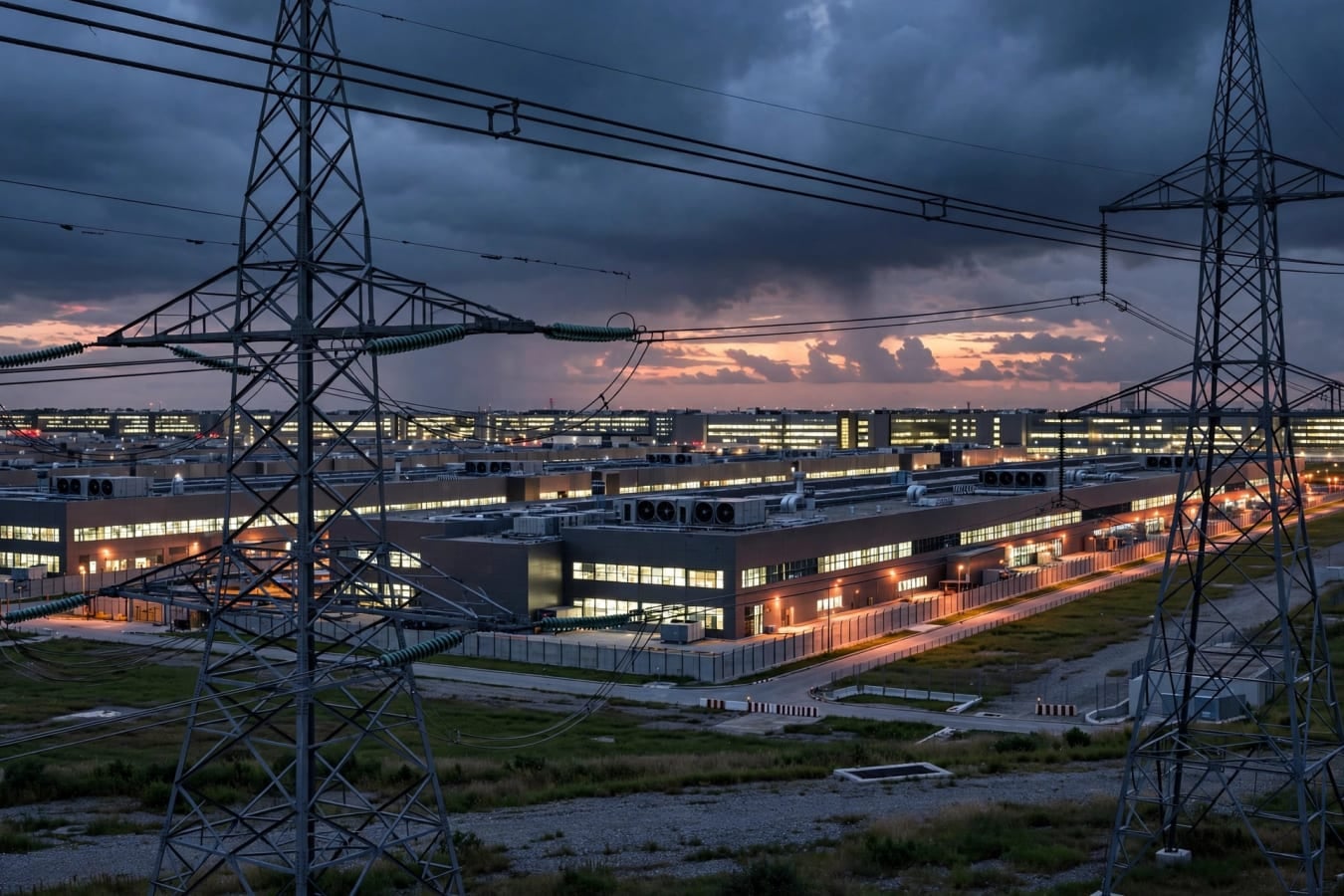
Quick answer
- More than 1,000 Amazon employees in the group Amazon Employees for Climate Justice (AECJ) are organising to slow the company's AI data center expansion.
- They say the buildout threatens jobs, strains local electricity and water supplies, and undermines Amazon's climate goals.
- The campaign stepped up after the November 2026 US midterm elections, in which voters backed candidates who pledged to crack down on data center construction.
- In Ohio, voters approved 21 local ballot measures in November 2026 that put about $17 billion of Amazon data center projects at risk.
- In June 2026, three Amazon engineers testified in favour of a one-year moratorium on new large data centers in Seattle. The council approved it, and Amazon then opened internal investigations into the three engineers.
- Amazon says expanding its data center network is necessary to meet growing demand for AI services, and points to more than $1 billion it plans to invest in host communities over five years.
Who is AECJ?
Amazon Employees for Climate Justice, known as AECJ, is a group of current and former Amazon employees that has been pressing the company on climate, its treatment of workers and related issues for nearly a decade. It was founded around ten years ago to push Amazon to adopt stronger climate commitments, and it led a mass employee walkout in 2019 that resulted in the company's founder, Jeff Bezos, announcing a public climate pledge.
The group has since broadened its scope from climate alone to the effects of artificial intelligence on jobs and the environment. According to reporting by the Financial Times, which interviewed a dozen current and former employees involved in the organising, the group now has more than 1,000 members. It is funded by donations and is one of the only formal tech workers' organisations across the major cloud companies — Amazon, Google, Meta and Microsoft.
Organised employee opposition to data center expansion is rare in the technology industry, where internal dissent has been relatively muted, particularly since the recent rounds of mass layoffs. That is part of why this campaign has drawn attention: it is Amazon's own engineers, the people building the AI systems, arguing that the infrastructure behind them is growing too fast and with too little public debate.
What the workers want
AECJ is calling for three things:
- Slower data center development. The group wants Amazon to pause the pace of new construction rather than racing to add capacity.
- A broader debate about AI use. Employees want a public discussion of what the AI systems they build are used for, and what they mean for jobs.
- Local governments to stop approving new sites. The group is urging councils and planning authorities to refuse or delay approvals for new data centers.
The concerns behind those demands fall into two groups: jobs and the environment.
On jobs, the worry is direct. Amazon chief executive Andy Jassy has previously said that adopting AI could reduce the company's workforce. One employee involved in AECJ told the Financial Times they worried the tools they are developing could make much of their current work unnecessary. Employees have questioned why Amazon is pouring vast sums into AI while job cuts continue across the company.
Eliza Pan, AECJ's co-director and a former Amazon programme manager, put it bluntly: "If we have to talk about reining in OpenAI and Anthropic, we have to also talk about reining in Amazon." The point is that the debate about AI's impact usually focuses on the companies building the models. AECJ argues the company building the infrastructure deserves the same scrutiny.
The Seattle testimony and the investigations
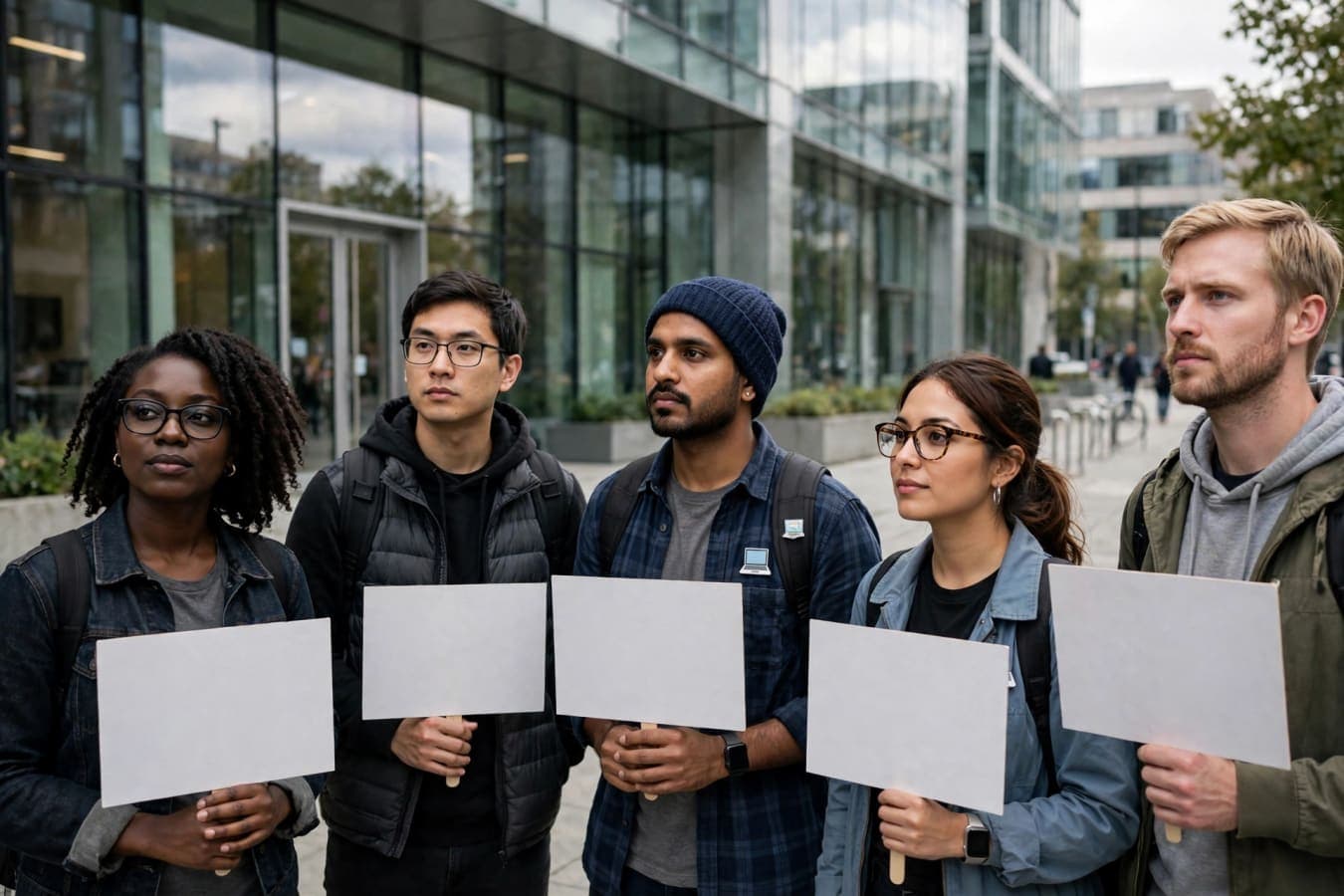
The campaign moved from internal letters to public hearings in June 2026. On June 3, three Amazon software engineers appeared at a Seattle City Council hearing and spoke in favour of a proposed one-year moratorium on new large-scale data centers. All three were members of AECJ. Their objections focused on the environmental impact of the sites, increasing electricity demand, and the economic consequences of large data center developments for surrounding communities.
Six days later, on June 9, the city council approved the one-year moratorium. Amazon then opened internal investigations into the three employees. They faced potential disciplinary action on June 10, prompting the engineers to file a civil rights complaint alleging retaliation and discrimination related to their political speech. The employees argue their testimony was protected civic participation rather than workplace misconduct.
The episode shows the personal risk involved. Speaking publicly against an employer's core investment strategy is unusual for engineers at a major technology company, and the investigations that followed will be watched closely by other workers considering whether to speak up.
The November 2025 open letter
The Seattle testimony was not the first public step. In November 2025, AECJ organised an open letter signed by more than 1,000 Amazon employees that challenged the company's approach to AI development and warned it was casting aside its climate goals to boost data center capacity. The letter demanded that the renewable energy generated by data centers exceed their consumption, and that Amazon set up an employee-led oversight committee.
That letter set the terms of the dispute: the workers were not asking Amazon to stop building AI, but to build it more slowly, with more renewable energy and more oversight from the people who work there.
Ohio: $17 billion in projects at risk
The second front in the dispute is Ohio, where voters approved 21 local ballot measures in November 2026 aimed at limiting the size and electricity consumption of new data centers. Three Amazon projects are affected, representing approximately $17 billion in planned investment and 1.8 gigawatts of proposed capacity.
Amazon had previously announced ambitions to invest $23 billion in Ohio by 2030. The three projects now facing uncertainty account for the bulk of that target, so the ballot results could complicate the company's plans in one of its biggest expansion states.
The Ohio measures reflect a wider shift. Communities near proposed data centers fear the sites will increase competition for power and water and worsen air and noise pollution. In the November 2026 midterm elections, Democrats swept Congress and three states that usually vote Republican — Texas, Georgia and Ohio — elected Democratic governors who had pledged to crack down on data center construction. AECJ is hoping to use those results to strengthen its campaign, and the Financial Times reported that the group is stepping up its organising in response.
How big is Amazon's buildout?
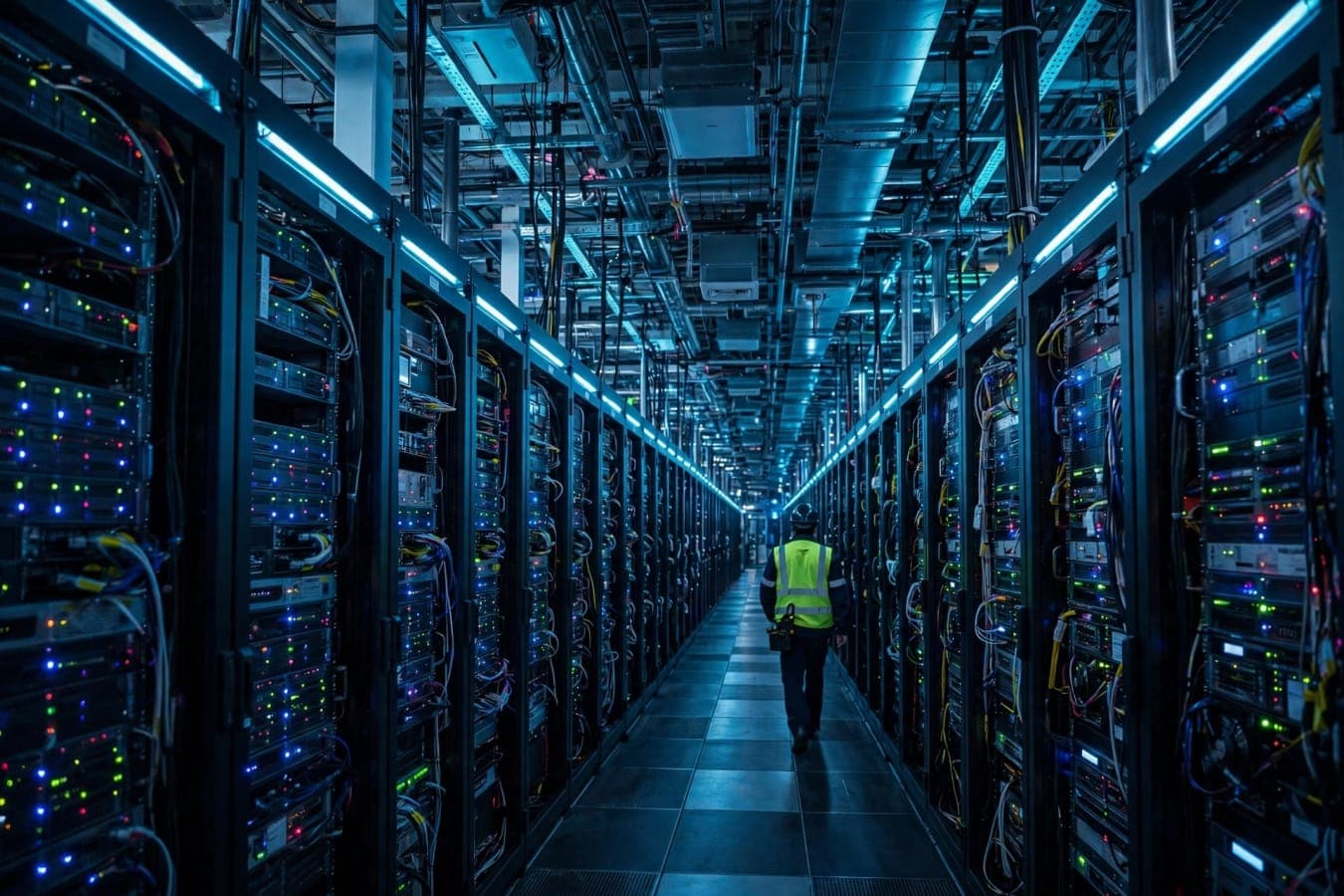
Amazon is one of the largest operators of data center capacity in the world through its cloud unit, Amazon Web Services (AWS), which runs more than 900 data centers in around 50 countries. It is competing fiercely with Google and Microsoft to build more capacity, and its total capital spending is expected to reach about $220 billion this year, with much of that going to data center infrastructure.
Those numbers explain why the workers' campaign matters beyond Amazon. The AI race is, in large part, a construction race: whoever builds the most data centers fastest can train and run the biggest models. Slowing Amazon's buildout, even slightly, would be a meaningful brake on the industry's expansion — which is exactly why the company is unlikely to agree to it voluntarily.
Amazon has responded with measures of its own. AWS chief executive Matt Garman said last month that the company would invest more than $1 billion over the next five years in the communities where it builds data centers. Amazon has also argued that expanding its data center network is necessary to meet growing demand for AI services. Neither response addresses the workers' central demand, which is to slow down rather than to spend more on the communities around the sites.
Why this is unusual in Big Tech
Employee activism at major technology companies has a long history, but it has been quieter in recent years. Mass layoffs across the industry have made workers more cautious about public dissent, and most large tech companies have no formal worker organisation at all.
AECJ stands out for three reasons:
- It is formal and organised. Unlike informal internal groups, AECJ has a name, a structure, funding from donations and a track record going back a decade.
- It spans the company's own interests. The group started on climate, moved to AI and jobs, and now connects all three — arguing that the same buildout threatens the climate, workers' jobs and local communities.
- It has moved into politics. The group is not only lobbying Amazon internally; it is testifying at council hearings, backing ballot measures and aligning with elected officials who want to regulate data centers.
That combination — a formal worker group, a public campaign and a political moment that favours regulation — is what makes this more than a one-off protest.
What happens next
- Seattle: The one-year moratorium on new large data centers is in force, and the civil rights complaint from the three engineers will test whether Amazon's investigations into them were retaliation.
- Ohio: The 21 ballot measures are now law locally, and Amazon will have to decide whether to challenge them, redesign its projects, or move investment elsewhere.
- The midterms effect: The new governors in Texas, Georgia and Ohio who pledged to crack down on data centers take office in the coming months. Their first decisions on permits and regulation will show how much of the campaign rhetoric turns into policy.
- Inside Amazon: AECJ is stepping up organising after the midterms. Whether more employees join publicly will depend partly on how the three Seattle engineers' complaint is resolved.
- The industry: Google and Microsoft face the same pressures — huge capital spending, rising local opposition and workers asking the same questions. What happens at Amazon is likely to be watched, and copied, elsewhere.
The bigger picture
The AECJ campaign captures a tension at the heart of the AI boom. The companies building AI say the infrastructure is essential, the demand is real and the investment will pay off in jobs and services. The workers building it, and the communities living next to it, are asking who pays the price in electricity, water, noise and jobs — and whether the pace of construction leaves any room for those questions to be answered before the concrete is poured.
For now, the workers have won two concrete results: a moratorium in Seattle and ballot measures in Ohio that put $17 billion of projects in doubt. Whether those wins slow the buildout, or simply move it somewhere else, is the question the next year will answer.
FAQs
What is AECJ?
Amazon Employees for Climate Justice (AECJ) is a group of more than 1,000 current and former Amazon employees that has pressed the company on climate, workers' rights and now the effects of AI and data centers. It was founded nearly a decade ago and led a mass walkout in 2019.
What do Amazon workers want on data centers?
AECJ wants slower data center development, a broader public debate about AI use, and local governments to stop approving new sites. Their concerns are jobs, electricity and water use, and Amazon's climate goals.
What happened in Seattle in June 2026?
Three Amazon software engineers testified at a Seattle City Council hearing in favour of a one-year moratorium on new large data centers. The council approved it on June 9, and Amazon opened internal investigations into the three engineers, who then filed a civil rights complaint alleging retaliation.
What happened with the Ohio ballot measures?
In November 2026, Ohio voters approved 21 local ballot measures restricting data center development. Three Amazon projects worth about $17 billion, with 1.8 gigawatts of proposed capacity, are affected.
How much is Amazon spending on data centers?
Amazon's total capital spending is expected to reach about $220 billion this year, much of it on data center infrastructure for AWS, which operates more than 900 data centers in around 50 countries.
How has Amazon responded?
Amazon says expanding its data center network is necessary to meet growing AI demand. AWS chief executive Matt Garman said the company would invest more than $1 billion over five years in communities where it builds data centers.
Was this article helpful?
Explore Specs, Comparisons & Related Topics

Written By
TechorCoffeeEditorial Team
The TechOrCoffee Editorial Team covers consumer hardware, artificial intelligence, software engineering, and regional smartphone & laptop market analysis.
Comments (0)
Leave a Comment
Read Next

Fri Oct 30 2026
NVIDIA in 2026: No New Gaming GPU, AI Takes Over
NVIDIA 2026 explained: no new gaming GPU, RTX 60 delayed to 2028, Rubin CPX for AI inference, memory shortage, and what PC gamers should buy now in 2026.

Sun Nov 01 2026
Hidden Enterprise Risk: How to Audit and Control 'Shadow AI'
Discover the hidden risks of Shadow AI in the workplace and learn how businesses can audit unauthorized AI tools, prevent data leaks, strengthen security.

Fri Oct 30 2026
Gemini 4 Argon: 1M Output, Price Doubles Dec 1
Gemini 4 Argon explained: 1M-token output, 1M context, $2/$10 intro price doubling Dec 1, benchmarks, and the thinking-token catch.