Drupal Commerce Flaw Exposes Online Stores

Published
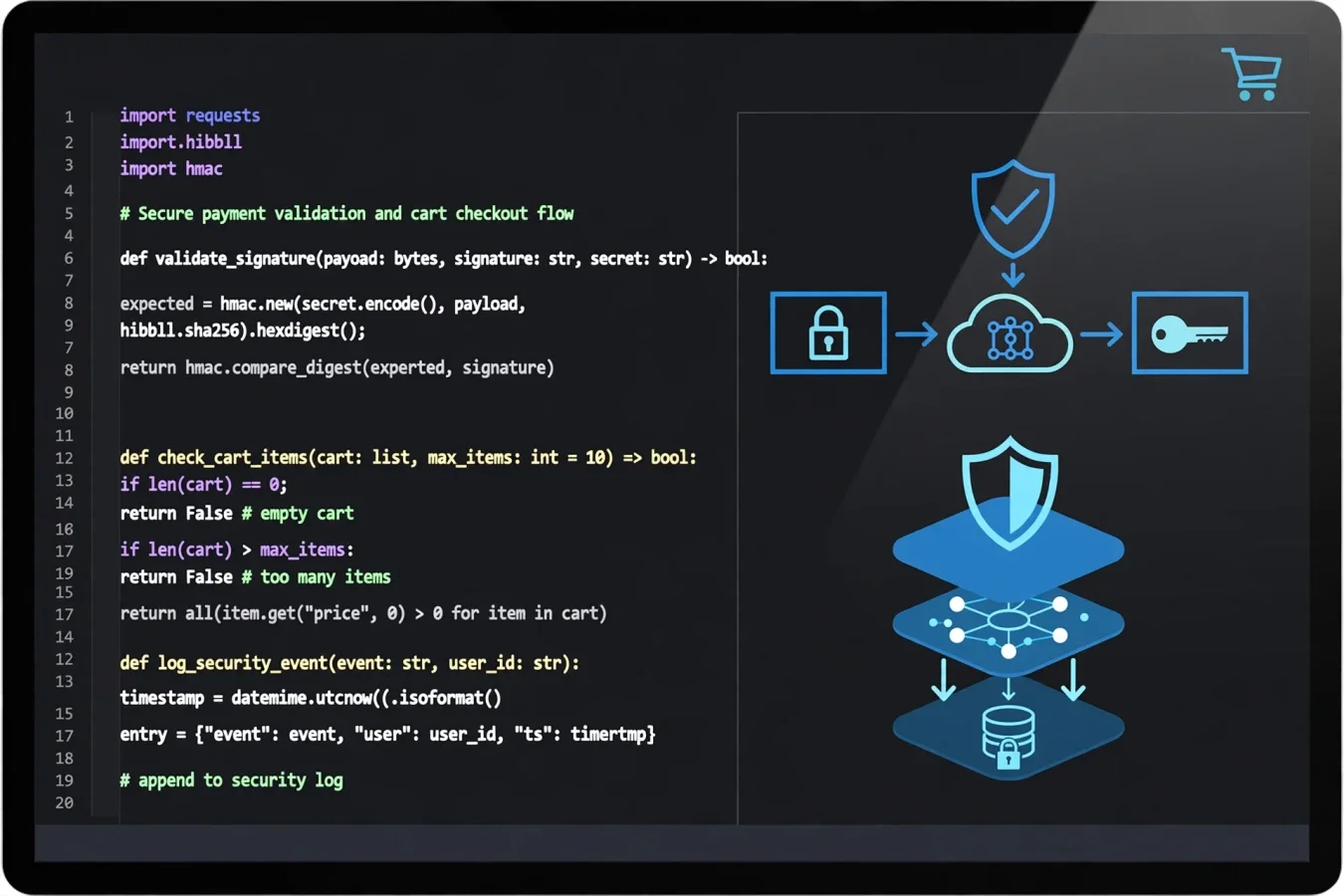
The flaw in one paragraph
CVE-2026-118539 is a missing-authorization vulnerability in Drupal Commerce Core, catalogued under CWE-862 and described by NVD as allowing "forceful browsing". Drupal's advisory, SA-CONTRIB-2026-254, says the module "doesn't sufficiently protect certain routes and entity fields, leading to an access bypass that may financially impact the vendor", and that the flaw "is being actively exploited in the wild". That is the complete technical description Drupal has published. Everything else in this analysis must be read in that light: the weakness class, the affected versions, the severity signals and the fix are confirmed; the exact routes, fields and observed attack steps are not.
Missing authorization, not missing authentication
Developers often conflate authentication and authorization, and this flaw shows why the distinction matters. Authentication asks: who are you? Authorization asks: are you allowed to do this, to this object, in this state? A system can authenticate correctly and still authorize badly. It can know a visitor is anonymous, and still let that visitor reach a route or field that was meant for a store administrator, a customer viewing their own order, or a staff member with a specific role.
CWE-862, Missing Authorization, covers the case where software does not perform an authorization check, or performs it incorrectly, when a user attempts to access a resource or perform an action. In web applications, that usually appears in one of three places:
- Routes: a URL or API endpoint that should require a permission, a role, or ownership, but does not check, or checks only superficially.
- Entity fields: individual fields on an object — an order, a customer profile, a payment record, a product — that can be read or written without the check that should guard them.
- State transitions: an action that should only be allowed in a particular state — for example, changing an order that is already paid, or reusing a checkout step out of sequence — but is not gated by state.
Drupal's wording covers the first two explicitly: "certain routes and entity fields". It does not say which routes or fields, how many there are, or whether state transitions are involved. A developer reading the advisory should therefore not hunt for one magic URL. They should audit every Commerce route and field their site exposes, on the assumption that the protection gap could be in more than one place, and that the fixed release — not a manual blocklist of guessed URLs — is the authoritative repair. Forceful browsing is the technique here: instead of stealing credentials, an attacker directly requests the route or field they should not reach, and the application serves it.
Severity: what 21/25 means, and what it does not
There is, at the time of writing, no CVSS score for CVE-2026-118539. NVD lists CVSS as not yet assessed, and The Hacker News also reports CVSS as N/A. Do not quote a CVSS number for this flaw, and do not convert Drupal's score into a CVSS score. They are different scales.
Drupal's score is 21 out of 25, rated "highly critical". Secondary reporting of the risk string — from SecurityWeek and other coverage — describes it as exploitable by unauthenticated attackers regardless of module configuration, with some impact on confidentiality and integrity, and with exploit status marked as "Exploit". Treat the detailed risk-string breakdown as reported, not as text from the short advisory page, but the headline severity is confirmed by Drupal's own "highly critical" label and by the active-exploitation statement.
Affected versions and the fix, precisely
NVD's version data, sourced from Drupal, gives the boundary in semver terms:
| Branch | Affected | Fixed release |
|---|---|---|
| Commerce 3.x | 3.0.0 to less than 3.3.13 | 3.3.13 |
| Commerce 2.x / 8.x-2.x | Less than 8.x-2.41 | 8.x-2.41 |
In other words, 3.x before 3.3.13 and 8.x-2.x before 8.x-2.41 are affected; 3.3.13 and 8.x-2.41 contain the fix for this advisory. Some reports phrase the range as "through 3.3.13" or "through 2.41". That phrasing is loose, and it should not be read as meaning the fixed releases are vulnerable. If a site reports Commerce Core 3.3.13, it has this fix. If it reports any earlier 3.x, it does not.
How an attack could work: scenarios, not confirmed steps
Drupal has not published the attack chain, and BleepingComputer and SecurityWeek both note the absence of detail on method, actor and scale. The scenarios below are therefore illustrative: they show what missing authorization on commerce routes and fields could enable, so developers can test and audit for them. They are not claims that these steps were observed.
Scenario 1: Reading protected order or customer fields
An unauthenticated request reaches a commerce route or entity field that should require ownership or a staff permission. The response reveals order details, customer information or internal notes that should not be public. The harm is confidentiality: data that was meant for the customer or the merchant becomes visible to anyone who knows or guesses the route. The audit signal would be unusual access patterns to commerce routes from anonymous sessions, or order data appearing where it should not.
Scenario 2: Changing an order field
A field on an order — status, total, discount, shipping method, fulfilment flag — can be written without the authorization check that should guard it. The order then no longer matches the payment record, the warehouse system or the customer's expectation. This is the scenario Drupal's "audit your orders for inconsistencies" advice most directly addresses. The harm is integrity and finance: an order marked in a way that triggers fulfilment, refund or payment reconciliation incorrectly. The audit signal is an order whose status, total or payment linkage does not reconcile with the payment provider.
Scenario 3: Abusing a checkout or cart route
A checkout, cart or decoupled-API route that should be tied to a specific cart, customer or session can be reached or manipulated out of sequence. Commerce Core explicitly supports decoupled applications via APIs, so a route that is safe in a traditional browser checkout may still be exposed through an API path that a developer assumed was internal. The harm depends on the route: it could be information disclosure, an order-state change, or a step in a longer chain. The defence is to test API routes with the same authorization rigour as browser routes, not to assume an API is private because it is not linked from the storefront.
Why authorization flaws are so dangerous in commerce
Authorization flaws are dangerous for a structural reason: they break the trust model that the rest of the application assumes. Payment, fulfilment, refunds, customer service and reporting all assume that an order's fields reflect actions by authorized people. If an unauthorized request can change a field, every downstream system that trusts that field inherits the error. A warehouse ships the wrong item. A refund is issued for an order that was never paid. A report counts revenue that does not exist. The damage is not a single breached record; it is a corrupted business process.
Technical recommendations for developers
These recommendations are for developers and site builders, not a substitute for the official fix. The first step is always the fixed release. Everything below is about verifying, hardening and preventing recurrence.
- Update first, then audit. Install Commerce Core 3.3.13 or 8.x-2.41, and check companion Commerce modules from the same batch. Do not write a custom workaround as a substitute for the fix, and do not delay the update to build a perfect test suite while exploitation is active. Backup before updating, test in staging if you can, then deploy.
- Verify the version, not the assumption. Check the installed Commerce Core version from the module list or composer, not from memory or from the Drupal core version. Record the before and after versions, and confirm the fixed version is actually running in production, not only in staging.
- Test authorization with three accounts. For every Commerce route and field your site exposes — browser and API — test with an anonymous visitor, a customer who does not own the order, and a staff account without commerce permissions. Any route or field that returns or accepts data it should not is a finding, even if it is not the CVE route. Fix it with an explicit access check, not by hiding the link.
- Check entity field access, not just routes. A route can be protected while a field remains writable through another path, such as an API, a form or a bulk operation. Review field-level access for orders, customer profiles and payment-adjacent entities, and ensure that a field that should be staff-only is not editable by a customer or anonymous request.
- Review decoupled and API surfaces separately. If the store serves a mobile app, a headless front end or a third-party integration, test those API routes with the same rigour as the browser checkout. An API route is a public route unless it is authenticated and authorized on every request.
- Log and alert on commerce access anomalies. Anonymous access to commerce routes, field changes without a matching staff or owner action, and order states that do not reconcile with the payment provider should be auditable. If your current logging does not capture who changed an order field and when, add that capture now — it is the evidence you will need for the next incident, not just this one.
- Patch the batch, not just the headline. The 28 October releases contain multiple Commerce Core advisories and companion-module fixes. Patching only CVE-2026-118539 and leaving an information-disclosure or CSRF advisory unpatched leaves a known hole in the same module.
- Add authorization tests to the pipeline. For every new Commerce route or field, add a test that asserts anonymous and non-owner access is denied, and that owner and staff access works. Authorization regressions are easy to introduce and hard to spot in manual testing; automated negative tests are the cheapest defence.
What developers should not do
Do not publish or test a guessed exploit against live stores, do not use a blocklist of guessed URLs as a substitute for updating, and do not treat a firewall or CDN rule as the fix. Above all, do not claim a store was "not affected" solely because it is now patched — patching proves the hole is closed, only an audit can speak to whether it was used.
The technical story of CVE-2026-118539 is, in the end, a familiar one: a widely used commerce module, a missing check on routes and fields, an unauthenticated attacker, and a fix that is already available. The unfamiliar part is the active-exploitation warning attached to a short advisory with no attack detail. That combination — confirmed exploitation, unconfirmed method — is exactly when developers should patch first, audit second, and test authorization third, rather than waiting for a detailed write-up that may arrive after the damage.
FAQs
What weakness is CVE-2026-118539?
CWE-862 Missing Authorization in Drupal Commerce Core, described by NVD as allowing forceful browsing on certain routes and entity fields.
Is there a CVSS score for this flaw?
No. NVD listed CVSS as not yet assessed at the time of writing. Use Drupal's 21/25 risk score, not an invented CVSS.
Which versions are vulnerable?
Commerce 3.x before 3.3.13 and 8.x-2.x before 8.x-2.41. Fixed releases are 3.3.13 and 8.x-2.41.
Does the flaw give attackers admin access?
Not confirmed. Drupal confirmed an access bypass with possible financial impact, not code execution or admin takeover.
What is forceful browsing?
Directly requesting a protected route, field or object without the authorization check that should guard it, instead of stealing credentials.
Why is unauthenticated access so serious here?
No account is needed, all configurations are reported affected, and commerce fields carry financial and customer data.
What should developers test after patching?
Every Commerce route and field with anonymous, non-owner customer and unprivileged staff accounts, including API and decoupled routes.
Was this article helpful?

Written By
TechorCoffeeContributing Writer
TechorCoffee is a technology reporter and software creator writing reviews and tutorials for TechOrCoffee.
Comments (0)
Leave a Comment
Read Next
Thu Oct 22 2026
PHP Security Vulnerabilities: Key Risks for Websites
Learn why PHP security matters, how website vulnerabilities can create risks, and what website owners can do to keep their systems secure.
Fri Oct 30 2026
Hackers Exploit Critical Drupal Commerce Flaw
Hackers are exploiting a highly critical Drupal Commerce Core access bypass. What happened, who is at risk, and what store owners must do now.
Fri Oct 30 2026
AI Scams in 2026: Spot Deepfakes, Phishing, Clones
AI scams in 2026: deepfake voice and video, polished phishing, fake shops and job offers, plus a 30-second check, safe words, and recovery steps.