Google Willow Quantum Chip Beats Classical Limits in Science

Published (Updated )
The quick answer
- Google Quantum AI has published peer-reviewed results in the journal Science showing its Willow quantum chip beating classical limits in four separate experiments.
- The paper appeared on November 19, 2026, and made the cover of Science.
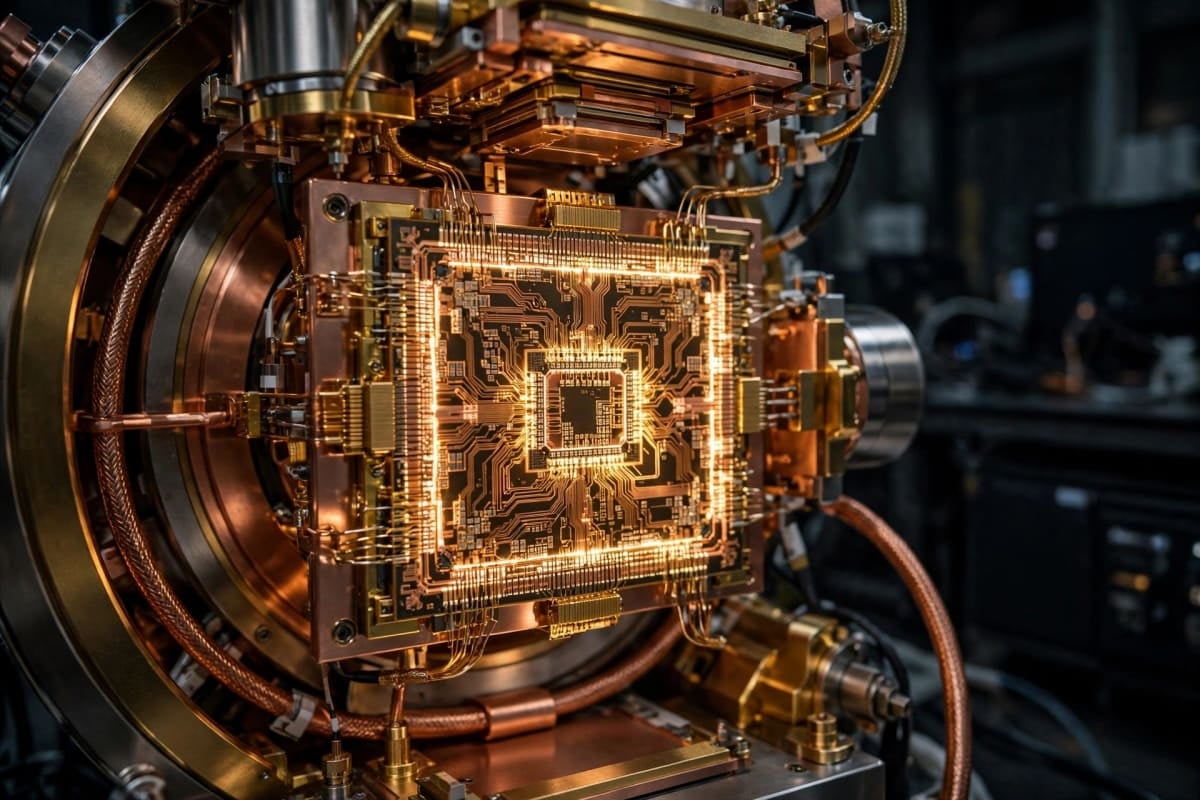
- Willow is Google's 105-qubit superconducting processor, first announced in December 2024.
- In the headline test, Willow won 98.3% of 900,000 rounds of a game where the best possible classical strategy can only win 88.9%.
- The chip also pushed past classical bounds in tests of entanglement and a computational problem run across grids from 9 to 105 qubits.
- The important caveat: the biggest claim rests on a widely believed but unproven conjecture, not a full mathematical proof.
- This is not a claim that Willow beats ordinary computers at everyday tasks.
What Google actually did
Google's quantum team ran four experiments on the same chip, Willow, and published the results together in Science.
- The work first appeared as a preprint on arXiv in December 2025.
- Peer review followed, and the paper was published on November 19, 2026.
- The journal chose it for the cover, a sign of how significant the editors judged it to be.
- All four experiments test the same underlying quantum property: contextuality.
Contextuality is the thread that ties the whole paper together, so it is worth understanding before the numbers.
What is quantum contextuality?
Quantum contextuality sounds abstract, but the idea is simple to state.
- In everyday life, measuring something gives you a property that was already there.
- A coin is heads or tails whether or not you look at it.
- Quantum mechanics does not always work that way.
- In quantum physics, the outcome of a measurement can depend on which other compatible measurements are performed alongside it.
- That dependence is called contextuality.
- It is not a quirk or a measurement error. It is a fundamental feature of quantum theory.
- Classical physics has no equivalent. No classical system can reproduce it.
Why does that matter for computing?
- Researchers have shown that contextuality is a resource for quantum advantage.
- In other words, it is one of the ingredients that lets a quantum computer do things a classical computer cannot.
- A chip that shows strong contextuality is showing it has the raw material for genuinely quantum computation.
- That is why Google built four different tests around it, rather than relying on a single benchmark.
Experiment 1: The magic square game
The first and most striking test is built around a game called the Mermin-Peres magic square.
- The game is played on a 3-by-3 grid, like a small magic square.
- Two players, or in this case two parts of the quantum chip, receive a row or a column as an input.
- They must fill in their row or column so that the numbers follow a set of rules.
- The rules are chosen so that no classical strategy can satisfy all of them at once.
- The best any classical player can do is win 8 times out of 9, or 88.9%.
- That ceiling is absolute. No cleverer classical trick can beat it.
Willow's result:
- Willow won 98.3% of its rounds.
- It played 900,000 rounds in total.
- Each of the nine possible row and column input pairs was run 100,000 times.
- The gap between 98.3% and the classical ceiling of 88.9% is enormous at that scale.
- The small number of losses came mostly from hardware noise, not from the strategy failing.
What this shows:
- The chip is not just simulating a quantum strategy. It is executing one.
- A classical computer following the best possible classical plan could never match that win rate.
- The result is a clean, direct demonstration of contextuality on real hardware.
Experiment 2: The Bell-Kochen-Specker test
The second experiment tests a famous inequality in quantum physics, the Bell-Kochen-Specker inequality.
- The classical limit for this test is a score of 4.
- The maximum score allowed by quantum theory is 6.
- Anything above 4 cannot be explained by any classical, non-contextual model.
Willow's result:
- Willow scored 5.590.
- That is well above the classical limit of 4.
- It is also close to the quantum limit of 6.
- The test used 180 different measurement contexts.
- Each context was measured 1,000 times.
What this shows:
- The chip's behaviour is strongly contextual across a wide range of measurement settings.
- The result is not a one-off tied to a single setup.
- It held up across 180 different contexts, which makes it much harder to explain away.
- A score of 5.590 leaves little room for doubt that the hardware is behaving in a genuinely quantum way.
Experiment 3: Entanglement at scale
The third experiment looks at entanglement, the phenomenon where qubits become linked so that they behave as a single system.
- The team used a test called the GHZ parity game.
- GHZ stands for Greenberger-Horne-Zeilinger, the names of the three physicists who first described this kind of entangled state.
- In this game, a quantum strategy can beat the classical bound, but only if the qubits are genuinely entangled.
Willow's result:
- The quantum strategy stayed above the classical bound with up to 71 qubits participating.
- That is a large entangled system by any standard.
- The researchers also verified genuine multipartite entanglement among up to 45 qubits.
- Multipartite entanglement means many qubits entangled together at once, not just in pairs.
What this shows:
- Willow can hold entanglement together across dozens of qubits.
- Entanglement is fragile, and keeping it intact at that scale is a hardware achievement in itself.
- The 71-qubit result and the 45-qubit verification are two different measures, and both point in the same direction.
- The chip is not just fast at small tasks. It can coordinate a large quantum system.

Experiment 4: The hidden linear function problem
The fourth experiment is the most computational of the four.
- It is based on a problem called the 2D hidden linear function problem.
- The task is to find a hidden pattern in a grid of qubits.
- The problem is designed so that a shallow quantum circuit can solve it, while a shallow classical circuit of the same shape cannot.
Willow's result:
- The team ran the problem on processor grids ranging from 9 qubits up to the full 105 qubits.
- At 105 qubits, Willow returned a valid answer more than half the time.
- The quantum circuit used about six effective layers of two-qubit gates.
- Six layers is shallow, which is exactly the point. The quantum advantage here comes from the structure of the computation, not from running a long program.
What this shows:
- The advantage grows as the system gets bigger.
- At 9 qubits, the problem is small enough that classical methods can keep up.
- At 105 qubits, the quantum approach is pulling ahead.
- This is the experiment that most directly resembles a computing task, rather than a physics test.
The caveat you need to know
This is the part that separates a careful reading of the paper from the headlines.
- The 105-qubit result rests on a conjecture.
- A conjecture is a statement that researchers believe is true, but have not yet proven.
- The rigorous theorem behind this kind of separation was published by Bravyi, Gosset and König in 2018.
- That theorem only fully applies at a much larger scale, near one million qubits.
- At 105 qubits, the claim depends on the conjecture holding.
- The comparison also covers a specific class of classical circuits: bounded-depth, geometrically local ones.
- It does not cover every classical algorithm that could ever be written.
What that means in plain terms:
- Google has strong evidence of a quantum-classical separation at 105 qubits, not an airtight mathematical proof.
- The evidence is serious, peer-reviewed, and backed by four separate experiments.
- But it is not the same as a theorem, and it is not a claim about all classical computing.
- Anyone who tells you this paper proves quantum computers beat classical computers at everything is overstating it.
Why this matters
If the caveat is real, why is the paper still a big deal? There are several reasons.
- Contextuality is a recognised resource for quantum advantage.
- Showing it clearly on a 105-qubit chip means the hardware has the ingredients that matter.
- These tests could also become practical tools for checking quantum hardware.
- Some hardware errors are hard to spot with standard checks.
- Contextuality tests can catch errors that other checks miss, because they probe the quantum behaviour directly.
- That makes them useful as diagnostics, not just as demonstrations.
- The paper also shows progress on the hardware itself.
- Running four demanding experiments on one chip, at up to 105 qubits, is a sign of a maturing platform.
- The results build on Willow's debut in December 2024, when Google said the chip completed a benchmark in under five minutes.
- Google said that same benchmark would take a leading supercomputer around 10 septillion years.
- That 2024 claim was a headline-grabber. This 2026 paper is the peer-reviewed follow-up, with the evidence laid out for other scientists to examine.
What this does not mean
It is worth being clear about what has not been shown.
- Willow has not beaten a classical computer at everyday tasks.
- It has not broken encryption, solved a business problem, or replaced a supercomputer.
- The experiments are designed to test quantum behaviour, not to run useful software.
- Nobody is going to run a spreadsheet or a web browser on Willow.
- The paper does not claim otherwise.
- What it claims is narrower and more interesting: that a real quantum chip can do things in these tests that no classical system of the same kind can match.
- That is a physics result with computing implications, not a product launch.
Willow in context
A short timeline helps put the paper in place.
- December 2024: Google announces Willow, a 105-qubit superconducting transmon processor.
- The chip is built at Google's fabrication facility in Santa Barbara, California.
- December 2024: Google reports the under-five-minutes benchmark result, and the 10-septillion-year comparison.
- December 2025: the contextuality results appear as a preprint on arXiv.
- November 19, 2026: the results are published in Science, and the paper makes the cover.
- The gap between preprint and publication is normal. Peer review takes time, especially for a result this significant.
What to watch next:
- Other research groups will try to reproduce and extend these results.
- Classical computing researchers will look for ways to close the gap, as they have after every quantum milestone.
- Google will likely push toward larger qubit counts and lower error rates.
- The conjecture behind the 105-qubit claim may be proven, refined, or challenged.
- Contextuality tests may start appearing as standard hardware checks, alongside existing benchmarks.
The bottom line
- Google's Willow chip has passed four peer-reviewed tests of quantum contextuality.
- The headline number is a 98.3% win rate in the magic square game, against a classical ceiling of 88.9%.
- The chip also scored 5.590 on the Bell-Kochen-Specker test, held entanglement across up to 71 qubits, and solved a hidden linear function problem at 105 qubits.
- The results are strong evidence of a quantum advantage in these specific tests.
- The 105-qubit separation rests on an unproven conjecture, and the classical comparison is limited to a specific class of circuits.
- That caveat does not undo the result. It defines what the result actually is.
- Willow is not a general-purpose computer that beats classical machines. It is a 105-qubit quantum processor that has now been shown, in peer-reviewed science, to behave in ways no classical system of the same kind can match.
FAQs
What is Google Willow?
Willow is Google's 105-qubit superconducting quantum processor, announced in December 2024 and built at Google's Santa Barbara fabrication facility. It uses transmon qubits, a type of superconducting circuit, and is the chip used in all four experiments in the new Science paper.
What did the new Science paper actually prove?
The paper shows Willow beating classical limits in four tests of quantum contextuality, including a 98.3% win rate in the magic square game against a classical ceiling of 88.9%. The 105-qubit computational separation rests on a conjecture, so it is strong peer-reviewed evidence rather than a full mathematical proof.
What is quantum contextuality in simple terms?
Quantum contextuality means the outcome of a measurement can depend on which other compatible measurements are performed alongside it. It has no classical equivalent, and researchers consider it a key resource that lets quantum computers outperform classical ones on certain tasks.
Does this mean quantum computers now beat normal computers?
No. Willow beat classical limits in four specially designed tests, not at everyday computing tasks. It has not replaced supercomputers or shown a practical advantage for ordinary software. The result is a physics milestone with computing implications, not a product that outperforms your laptop.
How big is 105 qubits?
Willow's 105 qubits make it one of the larger superconducting quantum processors in operation. The experiments used up to 71 qubits in the entanglement game and the full 105 qubits in the hidden linear function problem. The rigorous theorem behind the separation only applies near one million qubits, which is why the 105-qubit claim depends on a conjecture.
When was the research published?
The work appeared as an arXiv preprint in December 2025 and was published in the journal Science on November 19, 2026, where it made the cover. Willow itself was first announced in December 2024.
Was this article helpful?

Written By
TechorCoffeeContributing Writer
TechorCoffee is a technology reporter and software creator writing reviews and tutorials for TechOrCoffee.
Comments (0)
Leave a Comment
Read Next

Tue Jan 13 2026
Quantum Computing: Understanding the Next Revolution in Technology
Quantum Computing is a revolutionary technology that uses quantum mechanics to solve complex problems faster than classical computers and is expected to transform multiple industries in the future.

Sat Nov 14 2026
Nvidia CEO Jensen Huang Resigns After 33 Years at Top
NVIDIA has announced co-founder Jensen Huang has resigned as CEO after 33 years. CFO Colette Kress will serve as interim CEO during the search.

Wed Nov 18 2026
SpaceX Catches Starship From Orbit in Historic First
SpaceX caught a Starship from orbit for the first time on November 14, 2026, as Mechazilla's arms grabbed Ship 42 after 14 orbits — but the booster was lost.