Nvidia Rules Out Huang Return After Record Earnings

Published (Updated )

Quick answer
- Nvidia's board will not bring back Jensen Huang as chief executive, board chair Harvey Jones said on the company's earnings call.
- Huang, who co-founded Nvidia and led it for 33 years, resigned on November 12, 2026. Earlier on Tuesday he had said he would be "honored" to return if the board wanted him back.
- The board has "every confidence" in interim CEO Colette Kress, Nvidia's chief financial officer of 13 years, while it searches for a permanent replacement.
- The decision came on the same call where Nvidia reported record results: quarterly revenue of $115.8 billion, up 103 percent from a year earlier, and net profit of $64.9 billion, up 109 percent.
- Nvidia has hired executive search firm Heidrick & Struggles to find the next CEO, and reports say the board has approached Arm chief executive Rene Haas as a potential successor.
- An open letter calling for Huang's reinstatement has been signed by about 197,000 people, but the board's answer is now clear.
The board's answer, in its own words
Harvey Jones, who became Nvidia's first-ever board chair after Huang's resignation, opened the earnings call with a short statement that left no room for doubt.
- "The Nvidia board unanimously accepted his resignation and does not intend to reinstate Jensen as CEO," Jones said.
- He said Huang resigned after the disclosure of "personal behavior inconsistent with the company's code of conduct, standards, and cultural norms."
- Jones said the board would not take questions on the call about the circumstances of Huang's resignation or the ongoing investigation, and would "communicate further when appropriate."
The statement was a direct reply to Huang himself. Hours earlier, in his first public comment since stepping down, Huang had put himself forward as a candidate to lead Nvidia again.
- "If the Board of Directors decides that my return is in the best interest of our shareholders, our employees, the company, and America, I would be honored to answer these calls and return as CEO," Huang said.
- Huang's statement followed days of public pressure to bring him back, including an open letter signed by about 197,000 people, according to its organizers.
By the end of the call, the board's position was settled. Huang's name came up only three times during the roughly 12,000-word call, all of them in Jones's opening remarks. Interim CEO Colette Kress did not mention him at all, and none of the eight analysts who asked questions raised his name.
Why Huang resigned
Huang resigned abruptly on November 12, 2026, ending a 33-year run as Nvidia's chief executive. He was the company's co-founder and its public face through its transformation from a graphics-chip maker into the world's most valuable AI company.
- Nvidia's original announcement of the resignation gave no explanation.
- Reports since then have said Huang stepped down after allegations that he had multiple extramarital affairs, including one with a woman who may have been a Chinese spy.
- Jones's statement on the earnings call was the board's first public explanation: the resignation followed the disclosure of personal behavior that clashed with the company's code of conduct, standards and cultural norms.
The national security angle has drawn attention well beyond the business world.
- The US Department of Justice and the Securities and Exchange Commission have both launched investigations into the matter.
- Huang has been summoned to appear before committees in the House of Representatives and the Senate in early December.
- The episode has also been described as exposing weaknesses in the Trump administration's China policy, with Huang's case now sitting at the intersection of corporate governance, technology and national security.
The search for a permanent CEO
With Huang's return ruled out, the board's attention turns to finding a permanent chief executive. Jones set out the plan on the call.
- The board has hired executive search firm Heidrick & Struggles to lead the search.
- The board is considering internal and external candidates.
- Jones said the board wants to install a permanent CEO "as quickly as possible," but added: "We won't expedite the CEO before finding exactly the right person."
- The board created a National Security and Export Control Oversight Committee on the morning of the call, its first major governance move since Huang's departure, as scrutiny grows over Nvidia's national security role.
- Jones said the board is taking national security concerns into consideration in its search for the next chief executive.
One name has already surfaced. The Financial Times reported that Nvidia's board has approached Arm chief executive Rene Haas as a potential successor, while the board's investigation continues. Arm designs the chip architecture used in nearly every smartphone on the planet, and Haas has led the company since 2022.
Kress takes the helm for now
Colette Kress, Nvidia's chief financial officer of 13 years, is serving as interim CEO while the search runs.
- Jones said the board has "every confidence" in Kress to lead the company.
- On the earnings call, Kress sought to reassure investors that the leadership change will not alter Nvidia's direction.
- "Our ambition will not change, our passion to innovate will not change, and our commitment to customers, partners, and shareholders will not change," Kress told analysts.
- She said Nvidia's product roadmap is on track, "and our ambition has never been greater."
Kress has been at the center of Nvidia's financial story for more than a decade, presenting the results that turned the company into the dominant supplier of AI chips. Her task now is to keep that machine running while the board picks a permanent leader — and while investors watch for any sign that the scandal has damaged the business.
Record results: revenue doubles to $115.8 billion
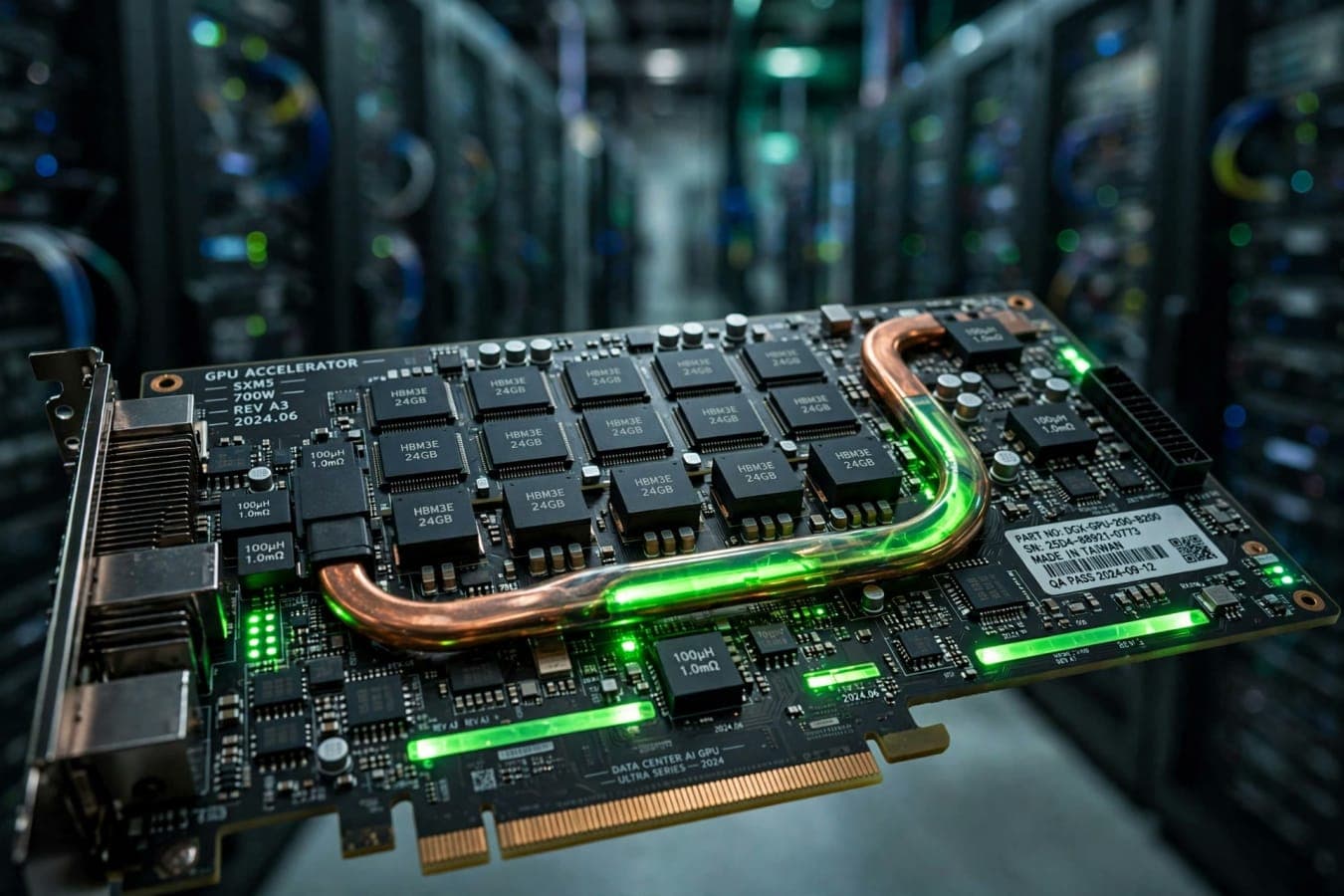
The earnings themselves were the strongest in Nvidia's history, which made the board's firm stance on Huang all the more striking: the company is performing at a level it has never reached before, and it is doing so in the middle of a leadership crisis.
- Revenue for the quarter ended October 25, 2026, was $115.8 billion, up 103 percent year over year.
- Net profit was $64.9 billion, up 109 percent year over year.
- Nvidia forecast next-quarter revenue of $130 billion, plus or minus 3 percent, above what Wall Street had expected.
- The company's Vera Rubin AI platform is now shipping, underpinning the next wave of data-center growth.
The numbers show that demand for Nvidia's AI chips remains intense, even as the company works through the most turbulent period in its history. Customers are still buying, the order book is still growing, and the next generation of hardware is reaching the market.
Investors, however, were less sure. Nvidia's shares fell after the call, with many investors who had hoped to hear that Huang would be invited back left disappointed. The market reaction underlines the tension at the heart of this story: the business has never been stronger, but the man who built it is gone, and the board has now closed the door on his return.
What the numbers mean for the AI boom
Nvidia's results are watched as a health check on the entire AI industry, because its chips power the data centers where the biggest AI models are trained and run.
- Revenue doubling in a single year shows that spending on AI infrastructure is still accelerating, not slowing.
- The $130 billion forecast for next quarter suggests customers have already committed to the next round of purchases.
- Vera Rubin shipping on schedule matters because it is the platform that will carry Nvidia's growth into 2027, and any delay would have been read as a warning sign.
The leadership question, however, now hangs over those numbers. Analysts on the call focused on the business — demand, supply, margins and the product roadmap — and nobody asked about Huang. But the choice of the next CEO will shape Nvidia's strategy for years, including how it handles export controls, competition from rivals such as AMD, and its relationship with Washington.
What happens next
- The CEO search is now the central story at Nvidia. The board says it will move quickly but will not rush, and the Heidrick & Struggles search will test both internal candidates and outside names such as Arm's Rene Haas.
- Huang's appearances before House and Senate committees in early December will put the scandal back in the spotlight, and the DOJ and SEC investigations are still running.
- The National Security and Export Control Oversight Committee will be watched closely, as it signals how Nvidia plans to handle the national security questions raised by Huang's departure.
- The next earnings report will show whether the $130 billion forecast holds, and whether demand for Vera Rubin keeps the growth story intact under new leadership.
- The 197,000 people who signed the letter calling for Huang's return now have their answer. The board has said no — and it said so unanimously.
The bottom line
- Jensen Huang offered to come back. Nvidia's board said no, unanimously, and it will not reconsider.
- Colette Kress leads the company as interim CEO while the board searches for a permanent replacement, with Heidrick & Struggles running the process.
- The business itself is booming: $115.8 billion in quarterly revenue, $64.9 billion in profit, and a $130 billion forecast for next quarter.
- The open question is no longer whether Huang returns. It is who leads the world's most important AI company next — and whether that person can keep its record run going.
FAQs
Will Jensen Huang return as Nvidia CEO?
No. Board chair Harvey Jones said on November 17, 2026, that the board "unanimously accepted his resignation and does not intend to reinstate Jensen as CEO," even though Huang had said he would be "honored" to return.
Why did Jensen Huang resign from Nvidia?
Huang resigned on November 12, 2026, after the disclosure of personal behavior the board said was inconsistent with Nvidia's code of conduct, standards and cultural norms. Reports have linked his departure to allegations of multiple extramarital affairs, including one with a woman who may have been a Chinese spy.
Who is Nvidia's CEO now?
Colette Kress, Nvidia's chief financial officer of 13 years, is serving as interim CEO while the board searches for a permanent replacement with executive search firm Heidrick & Struggles.
What were Nvidia's latest earnings?
For the quarter ended October 25, 2026, Nvidia reported revenue of $115.8 billion, up 103 percent year over year, and net profit of $64.9 billion, up 109 percent. It forecast next-quarter revenue of $130 billion.
Who could be Nvidia's next permanent CEO?
The board is considering internal and external candidates. The Financial Times reported that the board has approached Arm chief executive Rene Haas as a potential successor.
Is Jensen Huang under investigation?
The US Department of Justice and the Securities and Exchange Commission have both launched investigations, and Huang has been summoned to appear before House and Senate committees in early December 2026.
Was this article helpful?
Explore Specs, Comparisons & Related Topics

Written By
TechorCoffeeEditorial Team
The TechOrCoffee Editorial Team covers consumer hardware, artificial intelligence, software engineering, and regional smartphone & laptop market analysis.
Comments (0)
Leave a Comment
Read Next
Fri Oct 30 2026
GPU and RAM Prices 2026: Why AI Ate Your Upgrade
GPU and RAM prices in 2026 explained: AI memory shortage, DDR5 and RTX 50 price rises, RTX 50 Super delay, and when relief may come.

Fri Oct 30 2026
Drupal Commerce Attack Puts Online Stores at Risk
Why attackers target e-commerce, what a Drupal Commerce attack costs merchants and customers, and what to watch next.
Thu Nov 12 2026
Jensen Huang Resigns as NVIDIA CEO: Colette Kress Takes Over
Jensen Huang resigns as NVIDIA CEO, with CFO Colette Kress named interim chief as the company faces an investigation and leadership transition.