Slotbound Sells 200,000 Copies in a Week, Built With AI

Published (Updated )
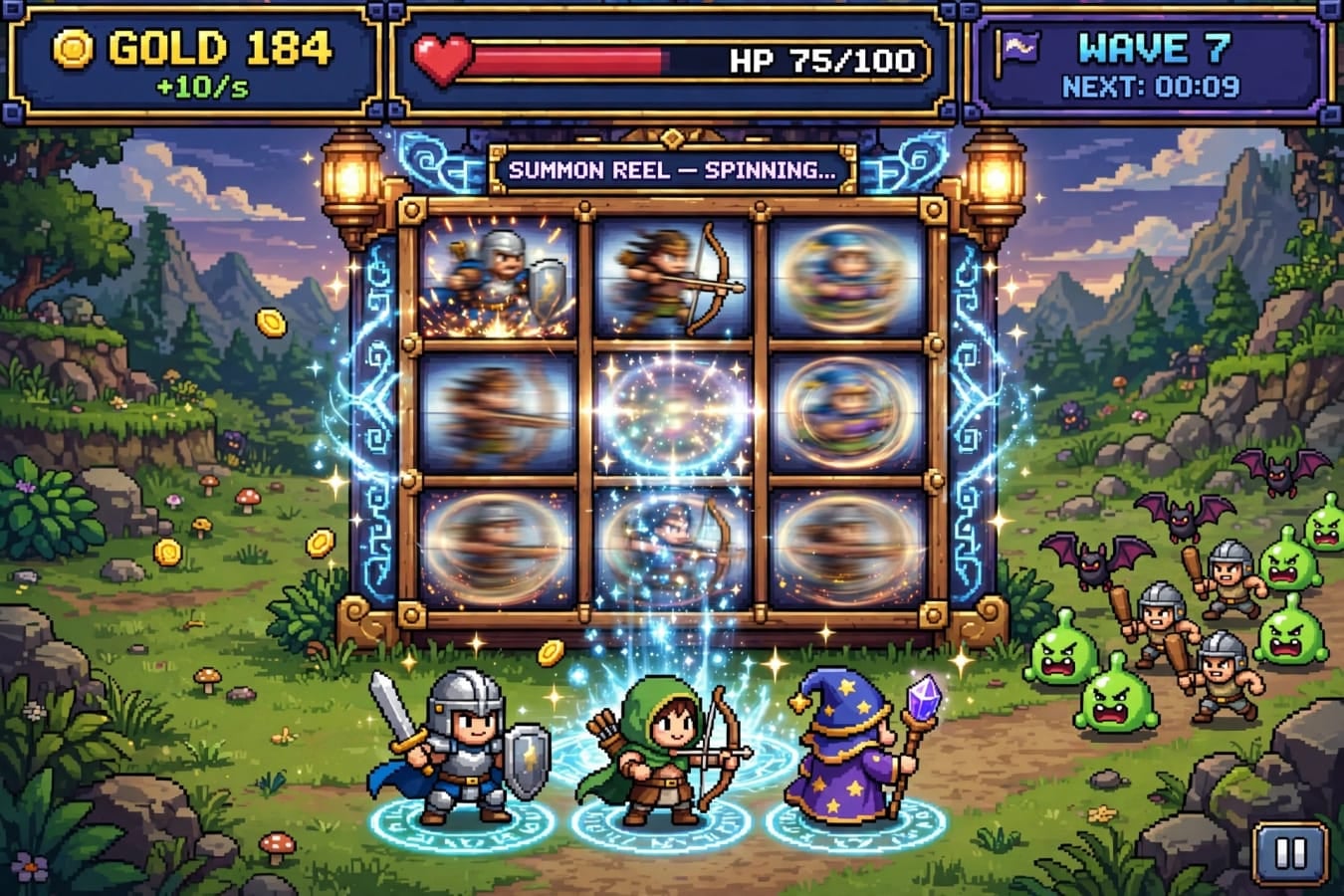
A tiny slot-machine game built mostly with AI tools has become one of the biggest indie surprises of the year. Slotbound, a roguelite auto-battler from solo developer Optima Arch, launched on Steam on November 12, 2026 — and less than a week later, it had sold more than 200,000 copies.
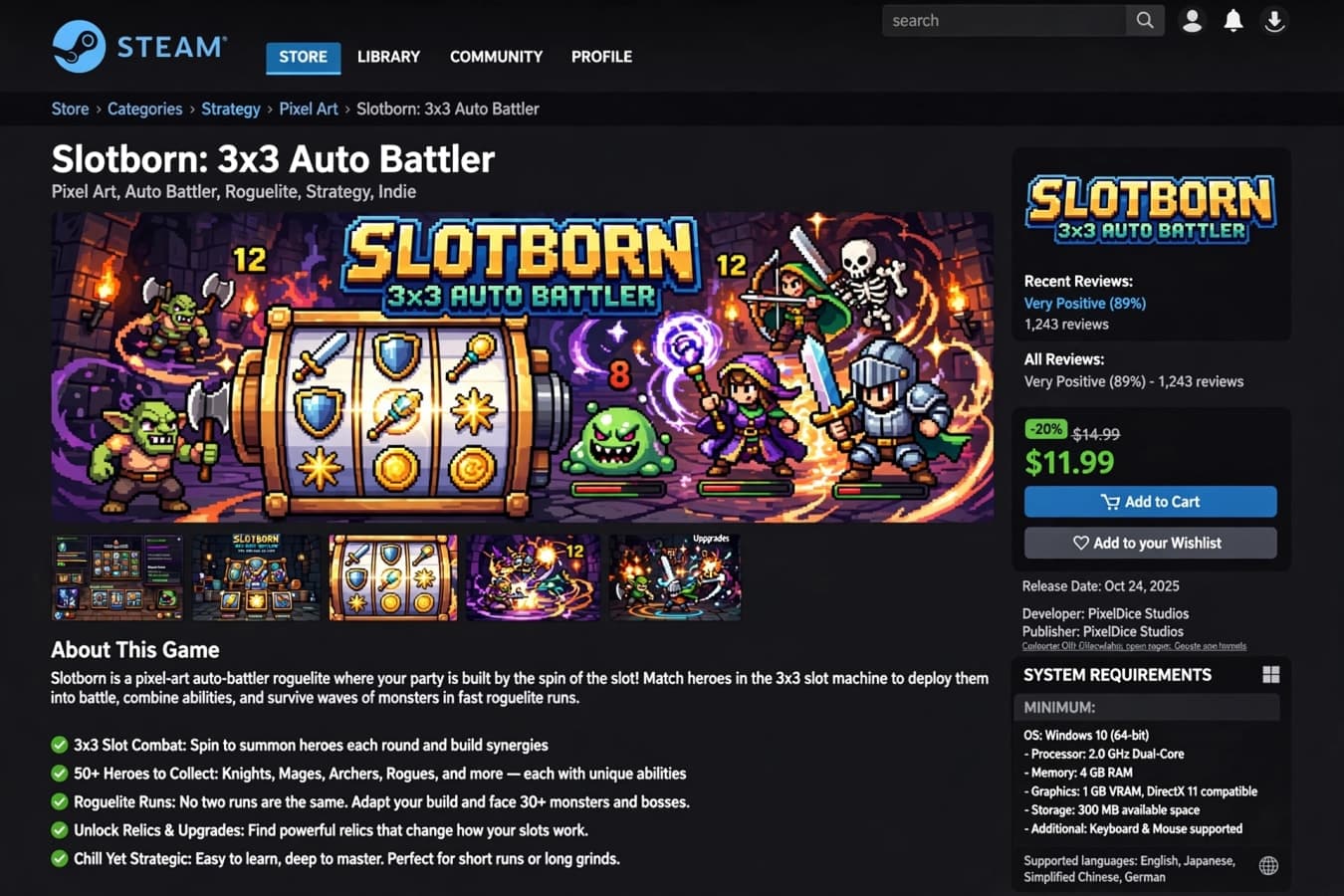
That is a remarkable result for any first game, let alone one made by a single person who says he had almost no programming experience before he started. The game costs $9.99 on Steam, with a 10% launch discount bringing it down to $8.99 until about November 26.
The quick answer
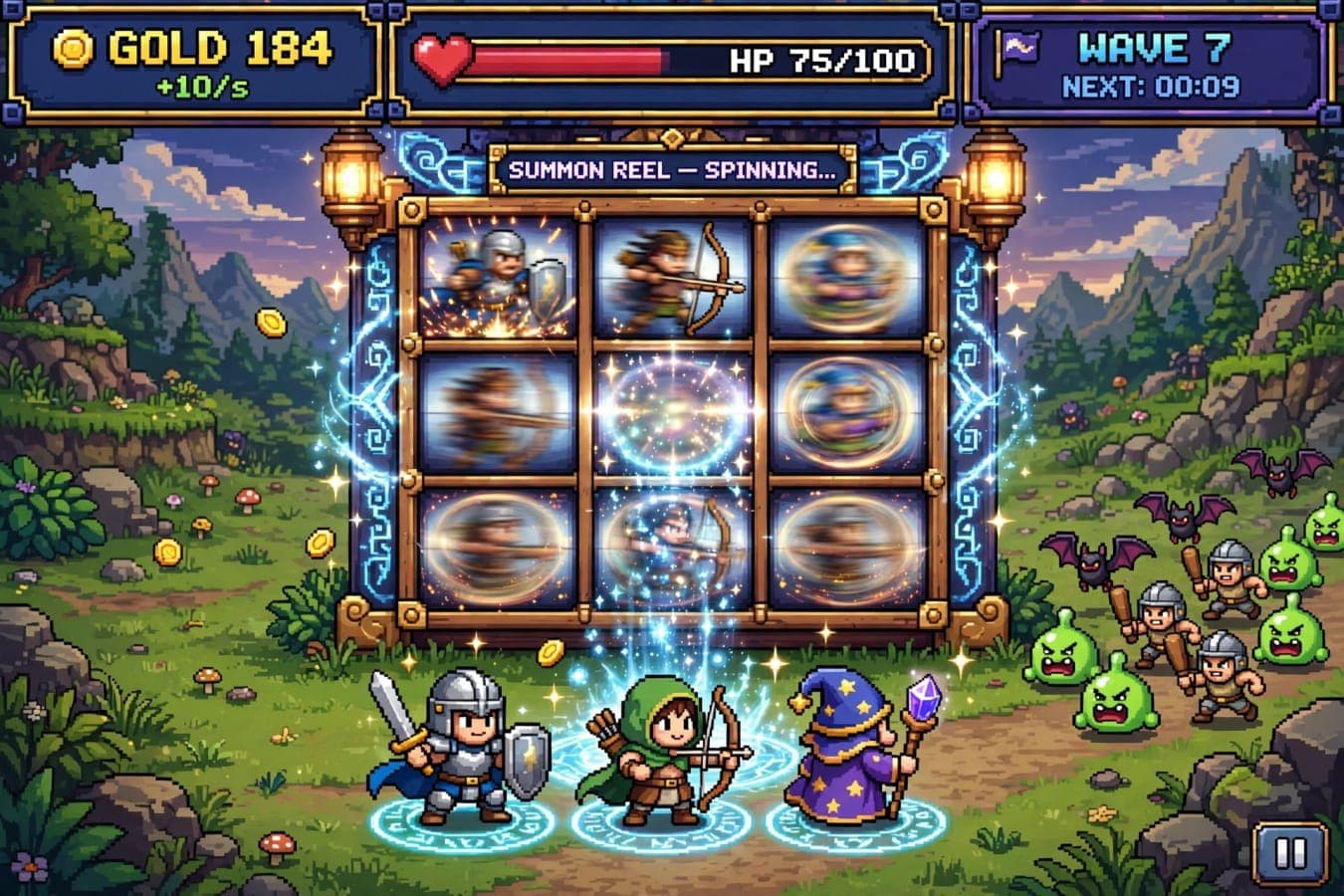
- What: Slotbound is a roguelite auto-battler defence game. You spin a 3x3 slot machine to summon units, merge them into stronger ones, and survive waves of enemies and boss fights.
- Sales: 50,000 copies in the first 48 hours, about $356,000 in gross revenue. It passed 100,000 copies in three days, and 200,000 copies in under a week.
- Price: $9.99 on Steam, $8.99 with the 10% launch discount until about November 26.
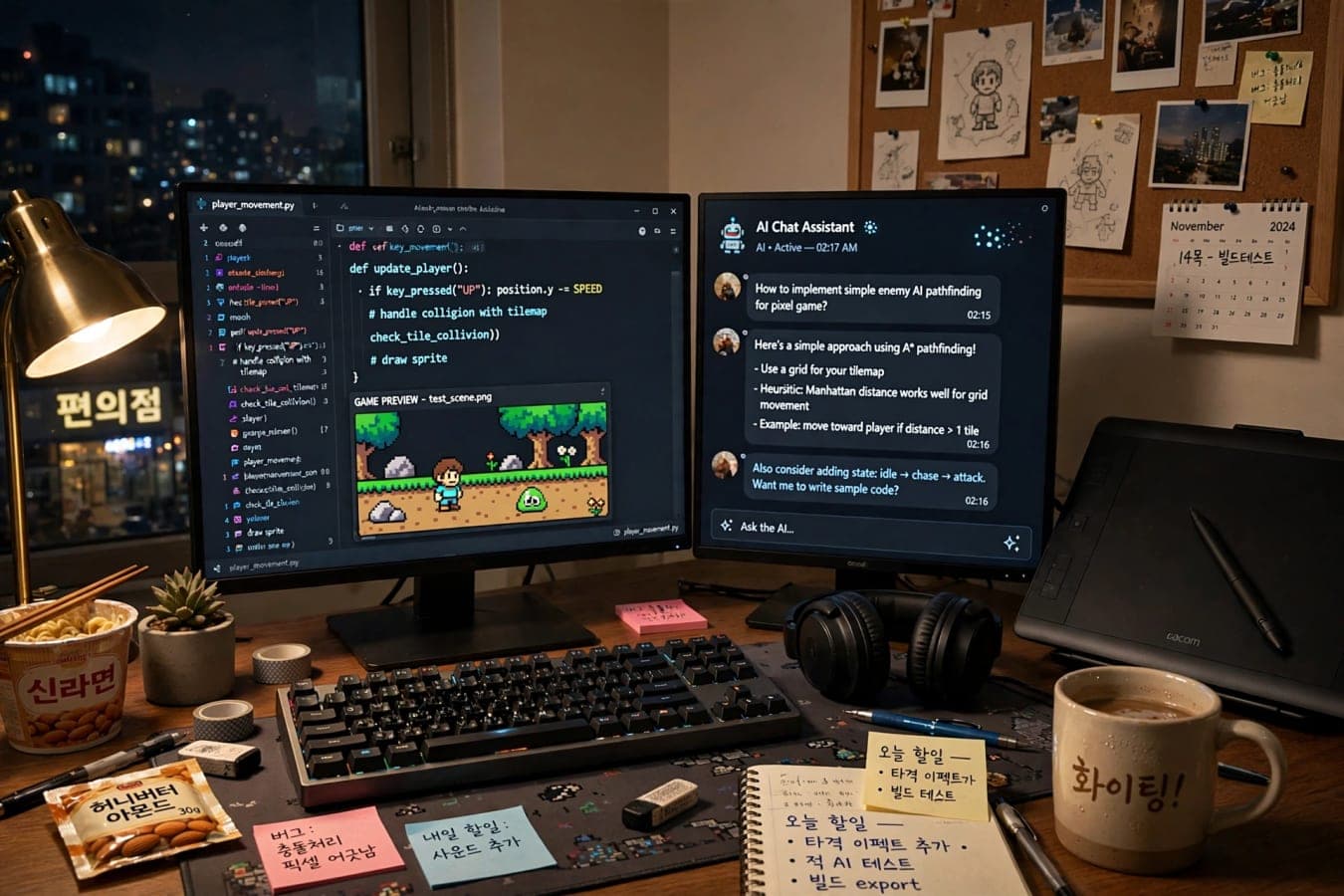
- The AI angle: The developer says the game was built with heavy AI assistance — code with Codex, design help from Gemini, pixel art with Nano Banana 2 and PixelLab, and sound effects with ElevenLabs.
- The catch: The claim that the game is "100% AI-coded" is the developer's own statement. It cannot be independently verified.
- Reception: Steam reviews sat at Mostly Positive, around 79% positive from more than 800 reviews, at the time of the 100,000-copy announcement. Ratings move as more reviews arrive.
A launch that kept accelerating
Slotbound did not creep up the charts. It sprinted.
- First 48 hours: 50,000 copies sold, grossing about $356,000, according to the developer.
- Peak players at that point: 9,377 concurrent players, again per the developer's own figures.
- Three days in: Sales passed 100,000 copies, announced on November 16.
- Under a week in: Sales passed 200,000 copies, announced on Steam on November 19, 2026. For context, the game was not a complete unknown before launch. A free demo released in summer 2026 peaked at close to 2,900 concurrent players, and reports put pre-launch wishlists above 100,000. That demo audience gave the full game a running start — and word of mouth did the rest. The peak concurrent player count tells its own story. SteamDB, the independent tracker, recorded a peak of around 22,000 concurrent players. That is a very different scale from the demo's 2,900-player peak, and it helps explain why the sales numbers kept climbing day after day.
What is Slotbound, and why is it so easy to pick up?
Slotbound is built around one simple idea: a slot machine that fights for you.
- You spin a 3x3 grid, like a casino slot machine, and each spin summons units onto the battlefield.
- Matching units merge into stronger versions, so every spin is a small gamble — do you take what you get, or push your luck for a better combination?
- Your units then fight automatically, in auto-battler style, against waves of enemies.
- Survive the wave, earn in-game gold, spin again, and get stronger.
- Boss waves arrive at intervals to test whether your army is ready. There is no real-money gambling in the game. All spending uses gold earned inside the game, which keeps the slot-machine loop firmly in the realm of play rather than betting. The appeal is easy to see. Each run is short, each spin is a surprise, and the merge system gives every pull a little decision to make. It is the kind of loop that fits a 20-minute session — or, for many players, several sessions back to back.
The sales numbers, in context
Two hundred thousand copies in under a week is a breakout by any measure, but the speed matters as much as the total.
- Day 2: 50,000 copies, about $356,000 gross.
- Day 3: 100,000 copies.
- Day 6 or so: 200,000 copies. At the $9.99 list price, 200,000 copies implies roughly $2 million in gross revenue before Steam's cut and taxes — though the real figure will be lower, since many buyers paid the discounted $8.99 launch price, and prices vary by region. For a solo developer's first release, those numbers put Slotbound in rare company. Most indie games never reach 200,000 lifetime sales, let alone in a single week.
Built with AI — and the claim that needs a caveat
The part of the story that travelled furthest is not the sales figure. It is how the game was made. According to the developer, Slotbound was built with heavy AI assistance across almost every part of production:
- Code: mainly written with Codex.
- Systems design: help from Gemini.
- Pixel art: Nano Banana 2 and PixelLab.
- Sound effects: ElevenLabs. The developer has also said he had almost no programming experience before this project. That is the detail that turned a good sales story into a viral one. The developer has described the game as "100% AI-coded". That is his own statement, and it cannot be independently verified. Nobody outside the project can check exactly how much of the code, art or audio was written by a model and how much was written, fixed or rewritten by a human. The Steam store page carries an AI Generated Content Disclosure, which states that various visual assets and promotional materials were created with generative AI assistance, and that the developer reviewed and refined all of it. That disclosure is a requirement on Steam for games using AI-generated content, and it is the most solid, checkable fact in this part of the story: AI was used, the developer says he reviewed and refined the output, and Valve's disclosure rules were followed. What this means in practice is simple. Slotbound is a real example of a game built with heavy AI help — and it is also a reminder to treat any "100% AI" label as a claim, not a measured fact.
Why the story went viral
The sales numbers first spread widely after Mark Kern — the former World of Warcraft team lead known online as "Grummz" — shared them on X on November 16. His post put the 100,000-copy milestone in front of a large gaming audience, and the story took off from there. It landed at a moment when the games industry is already arguing about AI. Some developers and players see AI tools as a way for small teams to compete with big studios. Others worry about quality, originality, jobs, and what happens when storefronts fill up with AI-assisted games. Slotbound gives both sides something to point at:
- For AI supporters: A solo developer with almost no coding experience shipped a polished, popular game. That is the democratisation argument in its strongest form.
- For AI sceptics: The game still needed a human to direct it, choose what worked, fix what did not, and respond to players after launch. AI did not ship the game alone.
- For everyone else: The market spoke. Players bought it, played it, and mostly liked it.
Nine updates in the first few days
One of the more telling details is what happened after launch. The developer shipped nine updates in the first days, most of them driven by player reports. That pace matters for two reasons:
- It shows the game was actively supported from day one, which helps explain the positive reviews.
- It shows the limits of any "AI built it" narrative. Shipping a game is not the same as finishing one. Listening to players, fixing bugs, and tuning balance is ongoing human work, whatever tools were used to write the first version. The game is Steam Deck Verified, so it runs well on Valve's handheld, and it has been translated into 13 languages — a sensible move for a game whose audience spans the US, UK, Europe and beyond.
The reception: strong, with room to grow
At the time of the 100,000-copy announcement, Slotbound sat at Mostly Positive on Steam, with around 79% positive reviews from more than 800 reviews. One outlet later described the rating as Somewhat Positive, which shows how quickly a score can move when thousands of new players arrive at once. A few things are worth keeping in mind when reading those numbers:
- Early reviews often come from the most enthusiastic players, including demo fans and wishlisters.
- A Mostly Positive score around 79% is good, not flawless. It means roughly one in five reviewers had a problem with something.
- Common complaints in early reviews of games like this tend to focus on balance, repetition over long sessions, and the randomness of the slot machine itself — the same randomness that makes it fun can also make a run feel unfair. None of that takes away from the achievement. A debut game from a solo developer holding a positive rating while selling 200,000 copies in a week is a success by any reasonable measure.
What Slotbound means for indie games and AI
Slotbound is not proof that anyone can now make a hit game with AI. It is proof that the barrier to entry has fallen sharply. A few lessons stand out:
- Tools are cheaper than ever. A solo developer can now get help with code, art, sound and design without hiring a team.
- Taste still matters. The slot-machine idea is simple, readable and fun to watch. No tool picks that idea for you.
- Marketing still matters. A demo with nearly 2,900 concurrent players and more than 100,000 wishlists gave the launch a real audience.
- Support still matters. Nine fast updates turned a good launch into a trusted one.
- Disclosure still matters. Steam's AI disclosure rules meant players could see, before buying, that AI-generated content was involved. The bigger question is what happens next. If one solo developer can do this, many more will try. Some will succeed. Steam's charts may see more small, cheap, AI-assisted games — and players will keep sorting the good ones from the forgettable ones, just as they always have.
What to watch next
- Sales beyond week one: The first week is driven by launch buzz. The second and third weeks will show whether word of mouth keeps working.
- The review score: If it holds at Mostly Positive as reviews pass a few thousand, that is a stronger signal than the early score.
- Post-launch content: New units, modes or events would show the developer is building on the launch rather than moving on.
- The AI debate: Expect more discussion of Steam's AI disclosure rules, and more developers sharing their own AI-assisted workflows.
- The price: The $8.99 launch discount ends around November 26, when the game returns to its $9.99 list price.
The bottom line
- Slotbound sold 200,000 copies in under a week, after 50,000 in 48 hours and 100,000 in three days.
- It is a simple, readable idea — a slot machine that summons your army — executed well.
- It was built with heavy AI assistance, according to the developer, who says he had almost no programming experience.
- The "100% AI-coded" label is the developer's claim, not a verified fact, and the Steam page's AI disclosure is the checkable part of the story.
- For players, the result is a fun, cheap roguelite that runs on Steam Deck. For the industry, it is the clearest sign yet that AI-assisted development has arrived — and that human judgement is still doing the heavy lifting.
FAQs
How many copies has Slotbound sold?
Slotbound sold 50,000 copies in its first 48 hours, passed 100,000 copies in three days, and passed 200,000 copies in less than a week after its November 12, 2026 launch on Steam, according to announcements from the developer.
How much does Slotbound cost?
Slotbound costs $9.99 on Steam, with a 10% launch discount bringing the price down to $8.99 until about November 26, 2026.
Was Slotbound really made with AI?
According to the developer, the game was built with heavy AI assistance: code mainly with Codex, systems design help from Gemini, pixel art with Nano Banana 2 and PixelLab, and sound effects with ElevenLabs. The Steam page carries an AI Generated Content Disclosure confirming generative AI was used for visual assets and promotional materials, which the developer says he reviewed and refined.
Is Slotbound really "100% AI-coded"?
That is the developer's own description, and it cannot be independently verified. Nobody outside the project can confirm exactly how much of the game was written by AI tools versus written or fixed by a human.
Is Slotbound gambling?
No. Although the game uses a slot machine to summon units, all spending uses gold earned inside the game. There is no real-money gambling.
Is Slotbound playable on Steam Deck?
Yes. Slotbound is Steam Deck Verified, and it has been translated into 13 languages.
Was this article helpful?

Written By
TechorCoffeeContributing Writer
TechorCoffee is a technology reporter and software creator writing reviews and tutorials for TechOrCoffee.
Comments (0)
Leave a Comment
Read Next
Fri Oct 30 2026
Best AI Coding Tools 2026: Cursor, Copilot, Claude Code
Best AI coding tools 2026 compared: Cursor, GitHub Copilot, Claude Code, Codex, models, prices, and which tool fits your workflow.
Mon Oct 26 2026
Instagram Now Available on Apple TV: Check Out the Details
Social Media will be featured on your home screens! People can now scroll reels and watch videos in their living space with just one step.
Fri Oct 30 2026
GPT-6.1 Terra: Faster Agents at Half the Price
OpenAI GPT-6.1 Terra explained: half-price API, faster computer use, 1.05M-token context, Codex and ChatGPT Work availability, benchmarks and safety limits.