Tesla FSD v15 Brings Reality View and 25x Safety Gain

Published (Updated )
The quick answer
- Tesla started rolling out Full Self-Driving v15 on Saturday, November 21, 2026, to a small group of Early Access drivers first.
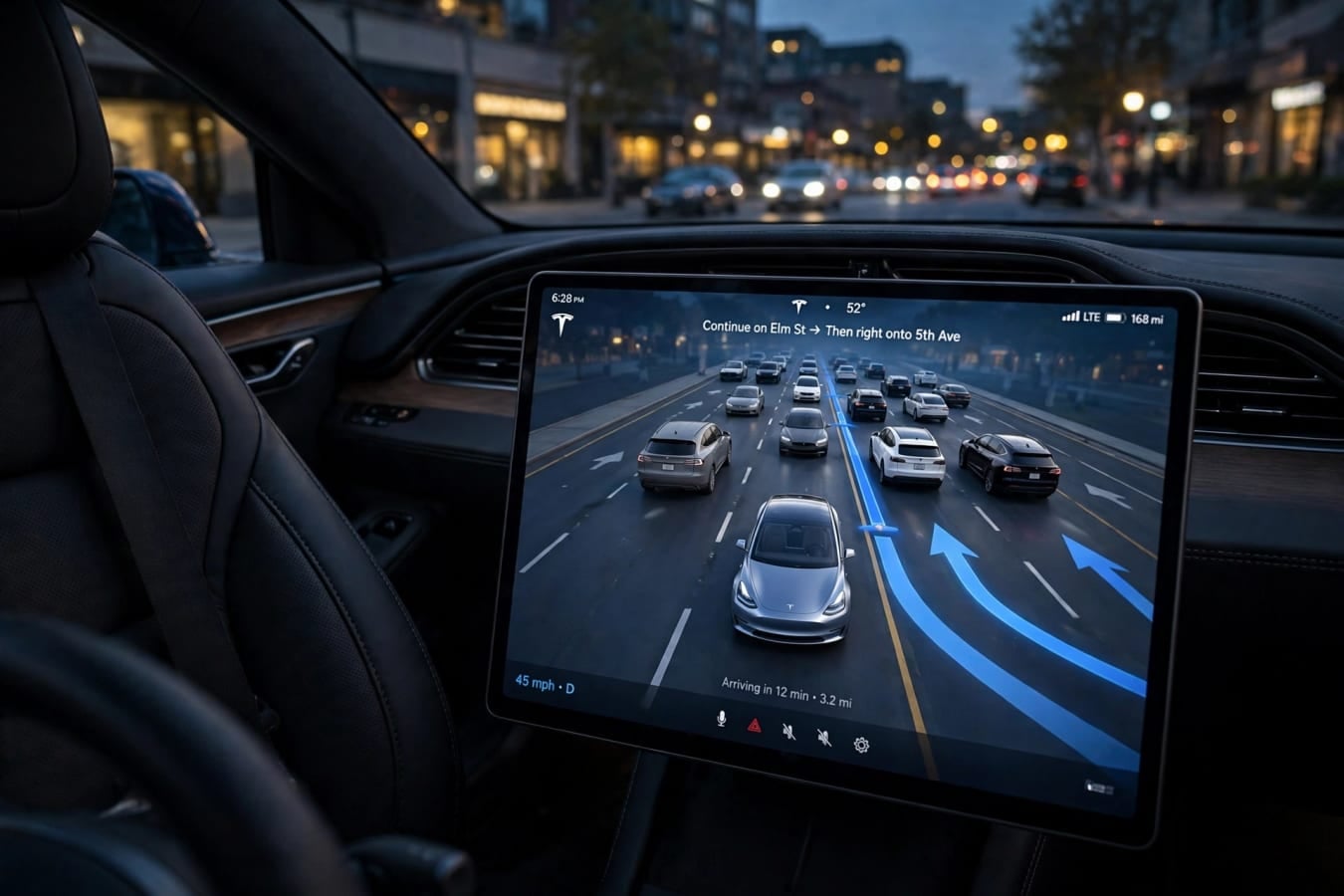
- The headline feature is Reality View, a live, photorealistic 3D display of the road that shows what the car is planning to do.
- Tesla claims v15 delivers 25 times better handling of safety-critical cases, based on a new vision system trained on millions of internet videos.
- The update targets FSD's weakest spots: reading speed signs, avoiding potholes, handling school zones, and slowing for speed cameras.
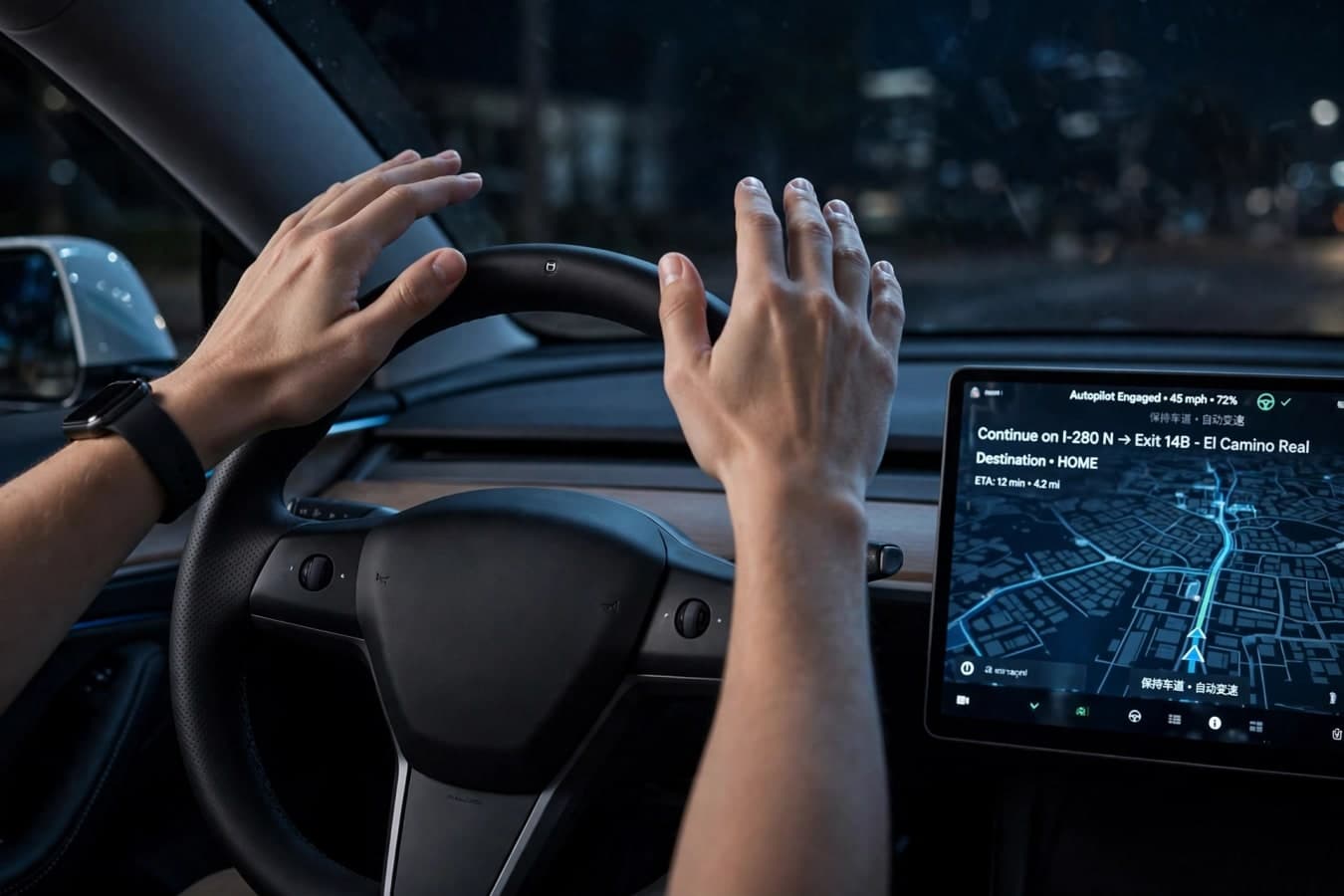
- A wider release is expected in December as part of Tesla's 2026 Holiday Update. FSD remains a supervised system, and the driver must stay ready to take over.
What v15 changes
Tesla announced the rollout on X on November 21, and its Tesla Super Intelligence account followed up with the full release notes. The company's message was blunt: "v15 upgrades every part of the end-to-end driving network." The first cars to get it are members of Tesla's Early Access Program. The update, version 2026.38.6.11 carrying FSD v15.0.1, was already showing up in fleet tracking data by November 22. Tesla has not said which models or hardware versions get it first, though it has previously told investors that its AI4 computer, also known as HW4, is enough to run v15. Elon Musk said v15 "goes to wide release next month" and confirmed it will arrive with this year's holiday update. The release notes list a long set of improvements. Here is what matters most.
- A new vision encoder, shared between FSD, Robotaxi, and the Optimus humanoid robot, trained on millions of internet videos for better generalization. Tesla says this improves the critical intervention rate by 25 times.
- Tesla Reality View, also called Tesla Augmented Reality in the release notes, a new live visualization that replaces the old driving display.
- Navigation rebuilt on an end-to-end learned model using route preference data from the fleet. It learns the start and end of trips for now, with full-route learning promised in later v15 releases.
- Better parking, using your personal parking history to pick a spot, with the map now showing multiple parking options at your destination.
- Better detection of road signs, small animals, road debris, and chains.
- Better detection of potholes, road details, and avoidance of deep standing water.
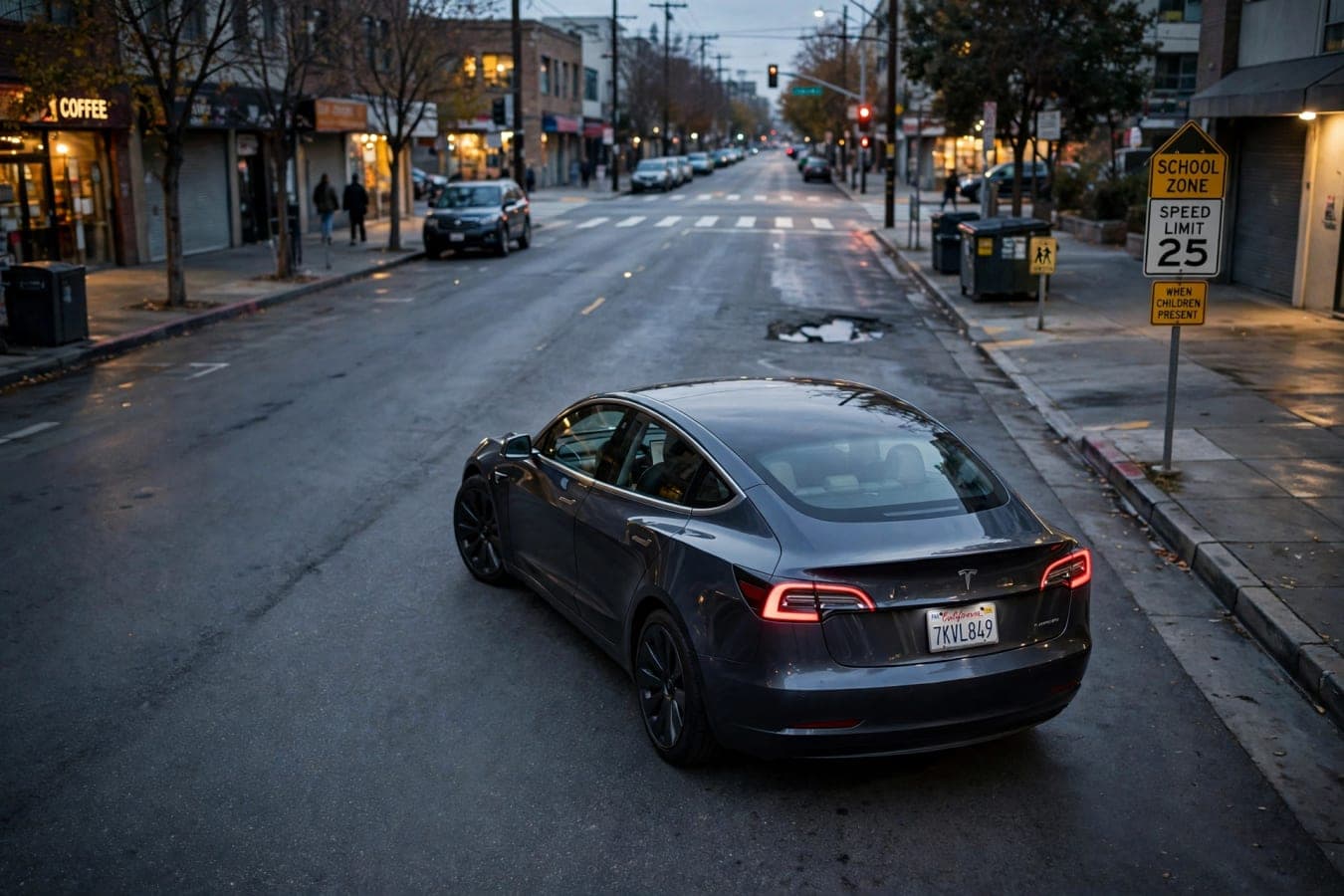
- Better speed handling for each driver profile, including school zones, speed limits, and bad weather.
- Driver monitoring that works better when the driver wears hats or sunglasses, with less strictness in higher-speed driver profiles.
- Autoshift unified with FSD-based gear predictions, so the car picks drive or reverse more intelligently.
- FSD can now slow down for speed cameras, and a new Bike Rack Mode lets FSD work with a bike rack or similar hitch accessory.
Reality View: the feature you can actually see
Reality View is the part of v15 that drivers will notice immediately. It replaces Tesla's familiar simplified driving graphics with a detailed, live rendering of the street around the car, streamed from a virtual camera above and behind the vehicle. Tesla describes it as a real-time generative visualization that lets you "see and control what FSD is planning to do." Turn arrows are drawn into the scene where the car intends to turn. Pins mark the parking spot it intends to use. The view comes in several modes, including full-screen, a map overlay, a split view, and a quiet mode for drivers who want less on screen. The key detail is who renders it. Tesla's vice president of AI, Ashok Elluswamy, says the same end-to-end driving model that steers the car also renders the view. That means Reality View shows the car's intent, not just a pretty picture of the road. If the car plans to turn left, the arrow appears because the driving model decided to turn left. Musk says drivers can "tap any point" in Reality View to make the car go there, and Tesla's demo video shows a driver doing exactly that at a city intersection. The release notes do not explain how the tap control works or where it is limited, so that part still needs real-world testing. Musk described the new view as "like GTA" on X, a reference to how the overhead, third-person camera resembles a video game. The comparison is apt, and it is also the point: if supervising a self-driving car feels like watching a game, drivers may find it easier to understand what the car is doing and when to step in. Everything shown so far comes from Tesla's own demonstrations. How well Reality View works on real roads, in rain, at night, and in heavy traffic is still to be proven by owners.
The 25x claim, explained
The most quoted number in this release is "25x better handling of safety critical cases." The release notes make clear what that refers to: Tesla says its new vision encoder improves the critical intervention rate by 25 times. A critical intervention is a moment where the driver has to take over to prevent something serious. That is the right metric to watch. The path to unsupervised driving is measured in miles between critical interventions, not in features added. But Tesla does not publish the underlying number, only the multiplier, which makes the claim hard to check. Electrek, which tracks FSD data closely, did the math. Its data from earlier this year suggested FSD v14 could go a couple of thousand miles between critical interventions. A 25 times improvement on that would put v15 at around 50,000 miles between critical interventions, well beyond the roughly 10,000 miles Electrek has said Tesla needs for a limited unsupervised service. That is Electrek's estimate, not Tesla's number, and it assumes the improvement holds across the whole fleet rather than in ideal conditions. Musk has set expectations high before. In April he wrote that v15 "will far exceed human levels of safety, even in completely unsupervised and complex situations." He had said similar things about v12 and v14. In August, Tesla told JPMorgan that v15 is a "step-change" built on seven core technologies, with about 40 percent of them already running in its Robotaxi fleet in Austin. The honest position is this: if the 25 times figure holds up in independent testing, v15 is the biggest step toward unsupervised driving Tesla has ever shipped. Until owners and independent testers put miles on it, it is a company claim, not a verified result.
v15 goes after FSD's biggest weak spots
What stands out in the release notes is where Tesla is focusing. Almost every driving improvement targets an area where FSD struggles today, and where owners and regulators have complained loudest.
Speed signs are a big one. In a test published in September by Brussels nonprofit Johanna.be, FSD exceeded the limit in 55 percent of the 30 km/h zones it drove through, averaging 44 km/h. In most of those zones, the car's screen showed a 50 km/h limit. It had not read the sign.
Potholes are another. In August, Musk said pothole avoidance was "coming soon," something he had already promised back in 2019. Today, FSD still drives straight through them. The v15 release notes promise improved detection of potholes and road details, and avoidance of deep standing water.
School zones are on the list too. The US National Highway Traffic Safety Administration is reviewing a petition claiming Tesla's Robotaxis speed through active school zones, on top of an investigation it opened in October 2025 into FSD traffic-law violations such as running red lights. Slowing for speed cameras fits the same theme, though it also suggests Tesla is comfortable with FSD going over the limit when there is no camera around.
One change goes the other way. Tesla says it is "decreasing strictness" of driver monitoring in higher-speed driver profiles, at a time when drivers falling asleep with FSD engaged keep making headlines, and when Tesla is tightening monitoring in Europe at regulators' request. That is a trade-off worth watching as v15 reaches more cars.
Two steps forward, one step back
FSD has never improved in a straight line. Every major version has brought real gains along with new problems, and point releases regularly go backward. When v14 arrived in October 2025, it came with hallucinations, brake stabbing, and excessive speeding, and early crowdsourced data showed about 732 miles between critical disengagements, below what was expected. It then improved a lot. Then the v14.2 updates went backward, before Musk sold v14.3 as the version where "the last big piece of the puzzle finally lands." Seven months and a long string of point releases later, owners are still supervising, and Tesla now needs v15 to deliver what v14.3 was supposed to. The pattern is a warning against taking any single release's claims at face value, including this one. That history does not make v15 unimportant. The scale of the change is different this time: a new vision encoder shared across FSD, Robotaxi, and Optimus, a rebuilt visualization, and a navigation system that learns from the fleet. If those pieces work together, v15 could be the version where the Robotaxi service in Austin stops being a small pilot and starts to scale.
What to watch next
- The wide release in December will be the real test. Early Access drivers are enthusiasts; the holiday update will put v15 in the hands of ordinary owners in far more situations.
- Independent safety data matters more than Tesla's multiplier. Watch for crowdsourced disengagement figures and any NHTSA response in the weeks after the wide release.
- The school zone and speed camera improvements will be tested against the NHTSA petition and the October 2025 investigation. Regulators will want to see behavior change, not just release notes.
- Reality View's tap-to-direct feature needs independent testing. If it works reliably, it changes how drivers interact with FSD. If it is flaky, it is a demo feature.
- Robotaxi expansion is the commercial prize. Tesla has said about 40 percent of v15's core technologies already run in its Austin fleet. Watch whether the Austin service expands or loosens its safety monitors after v15 rolls out widely.
The bottom line
- FSD v15 is Tesla's biggest self-driving update of 2026, with a new vision system, a rebuilt navigation model, and the eye-catching Reality View display.
- The 25 times safety claim is the number that matters, and it is also the number Tesla has not backed with published data. Treat it as a claim to be tested, not a result.
- The update targets the exact weaknesses that have held FSD back: signs, potholes, school zones, and speed limits. If it fixes them, it is a very good update.
- The wide release in December, with the holiday update, is when v15 will be judged. Until then, the visuals are impressive, and the driving is unproven.
FAQs
When did Tesla start rolling out FSD v15?
Tesla began the rollout on Saturday, November 21, 2026, starting with Early Access Program drivers. A wider release is expected in December with the 2026 Holiday Update.
What is Tesla Reality View?
A live, generative 3D visualization of the road around the car, shown on the center screen from a virtual overhead camera. It shows what FSD is planning to do, including turns and parking spots.
What does the 25x safety claim mean?
Tesla says the new vision encoder improves the critical intervention rate by 25 times. Tesla has not published the underlying number, so the claim is unverified by independent data so far.
Which cars get FSD v15?
Tesla has not published a full list of eligible vehicles. It has previously said its AI4 (HW4) computer is enough to run v15.
Is FSD v15 fully self-driving?
No. FSD v15 is still a supervised system. The driver must stay attentive and ready to take over at any moment.
What does FSD v15 improve?
Sign detection, pothole and standing water avoidance, school zone and speed limit handling, navigation, parking spot selection, driver monitoring, and Autoshift, plus slowing for speed cameras and a new Bike Rack Mode.
Was this article helpful?
Explore Specs, Comparisons & Related Topics

Written By
TechorCoffeeEditorial Team
The TechOrCoffee Editorial Team covers consumer hardware, artificial intelligence, software engineering, and regional smartphone & laptop market analysis.
Comments (0)
Leave a Comment
Read Next
Fri Oct 30 2026
Drupal Commerce Attack Puts Online Stores at Risk
Why attackers target e-commerce, what a Drupal Commerce attack costs merchants and customers, and what to watch next.
Thu Nov 12 2026
Jensen Huang Resigns as NVIDIA CEO: Colette Kress Takes Over
Jensen Huang resigns as NVIDIA CEO, with CFO Colette Kress named interim chief as the company faces an investigation and leadership transition.
Sat Nov 14 2026
Apple Support Community Closes on November 20, 2026
Apple is closing its Support Community on 20 November 2026 after 28 years, and the forums are already read-only. What to save before it disappears.