Tesla FSD v15 Is Here: 25x Safer Driving, Reality View

Published (Updated )
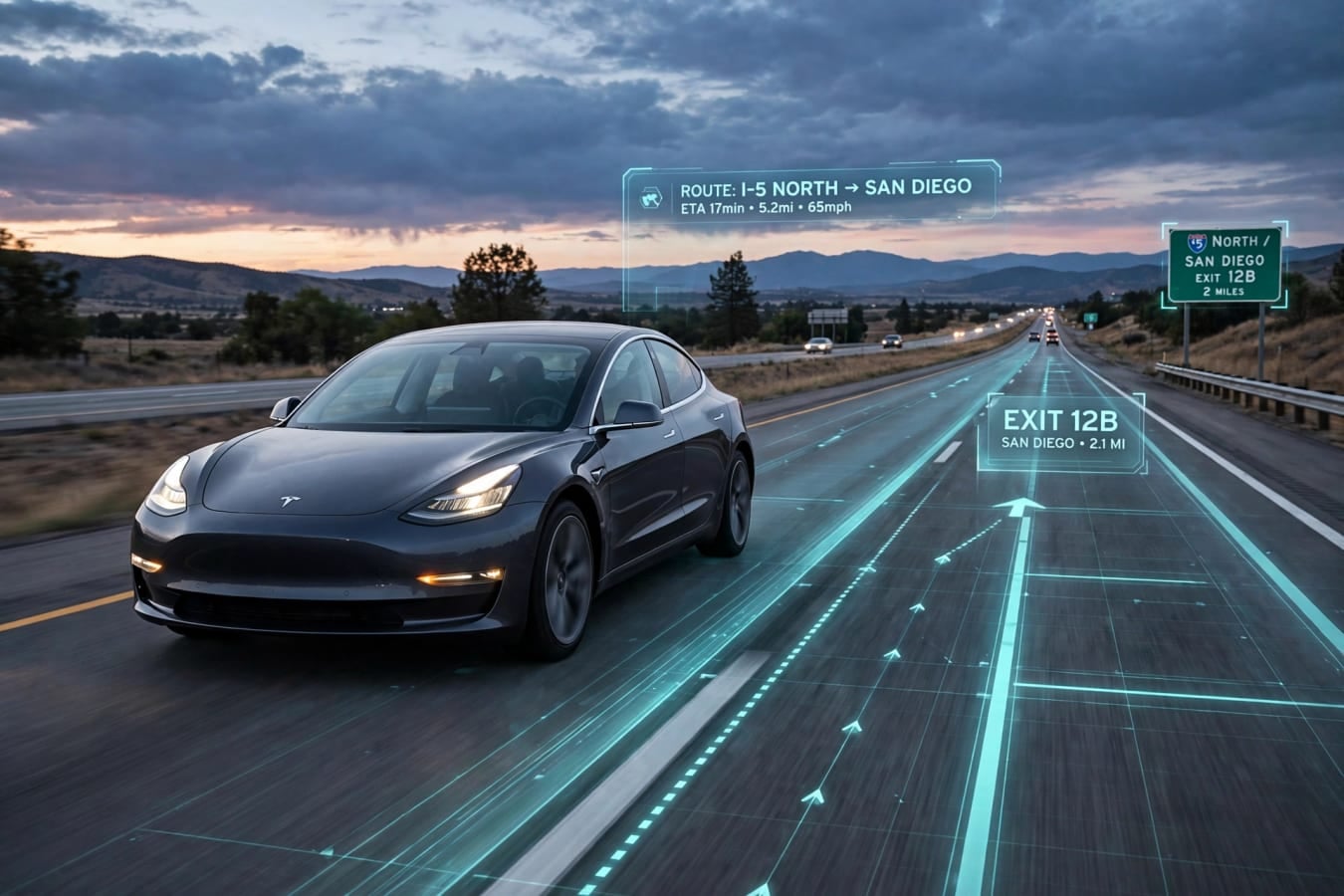
Quick answer
- Tesla started rolling out Full Self-Driving v15 on November 21, 2026, to a first wave of customers.
- Tesla claims the update delivers 25x better handling of safety critical cases, but it has not published the underlying data behind that number.
- The headline new feature is Reality View, a live 3D visualization that shows drivers what the car sees and what it plans to do next.
- The update also targets FSD's known weak spots: missed road signs, potholes, speed cameras and school zones.
- A wide release is expected in December with Tesla's 2026 Holiday Update.
- FSD v15 is still supervised driving. The driver must stay alert and be ready to take over at any moment.
What Tesla announced
- Tesla announced the rollout in a post on its official X account on November 21, 2026.
- The post said FSD v15 was "now starting to roll out" and that it upgrades "every part of the end-to-end driving network".
- Tesla's Super Intelligence account followed up minutes later with the full release notes.
- Ashok Elluswamy, who leads Tesla's AI software team, wrote that v15 was "releasing to the first wave of customers today".
- The first builds are going to Early Access Program members, according to reports of the rollout.
- Tesla has not said exactly which cars get it first, which regions are included, or how many owners are in the first wave.
- Elon Musk said earlier on November 21 that the wide release would come in December, as part of the 2026 Holiday Update.
- That means most owners will still wait weeks before v15 reaches their cars.
What is new in FSD v15
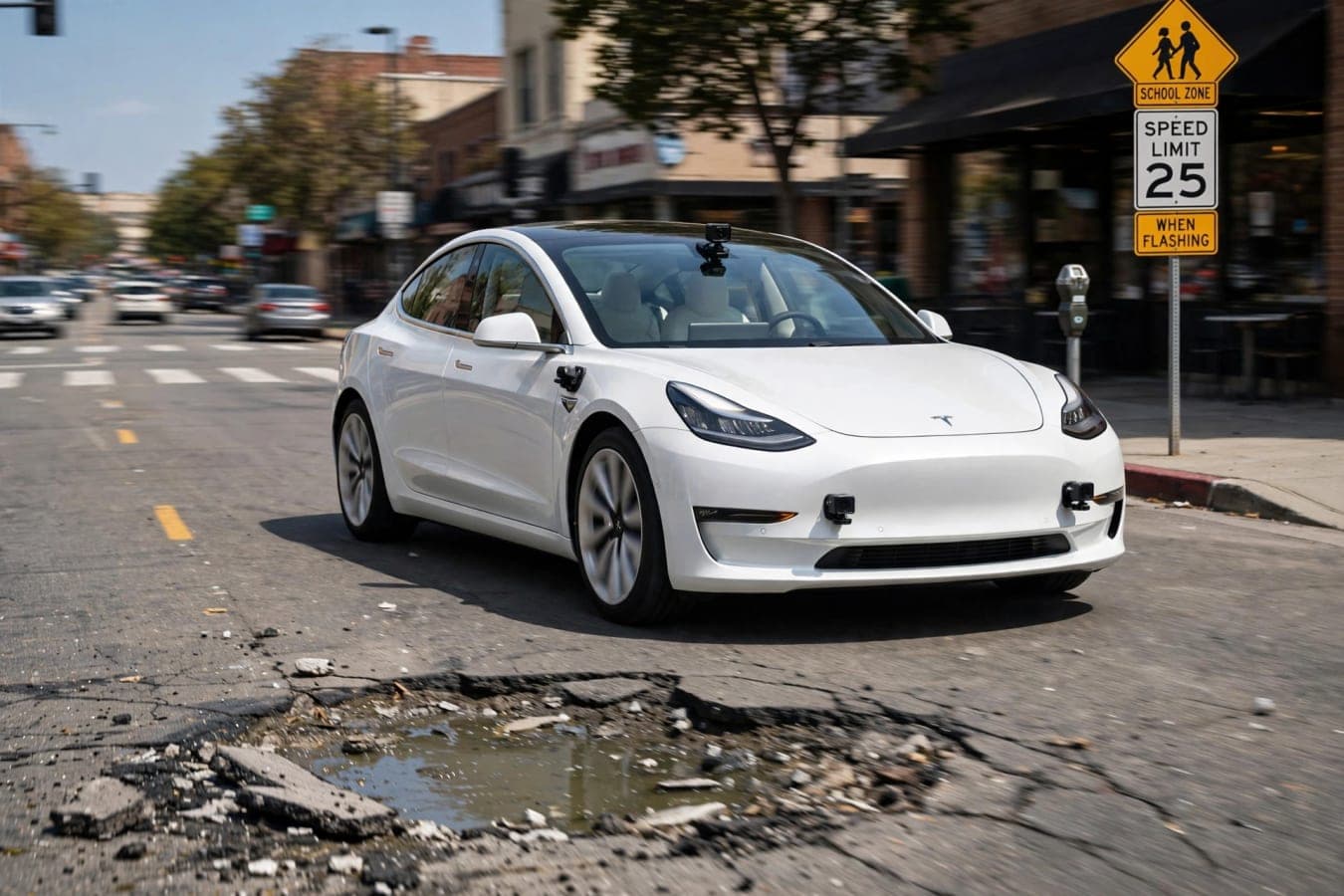
- The update touches almost every part of the driving system. Here is what Tesla says has changed.
- A new vision encoder: The part of the system that turns camera images into an understanding of the road has been rebuilt. Tesla says it is trained on millions of internet videos, which should help it handle unfamiliar situations better.
- Shared across three products: The same vision encoder now runs in FSD, in Tesla's Robotaxi service and in the Optimus humanoid robot. Tesla is betting that one shared vision system can serve cars, taxis and robots.
- 25x better critical intervention rate: Tesla says the new encoder improves the rate at which a driver has to step in to prevent a problem by 25 times. This is the headline number, and it is also the least verifiable one.
- Better sign detection: The system now reads road signs more reliably, including speed limit signs it used to miss.
- Potholes and road debris: FSD v15 spots more small animals, debris, chains and finer road details, including potholes. These are the everyday hazards that have tripped up earlier versions.
- School zones: The car now handles speed limits in school zones better, slowing down where it should.
- Speed cameras: FSD can now slow down for speed cameras, a small but practical change for daily driving.
- Bike Rack Mode: A new mode lets drivers use FSD with a bike rack or a similar hitch accessory attached, something earlier versions did not support well.
- Smarter navigation: The car now learns the start and end of a driver's regular trips. Tesla says later v15 releases will extend that learning to the entire route.
- Reality View: A new live visualization replaces the old separate model signals with a single end-to-end view of the drive.
The 25x claim: what it means and what it does not prove
- The "25x" figure is the most important number in Tesla's announcement, and it is also the one drivers should treat with the most caution.
- Tesla's main post says v15 offers "25x better handling of safety critical cases".
- The release notes say the new vision encoder improves the "critical intervention rate" by 25x.
- A critical intervention is a moment when the driver has to step in to prevent a problem. It is the right metric for measuring progress toward unsupervised driving, because it counts the failures that matter most.
- But Tesla has shared only the multiplier, not the actual rate. It has not said how many miles v14 covered between critical interventions, how v15 was tested, or under what conditions the 25x figure was measured.
- Without a baseline, the claim cannot be checked independently. A 25x improvement on a poor baseline is still poor, and a 25x improvement on a strong baseline would be remarkable. Tesla has not said which one it is.
- Independent analysts have tried to fill in the gap. Electrek estimated that if the improvement applied across the fleet, v15 could reach roughly 50,000 miles between critical interventions, well beyond the roughly 10,000 miles the site says Tesla needs for a limited unsupervised service. That estimate is Electrek's, not Tesla's, and it rests on assumptions about v14's real-world performance.
- Tesla also has not published disengagement data that would let outsiders settle the question.
- The honest way to read the claim is this: Tesla believes v15 is a large step forward in safety, and the real test will be what owners report in the weeks after the wide release.
- Earlier major FSD versions brought real gains but also new problems, and some point releases went backwards on things the previous version handled well. That history is a good reason to wait for real-world reports before treating 25x as proven.
Reality View: the flashiest part of v15
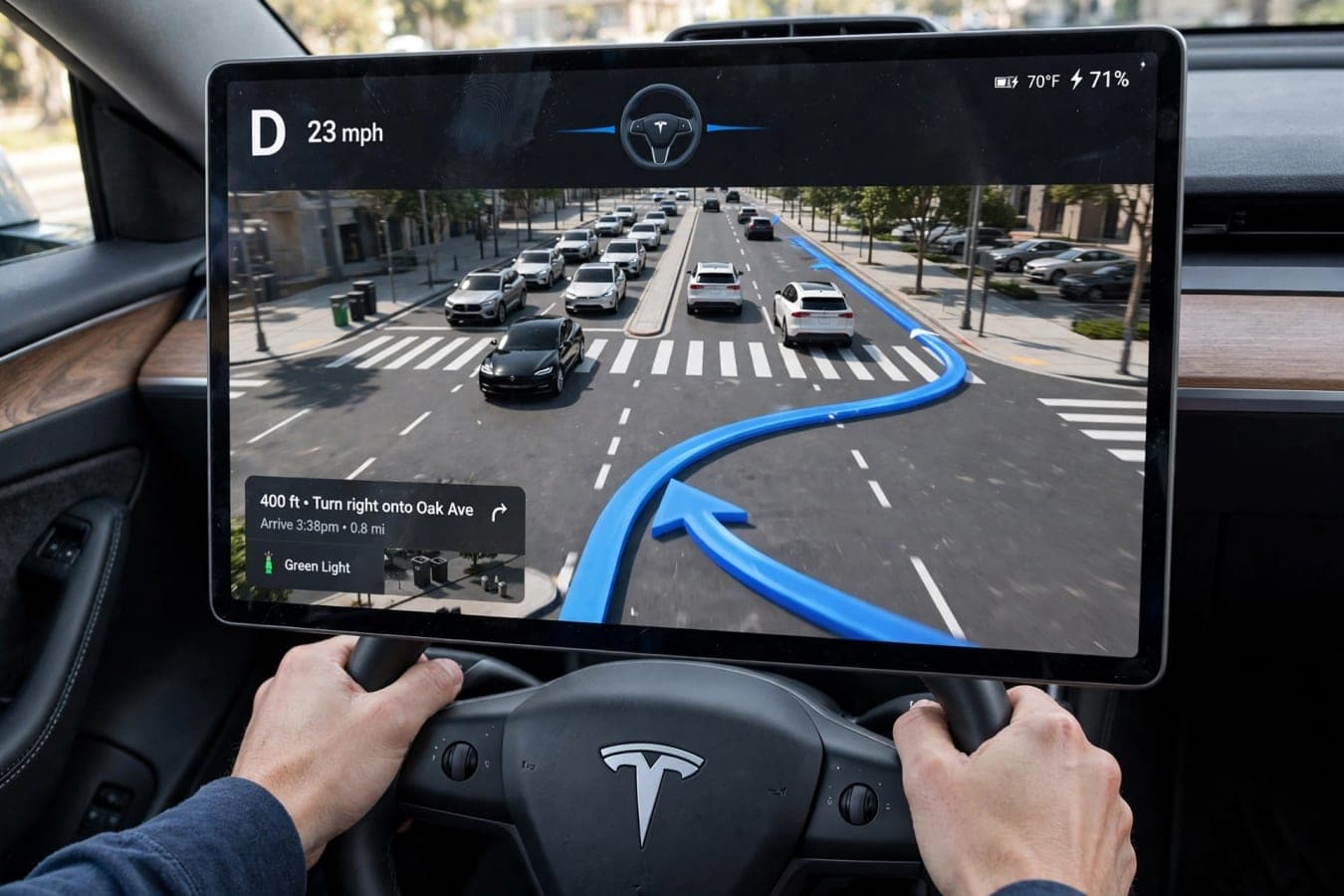
- Reality View is the most visible change in v15, and it is the one owners will notice first.
- Tesla calls it "Reality View" in its announcement and "Tesla Augmented Reality" in the release notes.
- It is a new real-time generative driving visualization that streams a view from a virtual camera above the vehicle.
- The centre screen shows a detailed, rendered version of the street around the car, far beyond the current FSD visualization.
- Drivers can see the road, other vehicles, lane markings and the route the car plans to take, including arrows for planned turns and pins for intended parking spots.
- Tesla says the visualization lets the driver "see and control what FSD is planning to do".
- The new view replaces all the separate model signals with a single end-to-end visualization, and Tesla says it uses less compute than the old system.
- The same model renders the scene, according to Tesla AI software chief Ashok Elluswamy.
- A video Tesla shared with the announcement shows the new view in action, and it looks far more detailed than anything FSD has shown before.
- The practical value is transparency. If drivers can see what the car intends to do, they can spot a mistake earlier and take over sooner. That matters most in the edge cases where FSD has struggled.
Who gets FSD v15 first
- The rollout is happening in waves, as Tesla usually does with major FSD releases.
- First wave: Early Access Program members are getting the first builds now.
- Wide release: Elon Musk said the wide release comes in December with the 2026 Holiday Update.
- Hardware: Tesla has previously told investors that its AI4 computer, also known as HW4, is enough to run v15. The company has not confirmed which hardware versions are in the first wave.
- What it costs: FSD Supervised is available in the US as a $99-a-month subscription or as a one-time $8,000 purchase. Owners who already pay for FSD will get v15 as a software update when their car is included in the rollout.
- What is still supervised: FSD v15 is still Full Self-Driving (Supervised). Drivers need to pay attention and be ready to take over. It is not unsupervised driving, and it does not turn a Tesla into a robotaxi.
- No build number yet: Tesla's release notes give no build number, no list of eligible cars and no timing beyond the first wave. Owners should check their car's software tab for the update rather than expecting a fixed date.
Why v15 matters beyond one update
- FSD v15 is more than a routine software release. It is the version Tesla is building its next businesses on.
- Robotaxi: The same vision encoder runs in Tesla's Robotaxi service. If v15 really is 25x better at handling safety critical cases, that directly affects how fast Tesla can expand driverless rides. The company has been running robotaxis in Austin, Texas, and the quality of the underlying driving model decides how quickly that service can grow.
- Optimus: The same encoder also runs in Optimus, Tesla's humanoid robot. Training one vision system on millions of internet videos and sharing it across cars, taxis and robots is a bet that driving, navigating a street and moving through a room are versions of the same problem.
- The unsupervised question: Tesla's long-term goal is unsupervised driving, where no driver needs to be ready to take over. The critical intervention rate is the metric that decides whether that is close. A genuine 25x improvement would be a big step toward it. An unverified one is a promise, not proof.
- Competition: Other companies are pushing hard on the same ground. Waymo runs driverless rides in several US cities, and traditional carmakers are adding hands-free highway systems. Tesla's advantage has always been its fleet size and its data. V15 is a test of whether that data advantage is turning into a real safety advantage.
- The December test: The wide release in December will put v15 in the hands of hundreds of thousands of owners at once. Their reports, videos and intervention data will say more about the 25x claim than any announcement can.
What to watch next
- Real-world intervention reports: Owners in the first wave will post their experiences within days. Watch for how often they have to take over, especially in the situations v15 claims to fix.
- The Holiday Update: The December wide release is the real launch. That is when v15's quality will be judged by the broader owner base.
- Robotaxi expansion: If v15 performs well, expect Tesla to talk about expanding its driverless service. If it struggles, expect a slower rollout.
- Regulator attention: US safety regulators watch FSD closely. A major new version with a big safety claim will draw scrutiny, especially if early reports show problems.
- Independent testing: Third-party testers and data trackers will try to measure the critical intervention rate themselves. Their numbers, not Tesla's multiplier, will settle the debate.
- The next point release: Tesla usually follows a major FSD version with quick fixes. The speed and size of the first v15 point release will say a lot about how smooth the launch really was.
Bottom line
- FSD v15 is Tesla's biggest self-driving update in a long time, and it arrives with a bold claim and a genuinely impressive new visualization.
- The 25x safety figure grabs attention, but Tesla has not shared the numbers behind it, so real-world results will matter more than the headline.
- Reality View is a real improvement in transparency, and the fixes for signs, potholes, school zones and speed cameras target the exact problems owners complain about most.
- If you are in the first wave, try it and watch it closely. If you are waiting for December, wait for the early reports before deciding what the 25x number really means.
FAQs
What is Tesla FSD v15?
FSD v15 is the newest version of Tesla's Full Self-Driving software. It upgrades the end-to-end driving network with a new vision encoder, adds the Reality View visualization, and improves detection of road signs, potholes, school zones and speed cameras.
When will FSD v15 be available?
Tesla started rolling out v15 to a first wave of customers on November 21, 2026. Elon Musk said the wide release will come in December 2026 as part of the 2026 Holiday Update.
What does the 25x safety claim mean?
Tesla says v15 improves the critical intervention rate by 25 times. A critical intervention is when a driver has to step in to prevent a problem. Tesla has not published the underlying rate or test data, so the claim cannot be checked independently yet.
What is Reality View in FSD v15?
Reality View is a new live 3D visualization on the car's centre screen. It shows a rendered view of the street around the car from a virtual camera above it, including the route FSD plans to take, so drivers can see and control what the car intends to do.
Which Teslas can run FSD v15?
Tesla has previously said its AI4 computer (HW4) is enough to run v15. The company has not confirmed the full list of eligible cars or hardware versions for the first wave.
Is FSD v15 fully self-driving?
No. FSD v15 is still Full Self-Driving (Supervised). The driver must stay alert, watch the road and be ready to take over at any time. It is not unsupervised driving.
Was this article helpful?
Explore Specs, Comparisons & Related Topics

Written By
TechorCoffeeEditorial Team
The TechOrCoffee Editorial Team covers consumer hardware, artificial intelligence, software engineering, and regional smartphone & laptop market analysis.
Comments (0)
Leave a Comment
Read Next
Fri Oct 30 2026
Drupal Commerce Attack Puts Online Stores at Risk
Why attackers target e-commerce, what a Drupal Commerce attack costs merchants and customers, and what to watch next.
Thu Nov 12 2026
Jensen Huang Resigns as NVIDIA CEO: Colette Kress Takes Over
Jensen Huang resigns as NVIDIA CEO, with CFO Colette Kress named interim chief as the company faces an investigation and leadership transition.
Sat Nov 14 2026
Apple Support Community Closes on November 20, 2026
Apple is closing its Support Community on 20 November 2026 after 28 years, and the forums are already read-only. What to save before it disappears.