Ubisoft Creates Motherbrain, a Generative AI Studio

Published (Updated )

Quick answer
- Ubisoft announced Motherbrain, a new subsidiary devoted to generative AI for gameplay, on November 19, 2026.
- The announcement came as part of Ubisoft's first-half 2026-27 financial results and an update to its operating model.
- Motherbrain's stated focus is new player experiences, smart NPCs with memory, and AI game masters that can manage large-scale systemic worlds.
- It will develop its own proprietary gameplay technology, rather than only using off-the-shelf AI tools.
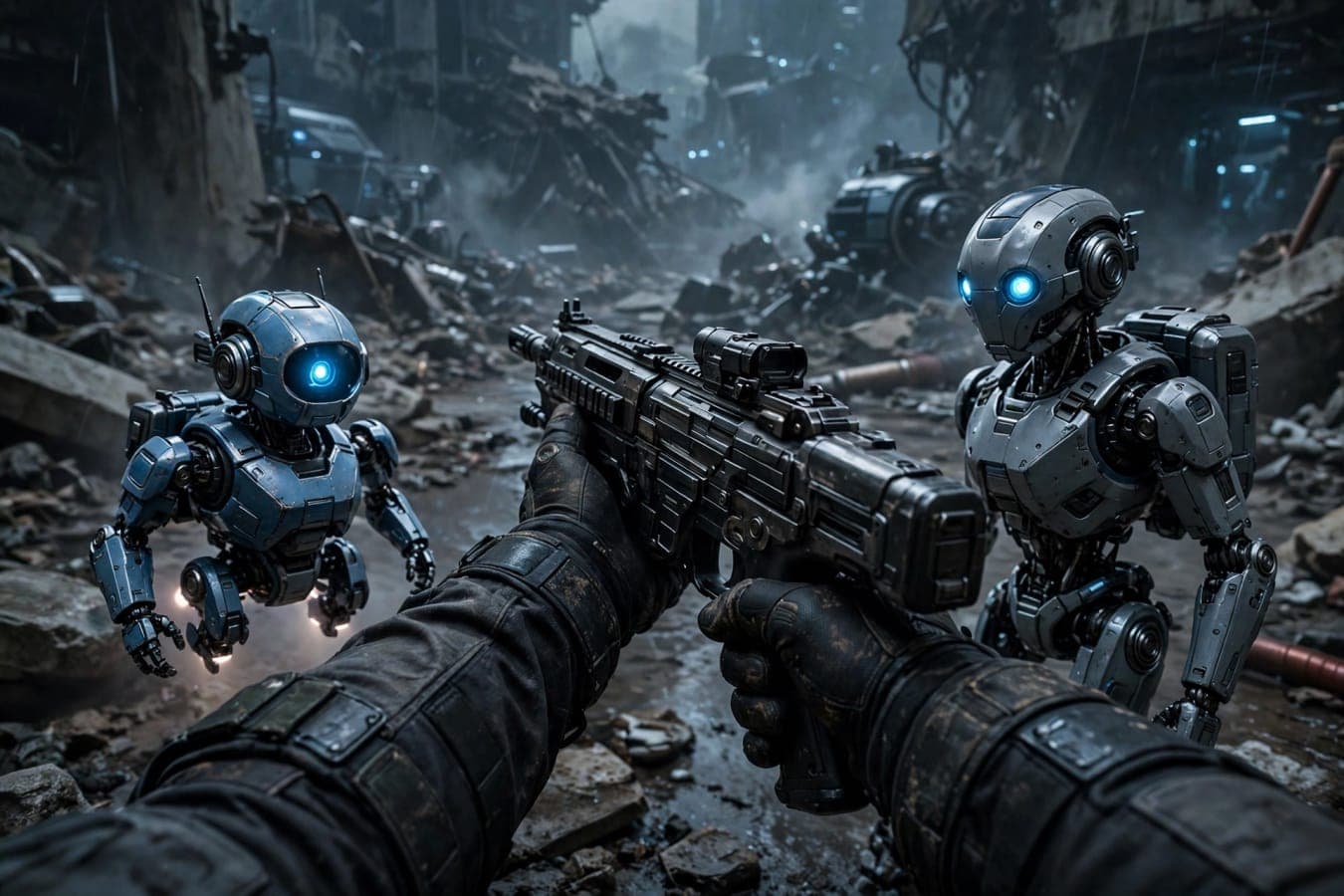
- Motherbrain is the team behind Teammates, Ubisoft's first playable generative AI experience, a first-person shooter in which the player works with two robotic AI companions controlled by real-time voice commands.
- Ubisoft has not said which commercial games will use Motherbrain's technology, when players will see it, or what its budget and staffing are.
- On the same day, Ubisoft announced another round of layoffs affecting 166 jobs across two major studios (128 in Montreal and 38 in Quebec City).
What Ubisoft announced
Ubisoft revealed Motherbrain on November 19, 2026, alongside its financial results for the first half of its 2026-27 year and an update on how the company is organised. The timing matters, because the new studio was presented as part of a wider change to Ubisoft's operating model, not as a standalone demo or a one-off experiment. Motherbrain is a subsidiary of Ubisoft. That structure gives it a distinct identity inside the company while keeping it under the Ubisoft umbrella. It is not a separate publisher, and it is not an outside partner brought in for a single project. It is Ubisoft's own dedicated home for generative AI in gameplay. The announcement is notable for what it says about where Ubisoft thinks AI belongs in games. Many publishers talk about AI mainly as a way to make development faster or cheaper. Ubisoft is positioning Motherbrain differently: as a studio whose job is to use generative AI to change what players actually do and feel inside a game. That distinction is the heart of the announcement. Motherbrain is not being sold as a production shortcut. It is being sold as a gameplay studio.
What Motherbrain will do
Ubisoft has set out three main areas for Motherbrain, and each one points at a different kind of change for players.
- New player experiences. Motherbrain will work on experiences that generative AI makes possible, rather than simply speeding up the making of familiar ones.
- Smart NPCs with memory. Non-player characters that can remember what the player did, said and decided, and react in ways that carry across a play session.
- AI game masters for large-scale systemic worlds. Systems that can manage complex, living game worlds in real time, adjusting events, characters and challenges as the player moves through them. Together, those three areas describe a shift from scripted games to games that respond more freely. A scripted NPC repeats the same lines and follows the same path. An NPC with memory could, in principle, remember a promise the player made, a favour the player did, or a betrayal the player committed, and behave differently because of it. An AI game master takes that idea further. Instead of a world that runs on fixed schedules and pre-written events, the game master could watch what the player is doing and reshape the world around it. That is the ambition Ubisoft is describing, even if the company has not yet shown what it will look like in a finished commercial game. Motherbrain will also develop proprietary gameplay technology. In plain terms, Ubisoft wants to own the underlying systems, not rent them from someone else. That matters for two reasons:
- It gives Ubisoft control over how the technology works in its own games.
- It gives the company something it can build on across many projects, rather than starting again each time. Ubisoft also says Motherbrain will serve creators inside its Creative House ecosystem as well as creators beyond it. Creative House is Ubisoft's name for the group of studios and teams that make its games, so the message is that Motherbrain's work is meant to reach across the company, not stay locked inside one team. The studio will also form partnerships with selected technology companies. Ubisoft has not named those partners, and it has not said what form the partnerships will take. That detail is undisclosed for now.

Teammates: the first playable proof
Motherbrain is not starting from zero. It is the team behind Teammates, which Ubisoft describes as its first playable generative AI experience. Teammates is a first-person shooter. The player works alongside two robotic AI companions, and directs them through real-time voice commands. That is the core idea: instead of pressing buttons to issue orders, or relying on companions that follow a simple script, the player talks to the two robots and they respond. The game was revealed in November 2025. Some members of the media have played it, which means it exists as a working experience rather than only as a concept video or a slide in a presentation. Teammates matters because it is the clearest public example of what Motherbrain means by generative AI for gameplay. The companions are not just following the player around. They are meant to understand spoken instructions, interpret them in the moment, and act on them inside a live shooter. Ubisoft has not said whether Teammates will become a full commercial release, or whether it will stay as a playable experiment. That question is undisclosed, along with the wider question of which games will use the technology first. What Teammates does show is the direction of travel. Motherbrain's work starts with companions a player can talk to, and points towards NPCs with memory and game masters that can run whole worlds.
What Ubisoft has not said
For all the detail in the announcement, several of the questions players will ask first remain unanswered. Ubisoft has not said:
- Which commercial games will use Motherbrain's technology.
- When players will see that technology in a game they can buy.
- What Motherbrain's budget is.
- How many people work there, or how big the team will become.
- What form the systems will take beyond Teammates. All of that is undisclosed. It would be wrong to present guesses about any of it as fact, and this article does not do so.
The layoffs announced on the same day
The Motherbrain announcement did not arrive on its own. On the same day, November 19, 2026, Ubisoft announced another round of layoffs affecting 166 jobs across two major studios. That pairing will shape how the announcement is received. A company announcing a new AI studio on the same day it cuts jobs invites an obvious question: is AI replacing people? Ubisoft has not framed Motherbrain that way. Its stated remit is gameplay innovation, not cutting development costs. But the timing means the two announcements will be read together, whatever the company's intent. The layoffs are also part of a wider pattern across the games industry, where studios have cut jobs even while investing in new technology. For the people affected, the news is about jobs lost, not about future game features. For players, it is a reminder that a new studio announcement and a round of cuts can happen at the same company on the same day. Ubisoft has not said which roles were affected, beyond the number of jobs and the fact that two major studios were involved. Further detail on the layoffs has not been confirmed.
Why this matters for players
Generative AI has been one of the most argued-over topics in gaming for the past two years. Supporters say it can make games more alive, more personal and more surprising. Critics worry it will replace human creativity, produce bland content, or be used to cut jobs. Motherbrain sits directly in the middle of that argument. If its ideas work, the difference for players could be real:
- NPCs that remember you. A character who recalls your earlier choices could make a long game feel more personal, because your history with that character would be unique to your playthrough.
- Companions you can talk to. Voice-directed teammates, like those in Teammates, could make co-operative play feel more natural, especially for players who play alone.
- Worlds that adapt. An AI game master could change a world's events based on what the player has done, rather than running the same script for everyone. Those are the promises. The risks are also clear, and players in the US, the UK and Europe have been vocal about them:
- Characters that feel wrong. An NPC that misunderstands the player, or says something out of character, can break immersion faster than a scripted line ever could.
- Repetition dressed up as variety. Generative systems can produce a lot of content that still feels the same. Quantity is not the same as quality.
- Loss of the human touch. Games are made by writers, designers and actors. Players care about who made the games they love, and about whether AI is replacing that work.
The wider debate this week
Motherbrain was announced in a week when AI in games was already under heavy discussion, and two other stories help explain the mood around it. Earlier in the week, Embark Studios faced criticism after replacing esports commentators in a highlights reel for The Finals with AI-powered characters. The reaction was negative, and it showed how sensitive players and viewers are to AI replacing human voices and personalities, even in a short video. The Finals is a live, competitive game, and its community pays close attention to how it is presented. Swapping real commentators for AI versions touched a nerve. On November 18, former Take-Two CEO Ben Feder said the Western game market was "one Toy Story moment away" from consumer acceptance of AI in video games. The reference is to the moment when audiences accepted computer animation as a legitimate art form, after years of doubt. Feder's point is that acceptance may come suddenly, when a single game or experience shows players what AI can do in a way that wins them over. Until that moment arrives, scepticism remains the default.
The unions' manifesto: a short note
There is one more piece of context worth a brief mention, because it was already covered in detail in an earlier TechOrCoffee article. On November 16, 2026, six European game-industry unions published a manifesto on generative AI. The document sets out the unions' position on how AI should be used in game development, and it reflects the same concerns about jobs, credit and working conditions that run through the wider debate. Readers who want the full detail can find it in that earlier article. It is mentioned here only because it forms part of the backdrop to Ubisoft's announcement three days later.
Assassin's Creed and what comes next
Ubisoft is also continuing work on the next generation of Assassin's Creed games, including Project Hexe, which is set during the European Witch Trials. That project was mentioned alongside the Motherbrain news, and it is a reminder that Ubisoft's biggest franchises are still moving forward while the company experiments with AI. Project Hexe is a different kind of bet from Motherbrain. It is a new setting for a long-running series, built around a dark and unusual period of European history. The Witch Trials setting suggests a tone quite different from the recent Assassin's Creed games, and fans in the US, the UK and Europe have been watching for news about it for some time. Ubisoft has not said whether Motherbrain's technology will be used in Assassin's Creed, or in Project Hexe specifically. That connection has not been confirmed, and it should not be assumed. The two announcements sit side by side in Ubisoft's plans, but they are separate projects unless the company says otherwise.
What to watch next
Several things will show whether Motherbrain is a turning point or a footnote. Here is what to watch, in order:
- A named game. The first time Ubisoft says a specific title will use Motherbrain's technology, the announcement will become concrete. Until then, it remains a statement of intent.
- A public demo beyond Teammates. Teammates has been played by some media members. A wider hands-on, or a new playable experience, would show how far the technology has come since November 2025.
- Detail on NPC memory. Smart NPCs with memory are the most interesting promise in the announcement. A demonstration of a character remembering a player across sessions would be the clearest proof that the idea works.
- Partnership names. Ubisoft says Motherbrain will partner with selected technology companies. Naming those partners will show what outside help the studio is bringing in, and what it is building itself.
- Reaction from developers and players. How Ubisoft's own developers talk about Motherbrain, and how players respond to its first public work, will matter as much as the technology itself.
What we still do not know
Honesty about the gaps matters as much as reporting the facts. What is not yet known:
- Which commercial games, if any, will use Motherbrain's technology first.
- When players will see that technology in a game they can buy.
- What Motherbrain's budget and staffing are.
- What form the systems will take beyond Teammates.
- Who Motherbrain's technology partners are.
- Whether Teammates will become a full commercial release. Until Ubisoft answers those questions, the right approach is to follow the confirmed facts, label the rest as undisclosed, and wait for the company to say more.
The bottom line
Ubisoft has created Motherbrain, a new subsidiary devoted to generative AI for gameplay, announced on November 19, 2026 as part of its first-half 2026-27 results and an operating-model update. Its stated remit is new player experiences, smart NPCs with memory, and AI game masters capable of managing large-scale systemic worlds, built on proprietary gameplay technology. It is the team behind Teammates, a first-person shooter revealed in November 2025 in which the player directs two robotic AI companions with real-time voice commands, and some media members have played it. The studio will serve creators inside Ubisoft's Creative House ecosystem and beyond it, and will partner with selected technology companies. At the same time, Ubisoft has not said which games will use the technology, when players will see it, or what its budget and staffing are. On the same day, the company announced layoffs affecting 166 jobs across two major studios. Motherbrain is a clear statement of intent: Ubisoft wants generative AI to change how games play, not just how they are made. Whether that intent becomes a game players love will depend on what the studio ships next, and on whether players accept AI companions, remembering NPCs and AI game masters as a genuine step forward.
FAQs
What is Motherbrain?
Motherbrain is a new Ubisoft subsidiary devoted to generative AI for gameplay, announced on November 19, 2026. Its stated focus is new player experiences, smart NPCs with memory, and AI game masters that can manage large-scale systemic worlds.
What is Teammates?
Teammates is Ubisoft's first playable generative AI experience, made by the Motherbrain team. It is a first-person shooter in which the player works alongside two robotic AI companions directed through real-time voice commands. It was revealed in November 2025 and some media members have played it.
Which games will use Motherbrain's technology?
Ubisoft has not said. The company has not confirmed which commercial games will use Motherbrain's technology, when players will see it, or what form the systems will take beyond Teammates. All of that is undisclosed.
Is Motherbrain just about using AI to make games faster or cheaper?
No, according to Ubisoft's announcement. Motherbrain's stated remit is gameplay innovation, not AI as a production shortcut. It will develop proprietary gameplay technology for new player experiences, smart NPCs and AI game masters.
Did Ubisoft announce layoffs on the same day as Motherbrain?
Yes. On November 19, 2026, Ubisoft also announced another round of layoffs affecting 166 jobs across two major studios. The breakdown is 128 in Montreal and 38 in Quebec City.
What is Project Hexe?
Project Hexe is one of the next generation of Assassin's Creed games Ubisoft is working on, set during the European Witch Trials. Ubisoft has not said whether Motherbrain's technology will be used in Assassin's Creed or in Project Hexe specifically.
Was this article helpful?
Explore Specs, Comparisons & Related Topics

Written By
TechorCoffeeEditorial Team
The TechOrCoffee Editorial Team covers consumer hardware, artificial intelligence, software engineering, and regional smartphone & laptop market analysis.
Comments (0)
Leave a Comment
Read Next

Fri Oct 30 2026
Drupal Commerce Attack Puts Online Stores at Risk
Why attackers target e-commerce, what a Drupal Commerce attack costs merchants and customers, and what to watch next.

Thu Nov 12 2026
Jensen Huang Resigns as NVIDIA CEO: Colette Kress Takes Over
Jensen Huang resigns as NVIDIA CEO, with CFO Colette Kress named interim chief as the company faces an investigation and leadership transition.

Sat Nov 14 2026
Apple Support Community Closes on November 20, 2026
Apple is closing its Support Community on 20 November 2026 after 28 years, and the forums are already read-only. What to save before it disappears.