Anthropic IPO Closes at $119.5B After Greenshoe Boost

Published
Quick answer
- Anthropic closed its initial public offering on November 20, 2026.
- The IPO raised about $93.5 billion in gross proceeds after underwriters fully exercised their option to buy extra shares.
- Anthropic itself received about $91.6 billion of that total.
- A concurrent private placement raised another $26 billion from seven tech giants.
- Combined, the IPO and private placement total about $119.5 billion — the largest fundraising in history.
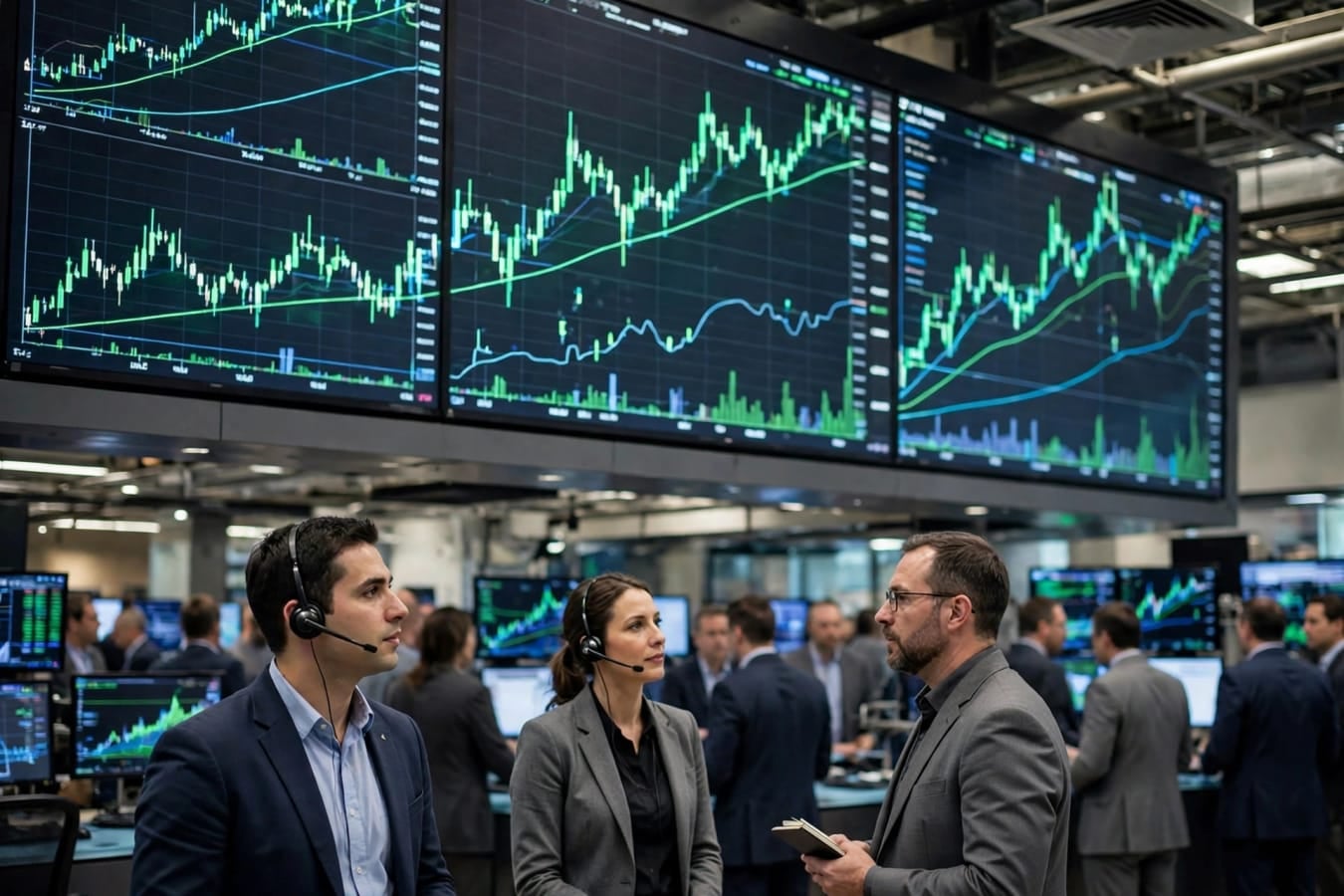
- Anthropic's shares began trading on Nasdaq on November 19 under the ticker ANT.
- The stock opened at $111.50, closed its first day at $97.17, and slipped toward $85 in early trading on November 20.
- The debut was already the largest IPO on record before the extra shares were added.
The numbers behind the close
- Anthropic priced its IPO at $83.00 per share on November 18, 2026.
- The base offering covered 980 million shares of Class A common stock.
- Underwriters then fully exercised their option — known as a greenshoe — to buy an additional 147 million shares at the IPO price.
- That took the total to 1,127,000,000 Class A shares sold.
- Gross proceeds from the IPO came to about $93.5 billion.
- Of that, about $91.6 billion went to Anthropic, with the rest going to selling stockholders.
- The base offering alone had already raised about $81.3 billion, which was itself a record.
- The greenshoe added roughly $12.2 billion on top.
- Anthropic's Class A shares began trading on the Nasdaq Global Select Market on November 19, 2026, under the symbol ANT.
The $26 billion private placement
- Alongside the IPO, Anthropic closed a separate private sale of shares.
- It sold 313,253,007 shares of Class N common stock at the same $83.00 price.
- The buyers were seven of the biggest names in technology: Advanced Micro Devices (AMD), Broadcom, Google, Micron Technology, Microsoft, Nvidia and TSMC Partners.
- The private placement raised about $26 billion in total.
- Google and Nvidia each bought 120,481,927 shares for about $10 billion each, according to the final prospectus.
- AMD bought about $2.5 billion worth of shares.
- Class N shares carry economic rights similar to Class A shares, but they do not carry ordinary voting rights except where the law requires otherwise.
- The Class N shares were not registered under the Securities Act of 1933 and are restricted securities.
- Google's purchase funds part of an investment it had already committed under a March 2026 agreement.
- Add the IPO and the private placement together, and the combined gross deal reaches about $119.5 billion before fees and expenses.
Who owns Anthropic now
- Anthropic's biggest existing shareholders remain Amazon and Google.
- Amazon owns about 14.6% of the company, according to the final prospectus.
- Google owns about 13.4%.
- Both hold their stakes in non-voting Class N stock.
- The seven private placement buyers are also Anthropic's key commercial partners.
- Anthropic is a very large buyer of cloud capacity and chips from Amazon, Google, Nvidia and AMD.
- That creates an unusual structure: the companies that sell Anthropic its computing power also own large stakes in it.
- Investors will be watching how those relationships affect pricing and competition in the AI market.
The first days of trading
- Anthropic's stock opened at $111.50 per share on November 19 — well above the $83 offer price.
- It closed its first day of trading at $97.17, still about 17% above the offer price.
- On November 20, the shares came under pressure as investors took profits and the wider market stayed weak.
- The stock was down about 12% in premarket trading on November 20, near $85 a share.
- By midday on November 20 it was trading near $84, only just above the $83 offer price.
- Around 273 million shares had changed hands by about 12:50 PM ET on November 20.
- The early slide reflects broader unease about the pace of growth in the AI sector, not just Anthropic itself.
- Big first-day pops followed by profit-taking are common for large IPOs.
- What matters next is whether the stock can hold above its $83 offer price in the coming weeks.
Why the deal is so large
- Anthropic's fundraising is on a scale the stock market has never seen.
- The $93.5 billion IPO alone is the largest on record, ahead of SpaceX's June 2026 listing.
- The combined $119.5 billion, including the private placement, is the largest fundraising event in financial history.
- The size reflects how expensive it has become to build frontier AI models.
- Training and running models like Claude requires enormous amounts of computing power.
- Anthropic's final prospectus lists an estimated $900.9 billion in contractual obligations, short-term and later commitments, and leases not yet started.
- That figure combines the company's position at September 30, 2026, with commitments made since.
- It is not money due tomorrow, and it is not the same as debt — but it shows the scale of the computing bill ahead.
- The $119.5 billion raised gives Anthropic a war chest to pay for chips, data centres and talent.
What the money will be used for

- Anthropic has not published a detailed spending breakdown for the IPO proceeds.
- The obvious priorities are computing capacity and research talent.
- Frontier AI labs now compete mainly on two things: access to chips and access to researchers.
- Anthropic's prospectus commitments show it has already signed up for vast amounts of computing power.
- The company also needs to keep pace with rivals including OpenAI and Google DeepMind.
- Its Claude models compete directly with ChatGPT and Gemini in coding, business and consumer markets.
- The IPO money also gives Anthropic independence from any single cloud provider.
- With Amazon, Google, Microsoft and Nvidia all invested, it can buy capacity from multiple suppliers.
- Investors will look for updates on revenue growth and computing costs in Anthropic's first quarterly reports as a public company.
How Anthropic compares with its rivals
- Anthropic is now one of the few AI labs listed on a public stock exchange.
- OpenAI remains private, though it has raised money at very large valuations.
- Google's AI work sits inside Alphabet, and Microsoft's AI business sits inside Microsoft.
- That makes Anthropic the purest public-market bet on frontier AI models.
- Its valuation at the $83 offer price was about $1.5 trillion, based on the share count in the prospectus.
- The first-day close of $97.17 implied a higher market value, but the November 20 slide pulled it back.
- The debate among investors is familiar: huge revenue growth, but also huge computing costs.
- Anthropic's prospectus shows the company is spending aggressively to stay competitive.
- Whether the bet pays off depends on AI demand continuing to grow faster than the cost of serving it.
The road to the IPO
- Anthropic filed its registration statement with the US Securities and Exchange Commission on October 26, 2026.
- The filing, known as an S-1, laid out the company's finances, risks and ownership for the first time.
- It revealed the scale of Anthropic's computing commitments and its dependence on a small number of cloud and chip suppliers.
- The IPO was priced at $83 per share on November 18, 2026.
- Trading began the next day, November 19, on the Nasdaq Global Select Market.
- The debut valued Anthropic at about $1.5 trillion based on the share count in the prospectus.
- The offering was oversubscribed, with demand from institutional investors far exceeding the shares on offer.
- That demand is what allowed underwriters to exercise their full greenshoe option.
- A greenshoe is a standard IPO mechanism that lets underwriters buy up to 15% more shares at the offer price.
- In Anthropic's case the option covered 147 million shares, and all of them were taken.
- The deal was handled by a syndicate of Wall Street banks, with the largest firms leading the book.
- The speed of the process — filing to trading in under four weeks — shows how eager investors were to get exposure.
- It also shows how much preparation Anthropic had done before filing, including audited financials and governance changes.
What the listing means for AI competition
- Anthropic's IPO changes the competitive map for frontier AI.
- Until now, the biggest AI labs were either private or buried inside much larger companies.
- A listed Anthropic gives investors a direct way to bet on the AI model business.
- It also gives Anthropic a currency — its own listed shares — for acquisitions and hiring.
- Stock-based pay is a key tool for recruiting top AI researchers, who can now hold shares in a public company.
- The listing puts Anthropic's finances under public scrutiny for the first time.
- Quarterly reports will reveal revenue growth, computing costs and margins in detail.
- That transparency cuts both ways: good numbers will lift the stock, bad numbers will punish it.
- Rivals will also learn more about Anthropic's business than ever before.
- OpenAI, which remains private, now faces a listed competitor with a $119.5 billion war chest.
- Google DeepMind and Meta's AI teams have the backing of huge parent companies, but not a standalone valuation.
- The IPO also raises the stakes for the next round of model releases.
- Each new Claude version will now be judged not just by users, but by the stock market.
What to watch next
- Anthropic's first quarterly earnings report as a public company will be the next big test.
- Investors will focus on revenue growth, margins and computing costs.
- Watch the share price around the $83 offer price — holding above it matters for sentiment.
- Any lock-up expiries for early shareholders could add selling pressure later.
- The company's next Claude model release will also be closely watched.
- Competition is intense: OpenAI, Google and others are shipping new models every few months.
- Regulatory scrutiny of AI is rising, including California's new lawsuit against OpenAI.
- Anthropic's relationships with its big-tech investors could also draw attention from competition regulators.
- For now, the message of the IPO is clear: the market is willing to fund frontier AI at an unprecedented scale.
FAQs
How much did Anthropic raise in its IPO?
The IPO raised about $93.5 billion in gross proceeds after underwriters fully exercised their option for 147 million extra shares. Anthropic received about $91.6 billion of that total.
What is the $119.5 billion figure?
That is the combined total of the $93.5 billion IPO and a concurrent $26 billion private placement of Class N shares to seven tech companies, including Google, Nvidia and Microsoft.
What is Anthropic's stock ticker?
Anthropic trades on the Nasdaq Global Select Market under the ticker ANT. Trading began on November 19, 2026.
What was the IPO price?
Anthropic priced its IPO at $83.00 per share on November 18, 2026. The stock opened at $111.50 on its first day and closed at $97.17.
Who bought the $26 billion private placement?
AMD, Broadcom, Google, Micron Technology, Microsoft, Nvidia and TSMC Partners bought Class N shares at the $83 IPO price. Google and Nvidia each bought about $10 billion worth.
Why is Anthropic raising so much money?
Building frontier AI models like Claude requires enormous computing power. Anthropic's prospectus lists about $900.9 billion in contractual obligations and future commitments, mostly for computing capacity.
Was this article helpful?
Explore Specs, Comparisons & Related Topics

Written By
TechorCoffeeEditorial Team
The TechOrCoffee Editorial Team covers consumer hardware, artificial intelligence, software engineering, and regional smartphone & laptop market analysis.
Comments (0)
Leave a Comment
Read Next

Tue Apr 21 2026
Best AI Tools for Students & Creators in 2026:Complete Guide
AI tools are transforming how students learn and creators produce content. From writing assistants to design and research tools, these platforms save time, enhance creativity, and improve efficiency. Choosing the right AI stack can significantly boost productivity and output quality.
Tue Jun 16 2026
Apple Intelligence 2.0: Siri AI & iOS 27 at WWDC 2026
Apple Intelligence 2.0 is here. I cover Siri AI, iOS 27 release dates, supported devices, and how Apple's new AI really compares to ChatGPT and Gemini.
Tue Oct 13 2026
Gemini 4 Argon: Everything You Need to Know
Gemini 4 Argon is Google’s new flagship AI model. See its benchmarks vs GPT-6 Astra and Claude, pricing, 1M-token output, safety features and how to get access.