Can AI Take Over Jobs? What Job Seekers Need to Know

Published
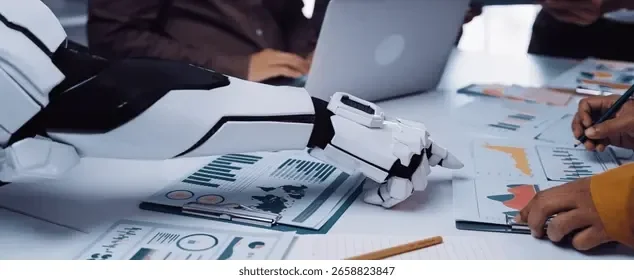
Gemini, OpenAI, and several other AI platforms have taken humanity a step forward. These tools have not only made everyday tasks more convenient but have also raised concerns about the future of employment, with businesses increasingly exploring the possibility of shifting certain responsibilities from humans to AI systems.
As AI makes people more efficient, an important question arises: Are recruiters and employers raising their expectations for candidates' skills and capabilities?
AI is increasingly being viewed as a tool for growth across industries. Job seekers, too, are trying to upskill themselves to remain competitive in the workplace. However, does dependence on AI truly reduce human effort, or does it change the way people work?
While AI can be a useful tool, relying on its immediate outputs may cause some unexpected errors in judgment. The real advantage lies in combining AI's efficiency with human judgment
1. AI proficiency must go hand in hand with critical thinking
Candidates do not necessarily need to depend on AI for every task to demonstrate their efficiency. Instead, they must understand when and how to use it effectively. While AI can simplify complex tasks and save time, critical thinking and sound judgment remain essential to achieving meaningful results. The ability to use AI strategically, rather than indiscriminately, helps create a balance between technological efficiency and human expertise.
2. Verification and information filtering remain essential skills
AI adoption in the workplace continues to evolve. Although these tools can help gather information quickly, their outputs may contain inaccuracies, outdated details, or irrelevant information. This makes fact-checking, research, and information verification crucial workplace skills.
A skilled professional can assess AI-generated information, identify what is useful, discard what is unreliable, and refine the remaining material into an accurate and relevant output. In this way, AI can support productivity while human expertise ensures quality and reliability.
3. Employers value the ability to solve real-world problems
Knowing how to operate AI tools is only one part of the equation. Employers also want candidates who can apply AI-generated insights to practical workplace challenges.
A candidate's ability to research effectively, identify appropriate solutions, interpret data, and apply insights to real-world situations can demonstrate how well they use technology to make a meaningful contribution. Ultimately, the focus is not simply on whether candidates can use AI, but on whether they can use it to solve problems and improve work outcomes.
4. Human judgment turns AI-generated insights into business results
AI can process information and generate results rapidly, but those results still require human evaluation. Professionals must be able to interpret the findings, assess their relevance, and determine whether the proposed solutions align with business objectives.
The ability to combine AI-generated insights with human judgment can help professionals make better-informed decisions, improve workflows, and contribute to business growth. This combination of analytical thinking, practical application, and technological proficiency can distinguish a capable candidate from someone who merely knows how to use AI tools.
Hence, employers need more than candidates who are proficient in AI. They need professionals who can think critically, verify information, solve real-world problems, and transform AI-generated insights into reliable, business-ready outcomes.
As AI continues to reshape the workplace, the real competitive advantage may lie not in how frequently someone uses AI, but in how effectively they combine it with their own skills, judgment, and expertise.
Was this article helpful?

Written By
TechorCoffeeContributing Writer
TechorCoffee is a technology reporter and software creator writing reviews and tutorials for TechOrCoffee.
Comments (0)
Leave a Comment
Read Next

Tue Apr 21 2026
Best AI Tools for Students & Creators in 2026:Complete Guide
AI tools are transforming how students learn and creators produce content. From writing assistants to design and research tools, these platforms save time, enhance creativity, and improve efficiency. Choosing the right AI stack can significantly boost productivity and output quality.
Tue Jun 16 2026
Apple Intelligence 2.0: Siri AI & iOS 27 at WWDC 2026
Apple Intelligence 2.0 is here. I cover Siri AI, iOS 27 release dates, supported devices, and how Apple's new AI really compares to ChatGPT and Gemini.
Tue Oct 13 2026
Gemini 4 Argon: Everything You Need to Know
Gemini 4 Argon is Google’s new flagship AI model. See its benchmarks vs GPT-6 Astra and Claude, pricing, 1M-token output, safety features and how to get access.