Google Unveils TPU 8i Max and 8tx for Enterprise AI Work

Published (Updated )
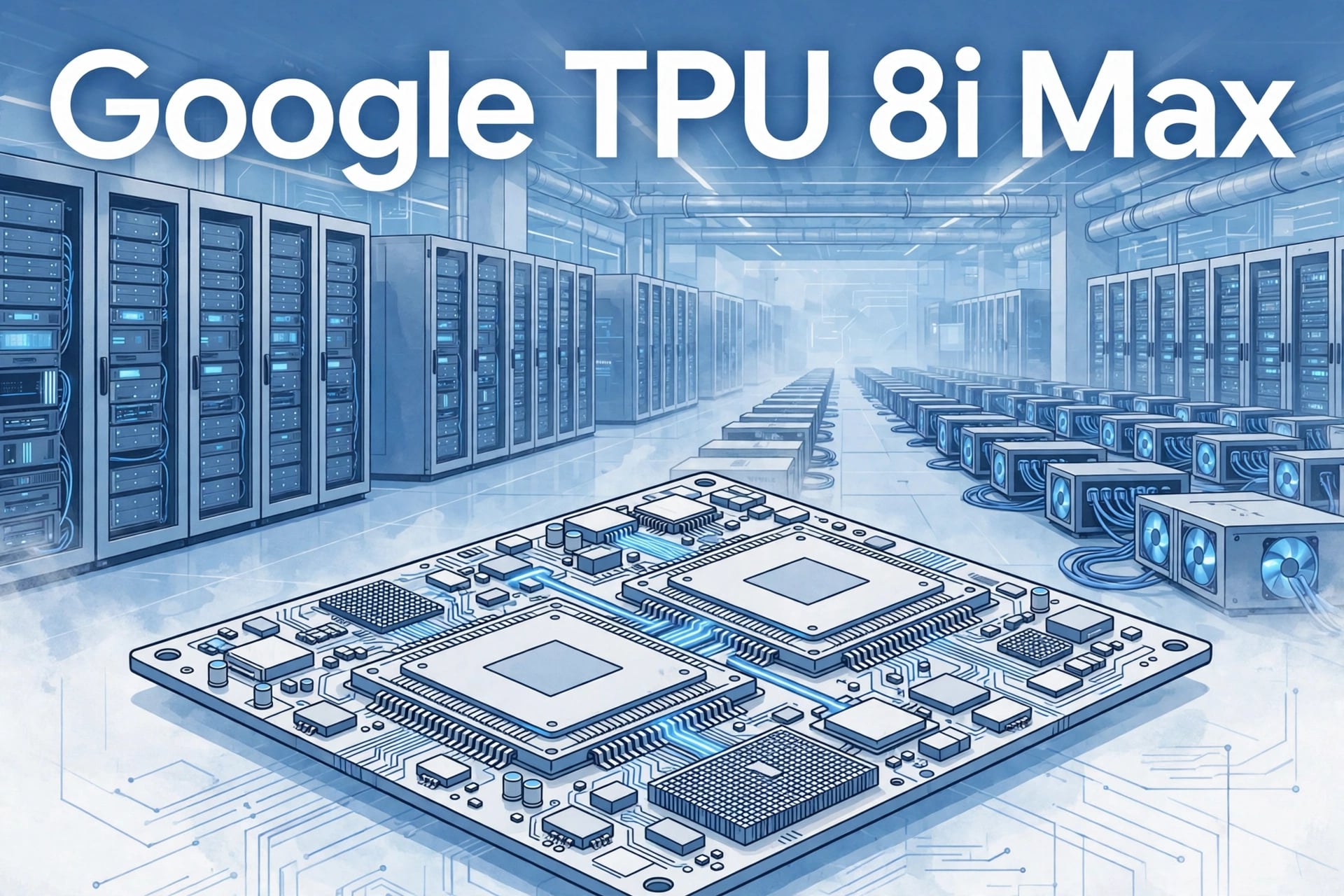
Google Unveils TPU 8i Max and 8tx for Enterprise AI Work
Google has added two new systems to its eighth-generation TPU family, and the interesting thing about them is what they are not. They are not entirely new chip designs. They are new combinations of existing silicon, packaging, networking and security, put together to solve two specific problems that companies keep running into with AI.
The announcement came on 9 November 2026, in a Google blog post titled "Introducing TPU 8tx and TPU 8i Max". One system, TPU 8i Max, is built for massive context windows and the highest compute density per rack. The other, TPU 8tx, is built for secure and confidential inference and small-scale training. Together, they take the eighth-generation TPU portfolio to four systems in a single year.
That pace is worth noting. Google introduced the first two systems in this generation at Google Cloud Next in April 2026, and the next two arrived in November.
Four systems in a single year
At Google Cloud Next in April 2026, Google introduced TPU 8t and TPU 8i. TPU 8t was aimed at large-scale training, the heavy work of building AI models. TPU 8i was aimed at real-time reasoning and inference, the work of running models once they are built and answering questions in the moment.
The two new systems build on those. TPU 8i Max builds on TPU 8i. TPU 8tx builds on TPU 8t, using the same silicon as TPU 8t. Neither is a from-scratch chip. Both are new combinations of parts Google already has, arranged differently to serve a different kind of workload.
That approach has a practical advantage. Designing a new chip from scratch takes a long time. Recombining existing silicon, packaging, networking and security into a new system is faster, and it lets Google respond to what customers are actually asking for. In this case, customers were asking for two things: a way to run very long-context reasoning and agents, and a way to run inference on sensitive data without exposing it.
The data centre behind the chips
Chips do not run on their own. They run in data centres, in racks, connected to networks, cooled and powered and managed as part of a much larger system. TPU 8i Max is described in terms of compute density per rack, which is a data centre measure: how much work fits into the physical space of a rack, and by extension into the floor of a data centre.
TPU 8i Max: built for long context
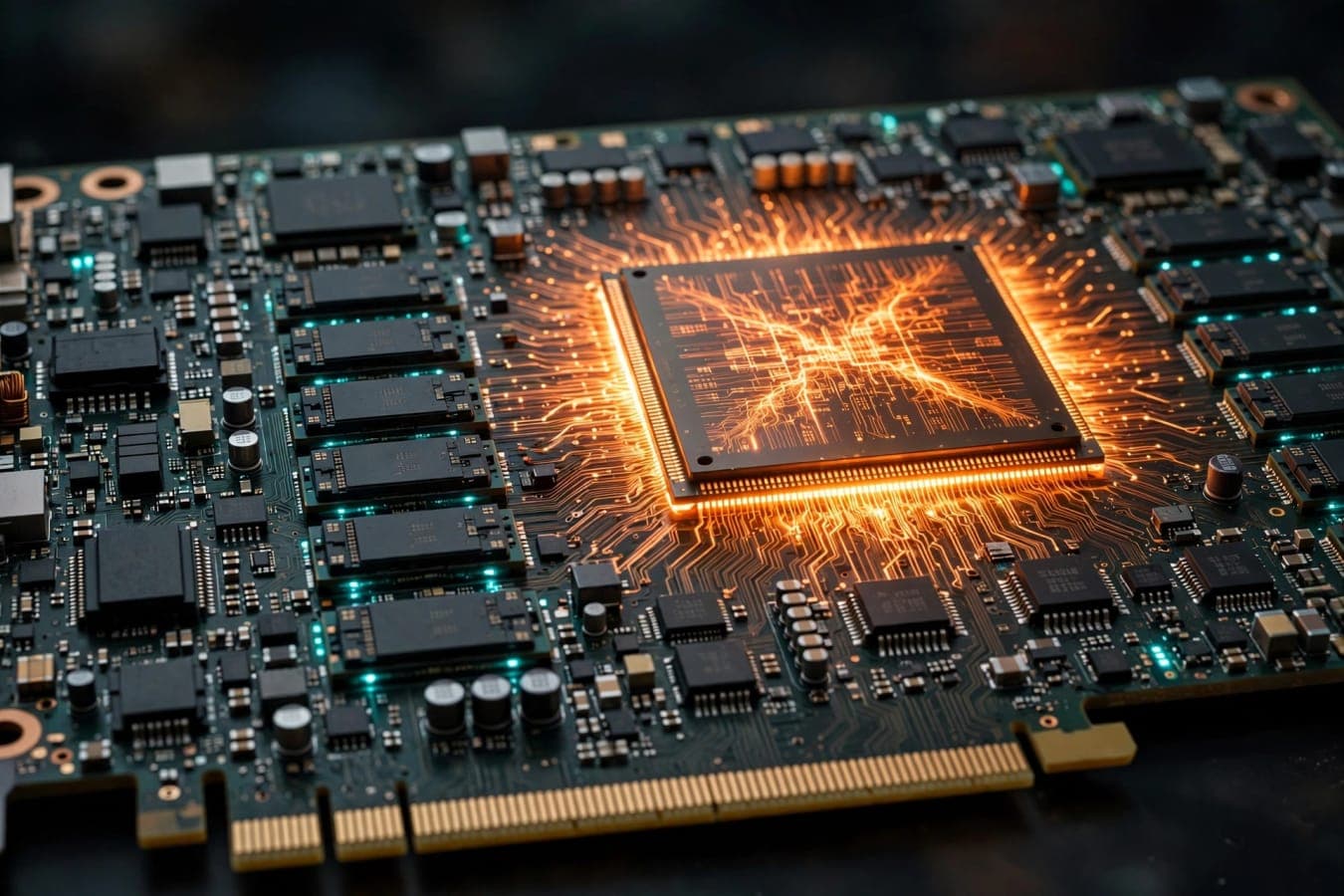
TPU 8i Max is the memory-heavy member of the family. It is built for massive context windows and the highest compute density per rack, and it targets memory-intensive, long-context reasoning and agents.
The way it gets there is straightforward to describe. It combines two TPU 8i chips in one package. That pairing doubles the compute capacity, the on-chip SRAM, and the high-bandwidth memory, or HBM, bandwidth compared with TPU 8i. The doubling is of bandwidth, not necessarily of capacity, which is a distinction worth keeping straight. Bandwidth is how fast data can move in and out of memory. Capacity is how much can be held at once. Google's claim is about the speed of movement, and about compute and on-chip memory doubling as well.
Why does that matter? Long-context work is work where the model needs to hold a lot of information in mind at once. That could be a long document, a long conversation, or a task where an agent has to keep track of many steps and many sources. The more context a model has to hold, the more memory and memory bandwidth it needs. A system that doubles those things is aimed squarely at that kind of work.
Agents are a good example of where this shows up. An agent is not just answering one question. It is working through a task over time, remembering what it has already done, what it has already read, and what it still needs to do. That takes memory, and it takes the ability to move data quickly. TPU 8i Max is positioned for that kind of reasoning, where the context window is large and the work is memory-intensive.
TPU 8tx: confidential inference
TPU 8tx takes a different direction. It is optimised for secure and confidential inference and small-scale training. It uses the same silicon as TPU 8t, the large-scale training system, but pairs it with fifth-generation AMD EPYC host CPUs and Google's Boardfly network.
Google claims up to 2x lower latency than TPU 8t. Latency is the delay between asking a model something and getting an answer back. Lower latency means faster responses, which matters for real-time use. The claim is Google's own, and no independent benchmark of either new system has been published yet, so performance claims are Google's own until independent testing appears.
The core idea behind TPU 8tx is confidential computing. Confidential computing uses hardware-backed isolation to protect data and model weights while in use. That phrase, "while in use", is the key part. Data is often protected when it is stored and when it is being sent from one place to another. Protecting it while it is actually being processed, while the model is working on it, is harder. Hardware-backed isolation is meant to do that, by keeping the data and the model weights sealed off from other things running on the same machine.
AMD's Secure Encrypted Virtualization helps extend those protections from the host CPU to the accelerators. In plain terms, the security does not stop at the main processor. It reaches the chips doing the AI work as well. That matters because the accelerators are where the sensitive data is actually being processed. If the protection only covered the host CPU, the most sensitive part of the work would be left exposed.
TPU 8tx also supports private model fine-tuning, distillation and reinforcement learning without moving sensitive data between clusters. Fine-tuning is adapting a model to a specific job. Distillation is making a smaller model learn from a larger one. Reinforcement learning is training a model by rewarding good outcomes. Doing those things without moving sensitive data between clusters means the data can stay where it is, rather than being copied to another set of machines for training. For companies with data they cannot move, that is a practical benefit, not just a security feature.
Why confidential computing matters now
The announcement does not present confidential computing as an abstract idea. It links it to a real event. An October 2026 Cloudflare AI data leak exposed cached information from earlier requests in responses to other customers. That is the kind of failure that makes companies nervous about running AI on sensitive data.
When one customer's information shows up in another customer's response, the problem is not just a bug. It is a breach of trust, and it raises questions about whether the system can be relied on with private information. Google's announcement context links that leak to why confidential computing matters. The argument is that hardware-backed isolation is a way to make sure one customer's data does not leak into another customer's answers.
On the software side, Google open-sourced TorchTPU in October 2026 so PyTorch code and Hugging Face models can run natively on TPUs, lowering the barrier for developers who already work in PyTorch.
What is still unknown
For all the detail in the announcement, several basic questions remain unanswered. The 9 November announcement gave no availability date, price or region. Google says the systems will be available next year, in 2027, per Amin Vahdat to Bloomberg, but that is not a date. It is a year. There is no price, and no region, which means companies cannot yet plan a budget or a rollout based on the announcement alone.
No independent benchmark of either new system has been published yet, so performance claims are Google's own. That includes the claim of up to 2x lower latency for TPU 8tx compared with TPU 8t, and the doubling claims for TPU 8i Max. Until independent testing appears, those numbers should be read as Google's claims, not as verified results. That is normal for a new chip announcement, but it is worth stating plainly. A claim from the company selling the chip is not the same as a result from an independent test.
The distinction between bandwidth and capacity for TPU 8i Max is another point to keep straight. The doubling is of bandwidth, not necessarily of capacity. That matters because a system can move data faster without holding more of it at once. For long-context work, both matter, but they are not the same thing. Readers should not assume that doubling bandwidth means doubling capacity.
What to watch next
The first thing to watch is availability. Google says the systems will be available next year, in 2027, but the announcement gave no date, price or region. The next update to look for is a firmer date, and a price, and which regions will get the systems first. Until those details appear, companies can plan around the idea of the systems, but not around a specific launch.
Google is also expanding distribution through a planned Blackstone-backed TPU cloud and an Oracle partnership, with OCI expecting TPU availability in 2027, starting with 8t and 8i. How quickly that expands will show how serious Google is about distributing TPUs widely.

The fourth thing to watch is confidential computing in practice. The Cloudflare leak in October 2026 showed what can go wrong when cached information from one customer's requests ends up in another customer's responses. TPU 8tx is Google's answer to that kind of risk, with hardware-backed isolation and AMD's Secure Encrypted Virtualization extending protections to the accelerators. Whether companies with sensitive data adopt it will depend on whether they trust that isolation in real use, not just in an announcement.
Google's eighth-generation TPU family now has four systems, introduced in a single year. TPU 8t and TPU 8i arrived in April, for large-scale training and real-time reasoning. TPU 8i Max and TPU 8tx arrived in November, for long-context agents and confidential inference. The chips themselves are new combinations of existing parts, not entirely new designs. What is new is the way they are aimed: at the memory-heavy work of long context, and at the security-sensitive work of private data. Those are two of the clearest problems in enterprise AI right now, and Google has now put a system against each of them.
FAQs
What did Google announce on 9 November 2026?
Google announced TPU 8tx and TPU 8i Max in a Google blog post titled "Introducing TPU 8tx and TPU 8i Max", expanding its eighth-generation TPU portfolio to four systems in a single year.
What are TPU 8t and TPU 8i?
TPU 8t and TPU 8i were introduced at Google Cloud Next in April 2026. TPU 8t is for large-scale training, and TPU 8i is for real-time reasoning and inference.
What is TPU 8i Max built for?
TPU 8i Max is built for massive context windows and the highest compute density per rack. It targets memory-intensive, long-context reasoning and agents, combining two TPU 8i chips in one package.
What does TPU 8i Max double compared with TPU 8i?
It doubles compute capacity, on-chip SRAM and high-bandwidth memory (HBM) bandwidth compared with TPU 8i. The doubling is of bandwidth, not necessarily of capacity.
What is TPU 8tx built for?
TPU 8tx is optimised for secure and confidential inference and small-scale training. It uses the same silicon as TPU 8t, pairs it with fifth-generation AMD EPYC host CPUs and Google's Boardfly network, and Google claims up to 2x lower latency than TPU 8t.
How does confidential computing protect data on TPU 8tx?
Confidential computing uses hardware-backed isolation to protect data and model weights while in use. AMD's Secure Encrypted Virtualization helps extend protections from the host CPU to the accelerators.
When will TPU 8i Max and TPU 8tx be available, and what will they cost?
The 9 November announcement gave no availability date, price or region. Google says the systems will be available next year, in 2027, per Amin Vahdat to Bloomberg. No independent benchmark of either system has been published yet.
Was this article helpful?

Written By
TechorCoffeeContributing Writer
TechorCoffee is a technology reporter and software creator writing reviews and tutorials for TechOrCoffee.
Comments (0)
Leave a Comment
Read Next

Tue Apr 21 2026
Best AI Tools for Students & Creators in 2026:Complete Guide
AI tools are transforming how students learn and creators produce content. From writing assistants to design and research tools, these platforms save time, enhance creativity, and improve efficiency. Choosing the right AI stack can significantly boost productivity and output quality.
Tue Jun 16 2026
Apple Intelligence 2.0: Siri AI & iOS 27 at WWDC 2026
Apple Intelligence 2.0 is here. I cover Siri AI, iOS 27 release dates, supported devices, and how Apple's new AI really compares to ChatGPT and Gemini.
Mon Jun 08 2026
WWDC 2026: Siri AI, iOS 27 & Apple's Biggest Reveal
WWDC 2026 introduced Siri AI, iOS 27, and major Apple Intelligence upgrades. See every game-changing feature Apple announced.