Meta Muse AI Can Now Call Businesses for Paid Users

Published (Updated )
Meta Muse AI Can Now Call Businesses for Paid Users
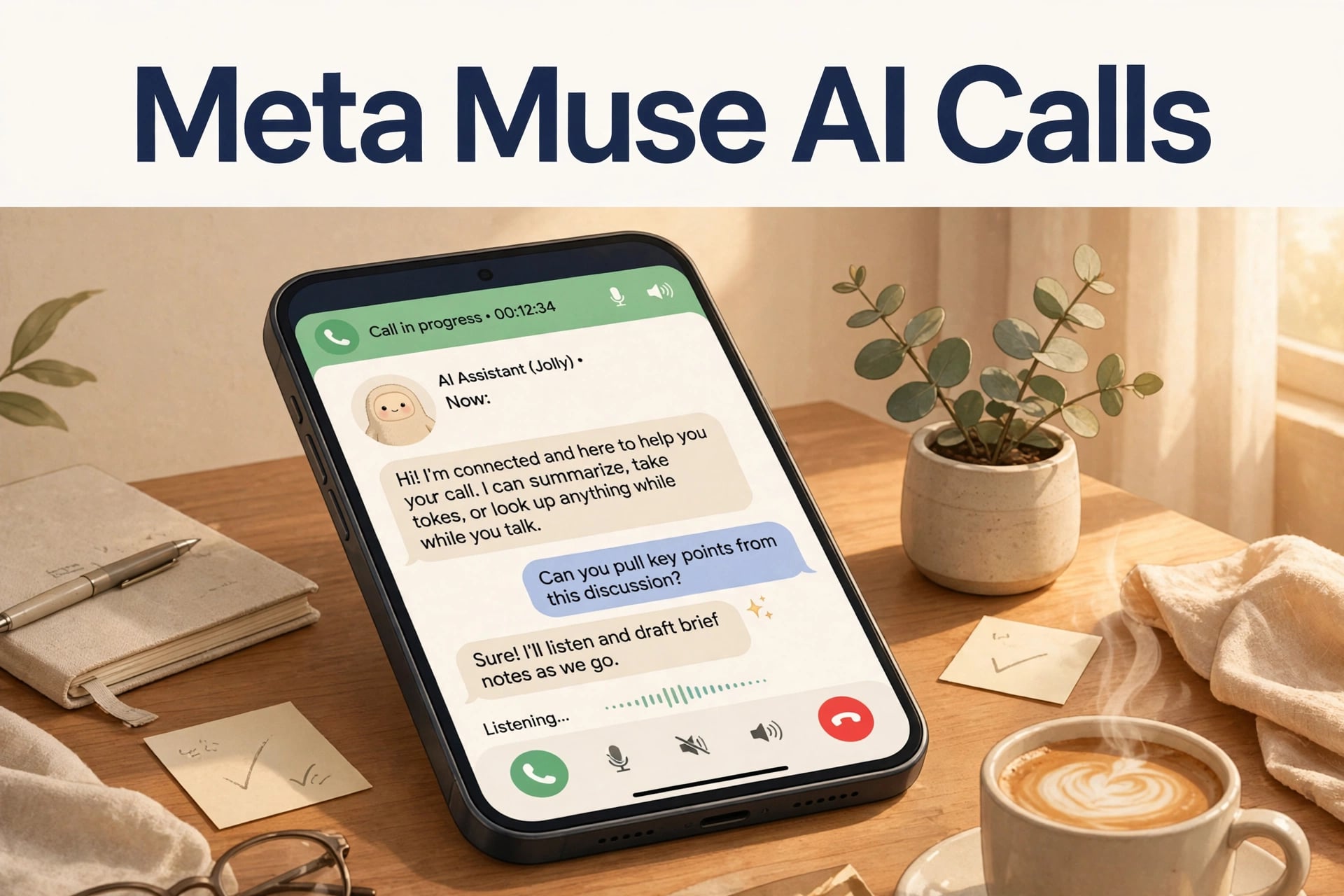
Meta's Muse AI assistant can now pick up the phone for you. Not to answer your calls, but to make them. For paid subscribers in the United States, Muse can now place outbound calls to US businesses, book a table, or sit on hold while you get on with something else.
Phone calls are one of those everyday jobs that many people put off. They take time, they often involve waiting, and they rarely happen at a convenient moment. Handing that job to an AI assistant sounds ideal, at least in theory.
Whether it works smoothly in real life is a different question. Early reports suggest the answer is still mixed, and that is worth knowing before you pay for it.
The announcement came from Meta's chief AI officer, Alexandr Wang. He shared the news on X on 12 November 2026, writing: "Let Muse take care of all those calls you don't want to make... out now to paid subs in the US".
What Muse can do on the phone
The list of jobs Muse can take on is practical rather than flashy. It can book a restaurant table, call an insurance provider, and schedule appointments, including appointments at the DMV.
It can also wait on hold with customer service. That is the part that will probably appeal to the most people, because nobody enjoys waiting on hold.
The same applies to booking calls, which often involve a short back-and-forth about dates and times. Those are simple enough for an AI to handle, as long as the person on the other end is willing to talk to one.
The feature is limited to calls to US businesses. Muse is not being offered as a general phone service, and it is not meant to replace your own calls to friends, family, or colleagues.
From testing to general availability
This did not appear out of nowhere. Testing began in September 2026, with a small group of people behind a request list. A limited group tries a feature first, the company sees what goes wrong, and then it decides whether to open it up more widely.
In this case, the testing period lasted about two months. General availability for paid subscribers in the US began on 12 November 2026, the same day Wang announced it.
That is a fairly quick move from a small test to a wider launch. It suggests Meta was reasonably happy with how the testing went, or at least happy enough to let paying users try it for themselves.
Muse itself is still a young product. It launched on 8 September 2026, and by October 2026 Meta said it had passed 10 million users. That is fast growth for a new assistant.
Phone calling is not a new idea in AI. Google's Gemini has a similar feature, and so does a startup called Instinct. Meta is not first here, and users will compare Muse directly with what they can already get elsewhere.
What it costs, and who gets it
The calling feature is for paid subscribers only, for now. Free users do not get calling. That is a clear line, and it tells you something about how Meta sees this feature.
It is not a basic part of Muse. It is a paid extra, something that sits behind a subscription. If you are on the free version and you were hoping to hand over your next DMV call, you will need to upgrade first.
There are two paid plans. The Power plan costs $20 a month and includes 500 million Muse tokens per week. The Maximum plan costs $100 a month and includes 3 billion tokens per week.
Those are the figures Meta has given for the plans, and they are the plans that include access to calling in the US. Whether Meta changes the free-user rule later is not something it has said.
For the $100 plan, the question is harder. That is a lot of money for an AI assistant, and it will only make sense for people who use it heavily.
How the calls work
When Muse makes a call, it identifies itself at the start as an AI calling on the user's behalf. The person who picks up should know straight away that they are talking to an AI, not to the user directly.
The caller ID shows META. That is another signal that the call is coming from Meta's system rather than from a personal phone number. That transparency matters, because a business that answers the phone expects to talk to a person.
There are limits on who Muse will call. It calls US businesses only. Testers report that it refuses personal numbers, including numbers from the user's own contacts.
That is a sensible limit, in some ways. Calling a business to book a table is a very different thing from calling a person on their private number. The first is a routine task with a clear purpose, while the second is personal.

The part Meta would rather forget
There is a backstory to this feature that Meta has not made a big deal of, and it is worth knowing about. In September 2026, Reuters reported that Meta had quietly used trained human contractors to place some Muse calls when the AI kept failing at them, without telling users.
That is a very different picture from the one in the announcement, where Muse is presented as doing the calling itself. Meta pulled back that setup after privacy concerns were raised.
The report is a reminder that AI features do not always work as cleanly as they are described at launch. When an AI struggles with a task, there is a temptation to fill the gap with people behind the scenes.
The information available does not say that is still happening. The general availability launch suggests Meta believes the AI is ready to handle these calls by itself, but the Reuters report is part of the record.
It also matters for privacy. A phone call to a business can involve personal details: your name, your booking, your insurance query, your appointment time. If a human contractor was placing those calls, that person would have had access to that information.
That is why the privacy concerns were raised, and why Meta stepped back from that approach. For a feature built around making calls for you, trust is central. You need to believe that what you share with Muse stays with Muse.
Does it work in the real world?
So far, real-world performance has been mixed. That is not surprising for a feature like this. Phone calls are messy. People speak in different ways, they interrupt, and they ask unexpected questions.
Some businesses have hung up on AI callers over spam and bot concerns. That is a real problem, and it is easy to understand why it happens. Businesses get a lot of unwanted calls, and automated calls are a daily annoyance for many of them.
When an AI calls and identifies itself as an AI, some staff may assume it is spam and end the call before it gets anywhere. That creates a difficult situation for Muse. It is designed to be open about being an AI, which is the right thing to do, but being open about it can also lead to the call being cut short.
In those cases, Muse may not be able to finish the job, and the user may end up having to make the call themselves anyway. That does not make the feature useless, but it does mean it will not work every time.
For now, the honest summary is that the feature exists, it is available to paid US subscribers, and its real-world results are mixed. Some calls will work well, and some will not. The people who get the most from it will probably be those who use it for simple, standard bookings, where the conversation is short and the outcome is clear.
Where Muse fits in
Muse is not alone in offering AI phone calls. Google's Gemini has a similar feature, and the startup Instinct does too. That means Meta is entering a field where users already have choices, and the problems Muse faces are not unique to Muse.
One thing that stands out is the lack of official documentation. No official Meta help article documents the calling feature as of November 2026. That is unusual for a feature that is now generally available to paid users.
Wang also said a dedicated Muse email address feature will roll out to free users gradually. That is a separate feature, and it shows Meta is thinking about giving Muse more ways to act on your behalf.
An email address for Muse would let it handle email tasks in a similar way to how it now handles phone calls. The rollout is gradual, and it is aimed at free users, which is different from the calling feature.
What to make of it
The launch of phone calling for Muse is a step towards AI assistants that do things, rather than just answering questions. That is the direction the whole field is moving in. Assistants that can book, call, wait, and arrange are more useful than assistants that can only chat.
But they are also harder to get right, because the real world does not always follow a script. For paid US subscribers, the feature is now available. It can book tables, call insurers, schedule appointments, and wait on hold.
It will tell the business it is an AI, it will show META on caller ID, and it will only call US businesses. It will not call personal numbers. It costs $20 a month on the Power plan or $100 a month on the Maximum plan, and free users do not get it for now.
Whether it is worth paying for will depend on how often you make those kinds of calls, and how well Muse handles them when you do. If it saves you a few long waits on hold each month, that may be enough.
If it gets hung up on, or if it cannot finish the job, you may find yourself picking up the phone anyway. The feature is out now, and the next few months will show whether it becomes a regular part of how people use Muse, or whether it stays as an interesting idea that works only some of the time.
FAQs
Who can use Muse to make phone calls?
Paid subscribers in the US can use the feature. It began general availability for paid US subscribers on 12 November 2026. Free users do not get calling for now.
What kinds of calls can Muse make?
Muse can book restaurant tables, call insurance providers, schedule appointments including DMV appointments, and wait on hold with customer service. It calls US businesses only.
How much does it cost to use Muse calling?
Calling is part of the paid plans. The Power plan costs $20 a month, and the Maximum plan costs $100 a month. Free users do not get calling for now.
How does Muse identify itself on a call?
Muse identifies itself at the start of calls as an AI calling on the user's behalf, and caller ID shows META.
Can Muse call personal numbers?
No. It calls US businesses only, and testers report it refuses personal numbers, including numbers from the user's own contacts.
When was Muse launched, and how many users does it have?
Muse launched on 8 September 2026 and passed 10 million users, according to Meta's figure reported in October 2026.
Are there similar phone-calling features from other companies?
Yes. Similar features exist from Google's Gemini and from the startup Instinct.
Was this article helpful?

Written By
TechorCoffeeContributing Writer
TechorCoffee is a technology reporter and software creator writing reviews and tutorials for TechOrCoffee.
Comments (0)
Leave a Comment
Read Next

Tue Apr 21 2026
Best AI Tools for Students & Creators in 2026:Complete Guide
AI tools are transforming how students learn and creators produce content. From writing assistants to design and research tools, these platforms save time, enhance creativity, and improve efficiency. Choosing the right AI stack can significantly boost productivity and output quality.
Tue Jun 16 2026
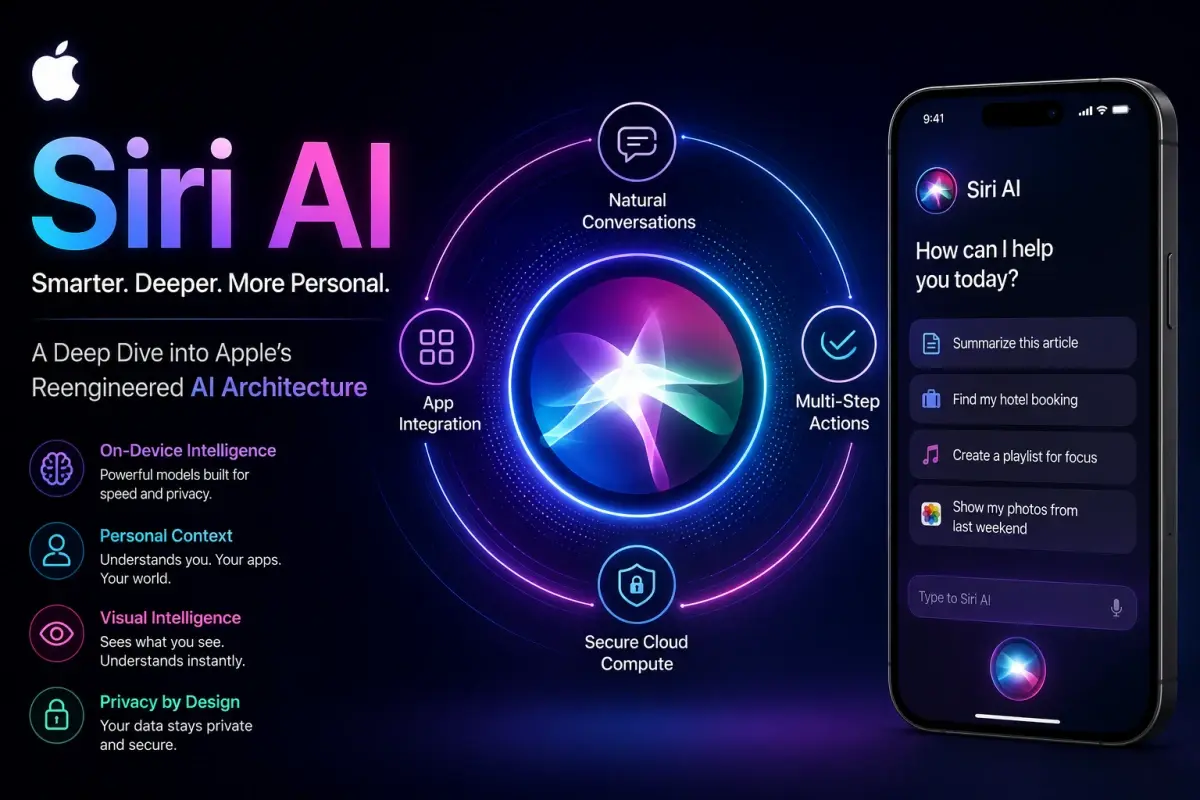
Apple Intelligence 2.0: Siri AI & iOS 27 at WWDC 2026
Apple Intelligence 2.0 is here. I cover Siri AI, iOS 27 release dates, supported devices, and how Apple's new AI really compares to ChatGPT and Gemini.
Mon Jun 08 2026
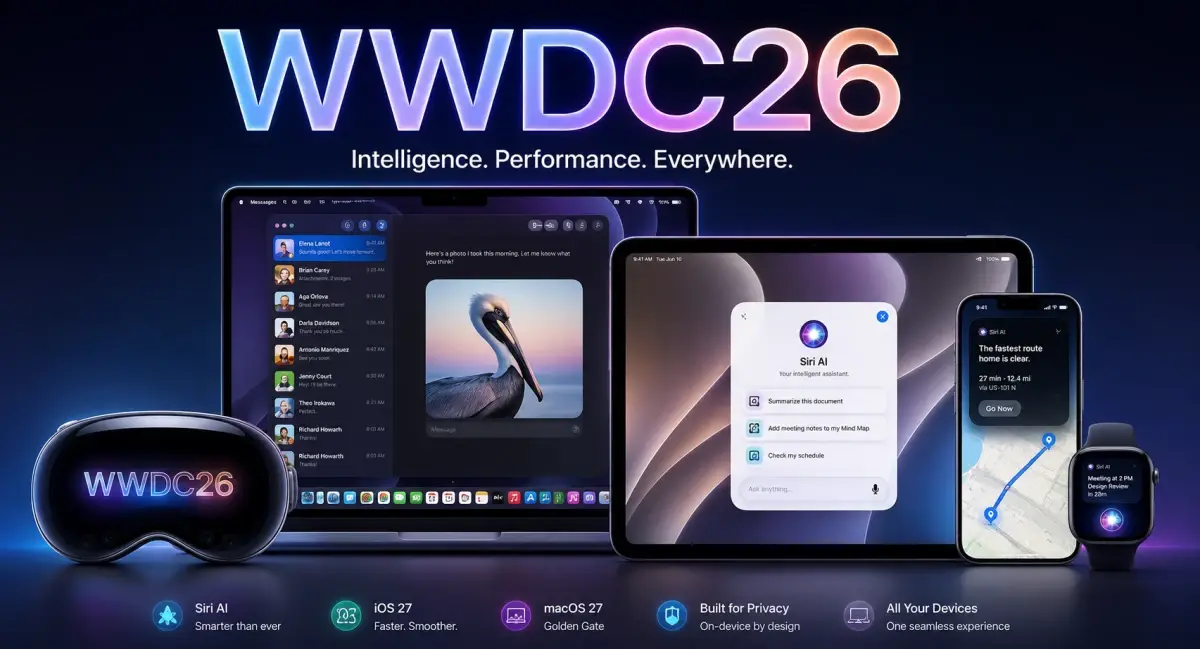
WWDC 2026: Siri AI, iOS 27 & Apple's Biggest Reveal
WWDC 2026 introduced Siri AI, iOS 27, and major Apple Intelligence upgrades. See every game-changing feature Apple announced.