Qwen 4 Max: Alibaba's 2.4T AI Model Undercuts GPT & Claude

Published (Updated )
Alibaba has a new flagship AI model, and its pitch is simple: frontier-scale capability at a fraction of the price.
Qwen 4 Max went into general availability on November 16, 2026. It is the first model built on Alibaba's new Qwen4 architecture and the successor to Qwen3.8-Max, with 2.4 trillion parameters, a 1-million-token context window, and native support for text, images and video.
The headline numbers are aggressive. At $1.50 per million input tokens and $4.50 per million output tokens, it costs 25% less than its predecessor — and far less per token than the flagship models from OpenAI, Anthropic and Google.
But the story is more complicated than the price tag. Independent benchmarks paint a mixed picture, and the model is closed and API-only. Here is what Qwen 4 Max actually is, what it costs, and how it stacks up.
The quick answer
- What launched: Alibaba's Qwen 4 Max, model ID qwen4-max, generally available from November 16, 2026.
- What it is: A 2.4-trillion-parameter sparse mixture-of-experts model, the first on the new Qwen4 architecture.
- How big is the context: 1 million tokens, with up to 131,072 output tokens per response without thinking mode.
- What it costs: $1.50 per million input tokens and $4.50 per million output tokens on QwenCloud's international list. Cached input costs $0.075 per million.
- How it compares: 25% cheaper than Qwen3.8-Max per token. But Artificial Analysis scores it 43 on its Intelligence Index, versus 59 for Claude Opus 5.5.
- Is it open source: No. Qwen 4 Max is closed weights and API-only. Alibaba says smaller Qwen4 models will be open-sourced later.
- Who it is for: Developers and enterprises building with the QwenCloud API, Qwen Studio, QwenWork or Qoder.
What Qwen 4 Max is
Qwen 4 Max is the top tier of Alibaba's new Qwen4 model family. A short preview ran from November 11 to 25 on the Token Plan, and that preview has now been retired in favour of full general availability.
The model is built on a sparse mixture-of-experts design. Of its 2.4 trillion parameters, only about 71 billion are activated for each token — roughly 3% of the total. That is how Alibaba keeps the cost down: most of the model's capacity sits idle on any given token, and only the relevant expert sub-networks switch on.
There is also a separate 328-billion-parameter N-gram embedding table, a large lookup structure that helps the model handle tokens and phrases more efficiently. It is an unusual design choice, and it is one of the things that sets the Qwen4 architecture apart from its rivals.
Native vision is built in: the model accepts text, images and video in the same conversation. Under the hood, Alibaba points to Gated DeltaNet layers, Qwen Sparse Attention (QSA), HyperConnection, PLE, and a Gated Residual design it says keeps training stable at this scale — claims independent researchers have not yet verified in detail.
The specs at a glance
| Spec | Qwen 4 Max |
|---|---|
| Model ID | qwen4-max |
| Release | November 16, 2026 (general availability) |
| Architecture | Qwen4, sparse mixture of experts |
| Total parameters | 2.4 trillion |
| Active parameters per token | ~71 billion (~3%) |
| Embedding table | 328 billion parameters (N-gram) |
| Context window | 1 million tokens |
| Max input (no thinking) | 991,808 tokens |
| Max input (with thinking) | 983,616 tokens |
| Max output (no thinking) | 131,072 tokens |
| Max output (with thinking) | 262,144-token shared budget |
| Input types | Text, images, video |
| Weights | Closed, API-only |
| Predecessor | Qwen3.8-Max |
The context window is the number that matters most for real-world use. One million tokens is roughly 750,000 words — enough to load an entire codebase, a stack of legal contracts, or months of meeting transcripts into a single conversation.
Output limits are generous too. Without thinking mode, the model can produce up to 131,072 tokens in a single response. With thinking enabled, the input and output share a 262,144-token budget, so long reasoning chains eat into the space available for the answer.
What it costs
Price is where Qwen 4 Max makes its strongest case. On QwenCloud's Singapore and international price list, the model costs:
- $1.50 per million input tokens
- $4.50 per million output tokens
- $0.075 per million cached input tokens — a 95% discount on repeated prompts
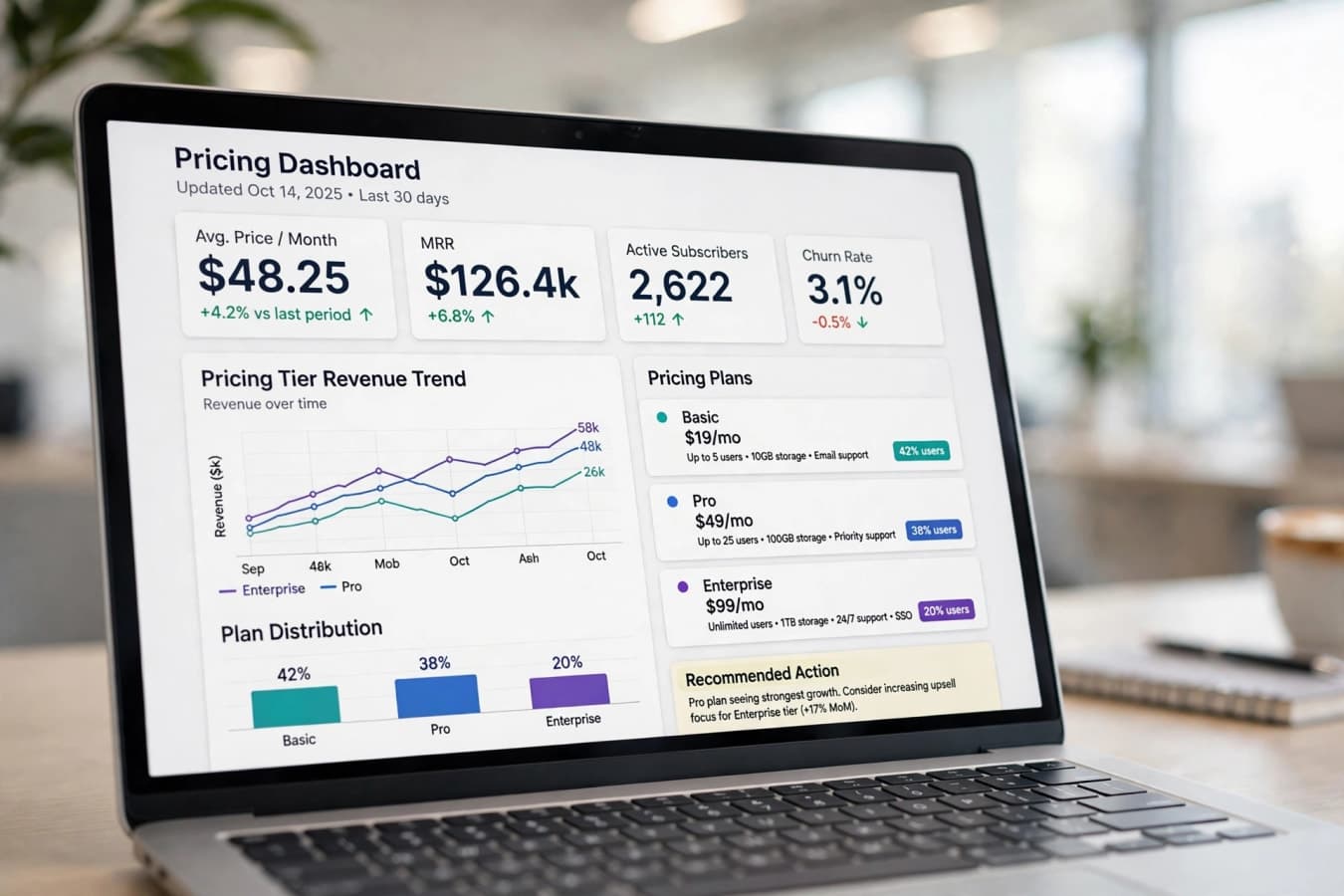
That is 25% cheaper than Qwen3.8-Max, which was priced at $2 per million input tokens and $6 per million output tokens. Some regions list even lower prices: Beijing, Hong Kong, Frankfurt, Virginia and Tokyo show $1.413 per million input tokens and $4.24 per million output tokens.
The cached-input price is the most striking number. At $0.075 per million tokens, repeated context — a system prompt, a codebase, a long document that stays in the conversation — costs almost nothing on repeat turns. For applications that reuse the same context across many requests, that changes the economics completely.
For developers in the US and Europe, the Frankfurt and Virginia region prices are the ones to watch. They are the closest to Western infrastructure, and they are also slightly cheaper than the Singapore list.
How the price compares with Western rivals
There is no official per-token price that makes Qwen 4 Max look expensive next to the Western flagships. OpenAI, Anthropic and Google all charge substantially more per million tokens for their top-tier models.
That comparison, though, only tells half the story. Per-token price is not the same as cost per task. A cheaper model that needs more tokens to finish the same job — or that produces longer, more verbose answers — can end up costing just as much in practice.
That is exactly what the independent data suggests. Artificial Analysis, which measures what models actually cost to complete a set of standard tasks, puts Qwen 4 Max at $3.27 per task. Gemini 4 Hydrogen, one of Google's flagship models, comes in at $3.16 per task. So on a per-task basis, the two are roughly level, despite the big gap in headline per-token prices.
What Alibaba claims
Alibaba's own numbers are, unsurprisingly, the most flattering. The company says the average cost per task on its Work360 suite — a set of workplace tasks used for internal testing — fell 62% compared with Qwen3.8-Max, from $4.43 to $1.67. It also says the new model needs up to 35% fewer tokens to complete the same work.
These are vendor claims, and they should be treated as such. They come from Alibaba's own test suite, run on Alibaba's own tasks, and they have not been independently verified. The 35% token-efficiency claim is the one to watch: if it holds up on real workloads, it would explain part of the per-task cost picture. But until independent testers confirm it across different kinds of work, it remains a claim, not a fact.
What the independent benchmarks say
Independent testing tells a more mixed story than Alibaba's launch numbers.
Artificial Analysis, one of the most widely cited independent benchmarking groups, gives Qwen 4 Max an Intelligence Index score of 43. That is 9 points above its predecessor, Qwen3.8-Max — a real improvement — but well behind Claude Opus 5.5, which scores 59. It places Qwen 4 Max in the capable-but-not-leading tier of current flagship models.
Vals AI, another independent evaluator, ranks Qwen 4 Max 11th overall. That is a respectable position in a crowded field, but it is not the top of the table, and it suggests the model is competing on value rather than on raw capability.
Independent testers have also flagged practical frustrations. Some describe the model as slow in places, and others note that its answers can be verbose — longer than they need to be, which matters when you pay per output token.
| Benchmark | Qwen 4 Max | Rival | What it means |
|---|---|---|---|
| Artificial Analysis Intelligence Index | 43 | 59 (Claude Opus 5.5) | 9 points above Qwen3.8-Max, but 16 behind the leader |
| Vals AI ranking | 11th | Top 10 dominated by Western models | Competitive, not leading |
| Cost per task (Artificial Analysis) | $3.27 | $3.16 (Gemini 4 Hydrogen) | Roughly level despite cheaper per-token pricing |
| Alibaba Work360 cost per task (vendor claim) | $1.67 | $4.43 (Qwen3.8-Max) | 62% drop claimed by Alibaba, not independently verified |
| Token efficiency (vendor claim) | Up to 35% fewer tokens | Qwen3.8-Max | Alibaba's claim, unverified by third parties |
Open or closed? The weights question
One of the biggest surprises of the launch is that Qwen 4 Max is closed.
Alibaba has built its reputation in the AI world partly on open weights. The Qwen family has been one of the most widely used open model families, and developers have come to expect that a new Qwen release means downloadable weights they can run themselves.
That is not the case here. Qwen 4 Max has no public weights and no open-source release. It is API-only, available through QwenCloud on the Token Plan or the standard API, and through Alibaba's own tools: Qwen Studio, QwenWork and Qoder.
The APIs are compatible with the OpenAI and Anthropic formats, which makes switching easier. A developer already calling the OpenAI API can point the same code at QwenCloud with minimal changes.
There are also limits on what you can do with it. Batch inference, fine-tuning and self-hosted model deployment are all marked as unsupported at launch, which rules out some common enterprise use cases — training the model on your own data, or running it inside your own infrastructure.
Where you can use it
Qwen 4 Max is available in several places:
- QwenCloud API — the main route, on the Token Plan or standard API, with OpenAI- and Anthropic-compatible endpoints.
- Qwen Studio — Alibaba's workspace for building with the model.
- QwenWork — aimed at workplace and enterprise tasks.
- Qoder — Alibaba's coding tool, where the model powers code generation and review.
The OpenAI and Anthropic compatibility is a deliberate choice. It lowers the switching cost for teams that already have code written against those APIs, and it signals that Alibaba is competing directly for the same developers.
For US and European teams, the regional pricing in Frankfurt and Virginia is the practical detail. Those regions offer the model at $1.413 per million input tokens and $4.24 per million output tokens, and they keep the data closer to home than the Singapore list.
Who should use it — and who should not
Qwen 4 Max makes the most sense for a specific kind of user.
It is a strong fit if you:
- Run high-volume workloads where per-token price dominates the bill
- Work with very long documents, codebases or conversation histories that benefit from the 1-million-token window
- Reuse the same context across many requests and can take advantage of the 95% cached-input discount
- Need native image and video input alongside text
- Already use the OpenAI or Anthropic API formats and want a cheaper drop-in option
Think twice if you:
- Need the absolute best reasoning or benchmark scores — Claude Opus 5.5 leads by a wide margin on independent tests
- Need to fine-tune the model on your own data, which is not supported at launch
- Need to self-host or deploy the model in your own infrastructure
- Need open weights for compliance, research or offline use
- Are sensitive to latency or verbosity, which independent testers have flagged
The pattern is clear. Qwen 4 Max is a value play, not a capability play. It gives you most of what a flagship model offers, at a much lower per-token price, with some trade-offs in benchmark performance and flexibility.
What this means for the AI market
The launch matters beyond Alibaba. It puts direct pressure on the pricing of every Western AI provider.
For two years, the frontier model market has been dominated by OpenAI, Anthropic and Google, with prices set by those three companies. A credible flagship from Alibaba, at $1.50 per million input tokens, changes the conversation. Even if the model is not the best on benchmarks, it is good enough for a large share of real work — and at that price, good enough is a serious competitive threat.
It also shows how far Chinese AI labs have come. Qwen 4 Max is not a copy of a Western model. It is built on a new architecture, with its own attention mechanism and training design, and it competes on engineering rather than imitation.
The closed-weights decision is the other half of the story. Alibaba is keeping its best model behind its own cloud, just as OpenAI and Anthropic do. That is a shift for a company that built its AI reputation on open releases, and it suggests Alibaba now sees its flagship models as a cloud business first.
What to watch next
A few things will show whether Qwen 4 Max lives up to its launch.
Independent benchmark updates Artificial Analysis and Vals AI update their scores as more testing comes in. Watch whether the 43-point Intelligence Index holds, rises or falls as the model is tested on more tasks.
Smaller open Qwen4 models Alibaba says smaller models in the Qwen4 family will be open-sourced later. When they arrive, and how capable they are, will show whether the open-weights community still gets a meaningful share of the new architecture.
Fine-tuning and deployment support Batch inference, fine-tuning and self-hosted deployment are unsupported at launch. If Alibaba adds them, the model becomes viable for far more enterprise work.
Real-world token usage The vendor claim of 35% fewer tokens per task needs independent verification. Developers who switch should measure their own token usage carefully — the per-task cost, not the per-token price, is what shows up on the bill.
The bottom line
Qwen 4 Max is Alibaba's most ambitious AI model yet: 2.4 trillion parameters, a 1-million-token context window, native vision, and a price of $1.50 per million input tokens that undercuts every Western flagship by a wide margin.
It is not the best model on independent benchmarks. Claude Opus 5.5 leads by 16 points on the Artificial Analysis Intelligence Index, and the per-task cost is roughly level with Gemini 4 Hydrogen despite the cheaper headline price.
But it does not need to be the best. For high-volume work, long documents and API-driven applications, it offers most of the capability at a fraction of the cost — and that is a proposition the AI market cannot ignore.
FAQs
What is Qwen 4 Max?
Qwen 4 Max is Alibaba's new flagship AI model, released on November 16, 2026. It is the first model built on the new Qwen4 architecture and the successor to Qwen3.8-Max. It has a 2.4-trillion-parameter sparse mixture-of-experts backbone, a 1-million-token context window, and native vision that accepts text, images and video.
How much does Qwen 4 Max cost?
On QwenCloud's international list, Qwen 4 Max costs $1.50 per million input tokens and $4.50 per million output tokens. Cached input costs $0.075 per million tokens, a 95% discount. Some regions, including Frankfurt and Virginia, list slightly lower prices of $1.413 and $4.24 per million tokens.
How does Qwen 4 Max compare with Claude Opus 5.5 and GPT-6?
On price, Qwen 4 Max is far cheaper per token than Western flagship models. On independent benchmarks the picture is more mixed: Artificial Analysis gives it an Intelligence Index score of 43, compared with 59 for Claude Opus 5.5, and Vals AI ranks it 11th. Its per-task cost is roughly in line with Gemini 4 Hydrogen.
Is Qwen 4 Max open source?
No. The Max tier is closed weights and API-only, available through QwenCloud, Qwen Studio, QwenWork and Qoder. Alibaba says smaller Qwen4 models will be open-sourced later, but the flagship model itself has no public weights.
What can Qwen 4 Max do?
It handles text, images and video natively, supports a 1-million-token context window, and is aimed at coding, long-document work, agentic tasks and enterprise use through Qwen Studio and QwenWork. Batch inference, fine-tuning and self-hosted deployment are not supported at launch.
Was this article helpful?

Written By
TechorCoffeeContributing Writer
TechorCoffee is a technology reporter and software creator writing reviews and tutorials for TechOrCoffee.
Comments (0)
Leave a Comment
Read Next
Tue Apr 21 2026
Best AI Tools for Students & Creators in 2026:Complete Guide
AI tools are transforming how students learn and creators produce content. From writing assistants to design and research tools, these platforms save time, enhance creativity, and improve efficiency. Choosing the right AI stack can significantly boost productivity and output quality.
Tue Jun 16 2026
Apple Intelligence 2.0: Siri AI & iOS 27 at WWDC 2026
Apple Intelligence 2.0 is here. I cover Siri AI, iOS 27 release dates, supported devices, and how Apple's new AI really compares to ChatGPT and Gemini.
Tue Oct 13 2026
Gemini 4 Argon: Everything You Need to Know
Gemini 4 Argon is Google’s new flagship AI model. See its benchmarks vs GPT-6 Astra and Claude, pricing, 1M-token output, safety features and how to get access.